Corbin Carroll was taking live batting practice in Scottsdale on Tuesday when he felt something snap in his right hand. Within hours, the Arizona Diamondbacks confirmed what everyone feared: a broken hamate bone, surgery required, World Baseball Classic participation canceled, Opening Day status uncertain. Carroll’s injury would have been a significant spring training story on its own. But it was not on its own. Francisco Lindor underwent surgery on the same bone the same day in New York. Jackson Holliday had broken his hamate in a cage session the previous Friday in Sarasota. Three of baseball’s brightest stars, three different teams, three different cities, one identical injury, all within a span of six days.
The cluster is so unusual that it has dominated spring training conversation, overshadowing roster battles and pitching competitions that typically define February baseball. “I’ve been covering baseball for 25 years and I can’t remember three players of this caliber going down with the same injury in the same week,” FanSided’s Robert Murray wrote. The hamate bone, a tiny wedge-shaped structure on the pinky side of the wrist that most fans had never heard of before this week, is suddenly the most discussed piece of anatomy in American sports.
A Cascade of Fractures
The timing is what makes this so jarring. Carroll, 25, was coming off a bounce-back season in which he rediscovered the form that made him the 2023 National League Rookie of the Year. The Diamondbacks were counting on him as their leadoff hitter and centerpiece for a lineup that needed his combination of speed and on-base ability to compete in a loaded NL West. His broken hamate bone came during a routine live batting practice session, the kind of swing he has taken thousands of times. One swing, one fracture, one surgery that will sideline him for at least six weeks.
Lindor’s situation is slightly different but no less disruptive. The Mets’ franchise shortstop had been dealing with hamate discomfort for some time, playing through pain that eventually demanded specialist evaluation. The diagnosis confirmed a stress reaction in his left hamate bone that required surgical intervention. Mets president of baseball operations David Stearns told reporters that Lindor “can be ready for Opening Day if he follows a six-week recovery,” and the math is tight but possible: the Mets open their season against Pittsburgh on March 26, precisely six weeks and one day after the procedure. Manager Carlos Mendoza expressed confidence in his star. “Knowing Lindor, I’m not going to bet against him,” Mendoza said. “Every player is different, but knowing the person, knowing the player, pretty comfortable saying that he’s going to be ready to go.”
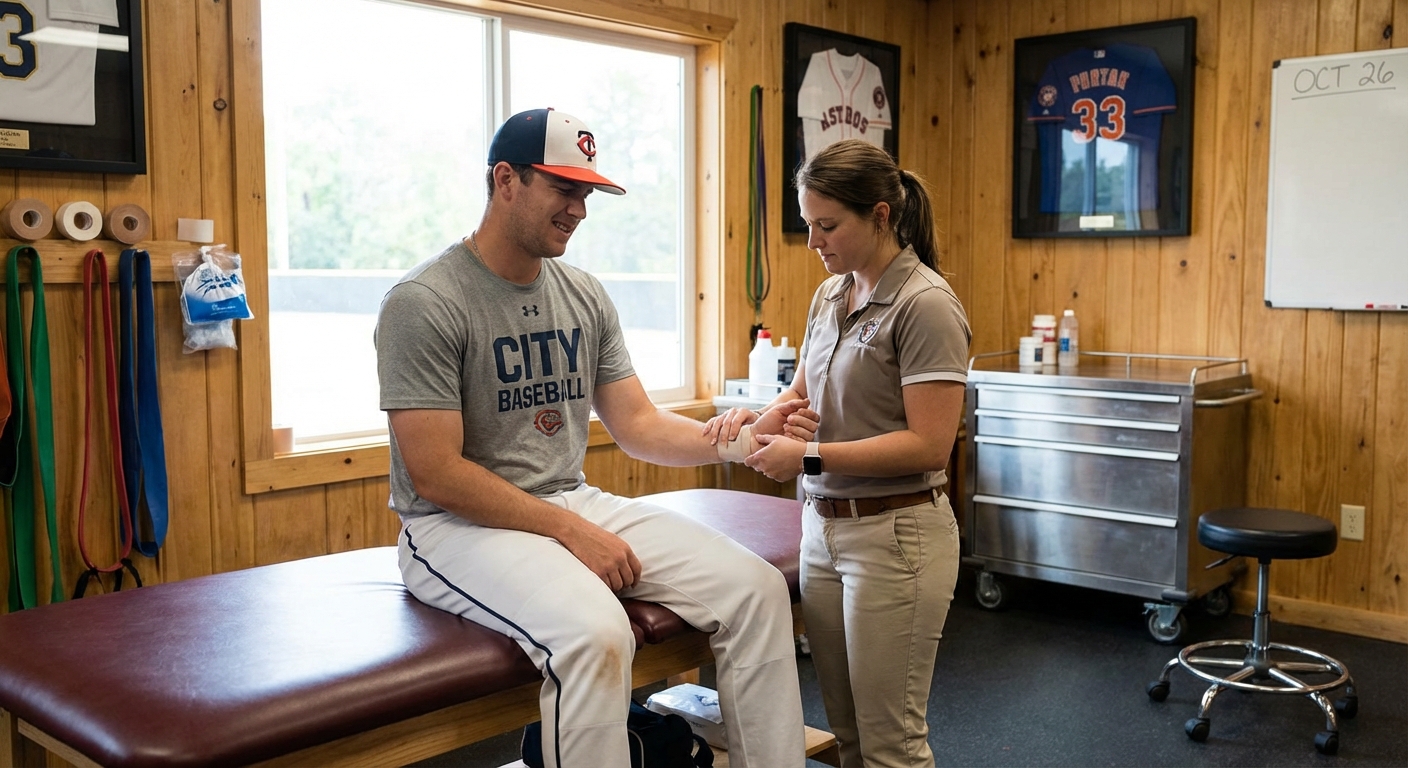
Holliday, the former number-one overall pick who was projected to be Baltimore’s Opening Day leadoff hitter, broke his hamate bone in a cage session last Friday and will undergo surgery that almost certainly rules him out for the start of the season. At 22, Holliday was entering the most important spring training of his young career, trying to cement himself as an everyday player after an up-and-down 2025. Instead, he will spend the first weeks of the season rehabbing a wrist injury that has a reputation for lingering long after the initial recovery.
The Tiny Bone That Terrorizes Hitters
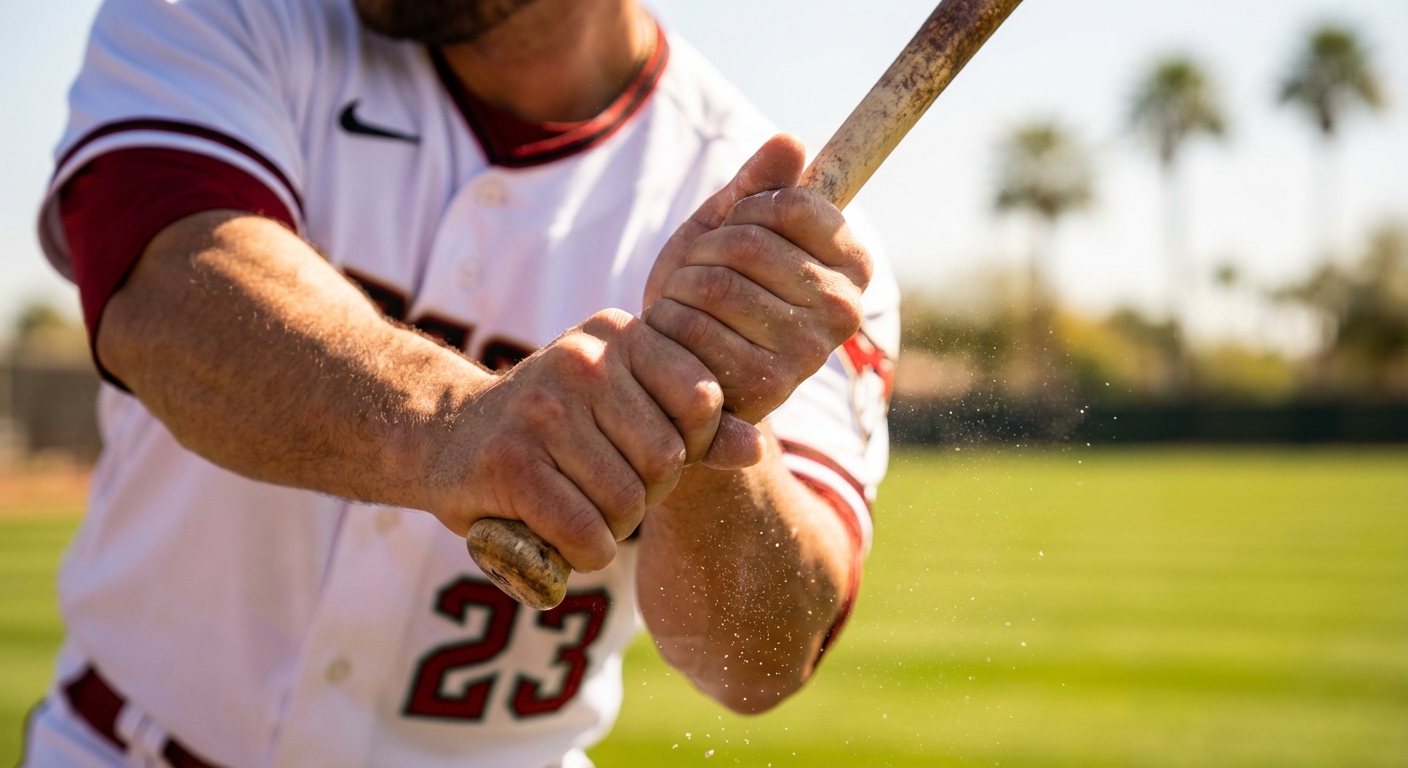
The hamate is one of eight carpal bones in the wrist, and it features a hook-like projection called the “hook of the hamate” that serves as an attachment point for ligaments forming the carpal tunnel roof. According to MLB.com’s injury explainer, the bone is extremely fragile despite its critical function, and baseball players are uniquely susceptible to fracturing it because of how they grip the bat. The knob of the bat presses directly against this bony protrusion with every swing, and over thousands of repetitions, stress fractures develop in the lower hand.
What makes the hamate particularly treacherous is the mechanism of injury. It is not always a single violent event. Checked swings, which MLB.com identified as “the most common cause of these injuries,” create enormous stress on the hook because the abrupt deceleration of the bat transfers force directly into the bone. Foul tips and hard line drives create vibrations that compound existing microdamage. The bone essentially weakens over time until it reaches a breaking point, sometimes literally mid-swing on what looks like a routine cut.
The medical response is almost always the same: remove the hook rather than repair it. The hamate bone has poor blood supply, which means it does not heal well on its own. Surgery to excise the fractured hook is a relatively straightforward procedure, and a 2020 study found that 81 percent of players returned at the same or higher level of performance. The list of stars who have undergone the surgery reads like a Hall of Fame ballot: Ken Griffey Jr. in 1996, Giancarlo Stanton in 2015, José Ramírez in 2019, Matt Olson in 2019, and Mookie Betts in 2024.
Why Spring Training Is the Breaking Point
The cluster of three injuries in one week is statistically unusual, but the timing within the baseball calendar is not. Spring training is historically the most common window for hamate fractures, and the reason is mechanical. Players spend the offseason maintaining fitness but not taking full-speed swings against live pitching. When they ramp up batting practice intensity in February, the sudden increase in volume and force on hands that have been relatively dormant for three months creates a perfect storm of stress on an already vulnerable bone.

Consider the math. A major league hitter might take 50 to 80 swings in a typical game-day batting practice session during the regular season, with the cushion of having built up over months. In the first week of spring training, those same hitters are suddenly taking similar volumes after weeks of lighter work. The tendons, ligaments, and bones in the hand have not had time to adapt to the load, and the hamate, already positioned in the worst possible spot relative to the bat knob, absorbs the brunt of the stress.
There is also an emerging conversation about modern swing mechanics and their role in hamate injuries. The launch-angle revolution that has transformed hitting over the past decade encourages aggressive uppercut swings that generate more torque through the wrists. Some biomechanics researchers believe this style of hitting places additional rotational stress on the hook of the hamate compared to the flatter, more contact-oriented swings of previous eras. The data is not conclusive enough to draw a direct causal line, but the conversation is happening in training rooms and front offices across baseball.
The Power Problem Nobody Talks About
The standard recovery timeline for hamate surgery is four to six weeks, which is why the optimism around Lindor’s Opening Day return is medically reasonable. But the real story of hamate recovery is not the timeline to return. It is what happens after the player comes back. Hitters who undergo hamate surgery consistently report that their grip strength and bat speed return relatively quickly, but their power takes months to fully recover. The hook of the hamate anchors muscles that control grip strength in the pinky and ring fingers, and removing it fundamentally changes the biomechanics of how force transfers from the hands through the bat into the ball.
Griffey Jr. returned from his 1996 hamate surgery in about a month and finished fourth in the AL MVP voting that season, but his power numbers in the immediate weeks after returning were noticeably below his career norms. Mike Trout’s hamate surgery led to complications and lingering pain that contributed to a frustrating stretch of his career. The surgery is routine and the return rate is high, but the adjustment period is real, and for a player like Carroll, whose game depends on driving the ball with authority from the leadoff spot, even a temporary power dip changes what he can contribute to his team.
For Holliday, the timing is particularly cruel. The MLB free agent market has already reshaped the competitive landscape heading into 2026, and Baltimore was banking on Holliday’s emergence as a cornerstone player to complement their pitching staff. Missing the first several weeks of the season means missing the opportunity to build early momentum and establish himself in a lineup that cannot afford to wait.
What This Means for Opening Day
The practical consequences of this hamate epidemic spread across three franchises with playoff aspirations. The Diamondbacks lose their catalyst at the top of the order during a spring training where they needed Carroll to build chemistry with new additions. The Mets face the possibility of starting the season without their most important position player, even if Stearns’ optimistic six-week timeline holds. The Orioles lose their projected leadoff hitter during a window where Holliday was supposed to prove he belongs in the everyday lineup.
The broader lesson is one that baseball has learned repeatedly but never quite internalized: the hamate bone does not care about your roster projections. It is a tiny, fragile structure positioned in exactly the wrong spot for a sport that demands thousands of violent, repetitive motions through the hands and wrists. The injury is not preventable in any meaningful sense. You cannot change where the bone sits or how the bat knob interacts with it. You can manage workload ramps in spring training, monitor grip pressure patterns, and use imaging to identify stress reactions before they become full fractures. But the fundamental vulnerability is baked into the biomechanics of hitting a baseball.
The cluster is a coincidence in timing but not in cause. The hamate bone has been breaking in baseball players’ hands since long before anyone was tracking it, and it will keep breaking as long as human beings swing wooden bats at 95-mile-per-hour fastballs. The only question for Carroll, Lindor, and Holliday now is how quickly their hands can forgive the surgery and remember how to hit.