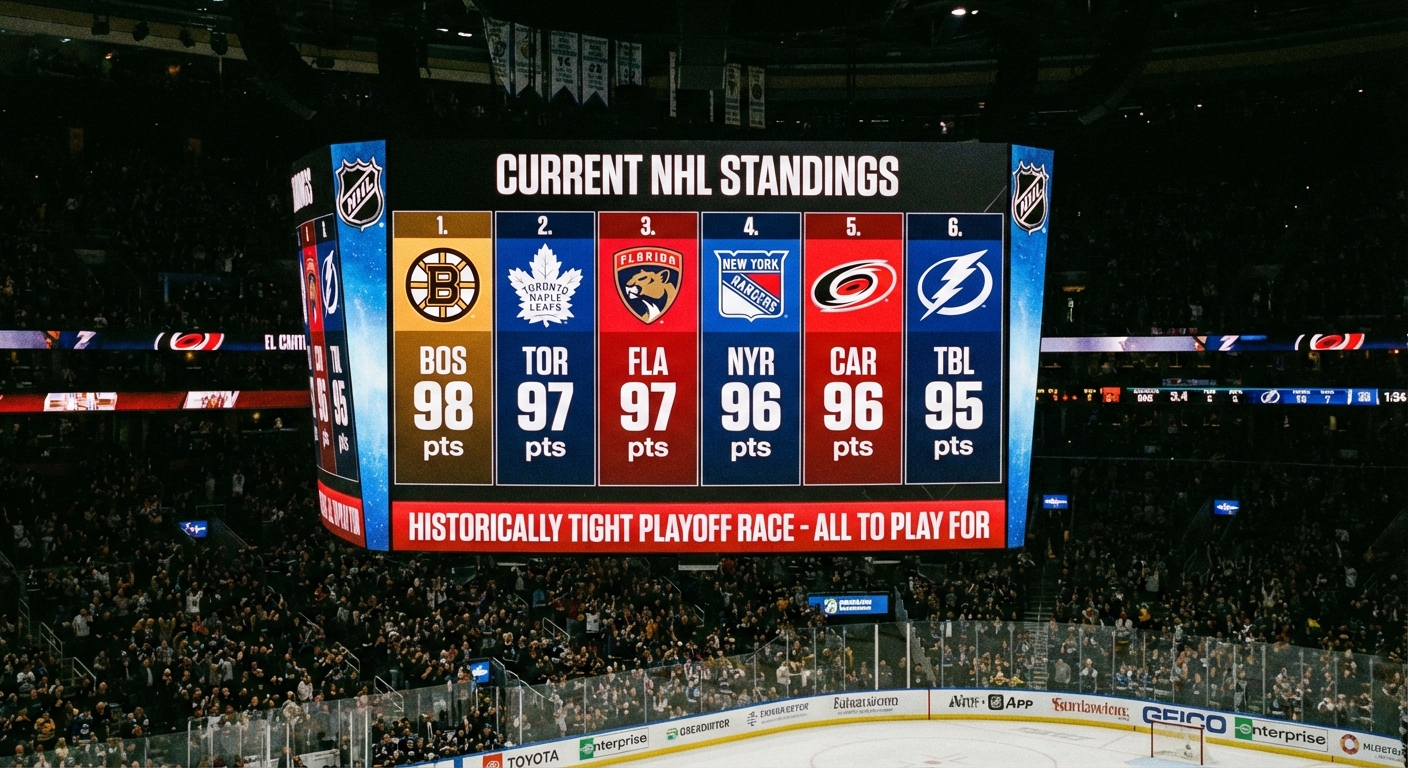
Twenty-nine teams are currently within four points of a playoff spot, per Hockey Reference. The 2025-26 NHL season has produced the tightest playoff race in the shootout era, which began in 2005-06, and it’s reshaping how we think about contenders and pretenders at the midseason mark. A three-game winning streak can vault a team into playoff position. A three-game losing streak can drop them to the basement. As ESPN’s Greg Wyshynski noted, “This is the most compressed standings picture I’ve seen in over a decade of covering the NHL.” The second half promises to deliver drama unlike anything the league has seen in two decades.
The previous high for teams within four points of a playoff spot this deep into the season was 26, set during the 2015-16 campaign, according to NHL.com stats. This year’s total shatters that mark by three and creates a landscape where no team can afford a prolonged slump. The margin between making the playoffs and missing them will come down to a handful of games, perhaps even a handful of goals scored at the right moments. Every point matters in a way that even the most familiar hockey refrains can’t overstate.
At the top of this chaotic standings picture sits the Colorado Avalanche, who have separated themselves from the pack through excellence rather than their opponents’ mediocrity. Nathan MacKinnon and Cale Makar are putting together seasons that should sweep the major awards, and their supporting cast has played well enough to give Colorado the league’s best record. But even the Avalanche aren’t immune to the parity across the NHL. They’ve lost games to teams they should have beaten, and the gap between first place and the wild-card spots remains smaller than it’s been in years.
Colorado’s Dominance, Explained
The Avalanche entered the new year atop the NHL’s power rankings with good reason. In 41 games, Nathan MacKinnon has accumulated 35 goals and 39 assists for 74 points, per Hockey Reference, numbers that project to a 70-goal, 150-point season that would rank among the greatest individual campaigns in league history. His plus-50 rating leads all players, and when MacKinnon is on the ice at five-on-five, Colorado has outscored opponents 58-16, per Natural Stat Trick. That goal differential suggests that MacKinnon doesn’t just help his team score. He fundamentally changes the nature of the game when he’s playing.
Cale Makar has been nearly as dominant from the blue line. His 47 points in 41 games put him on pace for a career-high 94 points, and his plus-25 goal differential at five-on-five ranks among the league’s best for defensemen, per Natural Stat Trick. The Athletic’s Dom Luszczyszyn ranks Makar as the league’s most valuable defenseman by a wide margin, and the 26-year-old is tracking toward his second consecutive Norris Trophy. Makar has become the prototype for the modern offensive defenseman, combining skating ability, vision, and a lethal shot in ways that create problems for every opponent.

Beyond their stars, the Avalanche have received contributions throughout their roster. Scott Wedgewood has emerged as a Vezina Trophy candidate in goal, providing the stability between the pipes that Colorado has sometimes lacked in previous seasons. Mikko Rantanen continues to produce at a point-per-game pace, and the depth scoring has been consistently good. Head coach Jared Bednar deserves Jack Adams consideration for managing personalities and minutes in a way that keeps his best players fresh while developing younger talent.
The question for Colorado isn’t whether they’re the best regular-season team. They clearly are. The question is whether this roster can translate regular-season dominance into playoff success. The Avalanche won the Stanley Cup in 2022 with a similar core, but they’ve been eliminated short of expectations in subsequent runs. The ongoing debate between MacKinnon and Connor McDavid for Hart Trophy honors has been compelling, but ultimately both players will be judged on championships. Colorado has positioned itself well to add another.
The Winnipeg Jets’ Stunning Collapse
No team better illustrates the perils of this season’s parity than the Winnipeg Jets, who won the Presidents’ Trophy last year and entered 2025-26 as Cup favorites. They’ve become one of the league’s biggest disappointments, going 2-8-4 in December for the fewest December wins in franchise history. That stretch, which eclipsed the three-win December posted by the 1999-2000 Atlanta Thrashers, dropped Winnipeg from legitimate contender to fighting for playoff survival.
The Jets’ struggles have been difficult to diagnose because the underlying talent remains intact. Connor Hellebuyck has played brilliantly in goal, but his elite performances have been wasted by an offense that can’t find the net. Winnipeg’s goal-scoring issues are structural rather than personnel-based, suggesting coaching or system problems that won’t be easy to fix mid-season. The team that looked unstoppable last spring has become one of the NHL’s most frustrating to watch.
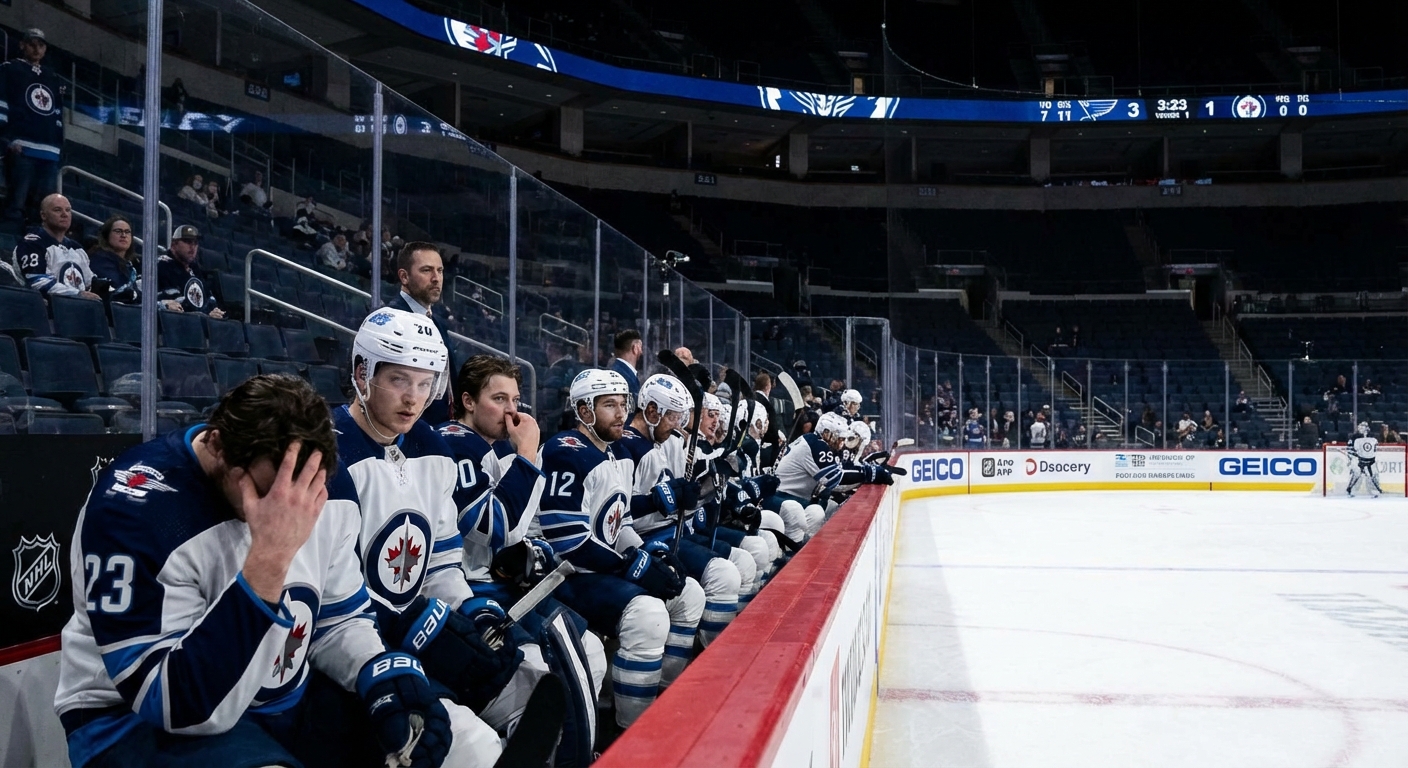
Their recent 10-game losing streak, extended by an overtime loss to the Vegas Golden Knights, represents the longest such stretch in franchise history. Until they demonstrate the ability to score in close games, the Jets will continue to underperform their talent level. Management faces difficult decisions about whether to stay patient with the current group or make trades that could alter the roster’s composition. With every loss, those decisions become more urgent.
The Jets’ collapse has been one of the season’s most surprising developments, but it also demonstrates how quickly fortunes can change in a league this balanced. Teams that appeared destined for playoff success are suddenly fighting for their postseason lives, while franchises that seemed headed nowhere have emerged as legitimate contenders. The second half will determine whether Winnipeg can salvage its season or if this year represents the end of their championship window.
Connor Bedard’s Breakout Season
While established stars continue to perform, Connor Bedard has finally delivered on the immense promise that made him the first overall pick in 2023. Through 31 games, the Chicago Blackhawks’ young center has recorded 19 goals and 25 assists for 44 points, per NHL.com stats, production that ranks among the league’s best. His two hat tricks this season, including a dominant performance against Calgary, have showcased the scoring ability that scouts projected when he was dominating junior hockey.
Bedard’s development has been accelerated by improved supporting cast and a coaching staff that’s learned how to maximize his talents. The Blackhawks’ offense ranks 13th in goals per 60 minutes at 2.53, a significant improvement from previous seasons and a direct result of Bedard’s emergence as one of the league’s most dangerous players. When he’s on the ice, Chicago creates scoring chances at rates that rival playoff teams, and his ability to finish those chances has grown substantially.

A shoulder injury suffered in mid-December has sidelined Bedard, though reports indicate he could return sooner than initially expected. The Blackhawks, who sit at 16-18-7, have enough talent to push for a playoff spot if Bedard returns healthy and continues his dominant play. His absence has demonstrated just how much Chicago depends on him, which is both a testament to his value and a concern for a franchise still building around its young cornerstone.
Based on his first-half production, the answer to whether this is “finally Bedard’s year” is clear. He’s playing at a point-per-game pace when healthy, something that seemed aspirational before the season began. At 20 years old, his 1.42 points-per-game rate already places him among the top ten in the league, per Hockey Reference. That trajectory puts him in rare company among third-year NHL players.
The Islanders’ Unexpected Surge
The New York Islanders have become one of the season’s pleasant surprises, contending for a playoff spot with a .590 points percentage in 39 games. The arrival of 2025 first overall pick Matthew Schaefer has energized the franchise, and the rookie defenseman’s performance on the blue line has sent a jolt through an organization that needed a spark. Schaefer has been everything the Islanders hoped when they won the draft lottery, and his impact extends beyond his individual statistics.
Bo Horvat has been the team’s MVP, scoring 20 goals in 34 games for a goals-per-game average of 0.59 that ranks eighth in the league. He’s outpacing elite scorers like Kirill Kaprizov and Macklin Celebrini, production that seemed unlikely for a player who struggled to find his footing after being traded to Long Island. Horvat has found chemistry with his linemates and accepted a leadership role that suits his personality and playing style.
The goaltending tandem of Ilya Sorokin and David Rittich has provided stability that allows the Islanders to compete in close games. Sorokin remains one of the league’s best goaltenders when healthy, and Rittich has been reliable in a backup role. The combination gives head coach Patrick Roy options when managing his crease, and both goaltenders have delivered when called upon in critical moments.
Conference-by-Conference Breakdown: No Safe Seeds
The current standings present a picture of competitive balance unprecedented in the modern NHL. The gap between making the playoffs and missing them has never been smaller, which means every game from now until April carries genuine weight. Teams that find consistency will rise through the standings. Teams that stumble will fall. The margin for error has essentially disappeared.
In the Western Conference, Colorado leads with 55 points, followed by Dallas, Minnesota, and Winnipeg, though the Jets’ recent slide threatens their position. The Pacific Division features multiple teams with legitimate playoff aspirations, and the wild-card race promises to be contested until the final week of the season. Even teams currently outside the playoff picture remain viable contenders given the tightness of the standings.
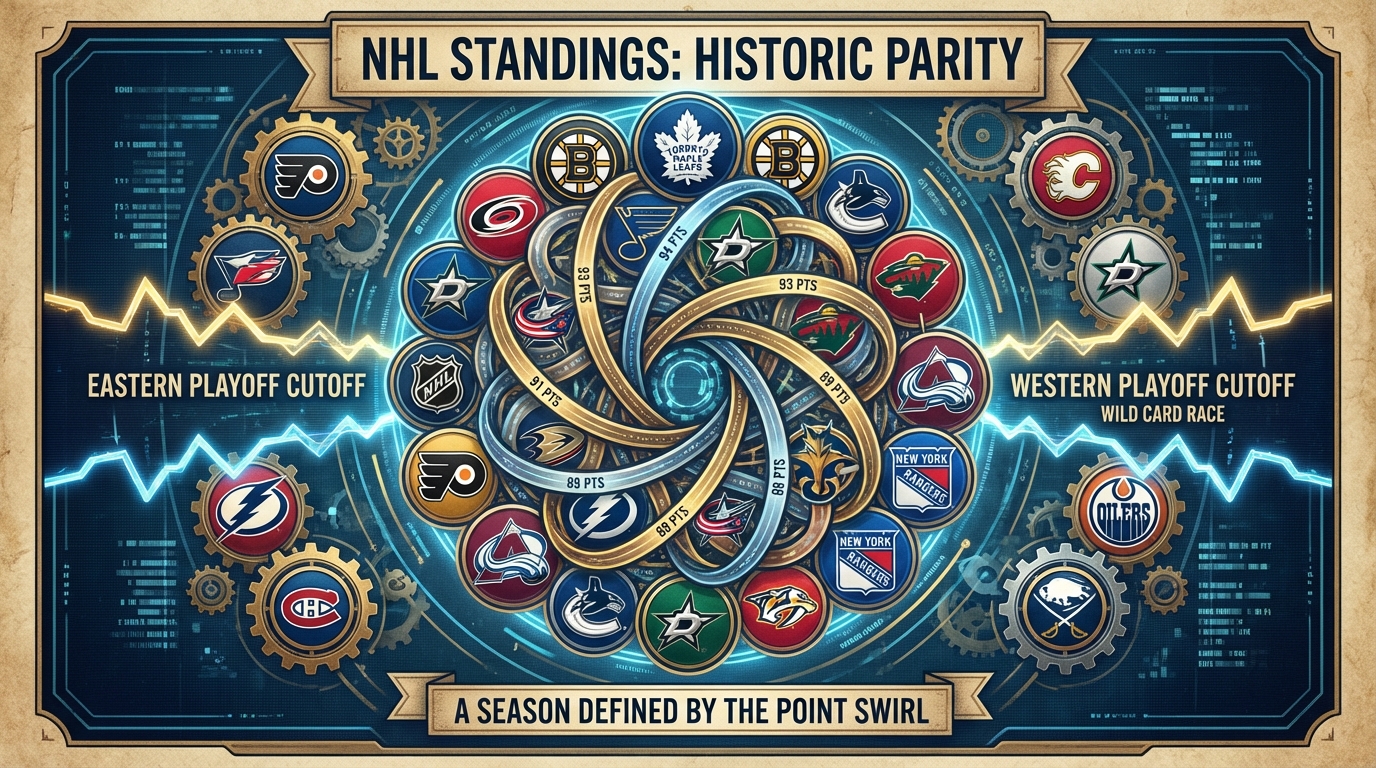
The Eastern Conference presents a similar picture, with Carolina, Tampa Bay, and Toronto leading a packed field. The Metropolitan and Atlantic Divisions both feature multiple legitimate contenders, and the wild-card spots will be contested by teams that could just as easily win their divisions with hot second-half stretches. The Islanders’ unexpected competitiveness has added another team to an already crowded race.
What makes this parity situation unique is its timing. Previous seasons with competitive balance often saw separation occur by the midseason point. This year, the opposite has happened. Teams have become more bunched as the season has progressed. As Elliotte Friedman reported, front offices across the league are recalibrating their trade deadline strategies because no team feels safely in or safely out of the race.
Second-Half Pressure Points for Contenders
The NHL’s second half will test every team’s depth, health, and mental fortitude. The schedule intensifies with fewer off days, meaning roster management becomes critical. Teams that relied on their star players carrying heavy minutes will need contributions from depth players. Per MoneyPuck, the gap in playoff probability between the 8th and 16th seeds in each conference is under 15 percentage points, the smallest such margin at midseason in their model’s history.
For Colorado, the mission is maintaining their lead while preparing for a playoff run. The regular season matters for seeding, but the Avalanche have their eyes on a Stanley Cup. MacKinnon and Makar can carry the team through most opponents, but the playoffs require all four lines contributing. The Avalanche’s depth will be tested when the intensity rises in April.
For the Jets, the challenge is reversing their slide before it becomes irreversible. Winnipeg still has the talent to make the playoffs, but they need to find their confidence and their scoring touch. The next month will determine whether this season is salvageable or whether the franchise needs to reconsider its direction.
For Bedard and the Blackhawks, the goal is simple: stay healthy and keep producing. Chicago is closer to playoff contention than expected, and a healthy Bedard gives them a chance to sneak into the tournament. If they fall short, the experience gained from competing for meaningful games will benefit the franchise long-term.
Final Whistle
This level of parity carries a structural consequence that extends beyond the regular season: it is compressing the talent gap between playoff teams and non-playoff teams to the point where first-round matchups will feature opponents separated by razor-thin margins. Historically, dominant regular-season clubs benefit from facing weaker first-round opponents who barely squeaked in. This year, the 8th seed in either conference could realistically carry a points percentage within .020 of the division leader, according to NHL.com stats. That means there may be no easy first-round matchups for anyone, including Colorado.
The ripple effects are already visible at the trade deadline, where Pierre LeBrun reports that the traditional buyer-seller divide has nearly vanished. Teams that would normally be clear sellers are instead holding onto assets, believing they remain in the race. That dynamic could produce a quieter deadline and a more volatile stretch run, as rosters stay largely intact and the outcome hinges on health, goaltending, and which teams handle late-season pressure. In a season defined by parity, the playoffs themselves may be the most unpredictable tournament in recent memory.
Sources
- 2025-26 NHL Season Summary - Hockey Reference, standings and statistics
- Official 2025-26 NHL Standings - NHL.com
- NHL Midseason Power Rankings 2025-26 - ESPN, midseason rankings and analysis
- NHL Standings Tight at Quarter Mark of 2025-26 Season - NHL.com, parity analysis
- Natural Stat Trick - Five-on-Five Player and Team Statistics - Natural Stat Trick