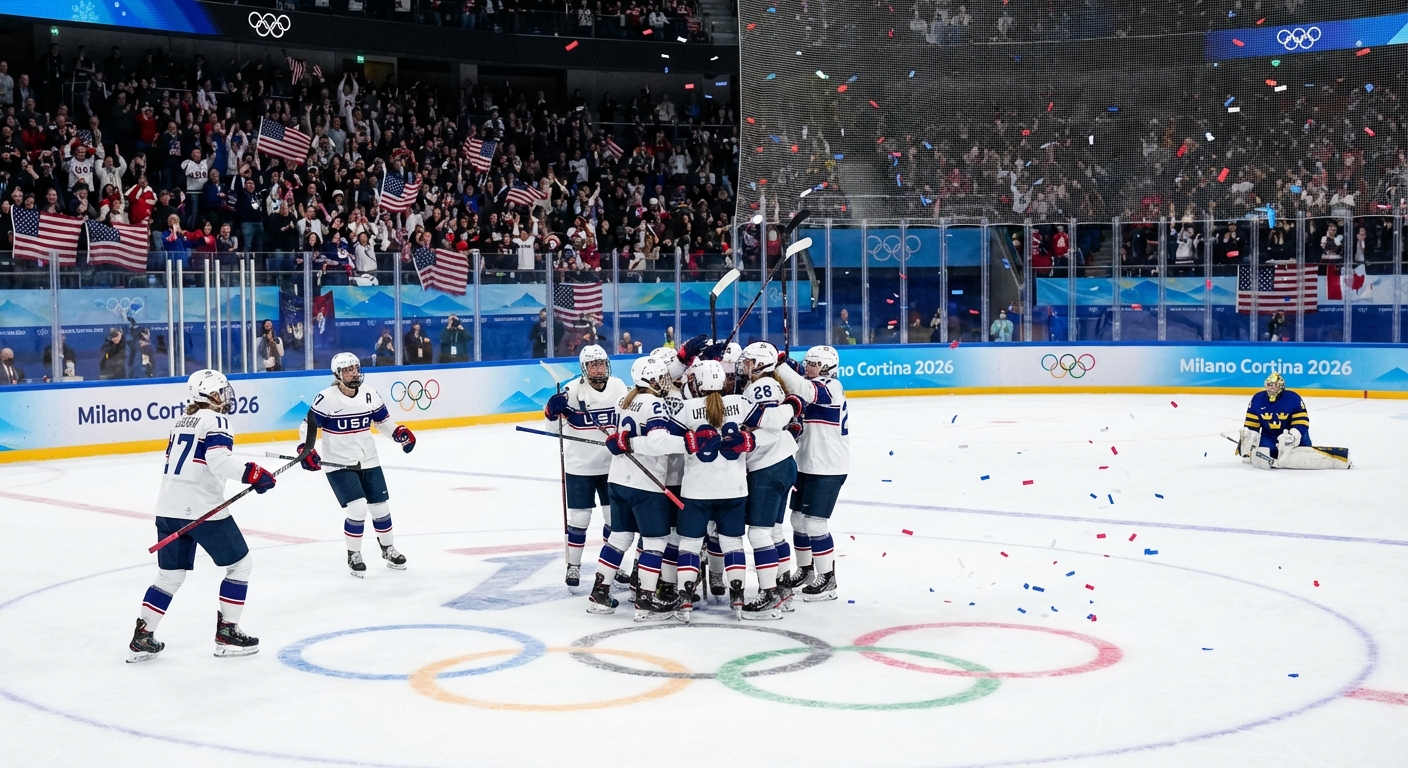
Sweden’s first shot on goal came 11 minutes into the game. Eleven minutes. In an Olympic semifinal, with a spot in the gold medal game on the line, the Swedish women’s hockey team couldn’t put a single puck on frame for nearly a quarter of the contest. By that point, Cayla Barnes had already scored to make it 1-0, Team USA had outshot Sweden by a lopsided margin, and the outcome felt less like a competitive question than a matter of how large the final deficit would grow. The answer, by the end of 60 minutes, was 5-0. Another shutout. The fifth consecutive shutout of the tournament for the United States, extending a scoreless streak past 311 minutes, per NBC News, a stretch of defensive dominance that has no precedent in Olympic hockey history.
Pull back from the specifics of Sunday’s semifinal, though, and the numbers become almost absurd. Through six games in Milano Cortina, Team USA has outscored its opponents 31-1. The single goal against came in the tournament opener, a brief lapse that the Americans have spent the rest of the Olympics making look like an aberration rather than a data point. Aerin Frankel has been virtually untouchable in goal. Hilary Knight is one goal away from breaking the all-time U.S. Olympic scoring record. And on Thursday, this team will play for gold against either Canada or Switzerland, carrying with them a shutout streak, a scoring margin, and a level of two-way dominance that may be without equal in the history of women’s international hockey.
Eleven Minutes of Silence: How the First Period Ended the Semifinal
The first period against Sweden wasn’t competitive in any meaningful sense. Team USA controlled possession from the opening faceoff with suffocating forechecking pressure that pinned the Swedes in their own zone for extended shifts. The Americans generated chance after chance, cycling the puck along the boards with a precision that spoke to weeks of preparation for exactly this kind of territorial dominance. Barnes’ opening goal, which came on a deflection in front of the Swedish net, felt like an inevitability rather than a breakthrough. The only question was whether it would hold or whether the floodgates would open.
Sweden’s inability to generate any offensive pressure in the first 11 minutes revealed the fundamental mismatch. This is a Swedish program that has improved significantly over the past Olympic cycle, with better skating and more structured defensive play than the teams the U.S. routinely handled in previous tournaments. That none of it mattered, that Sweden couldn’t even get the puck through the neutral zone cleanly for nearly half a period, illustrated the gap between Team USA and the rest of the field at these Games. The Americans weren’t just winning. They were preventing opponents from playing hockey.
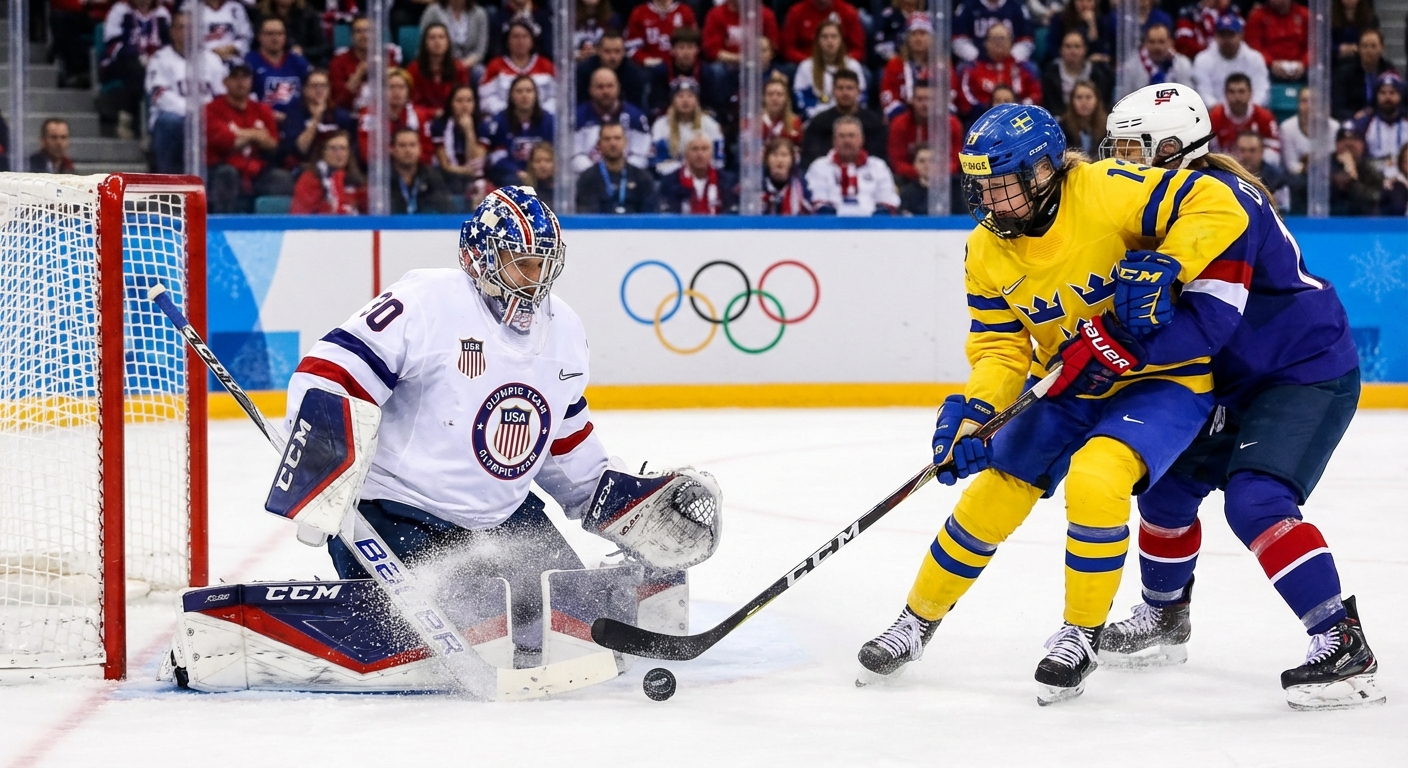
By the time the first period ended, the only real drama was whether Sweden could avoid a historically lopsided result. They couldn’t.
Four Goals in Three Minutes: The Second Period Avalanche
The second period turned a comfortable lead into a demolition. Taylor Heise scored first, followed in rapid succession by Kendall Coyne Schofield, Hayley Scamurra, and Abbey Murphy, per NBC News. Four goals in under three minutes, the kind of offensive explosion that transforms a game from a contest into a statement. Each goal came from a different part of the American roster, illustrating the depth that separates this team from every other program in the tournament. The U.S. doesn’t rely on a single line or a handful of star players to produce offense. The production comes from everywhere, in waves, with a relentlessness that opponents simply cannot match for 60 minutes.
Coyne Schofield’s goal was particularly notable for what it represented about Team USA’s speed advantage. She created the chance with pure straight-line skating through the neutral zone, blowing past the Swedish defense before picking a corner with a wrist shot that the goaltender never saw cleanly. At 30, Coyne Schofield remains one of the fastest skaters in women’s hockey, and her ability to generate breakaway opportunities through sheer acceleration creates problems that no defensive scheme can fully address. When a player is simply faster than everyone else on the ice, structure only matters until she gets behind it.
The four-goal burst pushed the score to 5-0 before the second period was half finished, and the remainder of the game became a controlled exercise in clock management. Team USA pulled back slightly on offensive pressure, protected Frankel’s shutout, and coasted through a third period that felt more like a victory lap than competitive hockey. The final shot count reflected the dominance: Sweden managed just 11 shots on goal for the entire game, a number that would be embarrassing in a regular-season league game, let alone an Olympic semifinal. “When you’re only facing 11 shots in a semifinal, that says everything about how this team is playing right now,” Frankel told Yahoo Sports after the victory.
311 Minutes, Five Shutouts, and the Weight of History
The statistical profile of Team USA’s tournament run has moved past dominance into territory that requires historical context to properly appreciate. Five consecutive Olympic shutouts. A scoreless streak exceeding 311 minutes and 23 seconds, per NBC News. A tournament scoring margin of 31-1. These are not merely excellent numbers. They are historically unprecedented numbers, the kind of defensive performance that resets the benchmark for what is possible at the Olympic level.
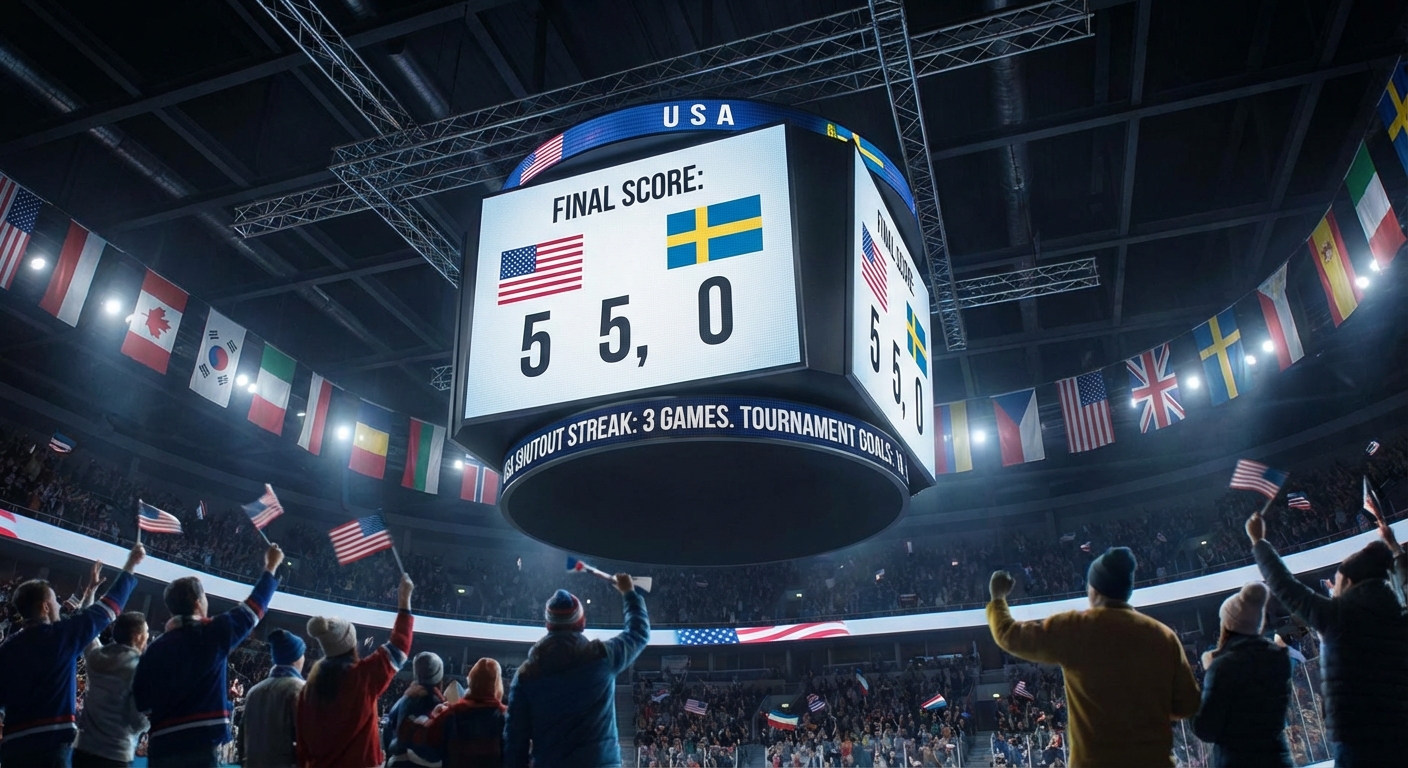
The shutout streak, which began after the lone goal against in the tournament opener, surpasses anything achieved in modern Olympic hockey. To find a comparable stretch, you have to reach back to the earliest days of the Winter Olympics, when the talent disparities between nations were vast and the competitive field was a fraction of its current size. What makes the current American run so remarkable is the context: the women’s game has never been deeper or more competitive internationally. Canada, Finland, and Sweden have all invested heavily in their women’s programs over the past decade. The gap was supposed to be narrowing. Instead, Team USA has widened it to a chasm.
The defensive structure begins with Frankel, whose positioning and puck-tracking abilities have been virtually flawless throughout the tournament. Per USA Hockey, Frankel entered the semifinal with a 3-0 record, 2 shutouts, and just 1 goal allowed across her starts. But goaltending alone doesn’t produce five consecutive shutouts. The American defensive corps, anchored by Caroline Harvey, who set the U.S. Olympic record for points by a defenseman with 9, per USA Hockey, has been clinical in limiting quality scoring chances. Opponents aren’t just being outshot. They’re being denied the kind of high-danger opportunities that even average NHL goaltenders would stop. The Americans are allowing shots from the perimeter, if they allow them at all, and clogging the slot with a discipline that speaks to months of tactical preparation.
The original insight that makes this streak historically significant beyond the raw numbers is the quality of opposition it has been achieved against. The 1924 Canadian men’s team and other early Olympic hockey dynasties posted shutouts against nations that barely had organized hockey programs. Team USA’s 2026 streak includes shutouts against Finland, a nation that won Olympic gold in 2022, and Sweden, a perennial medal contender. The streak hasn’t been compiled against weak competition. It has been compiled against the best women’s hockey nations on earth, which makes it all the more staggering.
Knight’s Record Chase and Her Farewell Coronation
Hilary Knight scored her 14th career Olympic goal earlier in the tournament against Finland, tying Natalie Darwitz and Katie King for the all-time U.S. Olympic scoring record, per ESPN. One more goal and the record is hers alone. That she’s chasing it in what she has confirmed will be her final Olympics adds a narrative layer that transcends the statistical milestone. Knight, 36, is competing in her fifth Winter Games, making her the first U.S. hockey player, male or female, to appear in five Olympic tournaments. Her career arc, from teenage prodigy to Olympic veteran to the player who helped fight for NHL involvement in these Games, has been one of the defining stories in American hockey.
“There’s nothing like it,” Knight said of the Olympic experience during the tournament, per NBC Olympics. Her 29 career Olympic points trail only Jenny Potter’s record of 32 in the all-time U.S. standings, and a multi-point performance in the gold medal game could challenge that mark as well. But the numbers, impressive as they are, undersell Knight’s contribution to this team and this program. She has been the face of U.S. women’s hockey for over a decade, the player who fought for better pay, better treatment, and better visibility for women’s professional hockey when the establishment was content with the status quo. That her final Olympics has become a coronation march, with the team dominating every opponent on the way to a gold medal game, feels like the sport’s way of saying thank you.
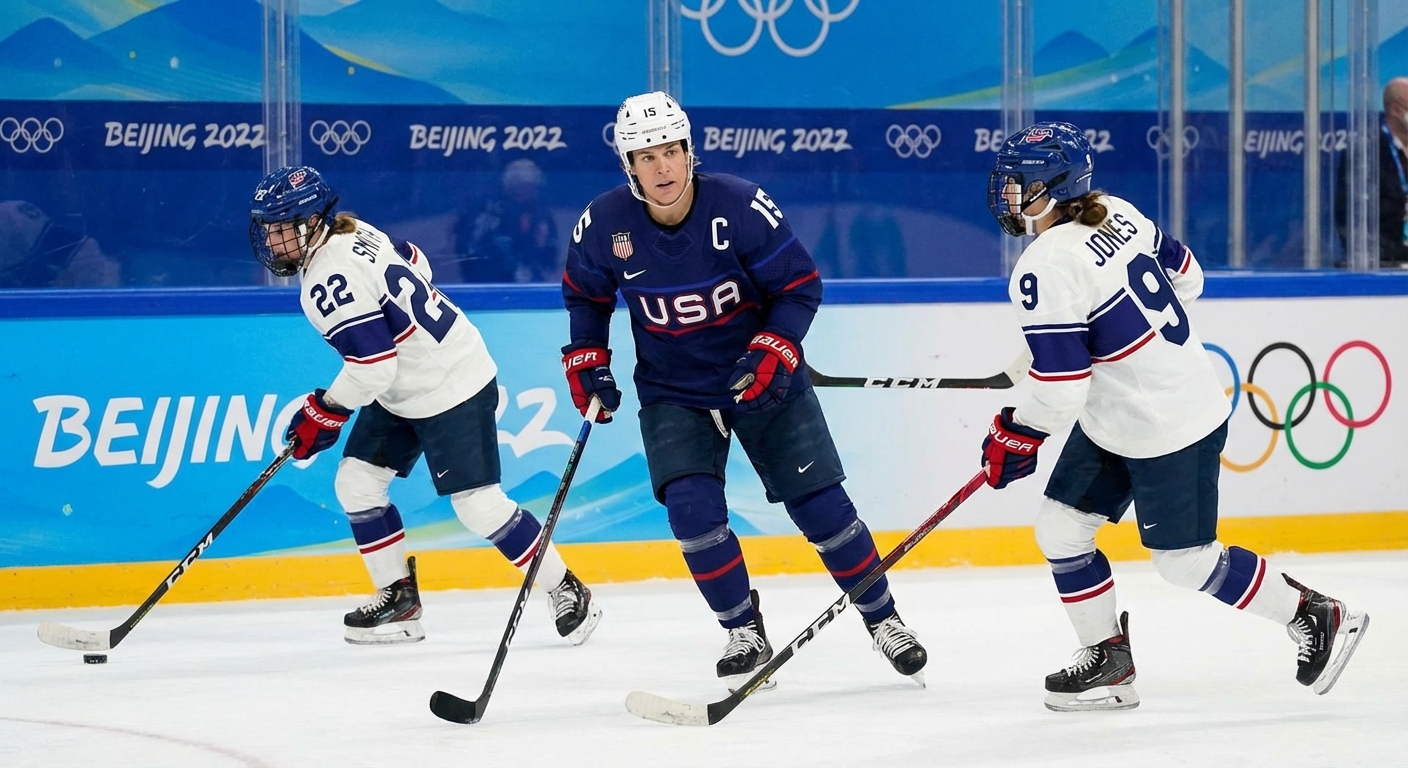
The semifinal against Sweden added to Knight’s assist total but not her goal count, leaving the record-breaking opportunity for Thursday’s gold medal game. The narrative symmetry is almost too perfect: the greatest goal scorer in U.S. Olympic hockey history, in her final game, needing one goal to claim the record outright. If Hollywood wrote this script, a producer would send it back for being too on the nose. But this is Knight’s career in miniature. She has always found ways to deliver moments that match the magnitude of the stage.
The Most Complete Women’s Hockey Team Ever Assembled
The argument for this being the greatest women’s hockey team ever assembled rests on more than the shutout streak or the scoring margin, though both support the claim. What separates the 2026 Americans from previous gold-medal teams is the depth of contribution across all four lines and three defensive pairings. Earlier championship squads, including the dominant 1998 team that won the first Olympic women’s hockey gold and the 2018 team that ended Canada’s four-Games winning streak, relied more heavily on a smaller group of elite players carrying the majority of the offensive workload. This team distributes production so evenly that opponents can’t key on any single line.
The defensive numbers are equally distributed. Harvey leads all defensemen in scoring, but the penalty kill has been flawless, and the team’s structure in the defensive zone has been so sound that Frankel is rarely tested with the kind of cross-crease passes and odd-man rushes that create dangerous chances. The American system asks every skater to defend, and every skater has answered. The result is a team without an obvious weakness, which is the rarest and most dangerous thing a hockey team can be in a single-elimination Olympic format.
Coaches often talk about the difference between a collection of talented individuals and a genuine team. The 2026 Americans have erased that distinction entirely. They are both: the most talented roster in the tournament and the most cohesive unit. Five consecutive shutouts don’t happen without both elements working in concert.
Thursday’s Date With History
The gold medal game on Thursday will pit Team USA against either Canada or Switzerland, and regardless of the opponent, the Americans will enter as prohibitive favorites. A gold medal would cap the most dominant Olympic hockey tournament performance in modern history, give Knight the storybook ending to her final Games, extend the shutout streak into even more rarefied statistical territory, and confirm what the past two weeks have suggested: this is not just the best women’s hockey team in the world right now, but possibly the best ever to take the ice at an Olympics.
The shutout streak adds a layer of pressure that most gold medal games don’t carry. It is one thing to play for a championship. It is another to play for a championship while carrying the weight of a historic streak that the entire hockey world is tracking. Frankel’s concentration will need to be absolute. The defensive structure will need to hold against a Canadian team that, if they advance, will bring the kind of rivalry intensity that regular tournament opponents cannot. Canada has been the only nation capable of consistently challenging the Americans in women’s hockey for two decades. If the gold medal game features that matchup, the shutout streak will face its toughest test yet.
But the streak is secondary to the real objective. Team USA came to Milano Cortina to win gold, and they are one game away. Knight came to set records and say goodbye, and the stage is set for both. Frankel came to establish herself as the best goaltender in women’s hockey, and five consecutive shutouts have made that argument for her. Thursday’s game will be about a gold medal, a farewell, and a team that turned dominance into something historic. The puck drops at noon Eastern time. The rest of the hockey world will be watching to see if anyone can finally score.
Sources
- Yahoo Sports: Olympics hockey semifinal, Team USA dominates Sweden for gold medal berth
- NBC News: 2026 Winter Olympics live updates, U.S. women defeat Sweden in hockey semifinal
- ESPN: Hilary Knight ties U.S. Olympic goal record in rout of Finland
- NBC Olympics: Hilary Knight ties U.S. Olympic goals record in Finland shutout
- USA Hockey: Defensive lockdown, Team USA’s shutout streak