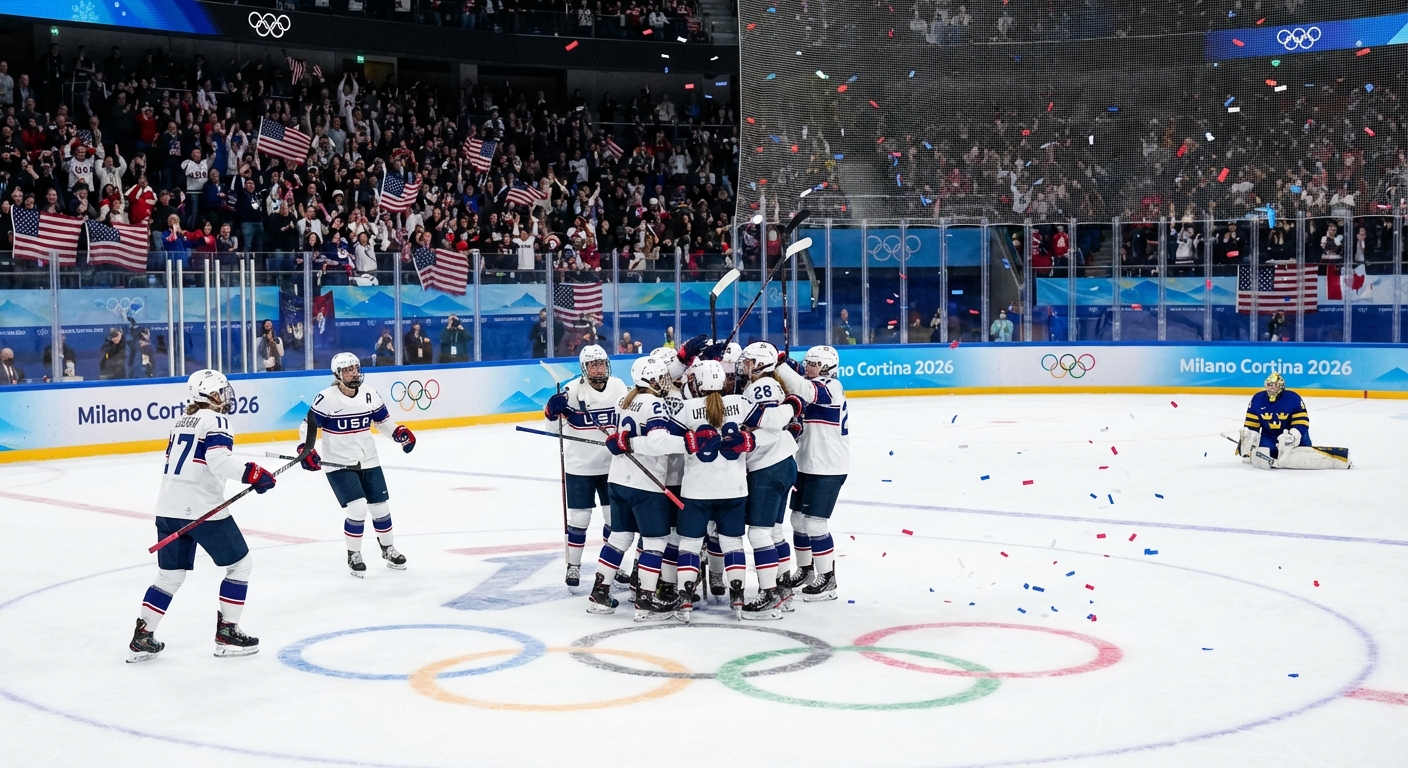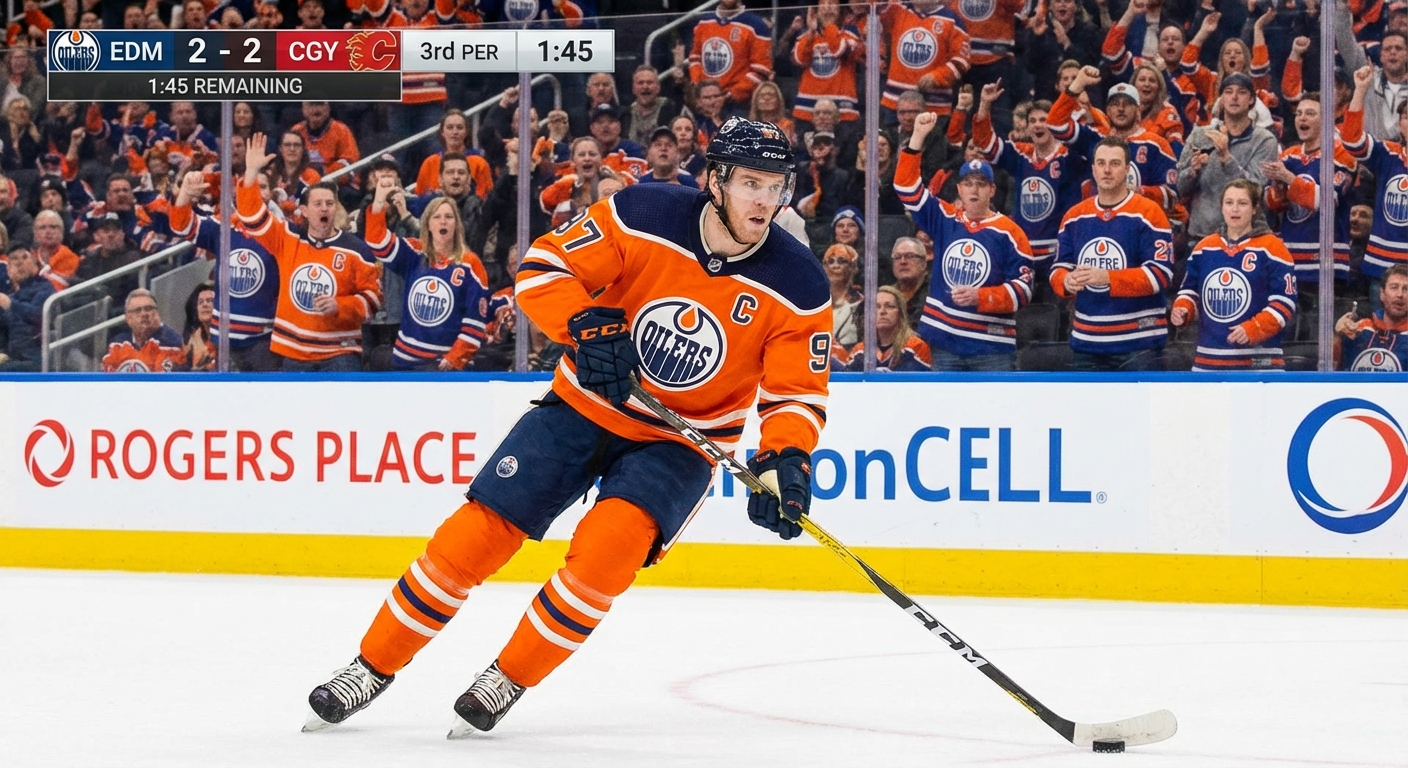
Connor McDavid stepped onto the ice at the Milano Santa Giulia Arena on Tuesday morning for his first Olympic practice session, looked around at the five rings painted at center ice, and tried to find words for a moment he had been imagining since he was a teenager watching Sidney Crosby score the golden goal in Vancouver. “It’s the biggest sporting event in the world,” McDavid said. “To do it together with 25 of Canada’s best hockey players is a dream come true, it really is. Everybody feels the same way.” Twelve years. That is how long the hockey world has waited for this feeling, for the best players on the planet to wear their national colors at the Olympics, for the tournament that defines international hockey to feature the talent it deserves. The NHL’s absence from PyeongChang 2018 and Beijing 2022 created a void that diminished the Olympic hockey tournament and frustrated players who grew up dreaming of gold medals. Now, finally, the wait is over.
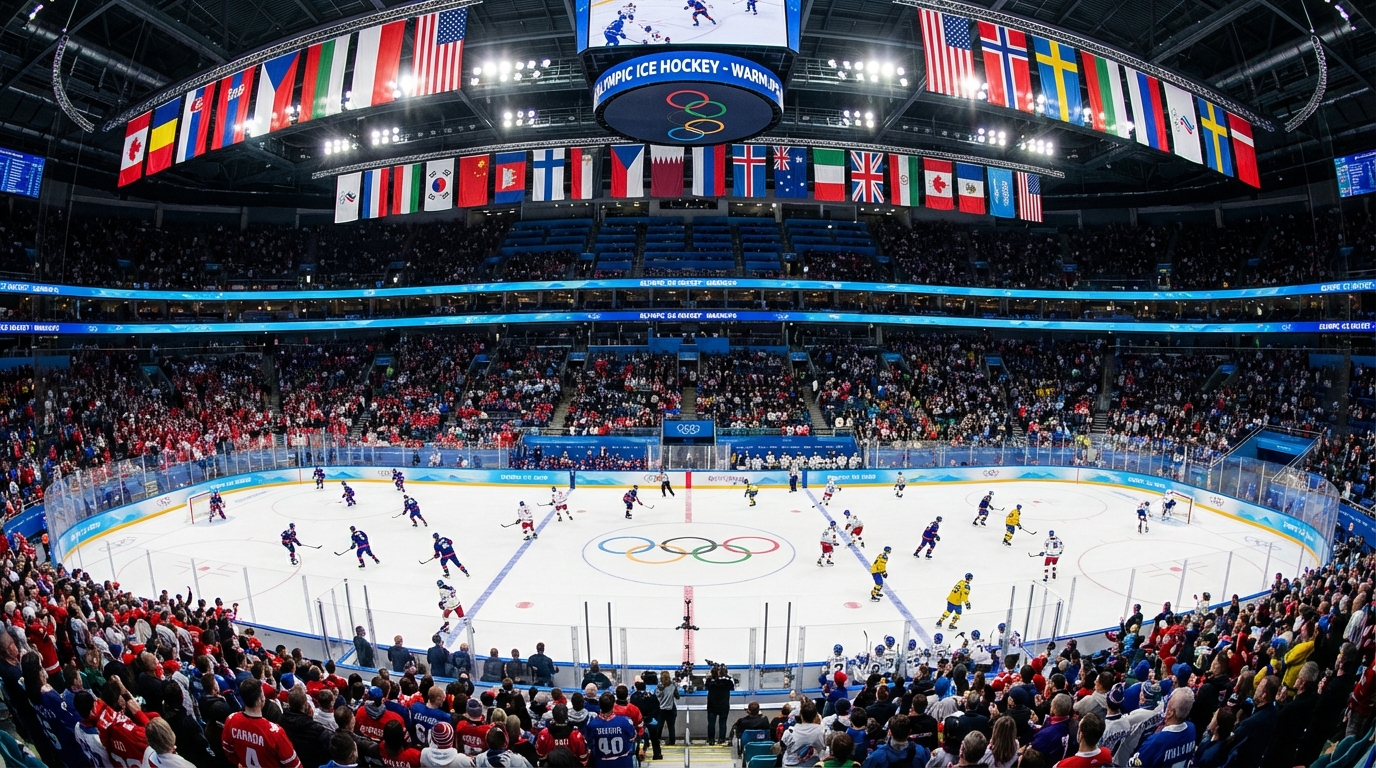
The men’s hockey tournament at the Milano Cortina 2026 Winter Olympics opened Wednesday with Slovakia facing Finland and Sweden dismantling host Italy 5-2 behind William Nylander’s decisive second-period goal. The full tournament runs through February 22, with 12 nations competing in a single-elimination playoff format after group play. But the real story is not the bracket or the schedule. It is who is on the ice. For the first time since Sochi 2014, every team (except host Italy) is stocked with NHL stars, and the result is a hockey tournament that feels, for the first time in over a decade, like it actually matters.
What the NHL Missed
The last time NHL players competed at the Olympics, Jonathan Toews and Drew Doughty were the cornerstones of Team Canada’s gold-medal defense in Sochi. Crosby was 26. McDavid was 17 and still a year away from being drafted first overall. Auston Matthews was 16, playing youth hockey in Arizona. The NHL’s decision to skip the 2018 and 2022 Olympics, driven by concerns about schedule disruption and insurance costs, meant that an entire generation of hockey’s greatest players spent the prime of their careers without the chance to play for Olympic gold.
The numbers illustrate how dramatically the landscape has shifted. Of the 148 NHL players competing in Milan, 125 are making their Olympic ice hockey debuts. That is not a typo. More than 84 percent of the NHL talent at these Games has never experienced Olympic competition. The absence did not just deprive fans of best-on-best hockey. It created a generation of world-class players for whom the Olympics was an abstraction, something they watched on television rather than something they lived.
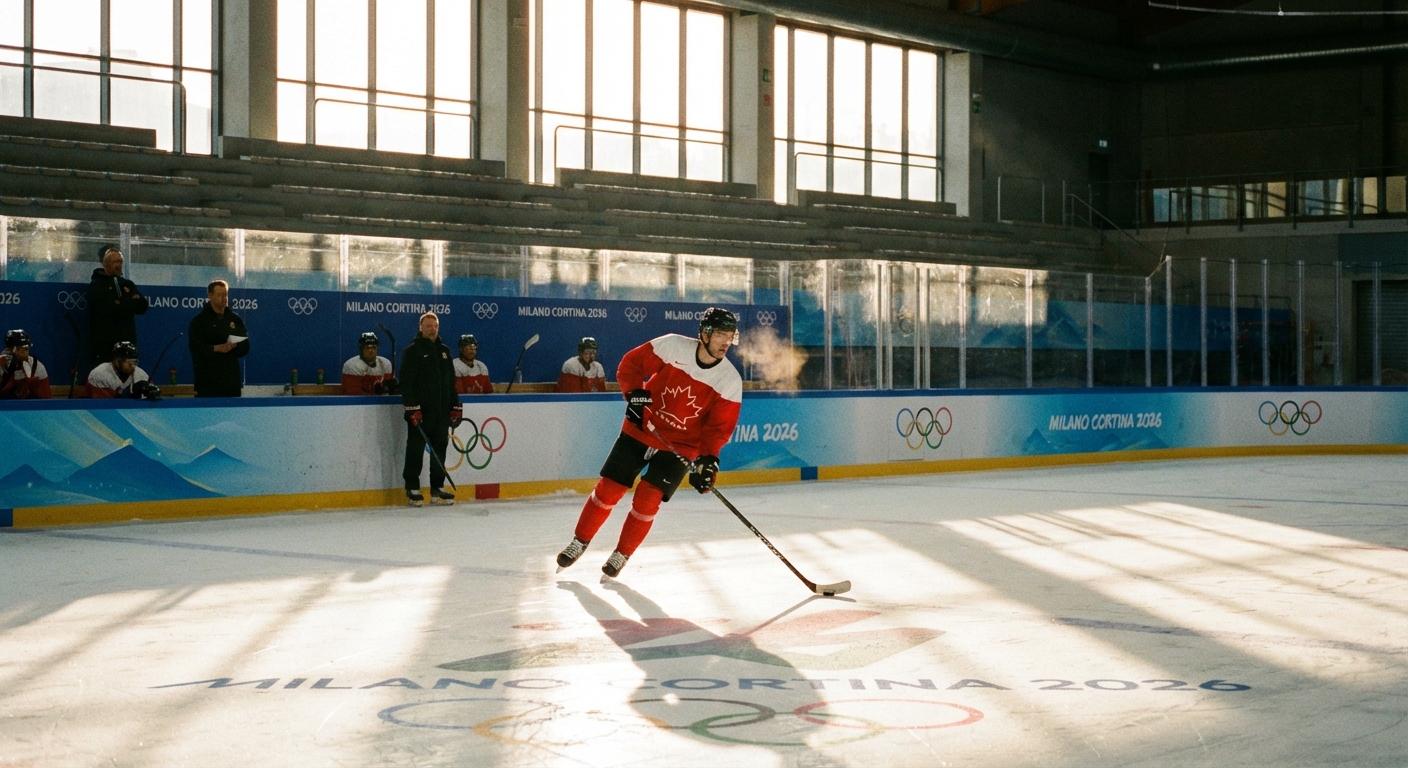
The agreement that brought NHL players back to the Olympics was reached after years of negotiation between the league, the NHL Players’ Association, and the International Olympic Committee. The players pushed hard for this. For athletes like McDavid, who called it “surreal” to finally be at the Olympics, the absence from the two previous Games was a genuine loss. “Excited to be here and be with the guys and get out there and see the rink and get our first skate under us,” McDavid said upon arriving in Milan. “It’s been a long time coming.”
Crosby is one of the few players at these Games who carries Olympic memory. He won gold in Vancouver in 2010 and Sochi in 2014, and at 38, this is almost certainly his final Olympics. Named Team Canada’s captain, with McDavid and Cale Makar as alternates, Crosby carries the weight of a country’s hockey expectations with the calm authority of someone who has been here before. “You have to be open-minded, go with the flow,” Crosby said of the Olympic experience. “And you have to embrace the whole experience. It’s a special one, not only representing hockey, but just the entire Team Canada and celebrating sports.”
Canada’s Gold-or-Bust Roster
Team Canada entered Milano Cortina with the deepest roster in the tournament and the heaviest expectations. Head coach Jon Cooper set the tone before the team’s first practice: “When you’re representing the country of Canada, you’re in it to win gold. You’re not in it to participate.” It was not a motivational speech. It was a statement of fact. Canada has won three of the last four Olympic men’s hockey gold medals that featured NHL players (2002, 2010, 2014), and anything less than gold will be considered a failure.
The roster justifies the confidence. Crosby and McDavid anchor a forward group that includes Nathan MacKinnon, Brad Marchand, Mitch Marner, Sam Reinhart, and 19-year-old phenom Macklin Celebrini, whose inclusion adds a generational bridge between the veterans and the future. The defense is headlined by Makar, arguably the best defenseman in the world, supported by Drew Doughty, Josh Morrissey, and Thomas Harley. Jordan Binnington, Darcy Kuemper, and Logan Thompson compete for the starting goaltender role, a battle that could define Canada’s tournament.
“We don’t have to be told that,” Winnipeg’s Josh Morrissey said when asked about gold-medal expectations. “No one is telling us that. We already know that. It’s what we expect from ourselves.” The continuity helps: 19 of the 25 roster players participated in Canada’s recent 4 Nations Face-Off championship victory, where McDavid scored the overtime winner in a 3-2 triumph over the United States. That result lingers in the minds of both teams heading into Olympic group play.
One subtle concern for Canada is that their forward depth, while staggering on paper, is not as defensively reliable as the 2014 Sochi group that featured Toews, Patrice Bergeron, and Ryan Getzlaf anchoring a shutdown identity. This roster leans more heavily toward offensive creation. If an opponent forces Canada into a grinding, low-possession game in the quarterfinals or semifinals, Cooper may find himself wishing for more two-way forwards who can kill penalties and win defensive-zone faceoffs at an elite rate. Canada opens against Czech Republic on Thursday in a Group A that also includes Finland and Switzerland.
Team USA: The Matthews Generation Takes the Ice
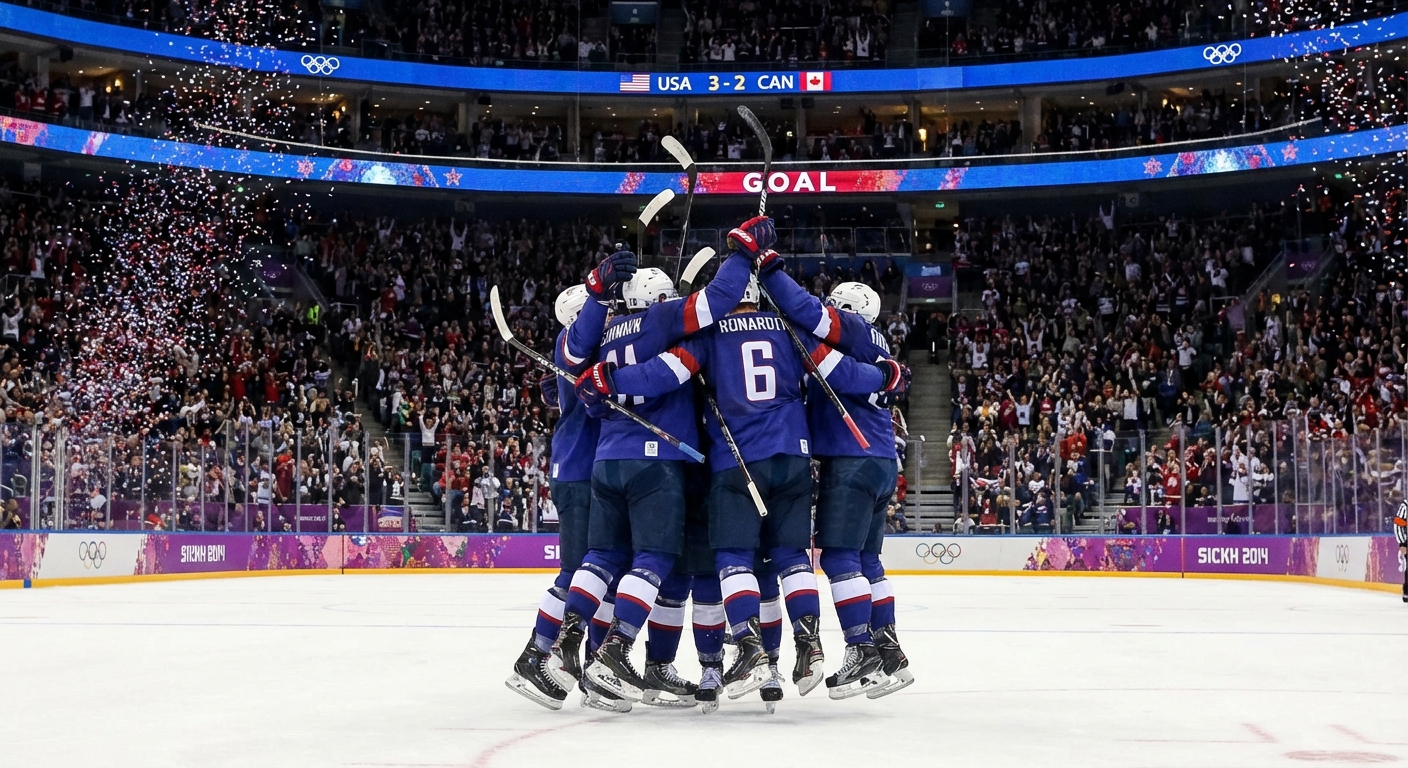
If Canada’s roster represents established dominance, Team USA’s roster represents a changing of the guard. Captained by Auston Matthews, with Charlie McAvoy and Matthew Tkachuk as alternates, this is the youngest and most dynamic American Olympic hockey team in decades. Head coach Mike Sullivan, who won back-to-back Stanley Cups with Pittsburgh, oversees a squad where 23 of 25 players are first-time Olympians.
The roster features two sets of brothers: Brady and Matthew Tkachuk on the forward lines, and Quinn and Jack Hughes on defense and up front, respectively. Quinn Hughes, whose blockbuster trade to the Minnesota Wild reshaped two franchises earlier this season, brings elite puck-moving ability from the blue line. Jack Eichel, finally healthy and playing the best hockey of his career, gives the Americans a first-line center capable of matching up against any team in the tournament.
The Americans are drawn into Group C alongside Germany, Latvia, and Denmark, a group that should allow them to ease into the tournament before the elimination rounds intensify. But Sullivan’s challenge is not about winning group games. It is about building chemistry in a compressed timeline. Unlike Canada, which has the 4 Nations Face-Off as a recent reference point for how its lines and pairings work together, the Americans must find their identity quickly. The talent is unquestionable. The cohesion is the variable.
The Dark Horses and the Group Stage Gauntlet
Beyond Canada and the United States, the tournament is loaded with legitimate contenders. Sweden, led by Nylander and a deep corps of two-way forwards, announced their presence with a clinical 5-2 victory over Italy in Wednesday’s opener. Finland, perennial overachievers in international hockey, bring a roster built on defensive structure and goaltending excellence. Czech Republic, powered by David Pastrnak’s offensive brilliance, could be the most dangerous team in the quarterfinals.
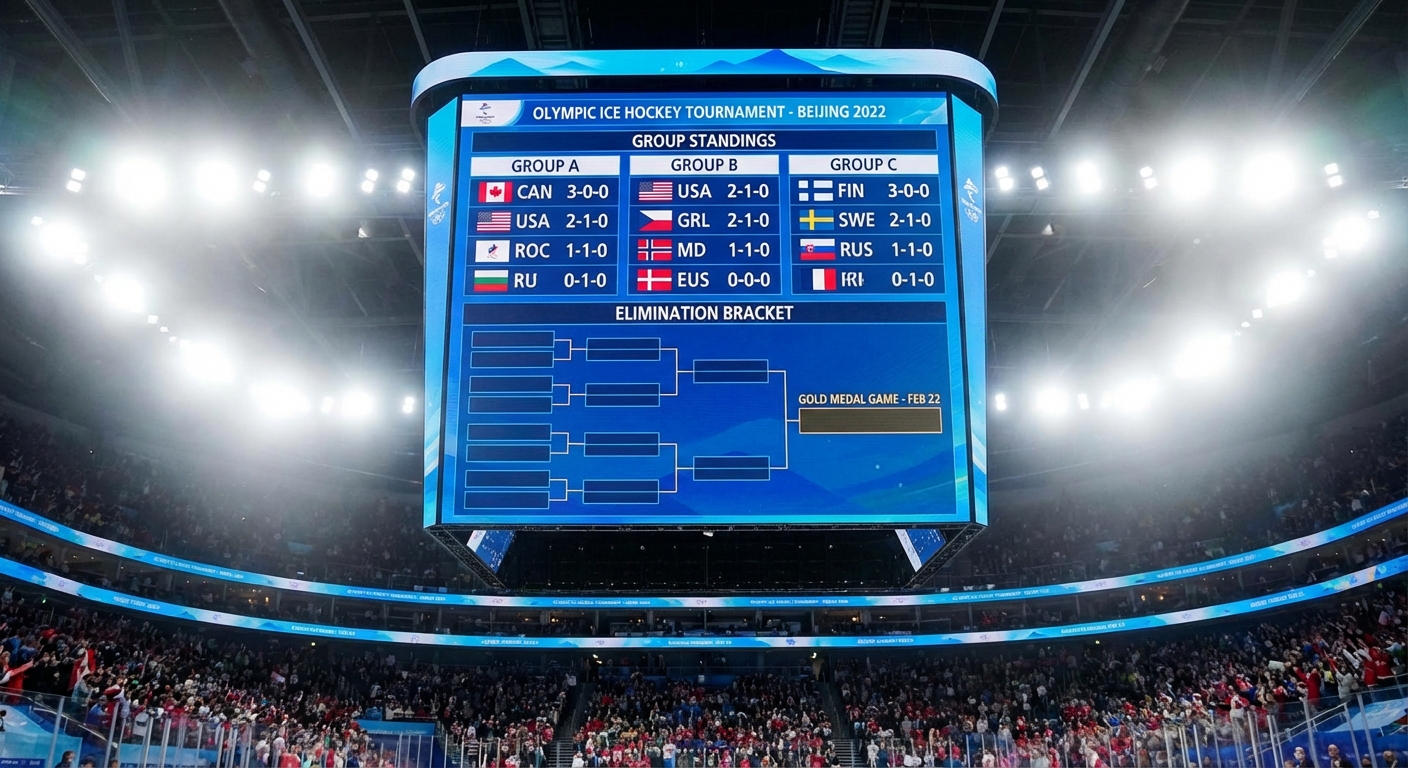
The group stage seeds 12 teams into three groups of four, with all 12 advancing to a single-elimination playoff. Group B (Czech Republic, Sweden, Slovakia, Italy) is the most competitive and could produce the quarterfinal matchups that define the tournament. Italy, the host nation and the only team without an NHL player on its roster, lost 5-2 to Sweden on Wednesday but the home crowd’s energy has been remarkable.
The team most likely being underrated is Finland. The Finns lack a headline superstar on the level of McDavid or Matthews, but their tournament model is proven and their structural advantages are significant. Finland won gold in Beijing 2022 without NHL players by executing a suffocating defensive system that limited opponents to fewer than 25 shots per game. Now add Aleksander Barkov, the NHL’s best two-way center, Mikko Rantanen’s finishing ability, and Sebastian Aho’s playmaking to that same defensive DNA. Finland’s goaltending pipeline is arguably the deepest in the tournament: Juuse Saros has been a Vezina-caliber performer for three consecutive seasons. In a single-elimination format where one bad period ends your tournament, Finland’s ability to play low-event, structure-first hockey makes them a nightmare draw for any team built around offensive firepower.
The matchup problem Matthews creates for opposing defenses also deserves closer examination. At 6-foot-3 and 220 pounds, Matthews is the rare center who can win board battles, dominate the cycle game below the goal line, and then finish from the slot with an NHL-best release. In Olympic-sized rinks, which use the same dimensions as NHL ice, his skating and shot remain elite, but his physical play along the boards becomes even more disruptive because defenders cannot simply angle him into the corner and contain him. Matthews logged a 1.28 expected goals per 60 rate at five-on-five this season, per Natural Stat Trick, the highest among all Olympic-participating centers. If Sullivan deploys the Matthews line against Canada’s second defensive pairing rather than matching up against Makar, the Americans could exploit a gap that Canada’s depth cannot fully cover.
The Gold Medal Question
The favorites are clear. Canada has the deepest roster, the most Olympic experience (concentrated almost entirely in Crosby and Doughty), and the institutional expectation of winning gold that Jon Cooper has made no effort to downplay. The United States has the most explosive offensive talent and a chip on their collective shoulder after losing the 4 Nations Face-Off final. Sweden and Finland are perennial threats whose defensive systems and goaltending traditions make them nightmare matchups in single-elimination games.
But the most compelling storyline is not which team wins gold. It is what this tournament means for the sport. The NHL’s absence from the Olympics left a scar on international hockey that the league’s executives underestimated. Two generations of fans grew up without watching the best players compete for their countries on the world’s biggest stage. Players like McDavid, Matthews, and Makar spent years watching from their couches, wondering what it would feel like to hear their national anthem after winning gold. Now they get to find out.
As we previewed back in January, the stakes of this tournament extend beyond the final score. If the hockey tournament captivates global audiences and the players return healthy, the argument for permanent NHL participation in future Olympics becomes nearly impossible to refute. If injuries mount or the product disappoints, the league’s executives who reluctantly agreed to the pause will have ammunition to pull back again.
Crosby, who has lived this before and understands what the Olympics mean in ways that most of his teammates are only beginning to discover, put it simply: “It means a lot, playing hockey, being Canadian, there’s a lot of expectations. The expectation when you go to the Olympics is to win gold.” For 12 years, the hockey world waited for the best to come back. They are here now, in Milan, with gold medals on the line and a sport that feels whole again. The hockey starts Thursday for real. Do not look away.
Sources
- NHL.com: Canada carries gold-or-bust expectations into Milano Cortina Olympics
- Olympics.com: NHL stars land in Milan for Milano Cortina 2026
- NHL.com: Complete men’s hockey rosters for 2026 Winter Olympics
- NHL.com: Team Canada roster for 2026 Winter Olympics
- Olympics.com: Team USA announce 25-strong men’s roster for Milano Cortina 2026