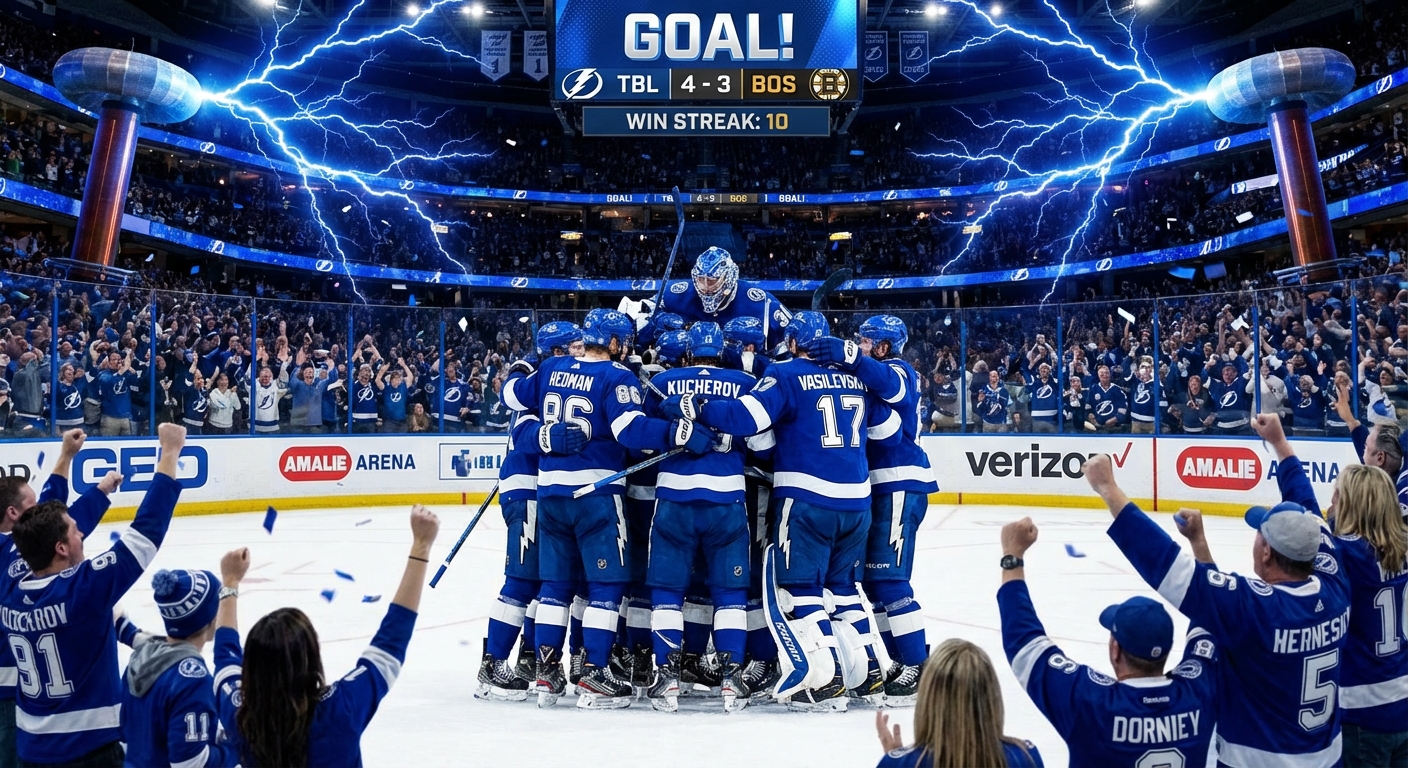
The Tampa Bay Lightning have reminded the hockey world that writing off championship-caliber teams is always premature. Their 11-game winning streak, the longest in franchise history, has propelled them to 64 points and the top of the Atlantic Division. A team that ESPN’s Greg Wyshynski described as “potentially past its prime” has responded with the most dominant stretch in organization history, outscoring opponents 44-19 per NHL.com records, a differential that defies modern NHL parity.
The streak began on December 28th against Buffalo and has included victories over playoff contenders and bottom-dwellers alike. Tampa has won close games and blowouts, demonstrated resilience when trailing and ruthlessness when leading. The excellence extends to both ends of the ice, with the team controlling play in ways that the raw goal differential only begins to capture.
What makes this surge particularly impressive is the context. The Lightning entered December with questions about their championship window. Core players were another year older. The salary cap had forced difficult roster decisions. Competing in an Atlantic Division featuring Detroit, Montreal, and Boston seemed harder than in years past. Tampa answered every doubt with a run that established them as the team to beat.
The Core Delivers Again
Nikita Kucherov, Brayden Point, and Victor Hedman have been the Lightning’s foundation for nearly a decade, and all three have elevated their games during this streak. Kucherov leads the team in points, per Hockey Reference, with production that reminds everyone he remains one of hockey’s most dangerous offensive players. Point has been clutch in tight situations, scoring the game-winning goal in three of those victories. Hedman continues anchoring the defense while contributing offensively at a rate that would be elite for a forward.
The chemistry between these players has always been exceptional, but it appears sharper than ever during this run. They anticipate each other’s movements instinctively, creating passing lanes that shouldn’t exist and converting chances that seem impossible. Years of playing together have produced an almost telepathic connection that opponents struggle to disrupt.
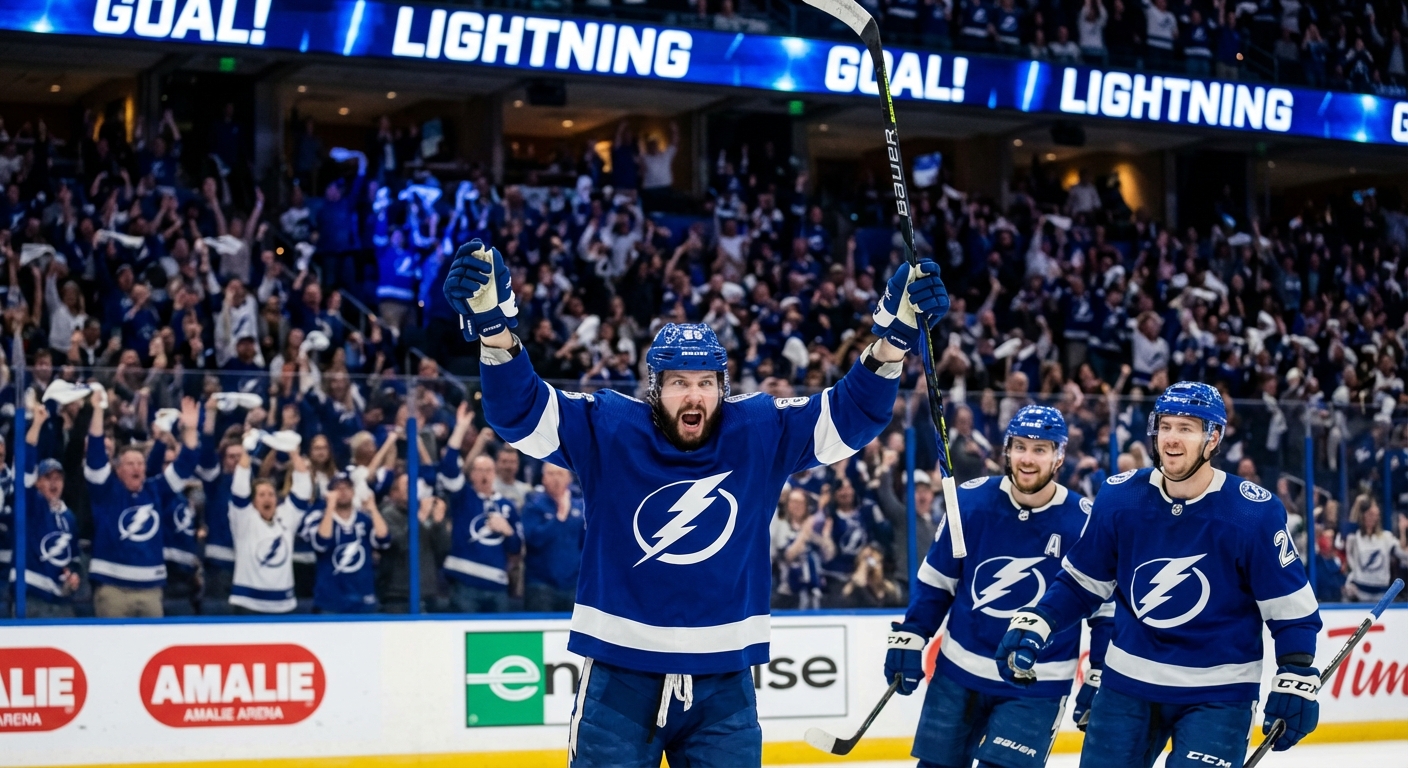
Andrei Vasilevskiy has been predictably excellent in goal. His numbers during the streak include multiple games with 30-plus saves and a save percentage that ranks among the league’s best. When Tampa’s defense has had breakdowns, Vasilevskiy has been there to bail them out. When they’ve played tight in front of him, he’s made the routine saves look easy and the difficult ones look routine.
The depth scoring that championship teams require has materialized at the perfect time. Players throughout the lineup have contributed, preventing opponents from focusing all their attention on the top line. When you can’t completely shut down Kucherov’s line and the second and third lines are still dangerous, defensive game plans become nearly impossible to execute.
Reclaiming the Atlantic
The Atlantic Division race has been competitive all season, with Detroit and Montreal both playing above expectations and Boston remaining relevant despite roster turnover. Tampa’s surge has opened a meaningful gap in the playoff seeding race. They lead the division in points, and the gap could grow if the streak continues.
Detroit sits second on level points but with more games played, meaning Tampa effectively controls their destiny in the divisional race. Montreal lurks just behind with 61 points, having exceeded preseason projections but, as The Athletic’s Joe Smith noted, “lacking the battle-tested depth that separates contenders from pretenders.” Boston rounds out the top four with 58 points, a respectable total that nonetheless leaves them chasing.
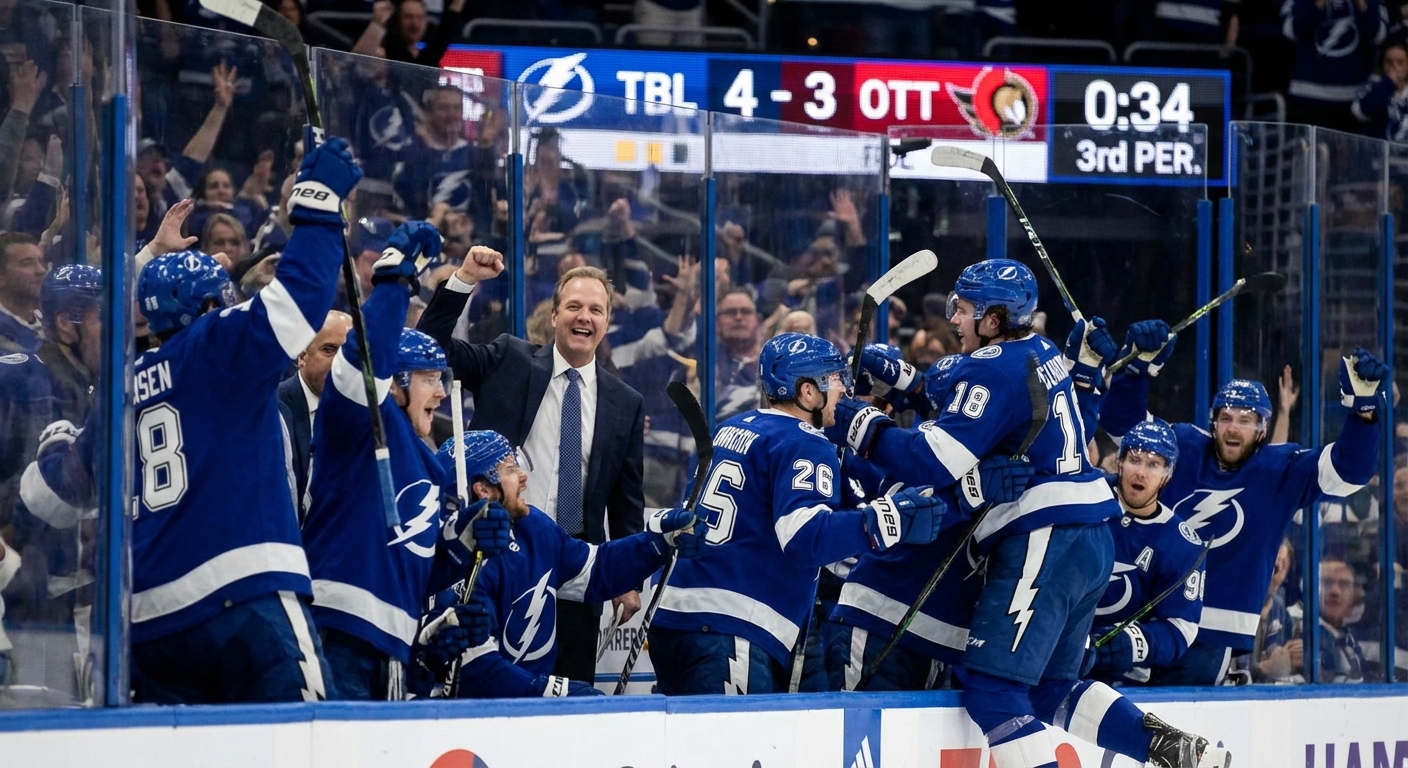
The schedule during the streak has been favorable but not easy. Tampa faced legitimate opponents and handled them with the composure expected from a team that has won two Stanley Cups in the past five years. They didn’t just beat bad teams; they beat good teams in ways that established psychological advantages for potential playoff matchups.
Clinching the Atlantic Division would ensure home-ice advantage through at least the first two playoff rounds. Given Tampa’s dominance at Amalie Arena, where the atmosphere reaches deafening levels during the postseason, that advantage has historically tilted tight series. According to NHL.com records, home teams have won 54% of Game 7s over the past decade, and Tampa’s postseason home record since 2020 is among the league’s best.
Cooper’s Tactical Adjustments
Jon Cooper has coached the Lightning since 2013, winning two championships and establishing himself as one of the NHL’s elite coaches. His adjustments during this streak have been subtle but effective. The team is playing with more pace than earlier in the season, transitioning quickly from defense to offense and not allowing opponents to establish their preferred style.
The power play, always a Tampa strength, has been operating at elite efficiency. With Kucherov, Point, and Hedman on the ice together, opponents must choose which threats to prioritize while knowing all of them can score. The movement and passing create openings that result in high-percentage chances, and Tampa’s shooters are converting at an unsustainable but very real rate.
Defensively, the Lightning have been structured without being passive. Per Natural Stat Trick, Tampa’s expected goals against during the streak ranks in the top five leaguewide, as they’re allowing fewer entries into the offensive zone and clearing rebounds efficiently when Vasilevskiy makes saves. The defensive pairs are communicating well, switching assignments seamlessly and supporting each other when beaten one-on-one. It’s the kind of systematic play that wins playoff series.
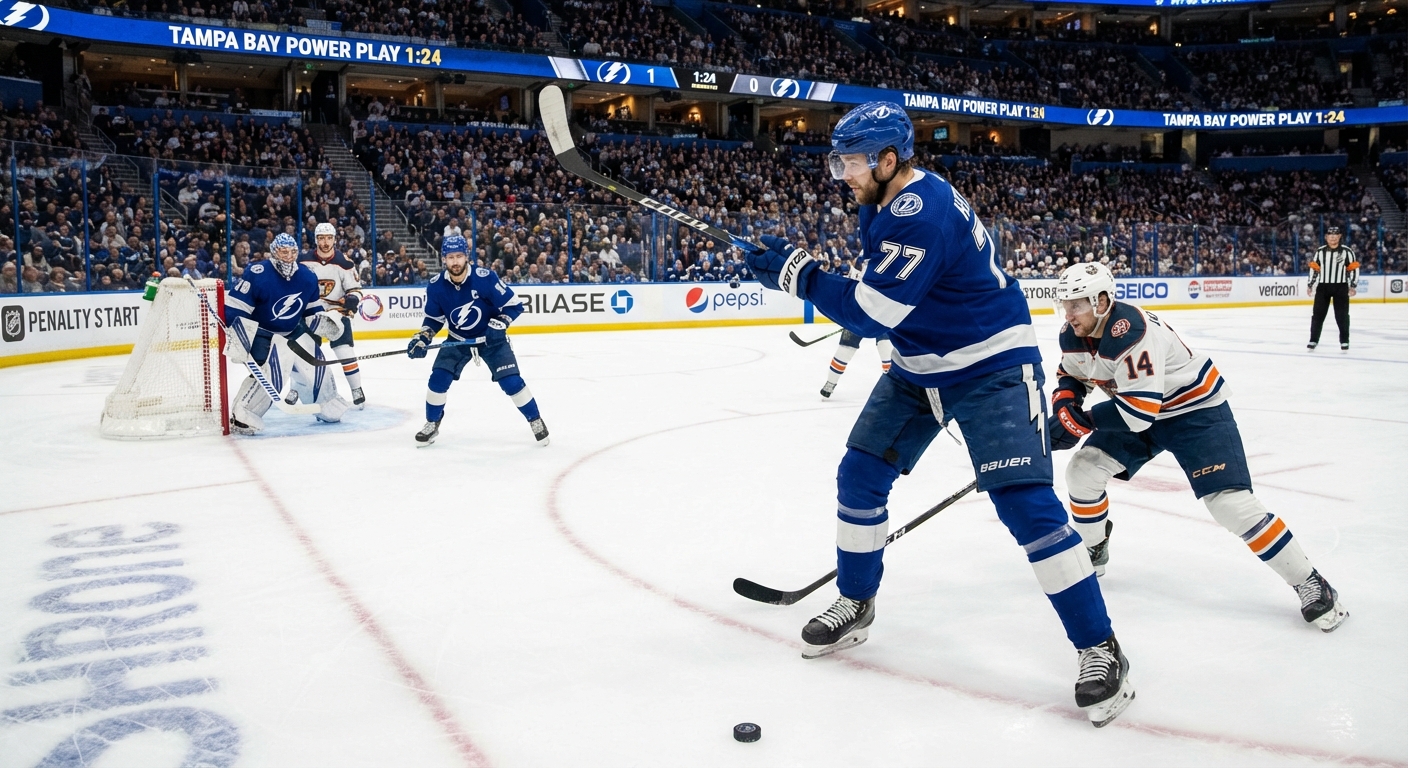
The physical element has returned to Tampa’s game. During their championship runs, the Lightning combined skill with toughness that wore opponents down over seven-game series. That edge had diminished somewhat in recent seasons but has reappeared during this streak. Tampa is finishing checks, battling hard along the boards, and making opponents pay a physical price for every inch of ice.
Sustainability and Schedule Ahead
All streaks eventually end, and this one is already an extraordinary accomplishment in a league designed for parity. The Lightning’s remaining January schedule includes games against New Jersey, Carolina, and Florida, all quality opponents capable of ending the run. Eventually, a bad bounce, an off night, or simply a better performance by an opponent will produce a loss.
The real question isn’t whether the streak will end but whether the level of play can be sustained. Tampa doesn’t need to win every remaining game to secure the Atlantic Division title and home-ice advantage. They need to maintain the consistency and execution that has characterized this stretch, winning more often than they lose and continuing to build separation in the standings.
Injuries represent the primary threat to continued success. The Lightning have been relatively healthy during the streak, allowing Cooper to deploy his preferred lineups and pairings. One significant injury to a core player could disrupt the chemistry that has made this run possible. Managing minutes and rest as the season progresses will be crucial.
The playoff implications of this streak extend beyond seeding. As Elliotte Friedman observed on Hockey Night in Canada, “Tampa has re-established themselves as the team nobody in the East wants to draw in the first round.” The confidence built during a run like this carries into April and May. Teams that know they can win under any circumstances perform differently when pressure peaks.
What History Tells Us
NHL history suggests that extended winning streaks during the regular season correlate strongly with deep playoff runs, though the relationship is more nuanced than simple momentum. Per Hockey Reference, of the 15 teams since 2000 that posted winning streaks of 10 or more games, 11 reached at least the second round of the playoffs that same season, and six advanced to the conference finals or beyond. The 2012-13 Blackhawks (24-game point streak) and the 2005-06 Red Wings (12-game win streak) both won the Presidents’ Trophy, and Chicago went on to capture the Cup.
What separates the streaks that translated into postseason success from those that didn’t is a pattern Tampa fits closely: sustained defensive structure paired with scoring depth, not just a hot goaltender or an unsustainable shooting percentage. As Pierre LeBrun noted on TSN’s Insider Trading, “The teams that ride streaks built on process rather than luck are the ones that carry it into the spring. Tampa checks that box.”
The current run echoes their own 2020 and 2021 championship blueprints — dominant five-on-five play, an elite power play, and a Vezina-caliber goaltender peaking at the right time. The difference now is that Kucherov, Point, Hedman, and Vasilevskiy are doing it in their 30s, which would make a third Cup run one of the more remarkable sustained dynasty stretches in modern NHL history. The streak alone doesn’t guarantee anything in April, but the underlying process driving it — structured defense, balanced scoring, and championship-tested composure — is exactly what separates contenders from pretenders when the playoffs arrive.
Sources
- Tampa Bay Lightning 2025-26 Schedule and Results - Hockey Reference
- NHL Standings and Division Races - NHL.com
- Tampa Bay Lightning Extended Winning Streak Analysis - ESPN NHL
- Lightning Streak Coverage - Tampa Bay Times
- Tampa Bay Lightning Advanced Stats - Natural Stat Trick