The last time American boxing produced a fight with stakes this high between two homegrown talents under 30, Floyd Mayweather was dismantling Zab Judah in 2006. Now, nearly two decades later, Teofimo Lopez and Shakur Stevenson will meet on January 31 in a junior welterweight collision that carries the weight of an entire generation’s expectations. Both men believe they’re the best American boxer of their era. Both men believe the other is standing in the way of their legacy. By the end of the month, we’ll have an answer that could shape boxing’s landscape for years to come.
Lopez enters as the WBO champion at 140 pounds, carrying a professional record of 21-1 with 13 knockouts, per BoxRec. His 2020 destruction of Vasiliy Lomachenko announced him as a force capable of beating anyone, and though he’s experienced setbacks since, he’s rebuilt his reputation with victories that showcase both his power and his maturation as a fighter. At 28 years old, Lopez is entering his physical prime with the experience of someone who’s already lived multiple boxing lifetimes.
Stevenson brings credentials that match Lopez’s accomplishment for accomplishment. A three-division world champion with a 22-0 record per BoxRec, who won Olympic silver at just 19 years old, the Newark native possesses the kind of defensive brilliance that frustrates opponents into mistakes. He’s never been knocked down as a professional, and his last three victories have come against quality opposition without Stevenson ever appearing in danger. Where Lopez overwhelms with aggression and power, Stevenson suffocates with angles and timing. Their contrasting styles make this matchup irresistible to anyone who appreciates the sweet science.
The boxing world has been clamoring for this fight for years, and the fact that it’s finally happening at the right time, with both fighters holding legitimate claim to pound-for-pound status, makes January 31 feel like an event that transcends the sport’s fractured championship picture.
Style Matchup: Power Against Precision
The fundamental question of this fight comes down to whether Lopez’s aggression can catch Stevenson before Stevenson’s defense turns the bout into a chess match he controls. Lopez wants to make this ugly, to turn the ring into a phone booth where his hand speed and combination punching can overwhelm Stevenson’s reflexes. Stevenson wants distance, angles, and the ability to dictate pace from the outside while Lopez chases shadows.
Lopez’s power is legitimate and fight-changing. According to CompuBox, Lopez lands 28% of his power punches across his career, well above the junior welterweight average. He throws with bad intentions, particularly to the body, and his willingness to take risks in search of the knockout creates opportunities that more conservative fighters never generate. But that aggression has also led to defeats when opponents have been skilled enough to exploit the openings he leaves.
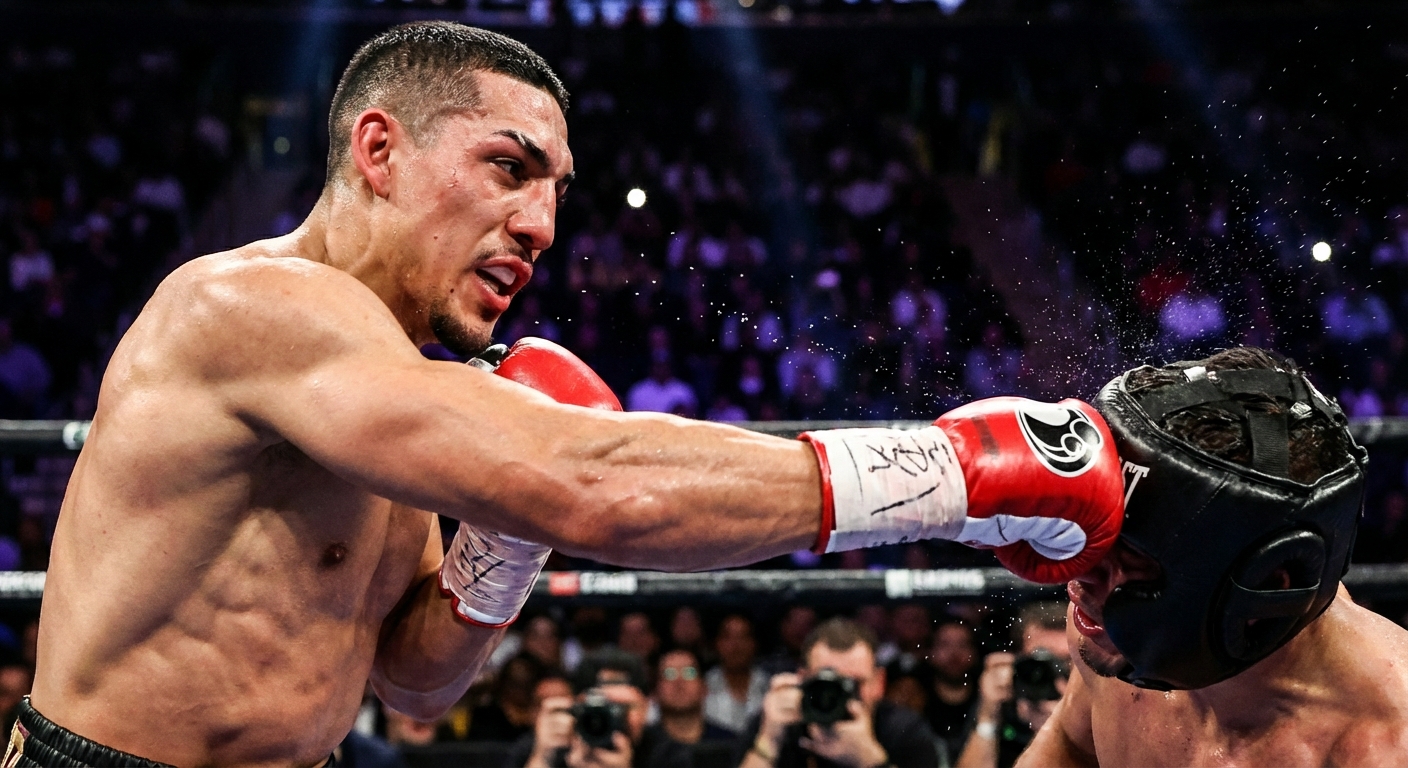
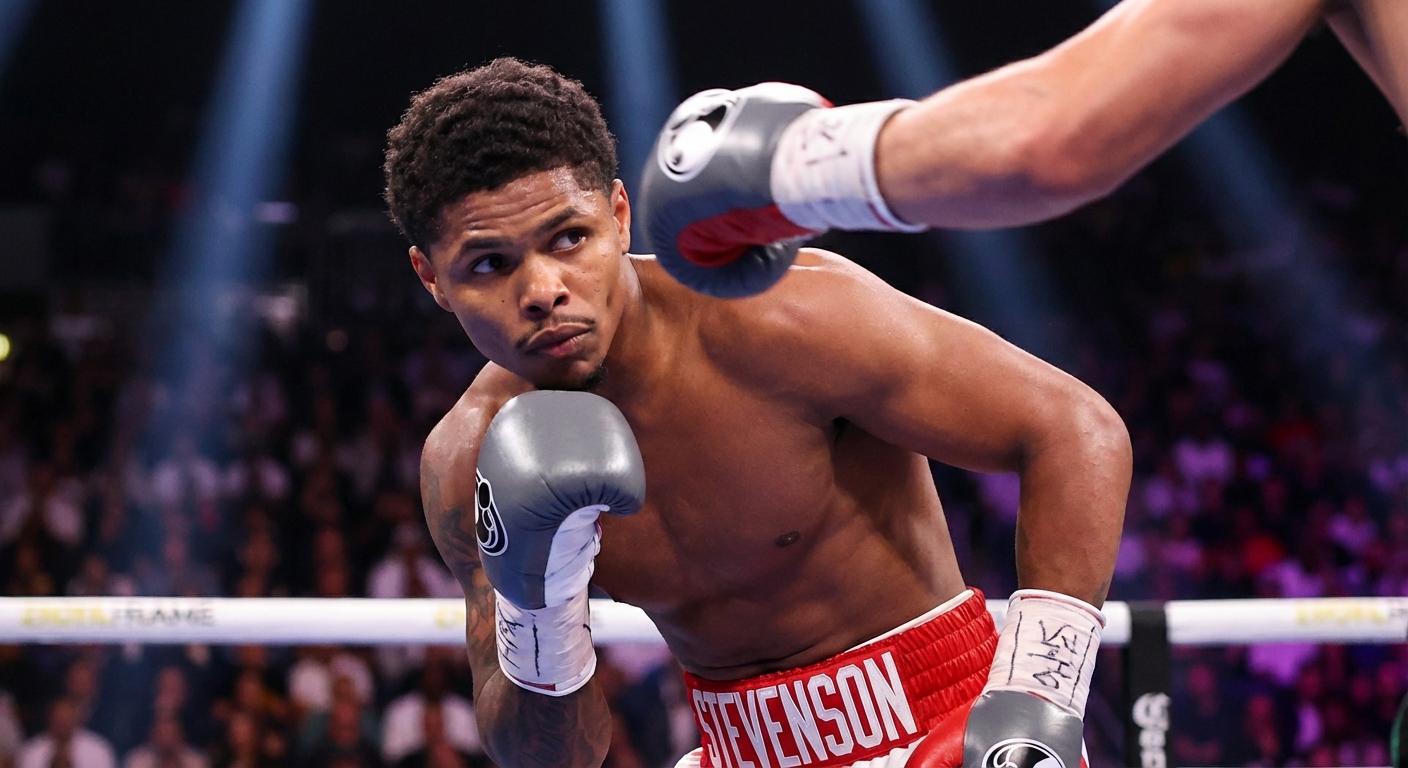
Stevenson’s defensive mastery presents a puzzle that few fighters have solved. According to CompuBox, opponents have connected on just 18% of total punches thrown against Stevenson across his career, one of the lowest rates among active champions. He slides punches with subtle head movement, makes opponents miss by inches, and counters with precise combinations that score without excessive commitment. His jab is among the best in boxing, a weapon that establishes range and sets up everything else. As ESPN analyst Tim Bradley has noted, “Shakur makes you pay for every punch you throw and miss. He turns your offense into his offense.” Stevenson doesn’t need to hurt you to beat you. He needs only to make you miss enough times that the scorecards become insurmountable.
The conditioning of both fighters will be tested in ways they haven’t experienced recently. Lopez has sometimes faded in later rounds when his early aggression doesn’t produce stoppages, while Stevenson has been accused of coasting in fights he’s controlling comfortably. This matchup offers neither man the luxury of pacing themselves. Lopez needs to sustain pressure for twelve rounds against an elite defensive fighter. Stevenson needs to remain sharp for twelve rounds against someone who can end things with a single punch.
What’s at Stake: Legacy and Supremacy
Beyond the belt on the line, this fight carries implications that extend far beyond a single championship. The winner will cement themselves as the unquestioned face of American boxing, a position that’s been vacant since the retirement of the previous generation’s stars. Sponsorship opportunities, pay-per-view leverage, and the ability to choose which megafights to pursue all flow to whoever emerges victorious on January 31.
Lopez has spoken openly about wanting fights that define legacies rather than simply adding to his bank account. His decision to chase this matchup rather than defend against lesser opposition reflects that mindset. A victory over Stevenson would validate Lopez’s claim that he’s been the best American fighter all along, that the losses along the way were bumps in a road leading somewhere important. At 28, he has time to build a Hall of Fame resume, but he needs signature wins against elite opponents to separate himself from the pack.
Stevenson’s motivations are equally clear. Despite his accomplishments across three weight classes, analysts including Teddy Atlas have questioned whether he’s faced enough top-tier opposition. As Atlas put it on ESPN, “Shakur’s resume is missing a signature win against someone who can really fight back.” The Stevenson that dominates average fighters could struggle against someone with Lopez’s combination of skills and fearlessness. A definitive victory here silences every doubter and establishes Stevenson as someone who beats the best available opponents, not just the best available opponents who happen to be stylistically favorable.
The winner also positions themselves for the biggest fights boxing can offer in the coming years. A unified champion at 140 pounds could move up to challenge whoever holds the welterweight titles, or remain and clean out a division that includes several other notable names. The options multiply with victory, while defeat sends the loser back into the queue of contenders waiting for another opportunity.
The Path to January 31
Lopez’s journey to this fight has been anything but straightforward. After the Lomachenko victory that established him as a superstar, he moved up to 140 pounds and suffered a shock defeat to George Kambosos Jr. in 2021. That loss could have derailed his career, but Lopez responded with a rebuild that demonstrated his mental resilience. He worked with new trainers, refined his approach, and won the WBO title with performances that showed growth alongside his natural talent.
His last three fights have been masterclasses in controlled aggression. Lopez is still the explosive puncher who can end fights suddenly, but he’s added patience and defensive responsibility to his arsenal. He’s learned when to sit on punches and when to box, making him a more complete fighter than the one who peaked too early against Lomachenko. That version of Lopez might have been too reckless for Stevenson. This version presents problems that Stevenson hasn’t faced before.
Stevenson’s path has been steadier but no less impressive. He won titles at featherweight, super featherweight, and junior welterweight without ever appearing vulnerable. His victory over Oscar Valdez in 2022 announced his arrival as a major star, and subsequent defenses have only enhanced his reputation. Stevenson makes difficult opponents look ordinary through ring generalship and tactical excellence. The question is whether Lopez is too skilled, too powerful, and too determined to be controlled the way Stevenson controls everyone else.
Size, Psychology, and the Referee: The Swing Variables
Several variables could tip the balance in either direction. The size at 140 pounds favors Lopez, who is naturally larger and has carried his power up from lightweight. Stevenson has looked comfortable at the weight but hasn’t faced someone with Lopez’s physicality at junior welterweight. Whether Stevenson can keep Lopez at range while absorbing the occasional punches that land cleanly will determine whether size becomes a decisive factor.

The mental warfare has already begun. Lopez thrives on chaos and confrontation during promotion, feeding off the energy that conflict generates. Stevenson prefers calm confidence, believing his skills will speak louder than any words exchanged at press conferences. How each fighter manages the psychological pressure in the final days before the bout could affect their performances when the bell rings. Lopez wants Stevenson uncomfortable. Stevenson wants Lopez frustrated. Neither has shown any indication of cracking so far.
The officiating will also matter more than usual. This fight could easily become a tactical battle where Stevenson ties up Lopez on the inside and referees must decide how much clinching to allow. If the referee lets them work in close, Lopez’s strength and inside combinations gain value. If the referee breaks them quickly and creates distance, Stevenson’s jabbing and movement become more effective. The fighters and their teams are certainly aware of this dynamic and will adjust accordingly.
How January 31 Reshapes Junior Welterweight
This fight will reshape the junior welterweight landscape regardless of outcome. The winner becomes the division’s clear number one, with a resume that demands respect from every other fighter at the weight. Potential matchups against unified champions in other divisions, rematches if this fight is close, and legacy-defining bouts against all-time greats all become possibilities that don’t exist without this victory.
The combat sports landscape has been dominated by UFC headlines recently, with boxing struggling to produce the kind of compelling matchups that draw casual fans back to the sport. Lopez vs. Stevenson represents boxing’s best argument for relevance: two supremely talented Americans in their primes, meeting with everything on the line. If this fight delivers on its promise, boxing could recapture some of the cultural significance it’s ceded to mixed martial arts.
Per ESPN Boxing stats, Lopez has averaged 62 punches thrown per round across his last three bouts, a pressure rate that would test any defensive fighter’s stamina and concentration over twelve rounds. Stevenson, by contrast, averages just 38 punches thrown per round but lands at a significantly higher connect rate, per CompuBox. That efficiency gap captures the entire tactical battle in a single stat line: Lopez needs volume to overwhelm, while Stevenson needs accuracy to accumulate.
The Prediction
Stevenson by unanimous decision, 116-112 on all three cards. The fight goes the full twelve rounds, and it is not particularly close on the scorecards even though it feels competitive in the ring.
Here is the analytical case: Lopez’s rebuild since the Kambosos loss has been impressive, but every opponent he has beaten in that stretch was willing to stand in front of him. Stevenson will not do that. Lopez has never faced a fighter who combines Stevenson’s lateral movement with genuine counterpunching danger, and that combination will force Lopez to lead with single shots rather than the sustained combinations where his power multiplies. When Lopez loads up on individual punches, his accuracy drops below 25%, according to CompuBox data from his recent bouts. Stevenson will exploit those single-shot sequences by stepping offline and landing two or three clean counters before Lopez can reset.
The critical rounds will be six through nine. Lopez historically slows his output in the middle rounds when early aggression fails to produce hurt, per ESPN Boxing stats. That is exactly when Stevenson’s cardio advantage and ring IQ allow him to bank rounds with clean, visible scoring. By the championship rounds, Lopez will need a knockout that Stevenson’s defensive discipline makes nearly impossible to land.
The underrated factor in this fight is feet. Stevenson’s footwork allows him to control ring geography without retreating, circling to Lopez’s power side to neutralize the right hand while staying close enough to counter. Lopez has not faced a southpaw with this level of positional intelligence since Lomachenko, and that fight ended with Lomachenko outworking him over the final six rounds before the stoppage flipped the script. Stevenson will execute a similar late-fight takeover, but without the risk of getting caught because his defensive reflexes are sharper than Lomachenko’s were at that stage of his career.
Lopez has the single best weapon in this fight: his right hand. But Stevenson has every other advantage. Skill over power, twelve rounds, no knockdowns.
Sources
- Teofimo Lopez Professional Record and Fight History - BoxRec
- Shakur Stevenson Professional Record and Fight History - BoxRec
- Teofimo Lopez, Shakur Stevenson Set 140-Pound Showdown for Jan. 31 - ESPN Boxing
- CompuBox Corner: What Do Numbers Say About Lopez vs. Stevenson? - Ring Magazine
- CompuBox Punch Statistics Database - CompuBox