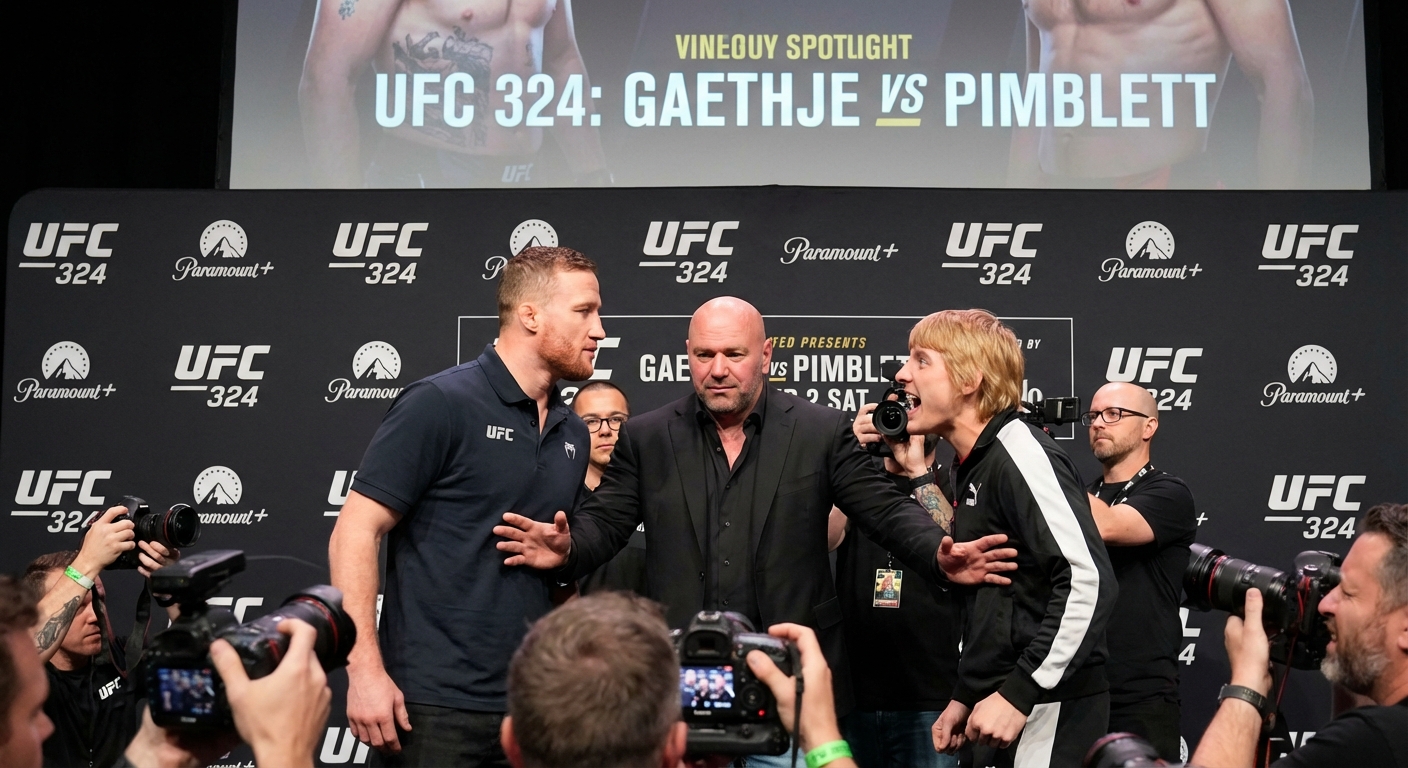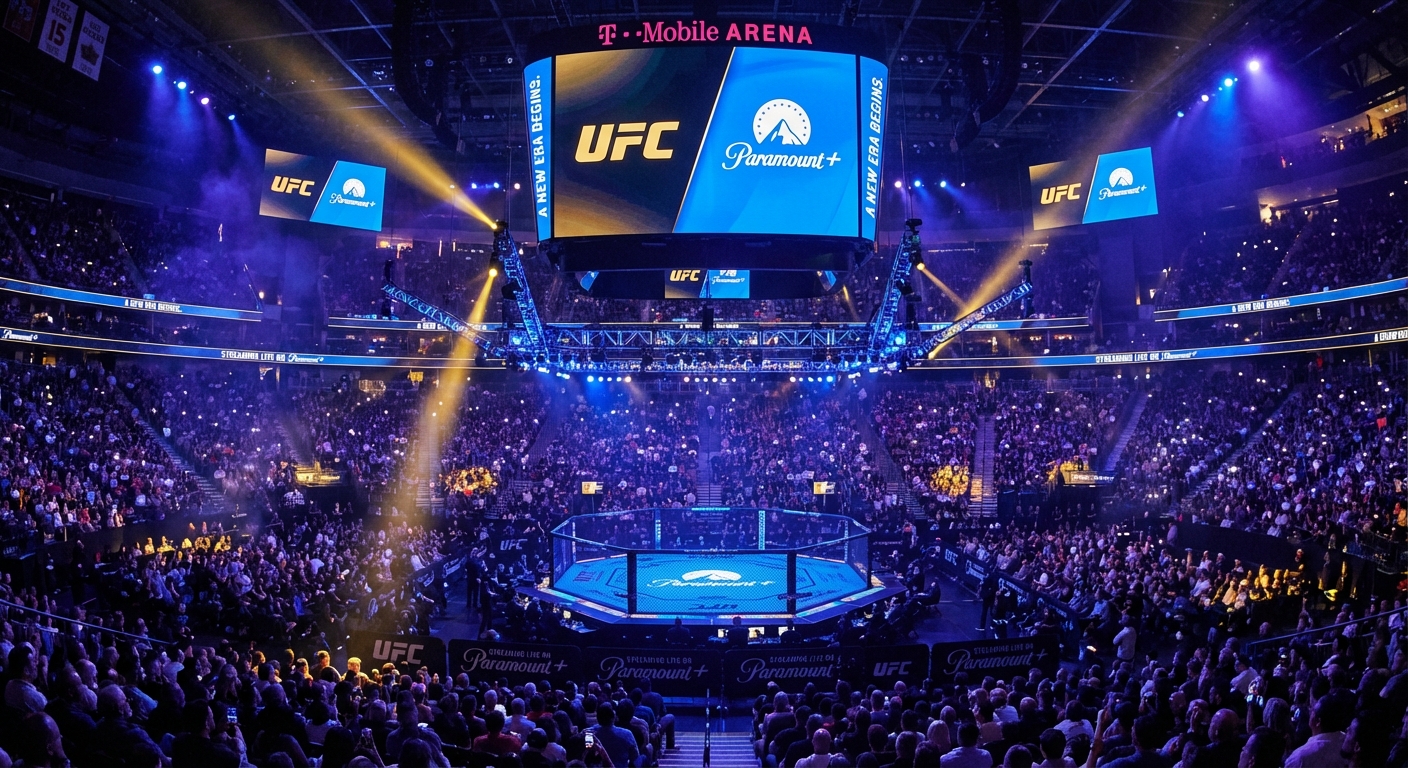
UFC 324 on January 24 will mark the end of an era that defined combat sports for three decades. For the first time since pay-per-view became the industry standard, a major UFC event will stream exclusively on Paramount+ without the traditional $79.99 price tag that fans have paid for championship fights. The seven-year deal between UFC and Paramount, announced in late 2025 and beginning this month, eliminates the pay-per-view model entirely for American, Latin American, and Australian audiences. What was once the sport’s primary revenue driver has been replaced by a subscription-based approach that could fundamentally change how mixed martial arts is consumed and compensated.
The financial terms of the agreement have not been publicly disclosed, but according to Ariel Helwani’s reporting, the deal’s total value is estimated at approximately $750 million annually, a figure that would represent a significant increase over UFC’s previous arrangements with ESPN+ and pay-per-view revenue. Paramount gains exclusive access to the UFC’s passionate fanbase, a demographic that skews young and male and has proven willing to pay premium prices for content. UFC gains guaranteed revenue regardless of individual event performance, eliminating the variability that made some cards profitable and others disappointing. Both parties believe they’ve won. The question is whether the fighters and fans share in that victory.
The pay-per-view model had defined combat sports economics since the 1970s, when closed-circuit television broadcasts of boxing matches demonstrated that fans would pay significant sums to watch fights they couldn’t see elsewhere. UFC adopted the model in its early days and refined it into a machine that generated over $1 billion in annual revenue at its peak, per industry reports from The Hollywood Reporter. The biggest stars built their wealth on PPV points, earning percentages of buy totals that could exceed their guaranteed purses by significant margins. Conor McGregor earned over $50 million from his share of the UFC 229 pay-per-view against Khabib Nurmagomedov, according to ESPN MMA’s reporting on disclosed fighter pay. That specific pathway to fighter wealth no longer exists.
What Changes for Fans
The most immediate impact for fans is financial and substantial. A Paramount+ subscription costs $12.99 per month for the ad-free tier that will carry UFC events, compared to the $79.99 that a single pay-per-view event would have cost under the previous model. Fans who purchased every numbered UFC event in 2025 would have spent approximately $800 across ten cards, per UFC Stats’ event calendar data. Under the new arrangement, that same content costs roughly $156 annually. The savings are dramatic and obvious, assuming fans already have or want Paramount+ subscriptions for the platform’s broader content library.
The accessibility implications extend beyond price. Pay-per-view events required deliberate purchases, moments of commitment that limited viewership to dedicated fans willing to invest in specific cards. Streaming removes that barrier entirely. Casual viewers who might have watched one or two events per year can now access every card without additional cost, potentially expanding the UFC’s audience to demographics that never considered MMA worth the pay-per-view premium. The sport’s growth has plateaued in recent years, and eliminating the price barrier could restart expansion that seemed to have stalled.

The viewing experience itself may change as well. Paramount+ has committed to producing pre-show content, post-fight analysis, and supplementary programming that expands beyond the traditional broadcast approach. Fans will have access to multiple camera angles, real-time statistics, and interactive features that pay-per-view broadcasts couldn’t provide. Whether these enhancements improve the experience depends on execution, but the technological capabilities of streaming platforms far exceed what traditional broadcast partnerships could offer.
The downside for fans involves platform fragmentation. UFC content now requires a Paramount+ subscription, separate from any existing streaming services fans might already use. For households that already subscribe to Netflix, Amazon Prime, Disney+, and ESPN+, adding another monthly fee diminishes the apparent savings. The consolidation of sports content across competing platforms has become a source of frustration for viewers, and UFC’s move to Paramount+ continues that trend rather than reversing it.
What Changes for Fighters
The implications for fighter compensation are more complicated and less uniformly positive. Pay-per-view points represented the most significant earning potential for UFC’s top stars, with elite fighters earning between 50 cents and $3 per buy depending on their contracts. A card that sold two million pay-per-views could generate $3-6 million in additional compensation for the main event fighters, income that dwarfed their guaranteed purses. What replaces that upside is the central question for every fighter on the roster.
UFC has stated that fighter compensation will be restructured to account for the loss of pay-per-view points, though specifics remain vague. Dana White mentioned in interviews that top fighters will receive flat bonuses for headlining major events, amounts designed to replace the pay-per-view income they would have earned under the previous system. Whether these bonuses adequately compensate fighters depends entirely on the amounts involved, and as Brett Okamoto of ESPN reported, multiple fighters and their management teams have raised concerns about the lack of transparency in how those replacement figures were calculated.
The concern is that guaranteed bonuses, however generous, cannot replicate the upside potential that pay-per-view points provided. A fighter who headlined a card that exceeded expectations under the old model could earn significantly more than projected. Under the new model, their compensation is fixed regardless of how the event performs in streaming viewership. The financial ceiling for fighter earnings may have been lowered even if the floor remains similar. For fighters who built their careers around being PPV draws, this represents a fundamental change in their earning potential.
Mid-tier fighters may actually benefit from the new arrangement. Under pay-per-view economics, only main event fighters received points, meaning that co-main event fighters and preliminary card participants earned the same regardless of how many people purchased the broadcast. The streaming model’s revenue is distributed differently, and UFC has suggested that more fighters will share in the platform’s success through revised bonus structures. Per MMA Junkie’s analysis of UFC’s disclosed bonus payouts, the current Performance of the Night bonuses average $50,000 per recipient, a figure that would need to increase substantially to offset lost PPV revenue across the roster. Still, the structural shift toward broader distribution of streaming revenue, compared to the concentrated distribution of pay-per-view points, could benefit the majority of fighters who never saw PPV money.
Why Both Sides Bet on Streaming Over PPV
UFC’s decision to abandon pay-per-view reflects broader trends in sports media that have made streaming the dominant distribution model for premium content. Traditional pay-per-view required cable or satellite subscriptions that younger audiences have increasingly abandoned in favor of internet-based alternatives. The demographic most likely to watch UFC events is also the demographic least likely to maintain traditional television packages, creating a growing disconnect between how the sport was distributed and how its audience wanted to consume it.
The guaranteed revenue from a streaming partnership also eliminates the volatility that made UFC’s financial performance unpredictable. Pay-per-view buys varied dramatically based on star power, card quality, and external factors like competing events or economic conditions. Some cards generated over one million buys while others struggled to reach 200,000. That inconsistency made financial planning difficult and created pressure to book recognizable names even when circumstances suggested they shouldn’t fight. Guaranteed streaming revenue removes that pressure and allows for more flexible matchmaking.
Paramount’s motivation is equally clear. The streaming wars have intensified competition for content that drives subscriber acquisition and retention. Sports programming has proven more effective at both than scripted entertainment, which can be binged and forgotten. UFC events provide regularly scheduled content that keeps subscribers engaged throughout the year, creating consistent reasons to maintain subscriptions rather than the episodic spikes that accompany premiere seasons of popular shows. The deal makes strategic sense for Paramount even if the specific financial terms prove expensive.
How Streaming Reshapes MMA’s Star-Making Machine
The long-term implications for MMA’s development hinge on how the streaming model reshapes fighter incentives. Pay-per-view created a specific economic structure that rewarded certain types of fighters and fighting styles. Stars who could sell events through personality and promotion earned more than technically superior fighters who lacked mainstream appeal. The streaming model may redistribute those incentives, potentially rewarding consistent performance over promotional ability, though that outcome is far from guaranteed.
The accessibility improvements could expand MMA’s audience significantly, introducing the sport to viewers who never considered it worth the pay-per-view investment. A larger audience creates more opportunities for fighters to become stars, more pressure on UFC to deliver quality events, and more leverage for the sport in future media negotiations. Growth benefits everyone involved, assuming the growth actually materializes rather than existing primarily in corporate projections.
The risk is that removing the pay-per-view price tag also removes the premium positioning that made UFC events feel special. Part of what justified those premium purchases was the understanding that you were paying for something extraordinary, an event that warranted significant investment. When the same content is available for the price of a monthly streaming subscription, the perceived value may diminish even if the actual quality remains unchanged. UFC’s challenge will be maintaining the sense of occasion that pay-per-view pricing artificially created.
Where I Stand
This deal is a win for Paramount and a win for UFC corporate, but I am not convinced it is a win for the athletes who generate all the value. The pay-per-view model had serious flaws, chief among them that only headliners earned points while undercard fighters subsidized the spectacle. But replacing an imperfect system with one that eliminates the highest earning ceiling in combat sports, without any publicly disclosed revenue-sharing framework, is not progress. It is a lateral move that trades one form of inequity for another.
What concerns me most is the precedent. Per John Ourand’s reporting at Puck, UFC’s deal structure gives Paramount exclusive content rights with no contractual obligation to pass streaming subscriber growth back to fighters through escalating bonuses. That is a deliberate design choice. UFC could have negotiated performance-based escalators tied to subscriber metrics, the streaming equivalent of PPV points. They chose not to, and the silence from the promotion on this point tells you everything about their priorities.
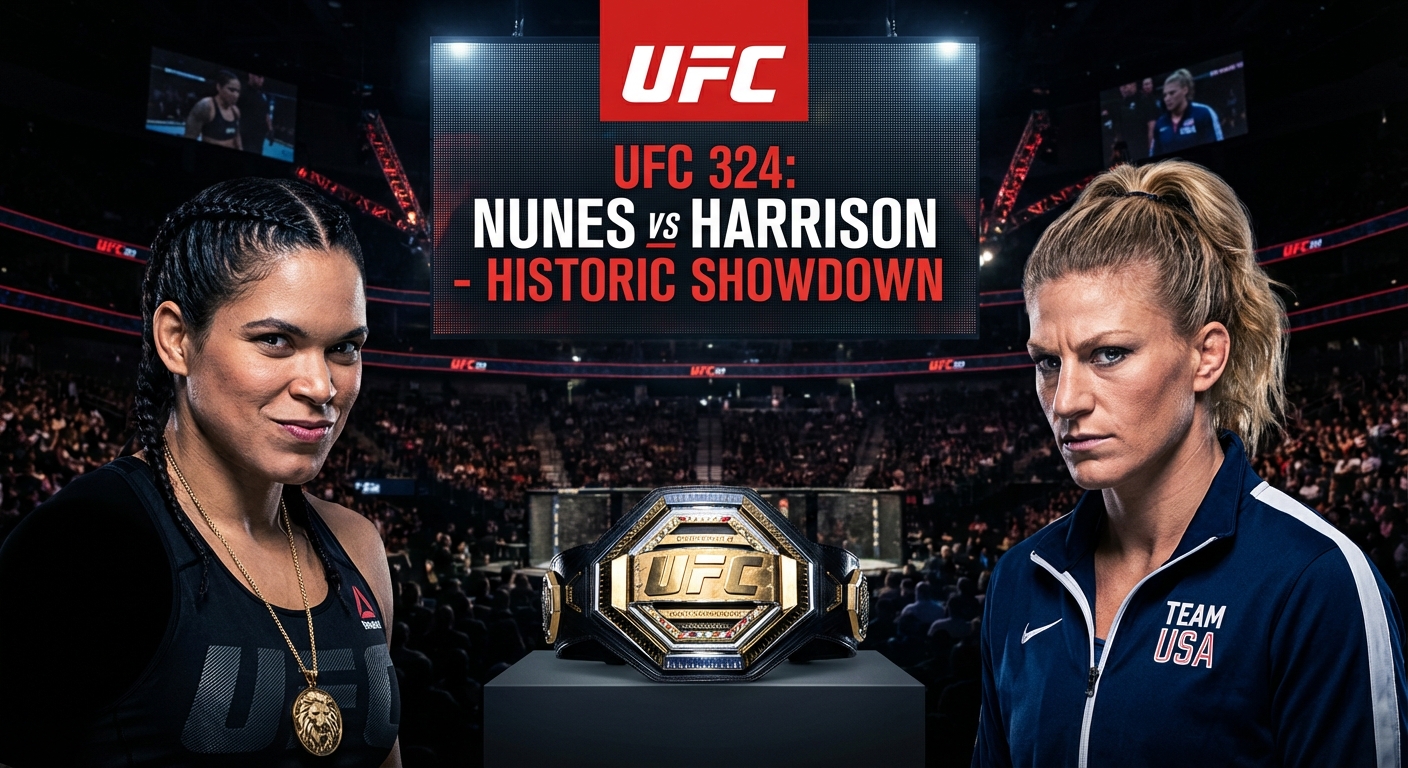
UFC 324 on January 24 will be the first real test. The card features Justin Gaethje versus Paddy Pimblett for the interim lightweight title and Amanda Nunes’ return against Kayla Harrison, matchups that would have cleared one million PPV buys under the old model, per UFC Stats historical data. If those fighters are earning flat bonuses below what their PPV points would have generated, the resentment will build quickly. According to MMA Fighting’s analysis of disclosed fighter pay, the top five PPV headliners in 2025 averaged over $4 million each in PPV point earnings alone. No flat bonus structure UFC has described comes close to replicating that upside.
My prediction: viewership climbs 30-40 percent as the price barrier disappears, per industry projections from Variety’s sports media analysts, but fighter organizing efforts accelerate within 18 months. The UFC Fighter Association or something like it becomes inevitable, not because fighters suddenly care about collective bargaining, but because the Paramount deal removed the one mechanism that let individual stars capture value proportional to the audience they attracted. When you eliminate the market signal that tells a fighter what they are worth, you force them to organize to find out.
Sources
- Paramount and TKO Announce Historic UFC Media Rights Agreement - Paramount, official deal announcement and terms.
- UFC’s First Paramount+ Fight Card Averages Nearly 5M Views - ESPN, UFC 324 viewership data and streaming transition coverage.
- The Paramount Era Begins: How UFC’s Streaming Shift Changes Everything in 2026 - MMA News, analysis of the deal’s impact on fighters and fans.
- UFC 324 Draws 4.96 Million Views in Paramount+ Debut - Variety, sports media industry analysis and viewership data.
- Will UFC Fighters See Any of Massive Paramount Deal Money? - MMA Mania, analysis of fighter compensation under the new deal structure.