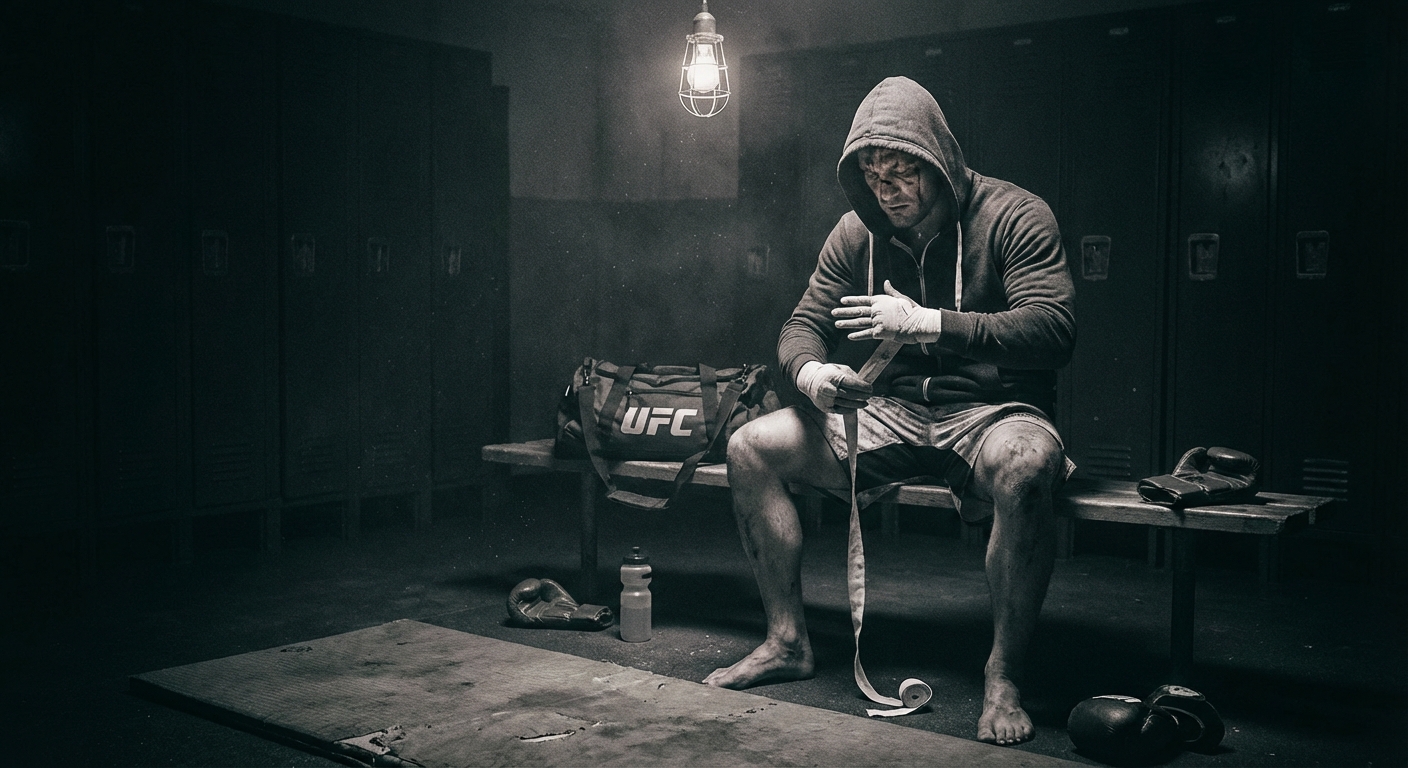
The last time Sean Strickland fought inside the octagon, he was the middleweight champion of the world, defending his title against a hungry contender in a fight that did not go his way. That was February 2025. Twelve months, zero fights, and countless controversies later, the most polarizing figure in mixed martial arts is set to return on February 21 at UFC Fight Night in Houston, Texas, against top contender Anthony Hernandez. The question hanging over this comeback is one that applies to every elite fighter who steps away from the sport for an extended period: does the time off heal what was broken, or does it create new problems that only become visible under the lights?
For Strickland, a fighter whose greatest weapons have always been his relentless pace and his ability to mentally overwhelm opponents with constant pressure, a year away from competition carries risks that go beyond physical conditioning. Ring rust is real, but for a fighter like Strickland, whose style depends on volume and rhythm built over five rounds, the concern is not whether he remembers how to fight. It is whether he can find the gear that made him champion in the first place.
The Middleweight Division Moved On Without Him
A year in MMA is an eternity. The middleweight division that Strickland left has evolved significantly in his absence, with new contenders emerging and the championship picture shifting in ways that make his return both more interesting and more dangerous. The division is deeper than it has been in years, and the path back to a title shot is not guaranteed simply because Strickland held the belt a year ago.
According to the UFC’s official rankings, Strickland enters his comeback as the number-three ranked middleweight, a position maintained by reputation and past performance rather than recent activity. Hernandez, ranked eighth, has won three consecutive fights and has earned this main event slot through consistent performances that showcase his well-rounded skill set. Per UFC Stats, Hernandez lands 4.32 significant strikes per minute and absorbs just 2.87, a differential that indicates a fighter who is both offensively active and defensively responsible.
“Anthony Hernandez is a bad draw for a returning fighter,” ESPN MMA analyst Brett Okamoto noted on the MMA Hour. “He’s big, he’s physical, he wrestles well, and he’s been active while Strickland has been sitting. Ring rust against a guy like Hernandez can get you finished.”
The UFC’s move to Paramount+ has created new dynamics for fighter scheduling and event planning, and Strickland’s return is being positioned as a marquee event for the new streaming partnership. The promotional push behind this fight night card reflects the UFC’s understanding that Strickland, for all his controversies, is a draw who generates attention in ways that few middleweights can match.
What a Year Off Does to an Elite Fighter
The history of extended layoffs in MMA is mixed at best. For every Georges St-Pierre, who returned from a four-year retirement to win the middleweight title in 2017, there is a Dominick Cruz, whose multiple injury-related absences progressively eroded the timing and explosiveness that made him champion. The data suggests that fighters over 30 who take a year or more off return at approximately 60-70% of their pre-layoff performance, per a FightMetric analysis of UFC bouts from 2015 to 2024.
Strickland is 34 years old, an age where physical decline is not hypothetical but measurable. His cardio, arguably his greatest athletic attribute, has never been a concern when he is active and in fight shape. But cardio is the first thing to erode during extended time away from competition, and no amount of sparring in the gym perfectly replicates the metabolic demands of a five-round main event against a ranked opponent.
The mental side is equally important. Strickland has always been a fighter who thrives on the chaos of competition. His unorthodox striking style, built around a jab-heavy approach that confounds conventional counter-fighters, relies on confidence and timing that are difficult to maintain without regular competition. Former UFC middleweight champion Michael Bisping, who experienced his own layoffs during his career, offered perspective on his podcast: “The punches don’t come any slower when you’ve been out. Your brain just processes them slower. It takes two or three rounds to get that timing back, and against a guy like Hernandez, you might not have two or three rounds.”
Hernandez: The Overlooked Threat
Anthony Hernandez deserves more attention in this matchup than he is receiving. The 31-year-old has been on a quiet tear through the middleweight division, winning his last three bouts by increasingly impressive margins and demonstrating the kind of well-rounded skill set that makes him dangerous against any style. His grappling, in particular, poses a significant threat to Strickland, whose takedown defense has historically been his most exploitable weakness.
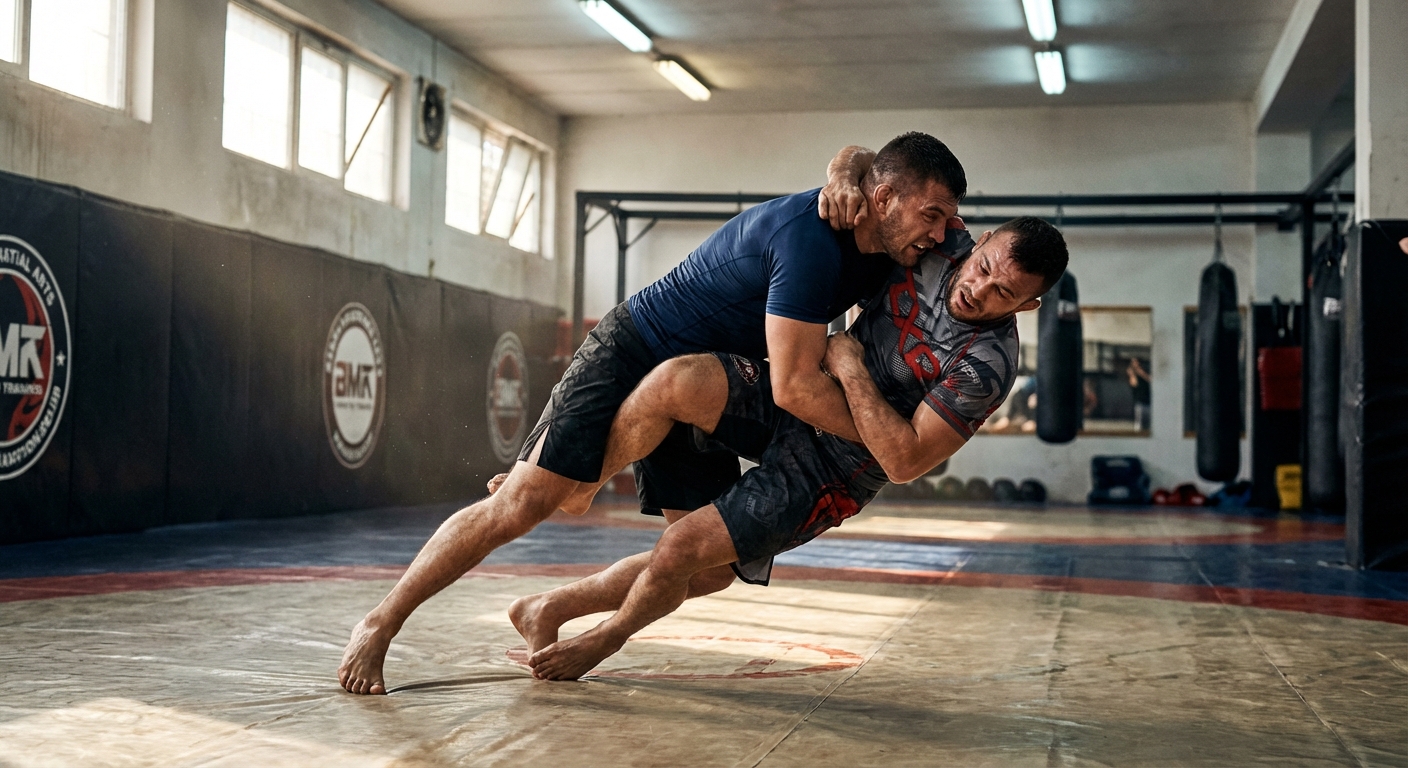
Per UFC Stats, Hernandez has a takedown accuracy of 52% across his UFC career and an average of 2.1 takedown attempts per 15 minutes. Those numbers may not sound overwhelming, but Strickland’s takedown defense rate of 67%, while respectable, is not elite. If Hernandez can get this fight to the ground even once or twice per round, it fundamentally changes the dynamic and forces Strickland to expend energy getting back to his feet rather than maintaining the striking volume that defines his style.
Hernandez’s coaches at MMA Lab in Arizona have built a game plan that capitalizes on the specific vulnerabilities a returning fighter typically shows. As one unnamed source in his camp told MMA Fighting: “We’re not looking to stand and trade with Sean for five rounds. We have a plan to test everything that a year off might have taken from him.”
The Stakes Beyond the Octagon
Strickland’s return carries weight that extends beyond the middleweight rankings. He remains one of the UFC’s most controversial and talked-about fighters, a lightning rod whose unfiltered commentary generates headlines, sponsorship challenges, and fan engagement in roughly equal measure. The UFC has historically valued fighters who move the needle on social media and in press conference settings, and Strickland does that as well as anyone on the roster.
A dominant win against Hernandez would immediately re-establish Strickland as a title contender and set up potential matchups against the current champion or other top contenders that would headline pay-per-view events. A loss, particularly a decisive one, would relegate him to the middle tier of the division and raise legitimate questions about whether his best fighting years are behind him.
The Paramount+ era has created new economic incentives for the UFC, and Strickland’s ability to generate subscriber interest makes his return commercially significant regardless of the result. But for Strickland himself, this fight is about proving that the layoff was a reset, not a decline, and that the fighter who shocked the world by winning the middleweight title is still in there somewhere, waiting for the cage door to close and the work to begin.
My Take
Hernandez is the smarter pick here, but betting against Strickland has been a losing proposition for most of his career. The layoff is a legitimate concern, and Hernandez’s grappling gives him a clear path to victory that does not require him to engage in the kind of five-round striking war where Strickland has historically been at his best. If this fight stays standing, Strickland’s jab and pressure will gradually overwhelm Hernandez. If it goes to the ground, Hernandez has a significant advantage.
The most likely outcome is a competitive, gritty fight that goes to the scorecards, with the winner determined by whether Hernandez can control where the fight takes place. Strickland’s chin, toughness, and sheer will are never in question, but those attributes are not always enough when a year of ring rust meets a hungry, well-prepared opponent in a five-round main event.
This is the kind of fight that reminds you why MMA is the most unpredictable sport on the planet. And with Strickland involved, unpredictability is the only thing you can predict.
Sources
- UFC Fight Night: Strickland vs Hernandez - UFC.com, February 21, 2026 event page
- UFC Schedule 2026: Dates, Start Times - Paramount+, 2026 schedule
- UFC Stats: Fighter Statistics Database - Career and per-fight statistics for Strickland and Hernandez
- MMA Schedule 2026: Dates, Division, Location - Yahoo Sports, 2026 MMA calendar