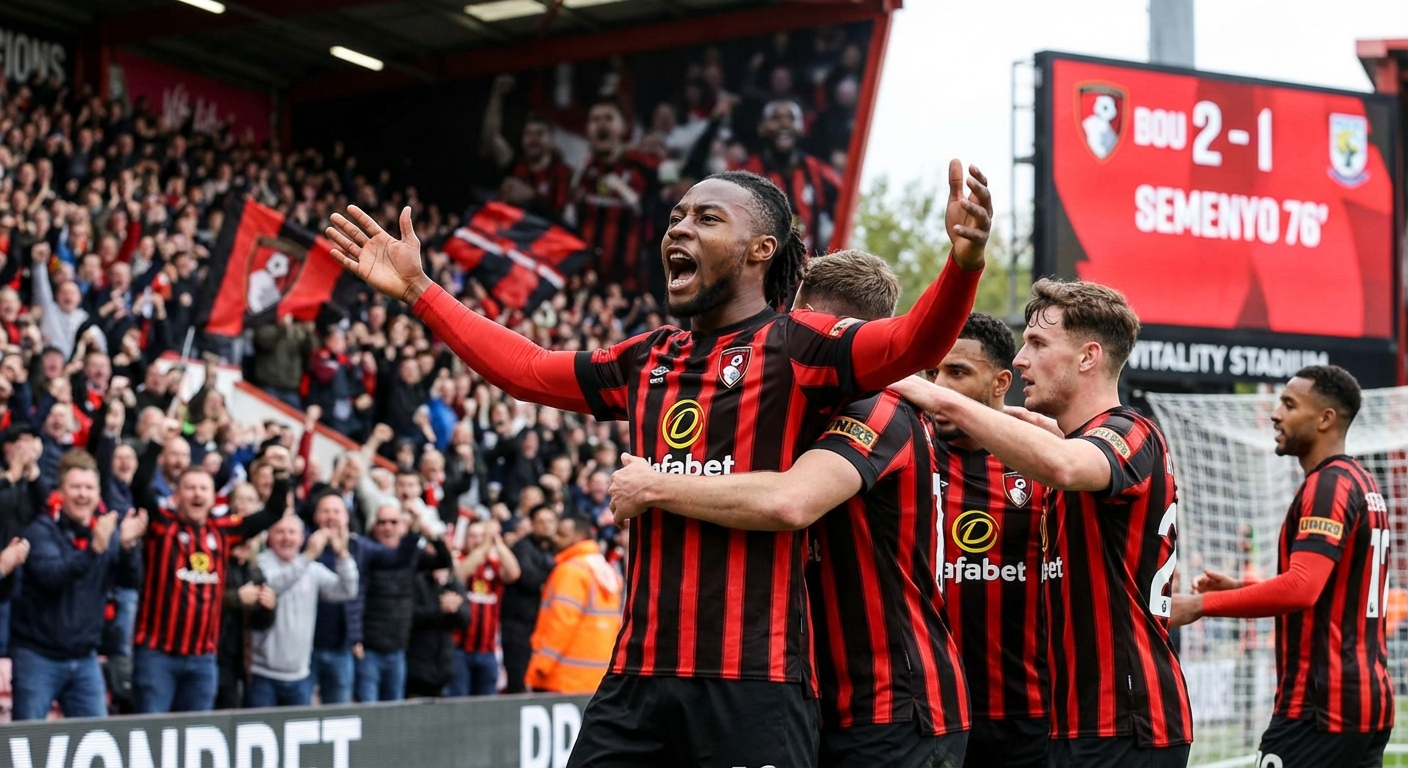
Manchester City announced Antoine Semenyo’s signing on January 7, completing a £62.5 million transfer from AFC Bournemouth, as first reported by David Ornstein of The Athletic. The fee represents the club’s largest January spending in over a decade. According to Fabrizio Romano, the deal happened quickly once negotiations began in earnest, with City desperate to address an attacking crisis that has seen them drop points against promoted sides and draw matches they would have won comfortably in previous seasons. Semenyo arrives as a solution to problems that have plagued Pep Guardiola’s team since autumn, but the question of whether one player can rescue a season that has veered so dramatically off course remains unanswered.
The numbers that attracted City’s interest are impossible to ignore. Semenyo scored 11 goals and provided 7 assists in the first half of the season, production that ranked him among the Premier League’s most effective attackers. His underlying metrics are equally impressive: his 0.58 expected goals per 90 minutes placed him in the top 10% of wide forwards across Europe’s top five leagues, per FBref. He completes 3.2 dribbles per game according to WhoScored, drawing fouls and creating chaos in situations where City’s current attackers have been too predictable. Valued at £45 million by Transfermarkt before the move, Semenyo at 25 years old represents both an immediate upgrade and a long-term investment in a position where City’s options have thinned considerably.
The context surrounding the transfer reveals how far Manchester City have fallen from their recent standards. They sit third in the Premier League table, six points behind Arsenal with 17 matches remaining. Their title defense has been undermined by uncharacteristic inconsistency, including a 1-1 draw with Brighton this week that left Guardiola visibly frustrated during his post-match press conference. City have drawn eight league matches this season, more than they drew in the entirety of their centurion campaign in 2017-18. The margins that once favored them have evaporated, and the squad that won four consecutive Premier League titles suddenly looks vulnerable in ways it never did before.
What Semenyo Brings
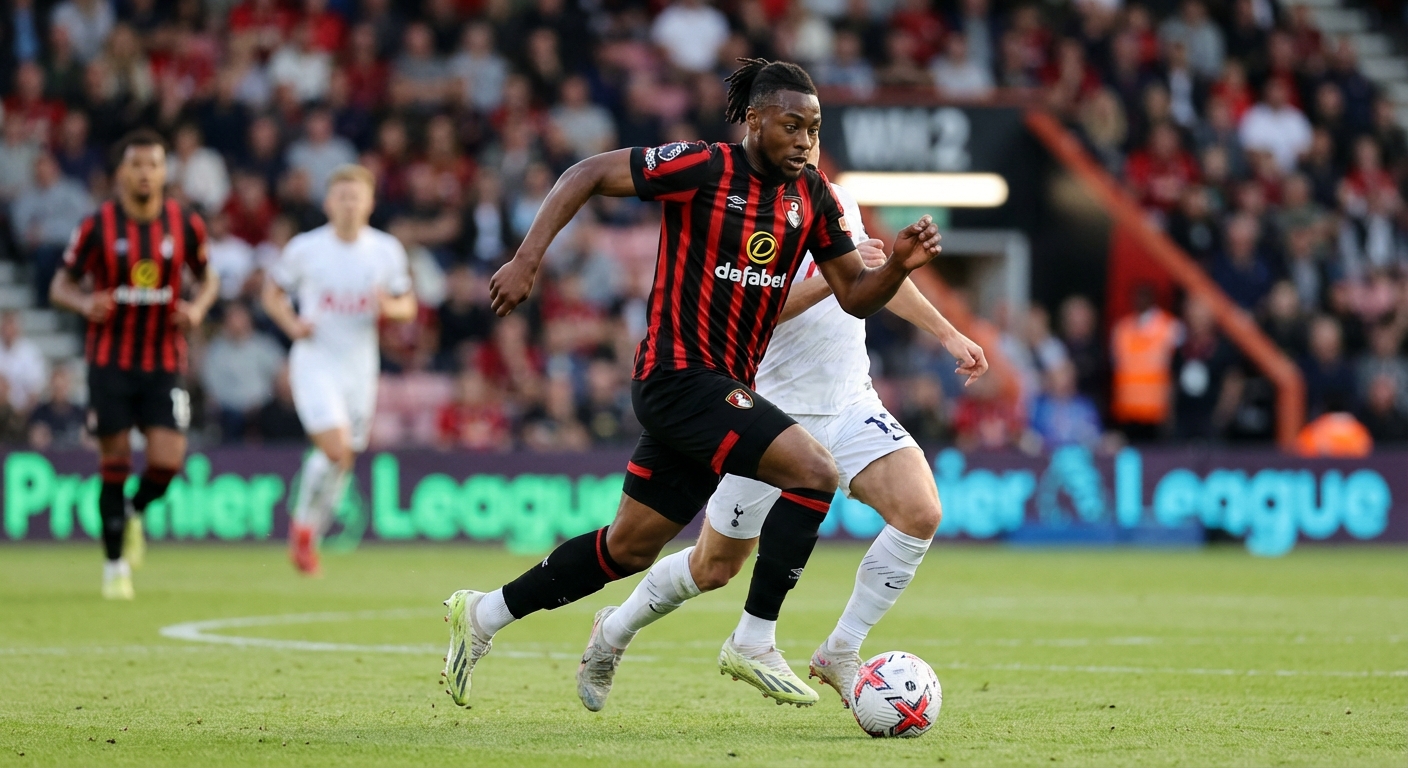
Semenyo’s game is built on directness and aggression, qualities that City have lacked from their wide positions this season. He attacks defenders with purpose, driving at them rather than slowing down to look for safer options. His pace is genuine top-end speed rather than the controlled quickness that characterizes many modern wingers, and he’s willing to use it in both offensive and defensive transitions. Bournemouth deployed him primarily from the left wing, cutting inside onto his stronger right foot, but he has also been effective from the right and through the middle when circumstances demanded flexibility.
His finishing has improved dramatically over the past 18 months. Semenyo arrived at Bournemouth from Bristol City with questions about his end product, concerns that seemed justified during his first season on the south coast. Something clicked last spring, and his conversion rate has climbed to levels that justify City’s significant investment. He’s particularly dangerous from inside the penalty area, where his combination of strength and timing allows him to get shots off under pressure that other players would struggle to execute.
The pressing intensity that Semenyo brings should appeal to Guardiola’s tactical preferences. He ranks in the top 15% of wide forwards for pressures per 90 minutes per Opta, showing the work rate and positioning that City’s defensive system requires from its attacking players. His willingness to track back and win the ball high up the pitch could help restore the suffocating pressure that made City so difficult to play against in previous seasons. The team’s pressing has declined noticeably this year, and adding an attacker who genuinely enjoys the defensive side of the game addresses that issue directly.
Semenyo’s arrival also provides insurance against the injury concerns that have plagued City’s attack. Jack Grealish has missed significant time this season, and when he has played, his form has been inconsistent at best. Phil Foden has dealt with recurring muscle issues that have limited his availability. Erling Haaland, for all his goals, has looked isolated at times without the creative support that a functioning attack provides. Semenyo gives Guardiola another option, another body to rotate through a position that has become a weakness rather than a strength.
The Deeper Problems
Money cannot solve every issue, and Manchester City’s struggles this season extend well beyond their attacking options. The midfield that once dominated possession with surgical precision has shown signs of age and fatigue. Rodri’s absence through injury exposed how dependent City’s system had become on his ability to control tempo and protect the back line. Kevin De Bruyne, still capable of brilliance, cannot maintain the consistency that made him the league’s most dangerous playmaker for the better part of a decade. The midfield that won everything looks like a unit in need of renewal rather than reinforcement.
The defensive vulnerabilities have been even more concerning. City have conceded 27 goals in 21 Premier League matches per FBref, a rate that would have been unthinkable during their championship seasons. The center-back pairing of Ruben Dias and Manuel Akanji has been solid when both are fit, but depth behind them remains thin, and neither player has performed at the level they established in previous campaigns. The full-back positions have become a particular weakness, with Kyle Walker’s pace declining noticeably and Josko Gvardiol still adapting to the demands of the Premier League’s most intense matches.
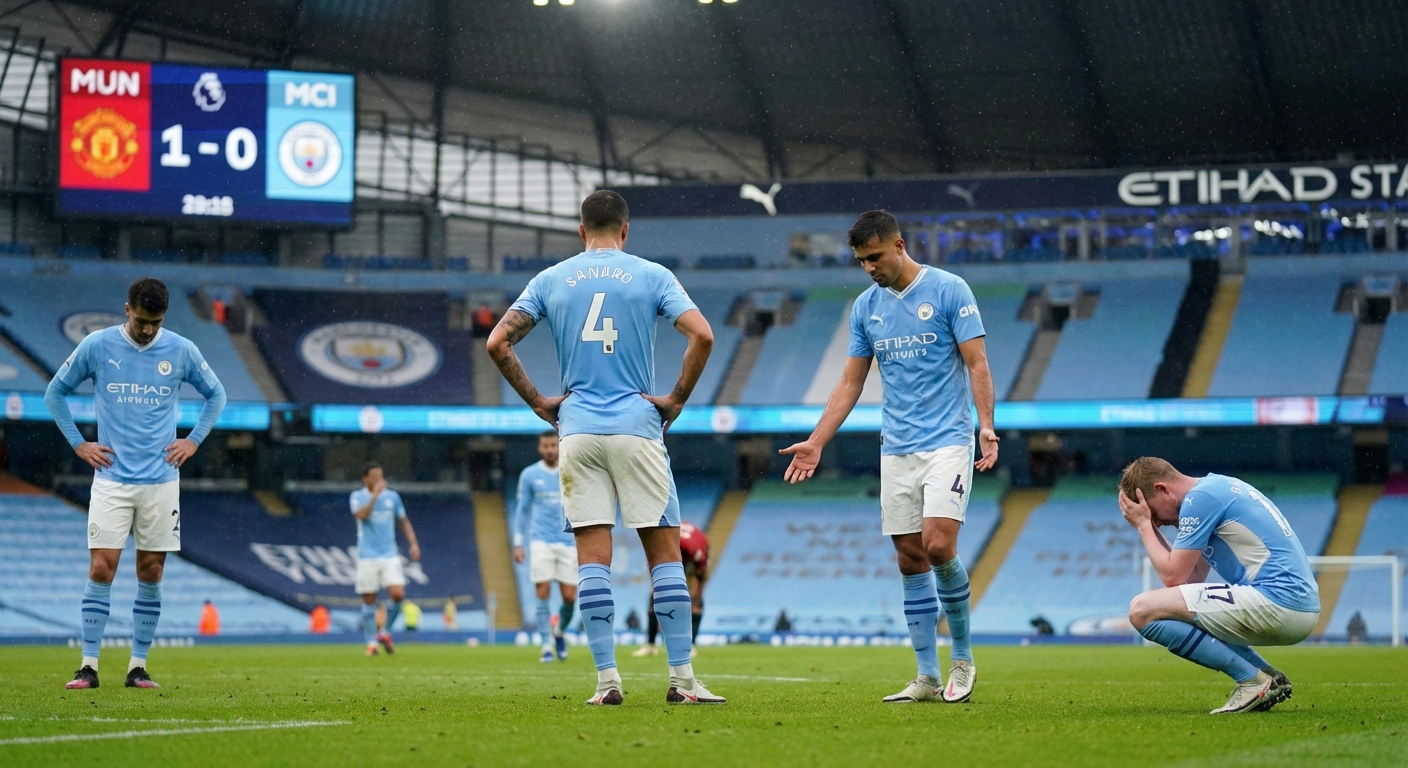
Guardiola’s tactical rigidity has also come under scrutiny this season. His commitment to playing out from the back has been exploited by teams willing to press aggressively, leading to turnovers in dangerous positions that better opponents have punished. The predictability of City’s buildup play has allowed opposing managers to prepare more effectively, denying the spaces that City’s intricate passing combinations once exploited. Guardiola has adjusted throughout his career when circumstances demanded it, but this season he has seemed reluctant to deviate from principles that have served him well in the past.
The summer transfer window’s decisions have contributed to the current predicament. As Sam Lee of The Athletic reported, City chose not to pursue a replacement for Bernardo Silva, who departed for Barcelona in a deal that brought financial flexibility but removed one of the squad’s most intelligent players. The gamble that existing personnel could cover his contributions has not paid off. Similarly, the decision to trust Haaland without a true backup striker has left City dependent on a player whose form fluctuates more than his prolific statistics might suggest. Semenyo addresses the wide positions, but the other gaps remain unfilled.
The Title Math After Semenyo
For Semenyo’s signing to be judged a success, City will need to win the Premier League or go deep in the Champions League. A third-place finish and early European exit would make the £62.5 million investment look like desperation rather than strategy. The expectations at this club remain championship or failure, and bringing in a player of Semenyo’s caliber during January suggests the hierarchy believes the title is still achievable. Whether that belief is justified depends on whether Arsenal stumbles and whether City can find the form that has eluded them since October.
The immediate test comes against Liverpool on February 1, a fixture that will reveal whether Semenyo has integrated quickly enough to impact a match of the highest stakes. City need points from their remaining fixtures against top-six opponents, and the February schedule includes meetings with Arsenal, Liverpool, and the FA Cup fifth round. The timeline is unforgiving: January signings historically take four to six weeks to reach full match sharpness in a new system, and City’s fixture congestion leaves little room for a gentle introduction.
Semenyo’s personality and approach to pressure will determine whether he can handle the weight of expectations at City. Bournemouth is a warm club with modest ambitions, where strong individual performances earn praise regardless of team results. Manchester City is a corporation that demands trophies, where falling short of perfection generates criticism and questioning. The mental transition from one environment to the other has broken players with more experience than Semenyo possesses. His ability to handle that pressure will matter as much as his ability to beat defenders and finish chances.
The Verdict
The Semenyo signing is a smart but incomplete answer to City’s problems, and it reveals something important about where this club stands in its competitive cycle. Semenyo addresses the most visible weakness — the lack of directness and goal threat from wide positions — but the fee also reflects a broader strategic shift at the Etihad. This is a club that built its dynasty on surgical summer planning, signing players who fit Guardiola’s system with precision. A record January outlay on an attacker who thrived in Bournemouth’s counter-attacking system represents a departure from that model, one driven by urgency rather than the patient recruitment that defined City’s best transfer windows.
The deeper concern is tactical. Semenyo’s greatest strength — his ability to carry the ball at speed into space — requires exactly the kind of transitional football that Guardiola has historically resisted. City’s system is built on positional play and controlled possession, not the direct vertical runs that made Semenyo so effective at Bournemouth. The degree to which Guardiola adapts his approach to maximize Semenyo’s attributes, rather than asking the player to suppress his instincts, will determine whether this transfer justifies its price tag.
City’s title chances hinge less on Semenyo’s output than on whether Rodri returns to full fitness and whether De Bruyne can sustain form across the congested February-March schedule. Semenyo will score goals and stretch defenses, but closing the gap to Arsenal demands improvement across all three thirds of the pitch. One signing, no matter how talented, cannot compensate for a midfield that has lost its metronome and a defense that has conceded at a rate unseen in the Guardiola era. The transfer is justified on its own merits. Whether it is sufficient is a different question entirely.
Sources
- Man City sign Antoine Semenyo from Bournemouth in £64M deal - ESPN, transfer details and deal breakdown.
- Antoine Semenyo joins Man City: Bournemouth forward signs in £64m transfer - Sky Sports, transfer confirmation and context.
- Antoine Semenyo 2025-26 Season Statistics - FBref, season-long statistical data cited throughout.
- Antoine Semenyo Market Value and Transfer History - Transfermarkt, valuation and career transfer history.