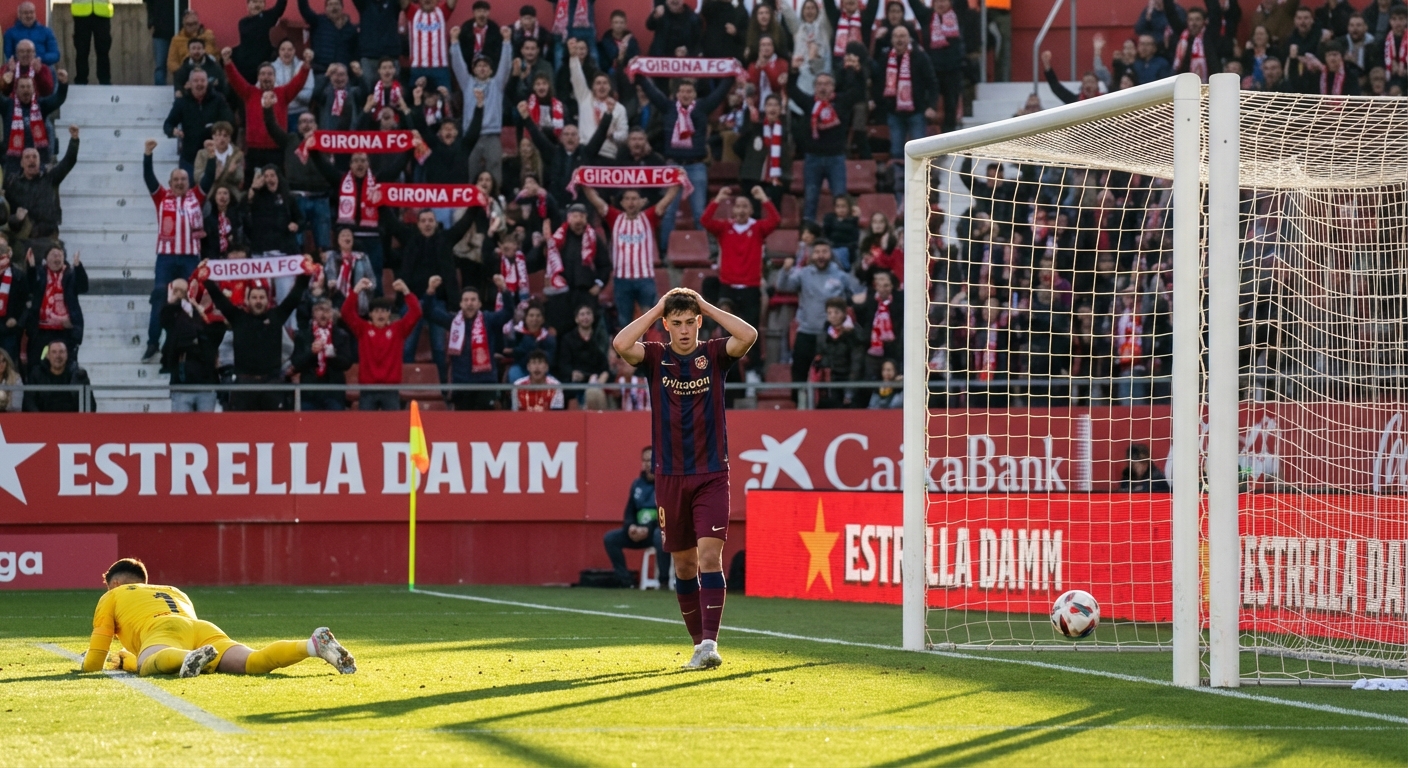
The penalty was perfect in every way except direction. Lamine Yamal stepped up in first-half stoppage time at Montilivi, Barcelona leading the approach play, Dani Olmo fouled by Daley Blind in the box, the referee pointing to the spot. Yamal struck it cleanly, low and hard to the left. Paulo Gazzaniga dove the other way entirely. And the ball slammed off the inside of the post and bounced back into play, spinning harmlessly across the six-yard box before a Girona defender hacked it clear. Gazzaniga lay on the ground, arms spread, grinning at the sky. He’d been beaten. The post saved him. Yamal turned away with his hands on his hips, and the stadium exhaled in a collective roar of relief that carried the weight of something larger than a single missed spot kick.
That penalty, on the stroke of halftime with Barcelona still locked at 0-0, became the hinge on which Sunday’s match, and potentially the entire La Liga title race, pivoted. Girona won 2-1. Real Madrid, who had already demolished Real Sociedad 4-1 two days earlier behind a Vinicius Junior double, now lead the table by two points. Barcelona have lost twice in a week, conceding eight goals across a 4-0 Copa del Rey demolition by Atletico Madrid and this defeat to a team sitting 15th in the table before kickoff. Hansi Flick’s squad, which looked like the best team in Europe as recently as January, is suddenly unraveling at the worst possible moment. And a teenage wunderkind’s penalty miss is the image that will define the crisis.
The 60 Seconds That Destroyed Barcelona’s Afternoon
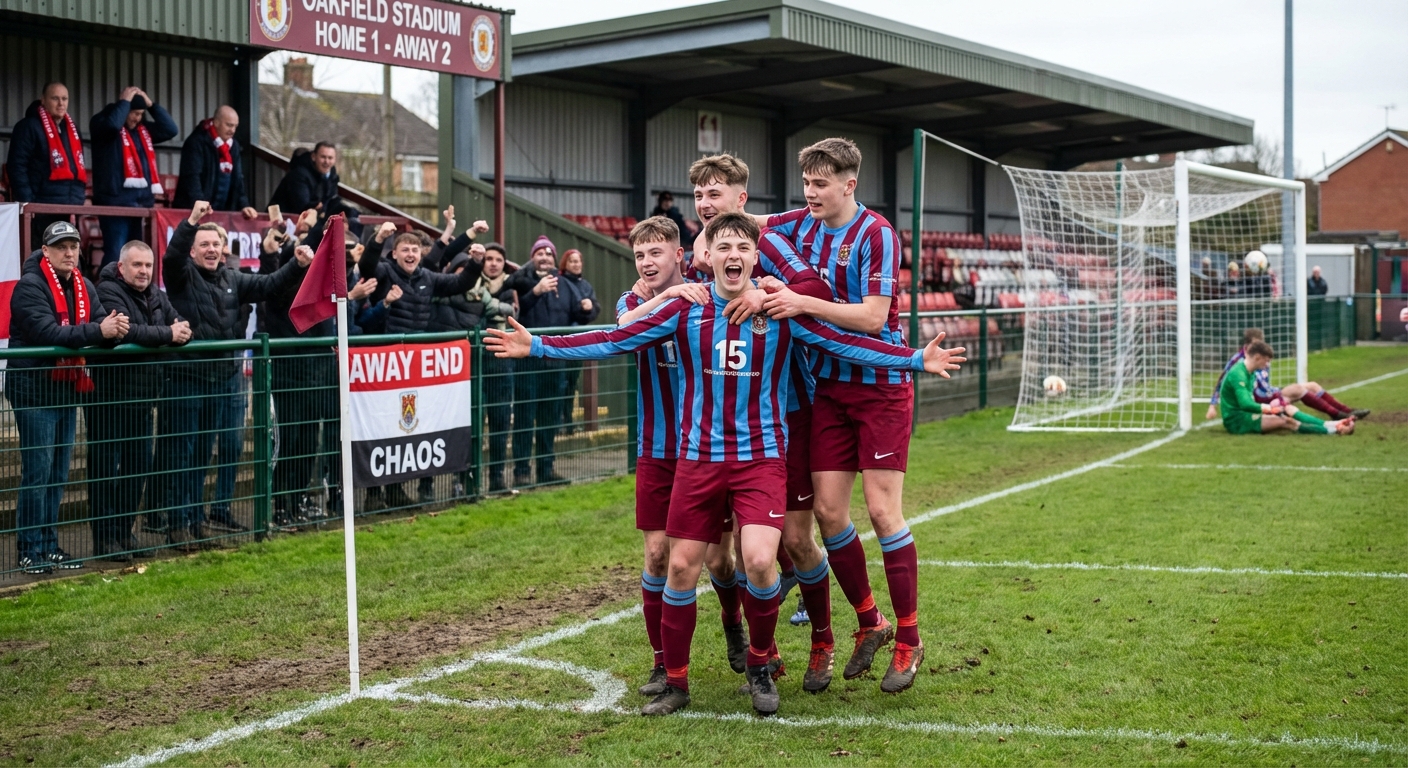
The second half started promisingly for Barcelona despite the penalty miss. They dominated possession, pinned Girona deep, and created the kind of sustained pressure that usually produces goals through sheer volume. It finally broke through in the 59th minute when Pau Cubarsi, the 17-year-old center-back who has become one of the most exciting young defenders in European football, rose to meet Jules Kounde’s cross from the right and headed it into the top corner. It was his first league goal for Barcelona, a moment of pure elation, the kind of breakthrough that seemed destined to define his afternoon. The celebration was emphatic. The teenager sprinted to the corner flag, teammates piling on top of him in a heap of relief and joy. Barcelona led 1-0, and Girona looked beaten.
Sixty seconds later, the lead was gone. Thomas Lemar, collecting a pass from Vladyslav Vanat on the left flank, worked a quick combination, found space in the box, and finished from close range to make it 1-1. The goal owed its existence partly to Cubarsi’s own positioning: the teenager who had just scored was caught too high up the pitch from his celebration, leaving space behind him that Girona exploited with a direct ball over the top. In the span of one minute, Cubarsi went from scoring the goal that should have sealed three points to contributing to the defensive lapse that gave Girona life. “Hero to zero in 60 seconds,” as Fox Sports framed it in their player ratings, where Cubarsi received a 5 out of 10 for the performance.
The emotional whiplash was visible on Barcelona’s players. A team that had been in complete control suddenly looked nervous, hesitant, their passing lacking the precision that had characterized the first 60 minutes. Girona sensed it. The home crowd sensed it. And what followed in the final 30 minutes was a slow-motion collapse that will haunt Flick for weeks.
Beltran’s Winner and the VAR Controversy
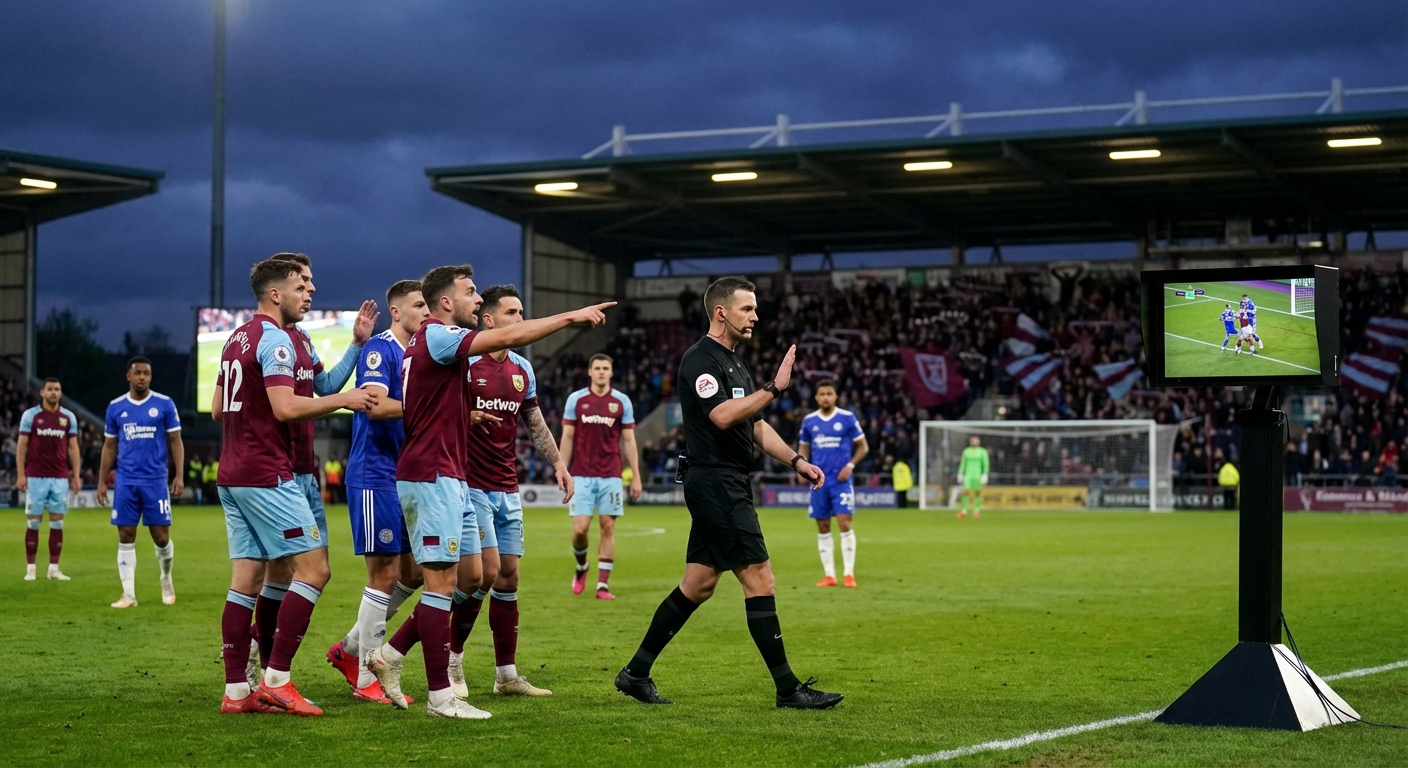
Fran Beltran scored the goal that may define Barcelona’s season in the 87th minute. The substitute collected the ball just inside the penalty area, steadied himself, and drove a low shot past Marc-Andre ter Stegen. Montilivi erupted. Barcelona’s players immediately surrounded the referee, protesting that Kounde had been fouled in the buildup, pushed off the ball before Girona launched the attack that led to the goal. The referee went to the VAR monitor. The replay was reviewed. And to Barcelona’s disbelief, the goal stood.
Flick was honest in his postgame assessment, even as the controversy swirled. “What do you think? A foul, right? No need to say anything more,” he told reporters when asked about the incident, per ESPN. But he refused to hide behind the officiating. “If we had played well, I could criticize the decision, but we did not play good. No complaining, no excuses. They make their job. Sometimes it’s not a good job, but they are on the same level that we played.” The admission was as damning as the result itself. Flick wasn’t just acknowledging a bad performance. He was conceding that his team’s level had dropped so severely that a questionable refereeing decision was merely the final symptom of a deeper problem, not the cause.
Barcelona fired 27 shots on the evening but put only four on target, per Al Jazeera. That ratio, four shots on target from 27 attempts, tells a story of profligacy that goes beyond bad luck. It was their first league defeat with at least 27 shots since 2015, per Sports Mole. The chances were there. The finishing was not. And in a title race where margins are measured in individual moments, Barcelona’s inability to convert dominance into goals has become a structural flaw rather than an occasional frustration.
Barcelona’s Penalty Crisis: A Season-Long Problem
Yamal’s miss was not an isolated incident. Barcelona have now missed three of their seven penalties in La Liga this season, giving them the joint-worst conversion rate in the division alongside Valencia, per Sports Mole. Robert Lewandowski accounted for the other two misses: one clipped off the post against Sevilla in October, and another blazed over the bar against Atletico Madrid in December. Three missed penalties across a season is unusual for any top club. For a team chasing a title, it represents points squandered in situations where conversion should be routine.
The penalty problem points to something more concerning than individual technique. Penalty conversion across Europe’s top five leagues typically hovers around 75-80 percent, and elite clubs with experienced takers usually sit above that baseline. Barcelona are converting at 57 percent, a rate that suggests either a selection problem, with the wrong players stepping up, or a psychological one, with pressure affecting execution. Yamal is 18. Lewandowski is 37. Neither profile is ideal for the high-stakes, slow-walk-to-the-spot moment that defines penalty taking. The club’s reluctance to designate a single, reliable taker has cost them at least four points this season, points that look enormous now that Real Madrid hold a two-point advantage with 14 matches remaining.
Compare Madrid’s spot-kick record and the gap widens further. Vinicius Junior converted both his penalties in the 4-1 win over Real Sociedad on February 14, per Al Jazeera, striking each with the composed arrogance that comes from knowing you’re the designated taker and nobody else is stepping up. Madrid have missed just one penalty all season. In a race this tight, the three-penalty gap between the clubs translates directly to the two-point gap in the standings.
Flick’s Crisis: Two Defeats, Eight Goals Conceded, One Week
The Girona defeat cannot be analyzed in isolation. It follows the Copa del Rey semifinal mauling by Atletico Madrid, a 4-0 humiliation that exposed Barcelona’s defensive fragility against teams willing to press high and counterattack with speed. In the space of one week, Flick’s side conceded eight goals across two competitions. The defensive structure that carried them to the top of La Liga through the first half of the season has disintegrated, and Flick’s own postgame comments suggest he knows it. “We defended very badly, especially in transition,” he told reporters. “We were too open, our midfield was not in the right position. We are not in a good moment. The players are really tired.”
That admission of fatigue is telling. Barcelona are competing on multiple fronts, and the physical toll of a congested fixture schedule is showing in their defensive intensity. But fatigue alone doesn’t explain a 4-0 cup loss or a 2-1 defeat to a team in 15th place. The deeper issue is structural: Flick’s high defensive line, which generates turnovers and fuels Barcelona’s pressing game, becomes a liability against teams with the pace and directness to exploit the space behind it. Girona’s two goals both came from transition situations where Barcelona were caught pushing forward, their center-backs exposed by runners exploiting the gap between defensive and midfield lines. The same vulnerability was apparent against Atletico. Two different opponents identified and punished the same weakness in the space of five days. That’s not a one-off. That’s a pattern.
How This Plays Out
The La Liga title race now has a clarity it lacked a week ago. Real Madrid lead by two points with 14 matches remaining, and their momentum is unmistakable: eight consecutive league wins at the Bernabeu, Vinicius Junior in imperious form, and a squad depth that allows Alvaro Arbeloa to rotate without losing quality. Barcelona, by contrast, look like a team that has peaked too early and is now managing the consequences of a season that has demanded too much from too few players.
The fixture list offers Barcelona no respite. They face Levante next, then Rayo Vallecano, before a crucial stretch in March that includes visits from Villarreal and Athletic Club. None of those are easy points, and Flick’s acknowledgment that his players are “really tired” raises questions about whether this squad has the physical reserves to sustain a 14-match sprint to the finish. Madrid’s schedule is comparable, but they have the buffer of a two-point lead and the psychological advantage of knowing that Barcelona are the ones who must chase, press, and win under pressure.
The historical parallel worth watching is the 2023-24 season, when Barcelona held a significant lead before Real Madrid’s late-season surge delivered the title. That collapse was driven by injuries and fatigue, the same factors Flick identified on Sunday night. If the pattern repeats, it won’t be because of a single missed penalty or a single controversial goal. It will be because Barcelona’s squad, brilliant in its best moments, doesn’t have the depth to absorb the attrition of a multi-competition campaign. Madrid do. And in the final weeks of a title race, depth isn’t just an advantage. It’s the difference between holding two points and surrendering them, one exhausted Sunday at a time.
Yamal’s penalty will be replayed endlessly in the coming weeks, but the shot that matters most was Beltran’s, low and hard into the corner in the 87th minute, the kind of goal that turns a title race. Barcelona had 27 shots and four on target. Real Madrid, playing two days earlier, put four goals past Real Sociedad with ruthless efficiency. The gap isn’t about talent. It’s about the margins that decide championships across European football, the penalties converted, the transitions defended, the moments where fatigue meets concentration and one team blinks first. On Sunday at Montilivi, Barcelona blinked.
Sources
- Barcelona Lose to Girona 2-1 After Lamine Yamal’s Penalty Miss - Al Jazeera
- Hansi Flick Won’t Blame ‘Clear’ Foul in Shock Barcelona Loss - ESPN
- Barcelona Player Ratings vs Girona: Yamal Misses Penalty, Cubarsi Goes From Hero to Zero - Fox Sports
- Barcelona Penalty Stat Makes for Grim Reading After Yamal Miss - Sports Mole
- Real Madrid Thrash Real Sociedad 4-1 to Move Top of La Liga - Al Jazeera