Arsenal have spent the better part of three years knocking on the door. They finished second to Manchester City in 2023-24. They finished second again in 2024-25, this time by a single point in a race that went down to the final day. Two consecutive near-misses, two consecutive summers of “what if,” two consecutive offseasons spent hearing pundits explain why Mikel Arteta’s side could not quite get over the line against Pep Guardiola’s machine.
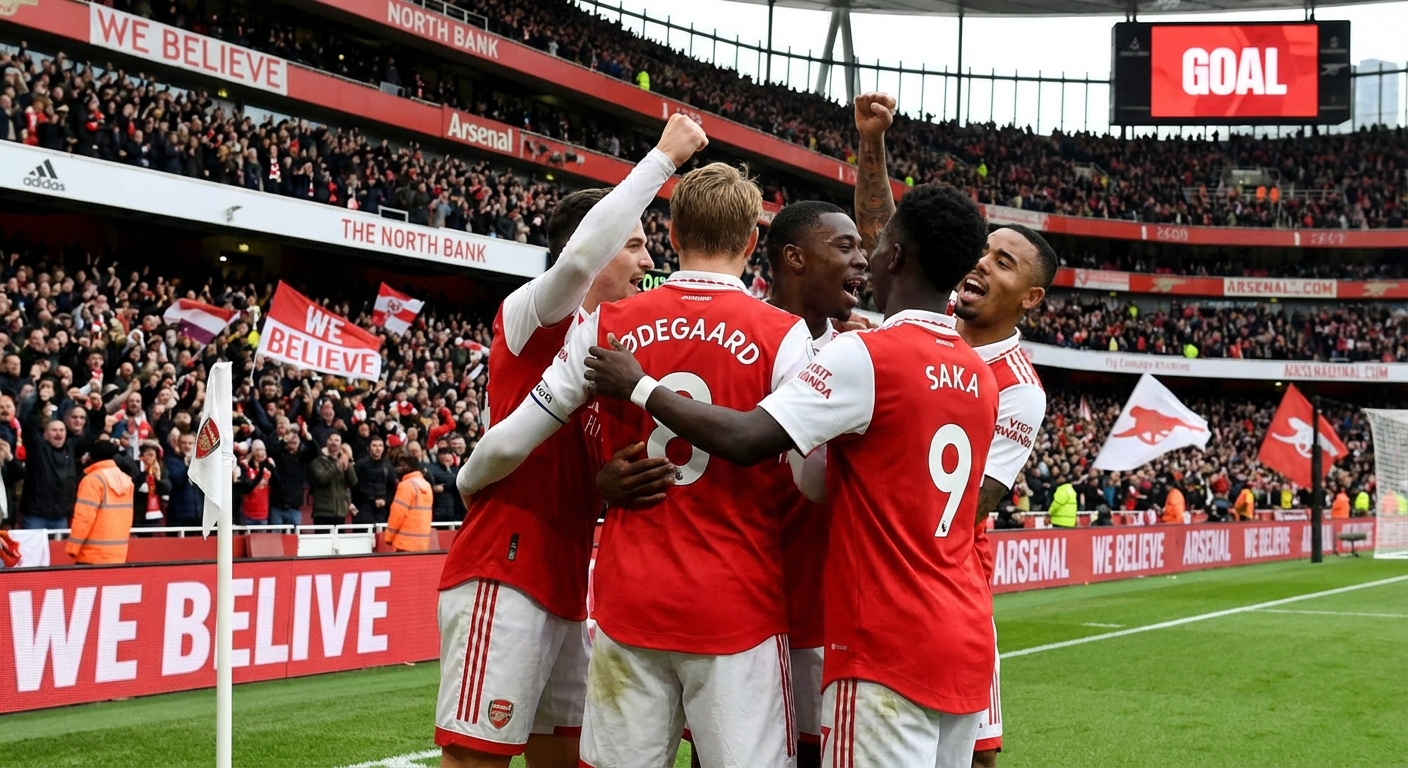
This season, Arsenal are not knocking on the door. They have kicked it down. Sitting six points clear at the top of the Premier League table with 13 matches remaining, Arteta’s squad has built a lead that feels comfortable for the first time in this title-challenging era. The question is no longer whether Arsenal can keep pace with City. It is whether anyone can catch them.
The Numbers Behind Arsenal’s Dominance
The raw statistics paint a picture of the most complete Arsenal team in two decades. Through 25 matches, Arsenal have accumulated 56 points from 17 wins, 5 draws, and 3 losses, per the Premier League’s official standings. Their goal difference of plus-32 is the best in the league, and their 49 goals scored represent the second-highest total behind only Manchester City’s 51.
But the numbers that truly separate Arsenal from the pack are defensive. Arteta’s side has conceded just 17 goals in 25 matches, an average of 0.68 goals per game. Per FBref’s advanced metrics, Arsenal’s expected goals against (xGA) of 22.3 is the lowest in the league, meaning they are not just defending well by results but by the quality of chances they are allowing. Opponents are simply not creating good opportunities against this backline.
“What Arsenal are doing defensively this season is historically elite,” wrote The Athletic’s Michael Cox in his tactical analysis. “They’ve combined the pressing intensity of peak Klopp Liverpool with the structural discipline of Simeone’s Atletico Madrid. No team in the Premier League has solved it consistently.”
William Saliba has been the anchor of this defense, but the collective improvement is what stands out. Gabriel, Ben White, and Jurrien Timber have formed a defensive unit that communicates, rotates, and recovers with the precision of a team that has spent years building tactical understanding. The consistency across 25 matches, not just individual performances, is what separates structural defensive excellence from a team riding a hot streak. That is system, not luck.
Why Manchester City Cannot Close the Gap
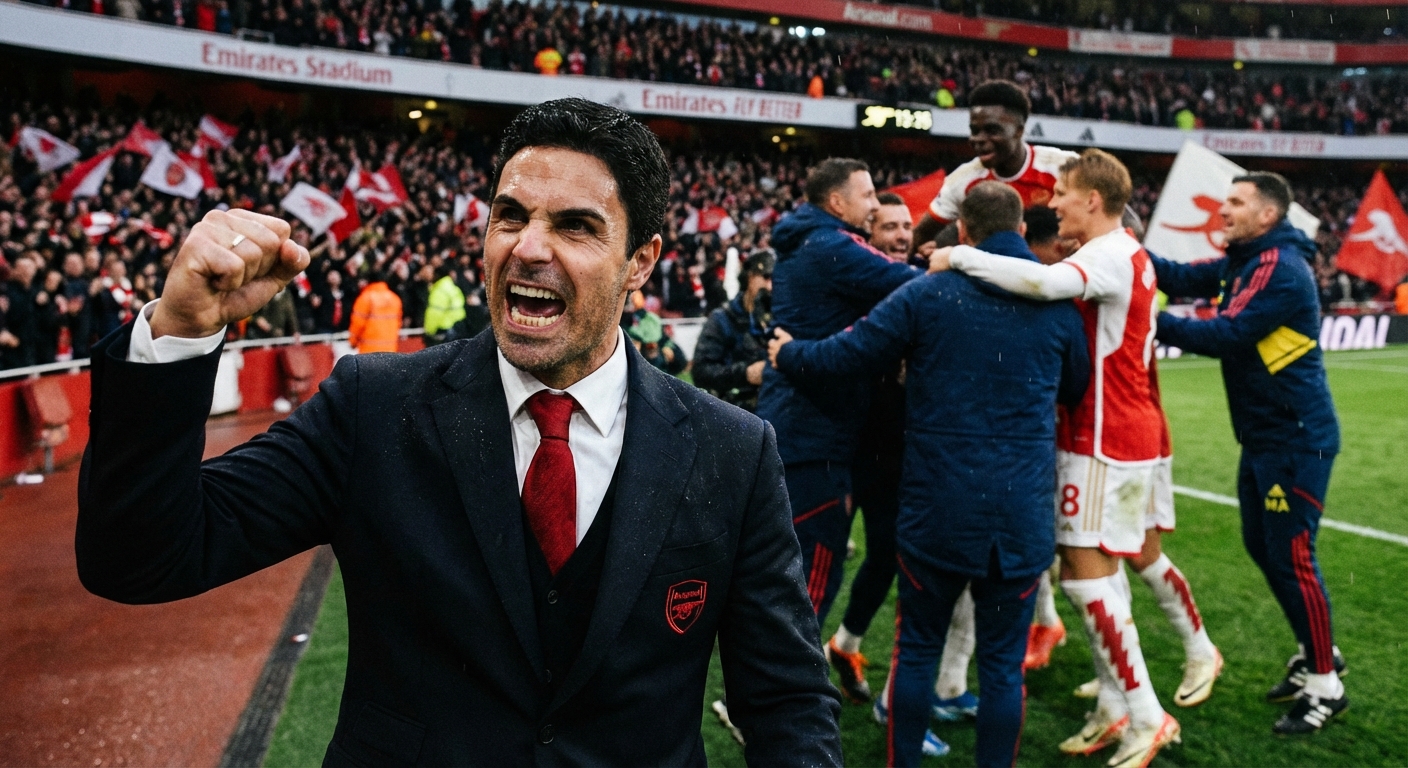
Manchester City sit second on 50 points, six behind Arsenal, and while Guardiola’s side has the talent to go on a run, the underlying data suggests their current form is unsustainable at the level needed to overtake the leaders. City have dropped 15 points from their first 25 matches, a rate that would have been unthinkable during their four-consecutive-title era from 2021 to 2025.
The problem is not offensive production. City have scored 51 goals, more than any other team. The problem is defensive vulnerability that Guardiola has been unable to solve. City have conceded 24 goals, seven more than Arsenal, and their xGA of 27.1, per FBref, places them fourth in the league rather than first. Key injuries, an aging midfield, and the departure of several defensive stalwarts over the past two transfer windows have left Guardiola without the kind of bullet-proof back line that defined his greatest City teams.
NBC Sports’ Premier League analysis noted that City would need to win 11 of their remaining 13 matches to reach 83 points, a total that has historically been enough to win the league. Arsenal, by contrast, need only win 9 of 13 to reach the same total. The margin for error is simply wider for the team at the top, and City have not shown the consistency this season to suggest they can produce the near-perfect run required.
Aston Villa: The Third Wheel That Could Cause Chaos
The most intriguing subplot in this title race is Aston Villa’s presence in third place on 47 points. Unai Emery’s side is not expected to sustain a genuine title challenge across the remaining 13 matches, but they are positioned to play kingmaker. Villa still have to play both Arsenal and City in the run-in, and their results in those matches could be the difference between a coronation and a collapse.
Villa’s form has been built on a balanced attack led by Ollie Watkins, who has 14 Premier League goals this season, and a midfield engine room that combines Youri Tielemans’ passing range with Douglas Luiz’s pressing intensity. They are the kind of team that can beat anyone on their day but lack the depth to produce results week after week against the league’s elite.
For Arsenal, the Villa match at Villa Park looms as the most dangerous fixture remaining. Away matches in the Midlands have historically been tricky for title challengers, and Emery’s tactical flexibility makes Villa a nightmare to prepare for. If Arsenal navigate that fixture without dropping points, the title is essentially sealed.
The Historical Precedent: How Often Does a Six-Point Lead Hold?
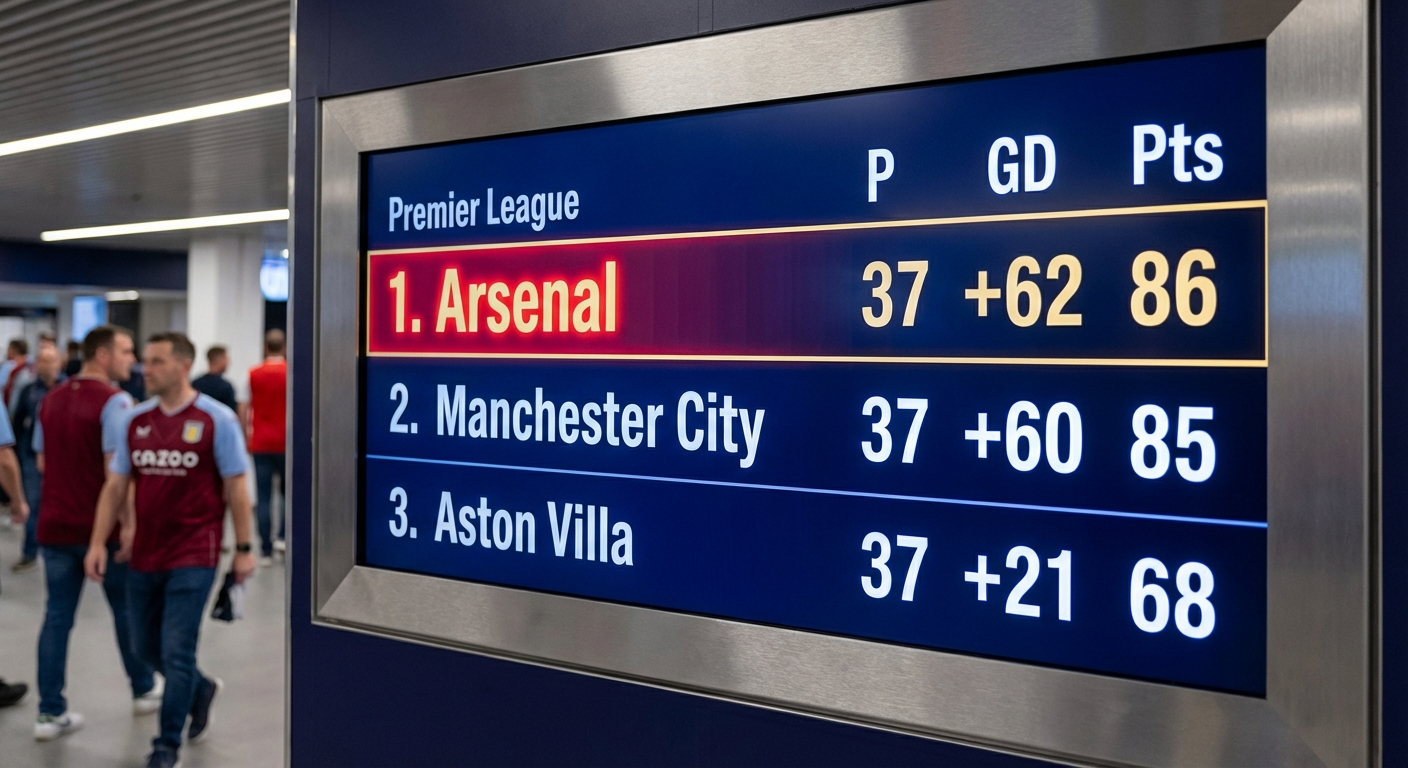
History strongly favors Arsenal in this position. According to data compiled by Opta, teams that have led the Premier League by six or more points at the 25-match mark have gone on to win the title in 14 of the last 16 instances since the Premier League’s inception in 1992. The two exceptions were both extraordinary collapses: Newcastle’s famous implosion in 1995-96 and Liverpool’s stunning late-season fade in 2018-19 when City overtook them with a 14-match winning streak.
Arsenal’s current squad bears no resemblance to either of those teams. Newcastle in 1996 were a one-man band built around Kevin Keegan’s emotional management and a thin squad that ran out of gas. Liverpool in 2019 were ultimately undone by a single result (the defeat at City in January) and a Guardiola side that was in the middle of the most dominant domestic run in English football history. Arsenal have the squad depth, the defensive resilience, and the tactical flexibility to manage a six-point lead across 13 remaining matches.
As we noted when Arsenal opened their seven-point lead in January, the psychological advantage of leading from the front cannot be overstated. Arsenal are not chasing. They are controlling the pace. Every time City drop points, the pressure mounts on Guardiola’s side, not on Arteta’s. That dynamic, more than any tactical adjustment or individual performance, is what makes this lead so difficult to overturn.
How This Plays Out
Arsenal will win the Premier League this season. The combination of the league’s best defensive record, a bench that has contributed 14 goals this season per FBref, and a fixture list that includes just three remaining away matches against current top-half sides makes them prohibitive favorites. Neither Manchester City nor Aston Villa have shown the consistency to produce the near-flawless run required to overtake them.
The more interesting question is whether this title represents the beginning of a period of sustained dominance for Arsenal or whether it is a one-off correction in a league that has been dominated by Manchester City for nearly a decade. Arteta’s squad is young enough to sustain this level for multiple seasons. Saliba is 24. Saka is 24. Rice is 26. The core of this team will be in their prime for the next three to four years.
If Arsenal close this out, the narrative shifts from “can they do it?” to “how many can they win?” For a club that has not lifted the Premier League trophy since 2004, that would be a transformation worth celebrating.
Sources
- Premier League 2025-26 Table and Standings - NBC Sports, updated February 2026
- Premier League Standings Shift on February 7, 2026 - FilmoGaz, February 2026
- FBref: Arsenal 2025-26 Season Statistics - Advanced metrics, xG, and xGA data
- Opta: Premier League Historical Standings Data - Title race precedent analysis