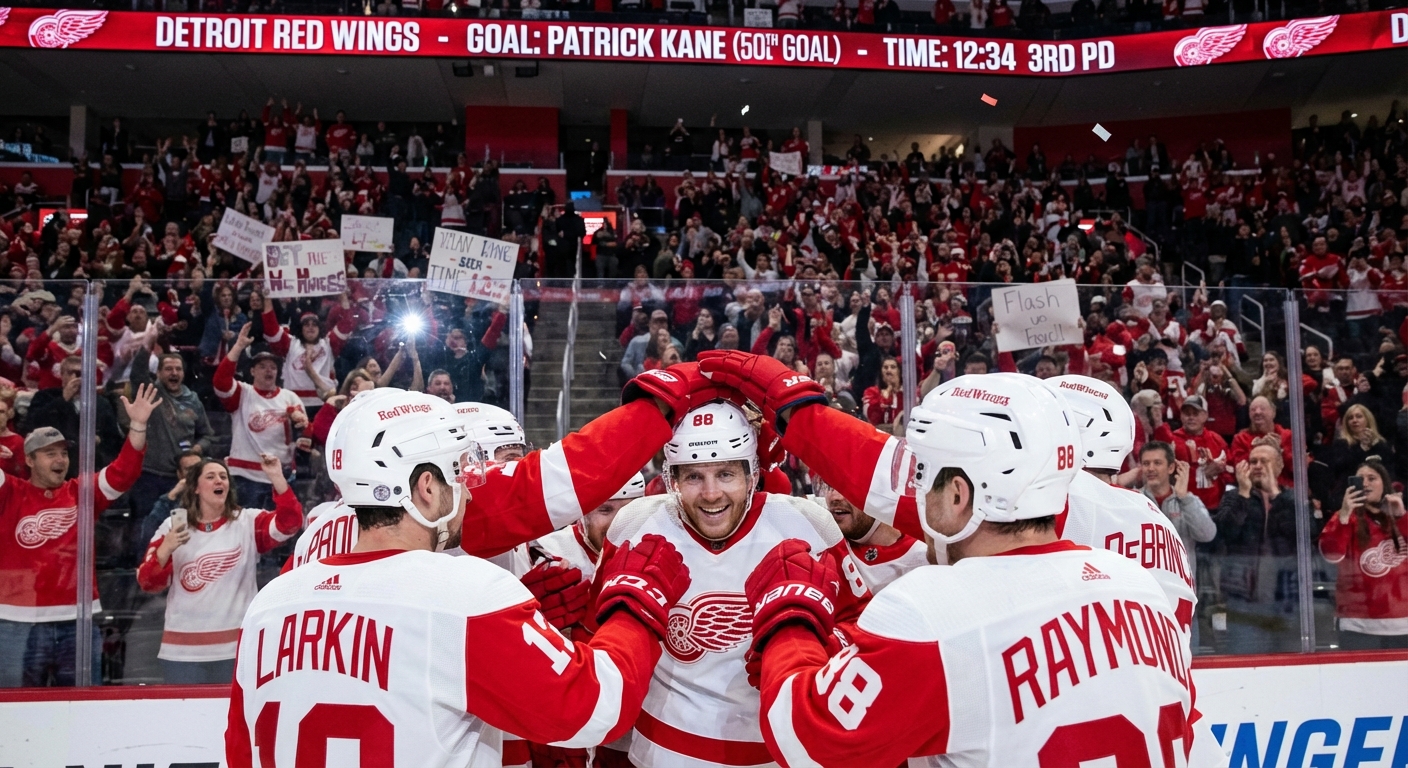
The puck slid into the empty Vancouver net at 16:07 of the third period on Thursday night, and Patrick Kane’s shoulders finally dropped. The goal itself was routine, a tap-in during a 5-1 Detroit blowout that had long since been decided. The number it represented was anything but ordinary. Kane had just become the 50th player in NHL history to score 500 career goals, joining a fraternity that includes every transcendent scorer the sport has ever produced. More significantly for American hockey, he became just the fifth player born in the United States to reach the milestone, adding his name to a list that includes Mike Modano, Keith Tkachuk, Jeremy Roenick, and Joe Mullen.
Kane stood at the bench and accepted congratulations from teammates who understood they had witnessed something historic. The Buffalo native who first announced himself to the hockey world as a 19-year-old helping the Blackhawks capture the 2010 Stanley Cup had completed a journey that seemed unlikely just a few years ago. A hip surgery that threatened to end his career prematurely had raised questions about whether Kane could continue playing at an elite level. Detroit took a chance on the diminished star, and Kane rewarded their faith by contributing meaningfully to a Red Wings team that has surprised the hockey world this season.
The milestone came in the most Patrick Kane way possible. He scored twice on Thursday, first on a power play at 19:31 of the first period to notch goal number 499, then sealed the game with the empty-netter that etched his name into history. The crowd at Little Caesars Arena gave him a standing ovation, and Kane admitted afterward that relief had replaced anticipation. The chase for 500 had weighed on him for weeks, a burden he was happy to finally set down.
The American Pioneer
Kane’s place in American hockey history was already secure before Thursday’s milestone. His 1,369 career points, per Hockey Reference, rank him among the highest-scoring American-born players ever, and his three Stanley Cup championships with Chicago established him as the centerpiece of the Blackhawks’ dynasty during the early 2010s. But 500 goals represents something different, a sustained excellence in finishing that requires both extraordinary skill and remarkable durability. Only four other Americans had ever managed to maintain that production across an entire career.

Mike Modano leads all American scorers with 561 goals, according to NHL.com records, a mark that Kane is unlikely to catch given his age and the years remaining in his career. Keith Tkachuk finished with 538, Jeremy Roenick with 513, and Joe Mullen with 502. Kane now sits fifth on that list with 500, just two goals behind Mullen for fourth place. The Red Wings have indicated their desire to keep Kane beyond this season, and his current scoring pace shows no sign of slowing.
The path Kane traveled to reach this milestone diverged significantly from his predecessors. Modano was a power center who combined size with speed. Tkachuk was a physically imposing winger who scored ugly goals in front of the net. Roenick brought a combination of skill and personality that made him one of hockey’s most recognizable stars. Kane is smaller than all of them, a playmaker whose game has always been about finesse rather than force. His 500 goals came primarily from his ability to see the ice differently than everyone else, to find shooting lanes that shouldn’t exist and finish with a wrist shot that goalies simply cannot stop consistently.
The Detroit Revival
The Red Wings’ decision to sign Kane following his hip surgery looked questionable at the time. Detroit was in the early stages of a rebuild, focused on developing young players rather than paying veteran stars whose best days appeared behind them. Kane arrived with diminished speed and questions about whether his body could handle the rigors of an NHL season. General Manager Steve Yzerman, himself a Hall of Famer who understands what elite scorers can provide, saw something in Kane that others had dismissed.
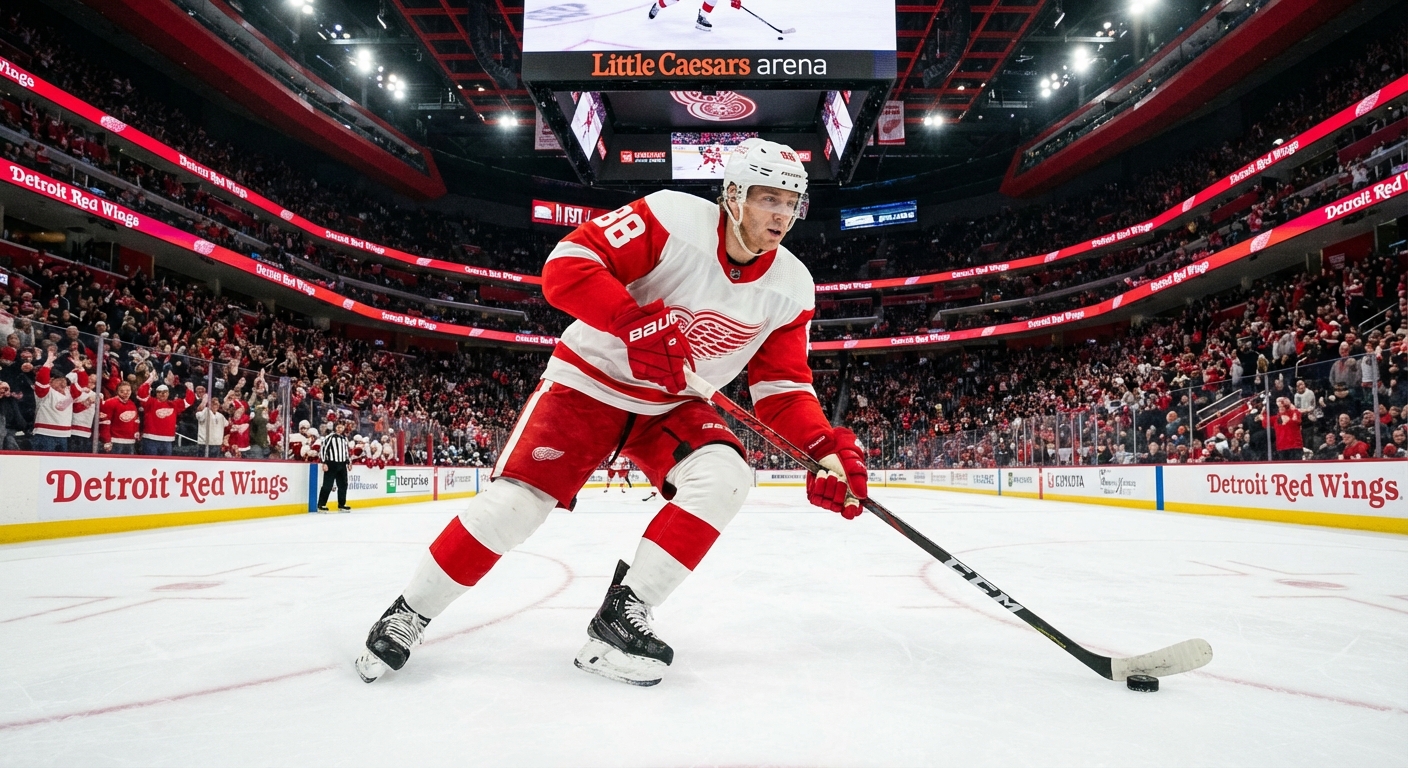
As The Athletic’s Mark Lazerus noted, Kane’s ability to reinvent himself after major surgery speaks to an elite hockey IQ that transcends physical attributes. The gamble has paid dividends beyond what even the most optimistic projections anticipated. Kane has contributed 42 points in 41 games this season, per Natural Stat Trick, production that ranks him among the Red Wings’ most valuable offensive weapons. His presence in the locker room has provided leadership that young players like Lucas Raymond and Moritz Seider desperately needed. The Red Wings are fighting for a playoff position that seemed laughable when the season began, and Kane’s influence on both ends of the ice deserves significant credit for their unexpected competitiveness.
Kane’s relationship with Detroit carries echoes of his Chicago tenure without the championship expectations. He is no longer the star upon whom everything depends, freed to contribute within a structure rather than creating one from scratch. The Red Wings have surrounded him with complementary talent that allows his playmaking abilities to shine while reducing the defensive burden he once carried. Detroit fans, hungry for a return to relevance after years of rebuilding, have embraced Kane with the fervor that Chicago once reserved for him.
The 500-Goal Club
Joining the 500-goal club places Kane in direct comparison with every great scorer in NHL history. The list includes Wayne Gretzky’s impossible 894 goals, Gordie Howe’s 801, and Brett Hull’s 741. It includes active stars like Alex Ovechkin, who leads all current players with 915 goals and continues chasing Gretzky’s record. It includes Sidney Crosby (649), Steven Stamkos (600), Evgeni Malkin (523), and John Tavares (509), making Kane the sixth active player to reach the milestone.
The company Kane now keeps reflects both his longevity and his sustained excellence. Many players possess the skill to score 30 or 40 goals in a single season. Far fewer can maintain that production across enough years to accumulate 500. Injuries, declining speed, changing roles, and the simple erosion of physical capabilities prevent most scorers from ever approaching such totals. Kane has scored at least 27 goals in 11 different seasons, per Hockey Reference, with a career high of 47 during the 2015-16 campaign when he won the Hart Trophy as league MVP.
The hip surgery that nearly ended Kane’s career makes his 500th goal even more remarkable. He missed significant time and returned as a demonstrably different player, unable to accelerate past defenders or recover from physical contact the way he once could. Rather than accept diminished status, Kane reinvented aspects of his game to remain effective. His positioning has become more precise, compensating for lost speed with anticipation that puts him in scoring positions before defenders realize the danger. His shot selection has improved, choosing high-percentage opportunities rather than forcing shots that require quickness he no longer possesses. ESPN’s Greg Wyshynski has described Kane’s post-surgery adaptation as one of the most impressive late-career reinventions in recent NHL history.
Kane’s Next Chapter in Detroit
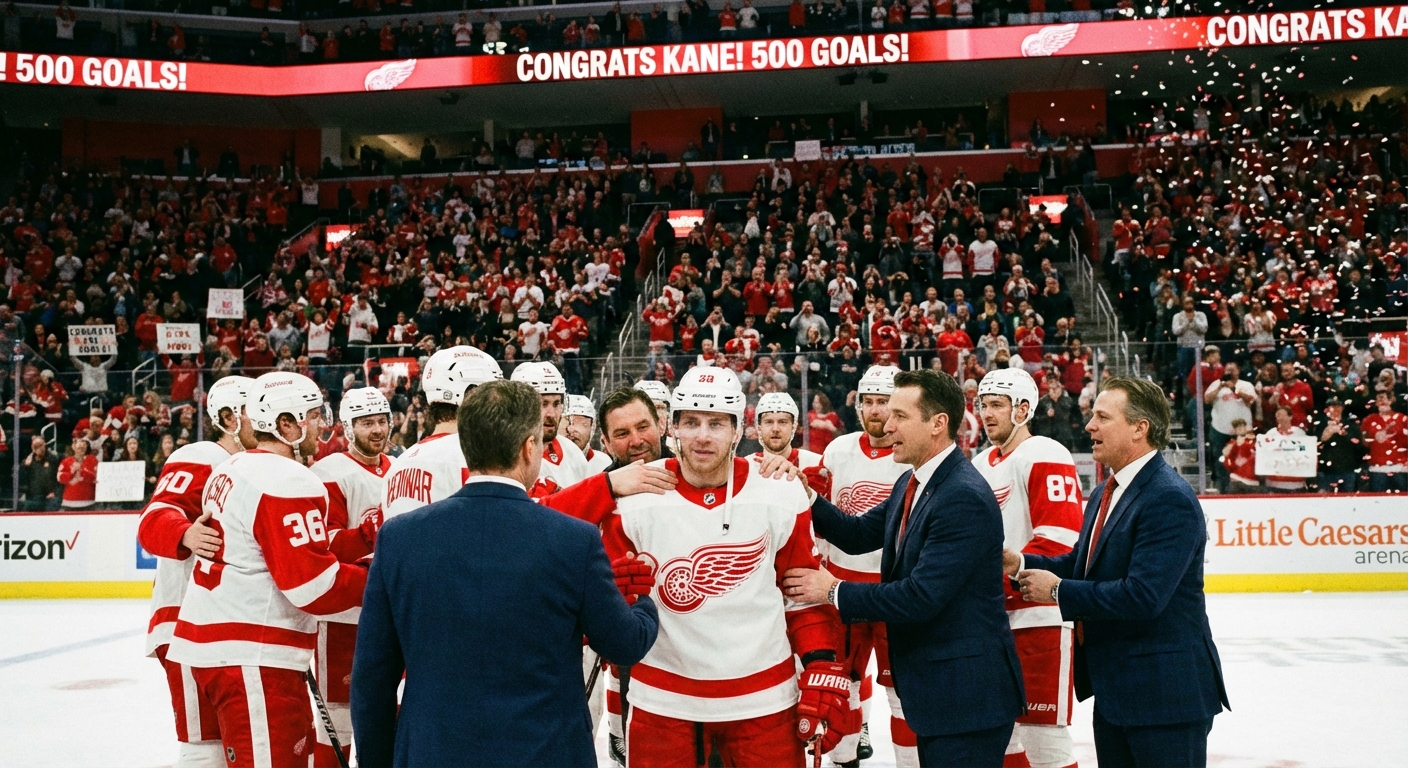
Kane turns 38 in November, an age when most hockey players have either retired or transitioned into diminished roles. His 42 points in 41 games this season represent a pace that would surpass Mullen’s 502 career goals before the regular season ends, moving Kane to fourth on the all-time American scoring list. Roenick’s 513 sits 13 goals away, a realistic target if Kane maintains his current production through next season.
His resume already includes those championship rings, a Conn Smythe Trophy as playoff MVP in 2013, the Hart Trophy as league MVP in 2016, and the Calder Trophy as rookie of the year in 2008. The 500-goal milestone adds the final credential to what is already one of the most decorated careers in American hockey history.
Detroit’s playoff push gives Kane’s current chapter immediate stakes. The Red Wings haven’t reached the postseason since 2016, ending a streak of 25 consecutive playoff appearances that represented the longest in major American sports history. Kane has played 127 career playoff games during his Blackhawks tenure, more postseason experience than every other player currently on Detroit’s roster combined.
The Legacy Question
The 500-goal milestone forces a recalibration of where Patrick Kane belongs in the broader hierarchy of NHL greatness, not just among American-born players but across the entire history of the sport. Kane is one of only 50 players to reach 500 goals, and he accomplished it while playing a style fundamentally different from almost every other member of that club. The overwhelming majority of 500-goal scorers relied on size, speed, or a devastating shot as their primary weapon. Kane reached the milestone through vision and creativity, a playmaker who happened to score prolifically because he understood offensive geometry better than his contemporaries.
What separates Kane’s Hall of Fame case from many of his 500-goal peers is the breadth of his resume. Several members of the club, players like Luc Robitaille or Keith Tkachuk, were prolific scorers who never won a championship or dominated a postseason. Kane has the Cup titles, a Conn Smythe Trophy, a Hart Trophy, and a Calder Trophy alongside his 500 goals. That combination of individual and team achievement places him in a tier with players like Steve Yzerman and Mario Lemieux, generational talents who elevated everyone around them. Sportsnet’s Elliotte Friedman has argued that Kane’s playoff pedigree, including his iconic 2010 Cup-clinching goal, already made him a first-ballot Hall of Famer before he ever approached 500 goals.
The question that will occupy hockey historians is whether Kane ranks as the greatest American-born player ever or merely one of the greatest. Modano scored more goals and played more games, but Kane won more championships and individual awards. The debate may never be settled definitively, but 500 goals ensures that Kane’s name will always be part of the conversation, a legacy secured not by a single milestone but by two decades of sustained brilliance that reshaped what American hockey players could aspire to become.
Sources
- Patrick Kane Career Statistics - Hockey Reference
- Kane Gets 500th NHL Goal, Becomes 5th U.S.-Born Player to Reach Milestone - NHL.com
- Patrick Kane: ‘Cool Feeling’ to Become 50th in NHL’s 500-Goal Club - ESPN
- The Reinvention of Patrick Kane in Detroit - The Athletic