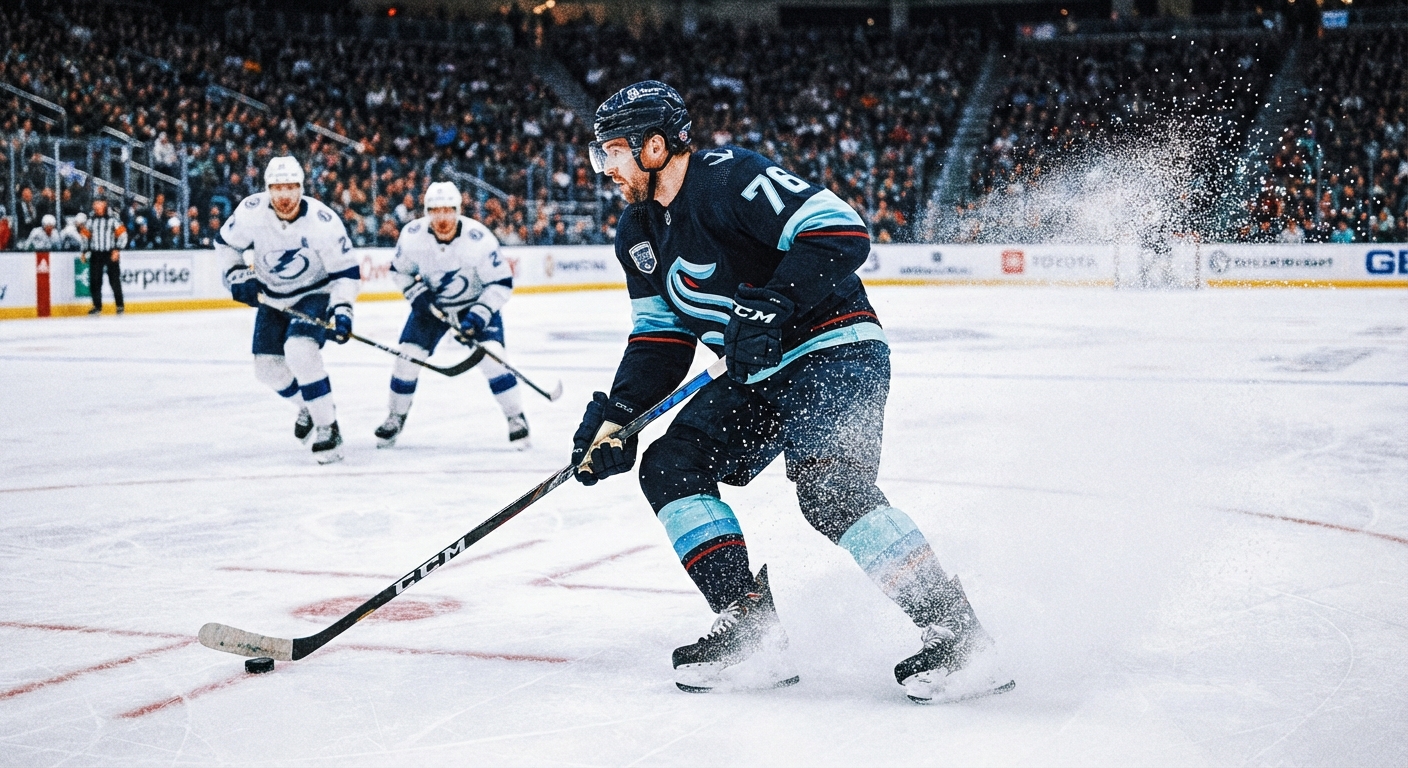
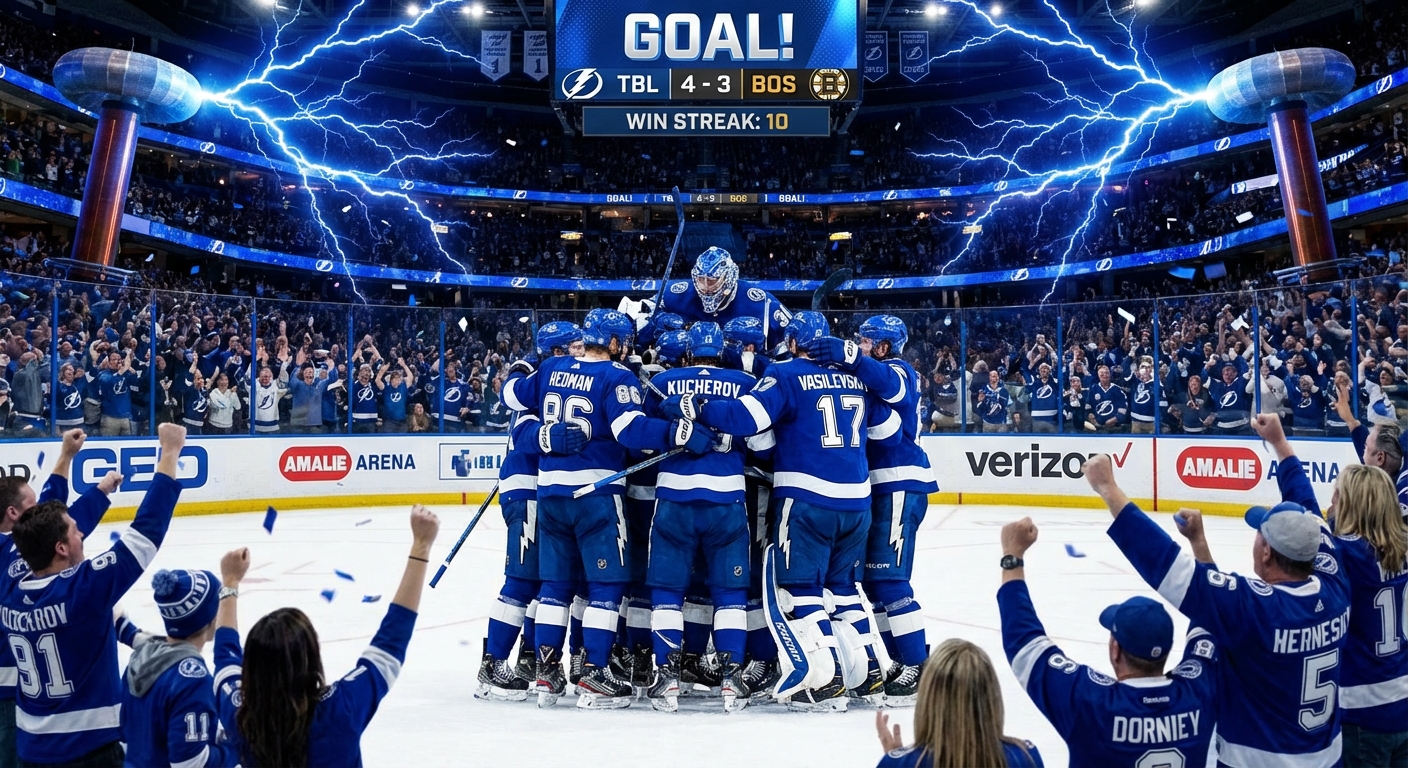
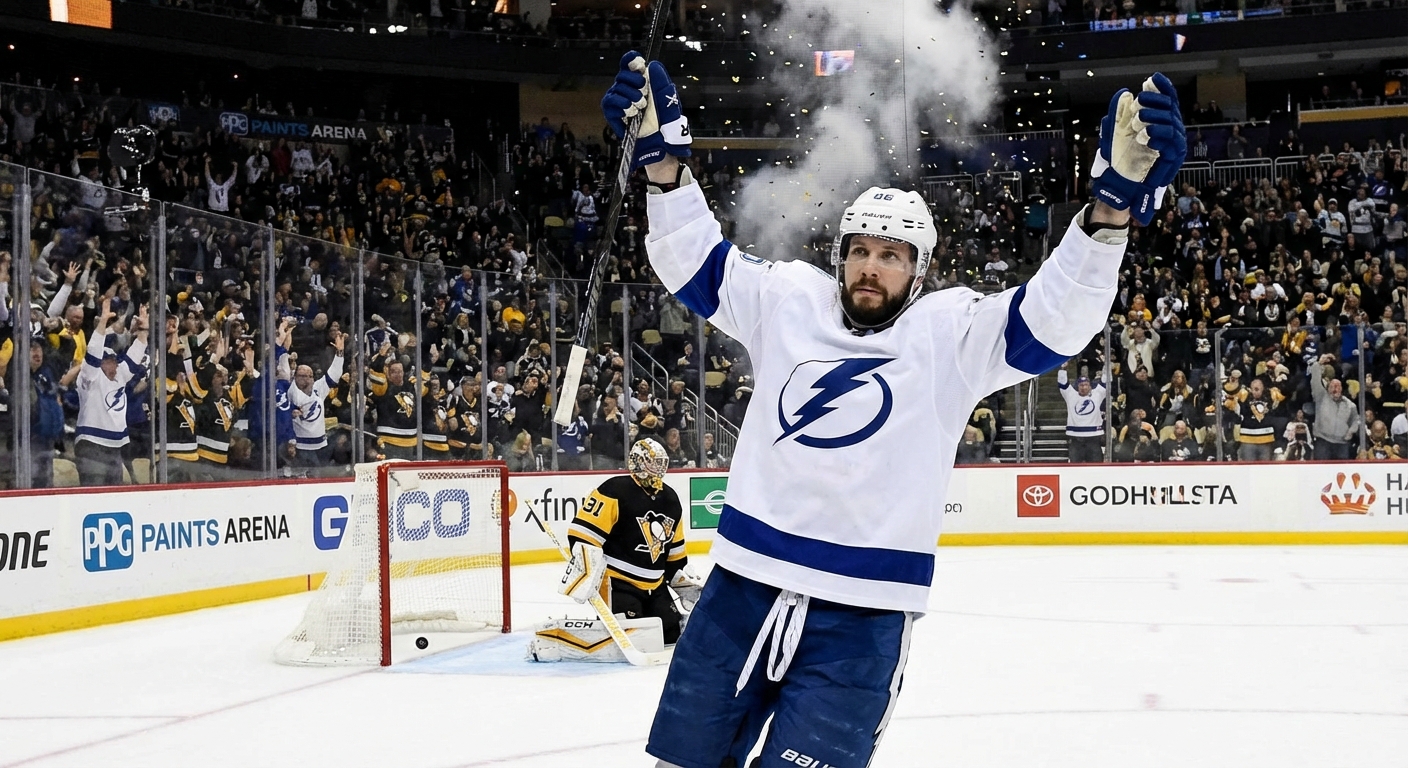
Nikita Kucherov’s wrists barely moved. The shootout attempt against Pittsburgh looked almost casual, a slight flick that sent the puck gliding past Tristan Jarry’s outstretched pad and into the bottom corner of the net. It was the kind of goal that separates generational talents from everyone else, a moment of pure skill executed under maximum pressure. That goal gave the Tampa Bay Lightning a 2-1 victory over the Penguins and, more importantly, it secured something that had eluded the franchise for its entire 32-year history: an 11-game winning streak.
The Lightning have been good for years. They won back-to-back Stanley Cups in 2020 and 2021. They reached the Cup Final again in 2022. They have consistently been among the NHL’s elite, a model franchise in a salary cap era that punishes sustained excellence. But they had never done this. They had never strung together 11 consecutive victories, never found that perfect balance of elite goaltending, opportunistic scoring, and resilient defending that allows a team to simply refuse to lose. Until now.
The Anatomy of the Streak
What makes Tampa Bay’s run remarkable isn’t just the wins. It’s how they’ve won. Consider the margins: five of the 11 victories came by a single goal. Three required overtime or a shootout to decide. This isn’t a team blowing out opponents with overwhelming offensive firepower. This is a team that has mastered the art of winning close games, of making the plays that matter when the stakes are highest.
The streak began on December 22 with a 4-2 victory over the Florida Panthers, a divisional rival that had beaten Tampa Bay three straight times to start the season. That game served as a statement of intent, a declaration that the Lightning were not content to cede the Atlantic Division to their geographic neighbors. Since then, they’ve beaten nine different opponents, including the NHL’s top two teams in points percentage, the Vegas Golden Knights and the Winnipeg Jets.
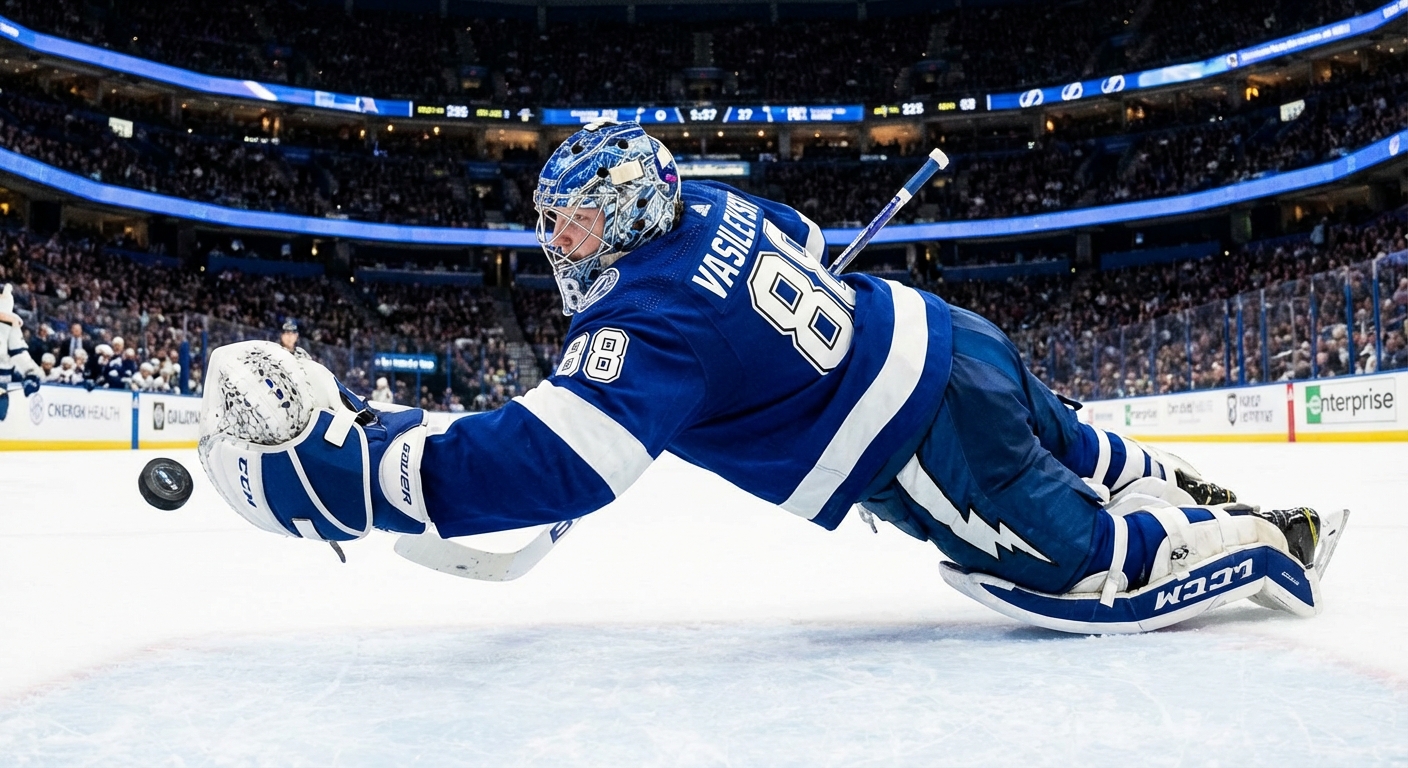
Andrei Vasilevskiy has been the foundation. The Russian netminder has posted a .934 save percentage during the streak, per Hockey Reference, including three games where he stopped 30 or more shots. His performance against the Jets on January 7 was particularly impressive: 38 saves against one of the league’s most potent offenses, including a sequence in the third period where he denied three consecutive scoring chances in a span of 12 seconds. “Vasilevskiy is doing what the truly great goalies do — he’s not just stopping pucks, he’s controlling games,” ESPN’s Greg Wyshynski noted. “When he’s locked in like this, Tampa becomes a different team entirely.” Vasilevskiy has always been elite, a Vezina Trophy winner and Conn Smythe recipient, but his current form suggests he’s playing as well as any goalie in the world right now.
Depth and Resilience Define the Lightning
The most surprising element of Tampa Bay’s streak has been their ability to thrive without Brayden Point. The center, who has been a consistent 30-plus goal scorer and one of the league’s best playoff performers, went down with a knee injury in early January and is expected to miss at least another two weeks. In his absence, the Lightning have somehow gotten better, going 4-0 without their second-leading scorer.
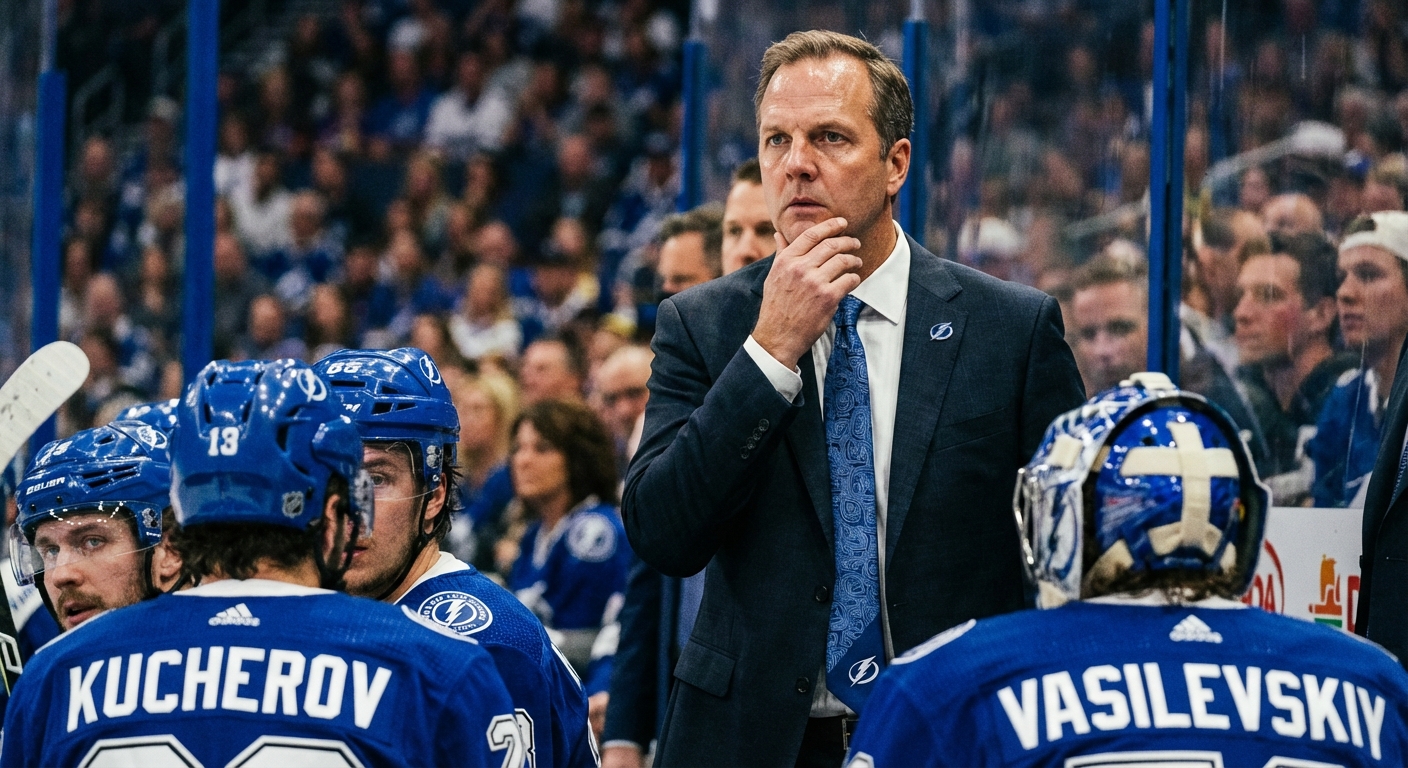
Head coach Jon Cooper has shuffled his lines to compensate, moving Brandon Hagel into a more prominent role and asking veterans like Steven Stamkos to take on additional defensive responsibilities. The results have been encouraging. Hagel has five goals during the streak, including a game-winner against Montreal. Stamkos has been exceptional in faceoff situations, winning 58% of his draws during the winning run, according to NHL.com records. The Athletic’s Joe Smith observed that “Cooper’s ability to reconfigure his lineup without missing a beat is the most underappreciated aspect of this streak. He’s got four lines that can all play in any situation.” The Lightning’s depth players have elevated their games precisely when needed, a testament to Cooper’s system and the organizational culture that Tampa Bay has cultivated over the past decade.
J.J. Moser’s emergence has been particularly noteworthy. Acquired from Arizona in the offseason, the young defenseman has seamlessly integrated into Tampa Bay’s blue line rotation. He scored the Lightning’s only regulation goal against Pittsburgh, a wrist shot from the point that beat Jarry cleanly. Moser has logged heavy minutes during the streak, often playing more than 22 minutes per game, and his plus-minus rating of plus-9 speaks to his effectiveness at both ends of the ice.
Where the Streak Ranks and What’s Ahead
Tampa Bay’s 11-game streak ranks among the longest in NHL history this season, but it falls short of the all-time record. The 2013 Pittsburgh Penguins won 15 consecutive games, while the 1992-93 Penguins also reached 17 straight, according to NHL.com records. The modern era has made such streaks increasingly difficult to achieve. Parity has improved across the league, scheduling includes more back-to-back games, and the salary cap prevents teams from stockpiling talent in the way previous dynasties could. As Elliotte Friedman noted, “The salary cap era was supposed to make runs like this impossible. Tampa keeps proving otherwise.”
The Lightning’s streak has pushed them to 61 points in 45 games, per Hockey Reference, good for first place in the Eastern Conference by a comfortable five-point margin over the New Jersey Devils. Their goal differential of plus-42 is the best in the conference, and they’ve allowed the second-fewest goals in the entire NHL. If the season ended today, Tampa Bay would host a first-round playoff series against a Metro Division wild card team, a favorable matchup for a roster built for postseason success.
But the season doesn’t end today. The Lightning face the Carolina Hurricanes on Thursday in a game that will test both their streak and their resolve. Carolina has beaten Tampa Bay in two of their three meetings this season and enters the matchup on a six-game winning streak of their own. The Hurricanes possess the kind of speed and defensive structure that can disrupt Tampa Bay’s patient offensive approach. Thursday’s result will define how the rest of the league evaluates this Lightning team heading into the second half.
Why Kucherov’s Playmaking, Not His Goals, Drives the Streak
Any discussion of Tampa Bay’s success must center on Nikita Kucherov. The winger has 23 points during the 11-game streak, including six goals and 17 assists. His shootout winner against Pittsburgh was his third game-deciding goal of the run. More importantly, his presence on the ice changes how opponents defend the Lightning. Teams consistently shade coverage toward Kucherov, which opens space for his linemates and creates opportunities that wouldn’t exist otherwise.
Kucherov’s playmaking has been particularly impressive. His ability to find passing lanes that don’t seem to exist, to thread pucks through sticks and skates to teammates in scoring positions, is unmatched in the current NHL. During the streak, he’s generated 31 scoring chances for teammates, per Natural Stat Trick, the highest total in the league over that span. His hockey IQ allows him to dictate the pace of games, to control possessions and create offense even when opponents are determined to prevent it.
The partnership between Kucherov and Vasilevskiy represents the Lightning’s greatest strength. When your best forward is playing at an elite level and your goalie is stopping everything, winning becomes significantly easier. Tampa Bay has had stretches where one or the other has carried them, but having both operating at peak efficiency simultaneously has made them nearly unbeatable.
What History Tells Us
Franchise-record winning streaks carry a complicated legacy in NHL history. The 1992-93 Penguins parlayed their 17-game streak into a Presidents’ Trophy but were upset by the Islanders in the second round. The 2013 Penguins won 15 straight during the regular season, then were swept by the Bruins in the Eastern Conference Final. The 2016-17 Columbus Blue Jackets set a modern record with 16 consecutive wins and were eliminated in the first round. Per Hockey Reference, of the 12 teams since 1990 that posted winning streaks of 11 games or longer during the regular season, only four went on to win the Stanley Cup that year. The correlation between mid-season dominance and postseason success is weaker than most fans assume.
What separates Tampa Bay’s streak from many of those historical precedents is its composition. The Lightning are winning tight games, not running up scores against weak opponents. The close margins documented earlier suggest a team that has internalized how to compete in the kind of pressure-packed, low-margin contests that define the playoffs. Pierre LeBrun pointed to this distinction: “The teams that go on long streaks by blowing opponents out often struggle when the postseason forces every game to be close. Tampa is already winning that way.”
The core that delivered those back-to-back championships isn’t getting younger, and the franchise has gone four seasons without another Cup. Stamkos is 35. Vasilevskiy is 31. The window for this particular group is narrowing. But the nature of this streak — built on goaltending, depth scoring, and defensive resilience rather than unsustainable offensive explosions — mirrors the profile of teams that historically translate regular-season momentum into deep playoff runs. The Carolina Hurricanes will test them Thursday. The answer will reveal whether this streak is a peak or a foundation.
Sources
- Tampa Bay Lightning 2025-26 Season Stats - Hockey Reference
- Lightning Edge Penguins in Shootout, Tie Franchise Record With 11th Straight Win - NHL.com
- NHL Standings - NHL.com
- Lightning Winning Streak Coverage - ESPN NHL
- Tampa Bay Lightning Beat Coverage - Tampa Bay Times