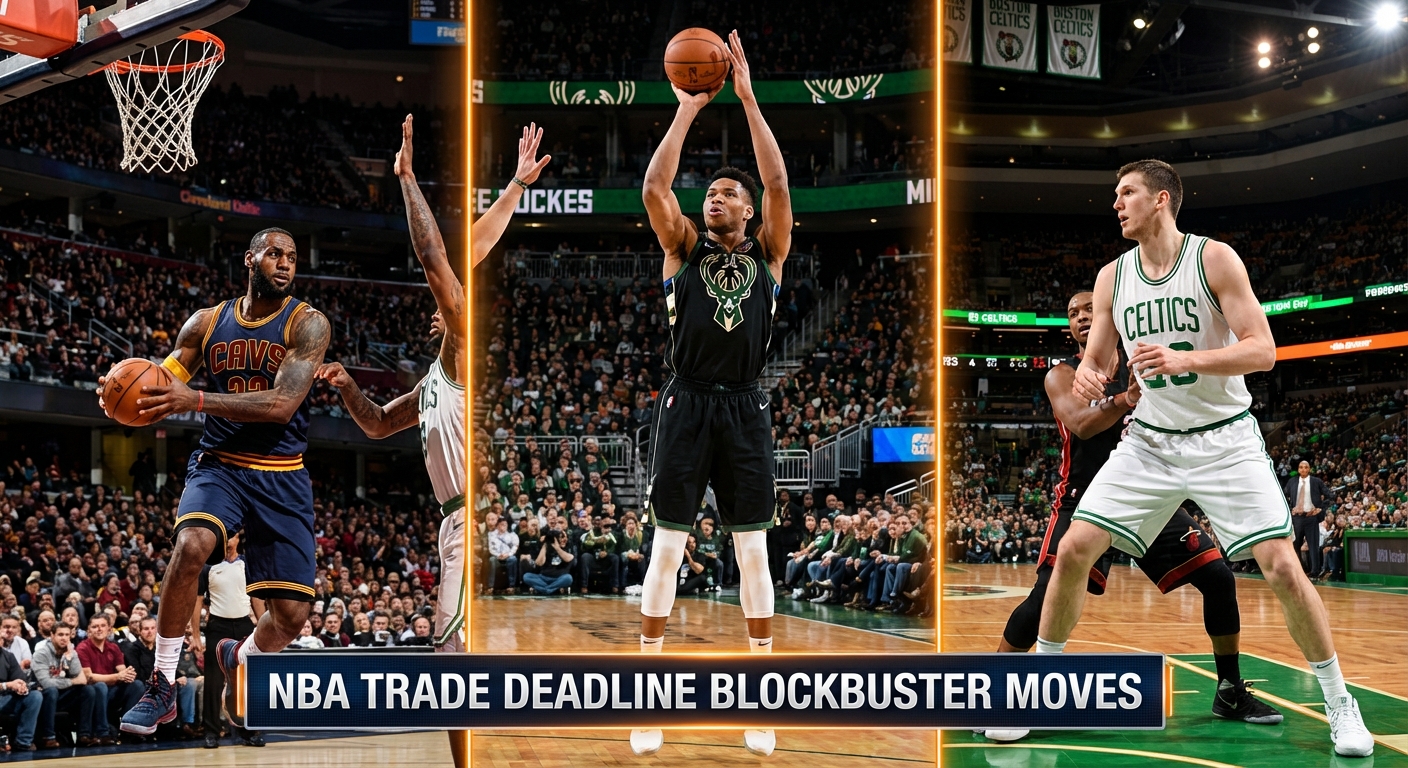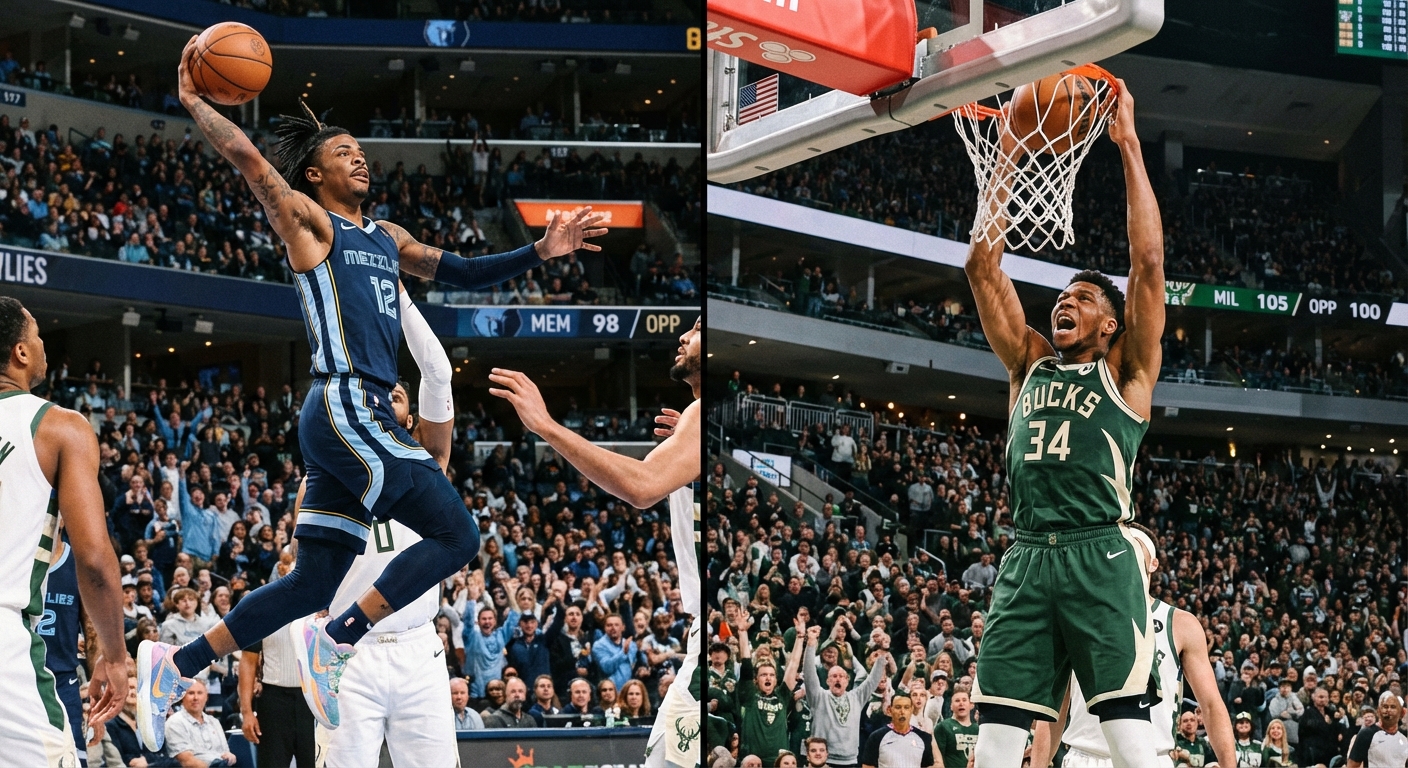
For weeks, the NBA’s trade deadline conversation revolved around a single question: where would Giannis Antetokounmpo end up? The two-time MVP, stuck on a Milwaukee Bucks team that has underperformed all season, seemed destined for a blockbuster trade that would reshape the league’s championship landscape. Front offices across the league cleared cap space. Fans refreshed Woj and Shams feeds obsessively. Mock trades proliferated on every sports website and podcast in the country.
And then nothing happened. Giannis stayed in Milwaukee. The Bucks, for all their dysfunction, decided that blowing it up was worse than running it back with their generational talent. The non-trade might end up being the most significant move of the entire deadline, and what it reveals about the current state of the NBA is more interesting than any deal that actually got done.
Milwaukee’s Calculated Gamble
The Bucks’ decision to keep Giannis was not born out of sentimentality. According to ESPN’s Adrian Wojnarowski, Milwaukee explored at least four separate trade packages involving Giannis over the past month, engaging in serious discussions with Miami, Golden State, Oklahoma City, and Philadelphia. The asking price was always the same: multiple unprotected first-round picks, a young All-Star-caliber player, and additional assets. No team was willing to meet it.
“The Bucks were never going to give Giannis away,” a league source told The Athletic’s Shams Charania. “They either get a godfather offer or they keep the best player they’ve ever had and figure it out.”
The math supports Milwaukee’s position. Giannis is averaging 29.4 points, 11.8 rebounds, and 5.7 assists per game this season, per Basketball Reference, numbers that would rank among the five best statistical seasons in franchise history. He is 31 years old but shows no signs of physical decline. His player efficiency rating of 28.9 ranks fourth in the league, and his on-court plus-minus of +6.3 per 100 possessions, per Cleaning the Glass, suggests that Milwaukee’s problems have far more to do with roster construction and coaching than with anything Giannis is or is not doing.
The question is whether Milwaukee can fix those problems before Giannis’s patience runs out. He has two years remaining on his supermax extension, and while he has publicly maintained that he wants to compete for championships, the gap between that aspiration and the Bucks’ current reality is wide and growing.

The Tanking Epidemic Reaches New Depths
While the Giannis saga dominated headlines, the more disturbing trend at this deadline has been the acceleration of tanking across the league. ESPN’s front-page analysis described it as “a disguised tanking strategy” that has reached unprecedented levels, with multiple teams openly prioritizing draft positioning over competitive basketball.
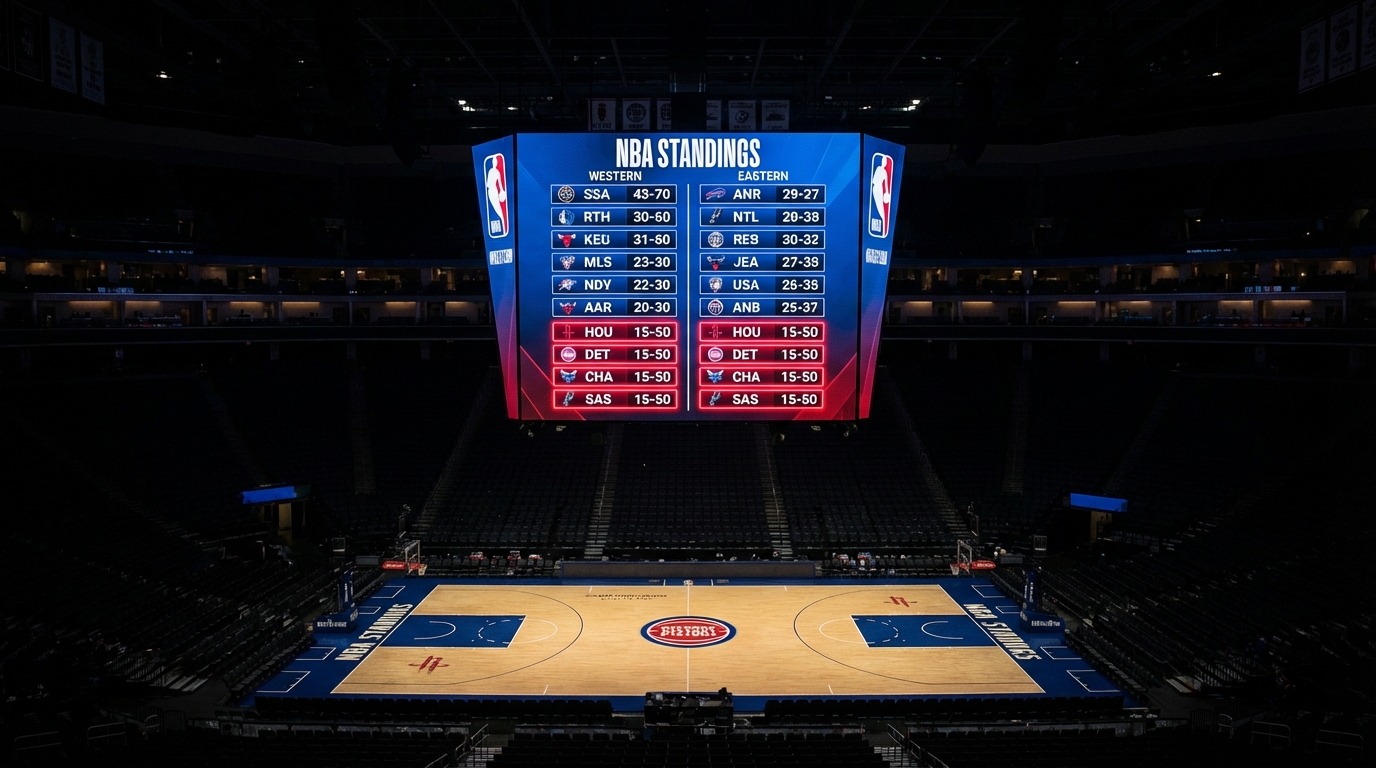
The numbers tell the story clearly. According to Tankathon, eight teams currently have 20 or fewer wins, the most at this point in the season since the 2011-12 lockout-shortened campaign. Several of those teams, rather than using the deadline to add veteran pieces and develop a winning culture, are actively shedding any player who might accidentally help them win games. The Brooklyn Nets, Washington Wizards, and Portland Trail Blazers have been the most aggressive sellers, moving rotation players for second-round picks and expiring salary.
The Ringer’s Group Chat podcast devoted an entire episode to what host Chris Vernon called “the NBA’s tanking problem hitting rock bottom.” The 2026 draft class, headlined by Duke’s Cooper Flagg, who has been projected as a generational prospect since high school, has created an incentive structure where losing is more valuable than marginal winning for nearly a third of the league. When one franchise player is perceived as a guaranteed path to a decade of relevance, the rational move for rebuilding teams is to be as bad as possible, and multiple front offices have embraced that logic aggressively.
What the Frozen Market Revealed
As we analyzed three weeks ago when the market first showed signs of seizing up, the fundamental problem with this trade deadline has been a disconnect between buyer and seller expectations. Contending teams want star-caliber additions at prospect-friendly prices. Rebuilding teams want future first-round picks and young players with upside. The gap between those two positions has been nearly unbridgeable for the biggest names on the market.
Ja Morant remained in Memphis. Anthony Davis stayed in Los Angeles. Jaren Jackson Jr. is still a Grizzly. The league’s middle class of tradeable stars, players good enough to demand a significant return but not so good that their current teams are willing to pay the tax to keep them, found themselves in a no-man’s land where the offers were either insulting or nonexistent.
The deals that have gotten done in the hours leading up to deadline day have been mostly secondary moves: role players changing teams, salary dumps masquerading as trades, and the kind of minor roster shuffling that fills transaction logs but does not meaningfully change the championship picture. The real fireworks, if they happen at all, will come in the final hours before the deadline closes.
The Deals to Watch in the Final 24 Hours
Several significant trades remain in various stages of negotiation as the deadline approaches. The Athletic reported that the Cleveland Cavaliers are finalizing a deal to acquire James Harden, which would pair him with Donovan Mitchell in a backcourt that is either brilliant or combustible, depending on your perspective. Milwaukee, having kept Giannis, is reportedly in advanced talks to add Cam Thomas from Brooklyn, a move that would give the Bucks a secondary scorer capable of carrying the offense when Giannis draws double teams.
The Boston Celtics have been connected to Chicago Bulls center Nikola Vucevic for weeks, and multiple reports suggest that deal is close. Boston’s need for a traditional center who can space the floor and rebound has been a topic of discussion since training camp, and Vucevic, while not a star, fills that role better than anyone available on the market.
The Indiana Pacers are also exploring significant moves, with Bleacher Report linking them to the Clippers’ Ivica Zubac in a multi-asset package that would give Indiana a rim-protecting center to pair with Tyrese Haliburton’s playmaking.
Why This Deadline Matters More Than the Moves
The real significance of this deadline is not about which trades get completed in the next 24 hours. It is about what the market reveals about the NBA’s structural health. The league has a tanking problem that is getting worse, not better. The gap between the top eight contenders and the bottom eight tanking teams has never been wider. And the middle tier, the teams that are competitive but not championship-caliber, are being squeezed from both sides: too good to tank, too far away to win, and unable to make the kind of deadline deal that changes their trajectory.
Commissioner Adam Silver has spoken publicly about competitive integrity concerns, but the incentive structure remains unchanged. Until the lottery odds or draft structure change, the rational behavior for non-contending teams will continue to be aggressive losing, and the trade deadline will continue to be dominated by salary dumps rather than genuine roster improvements.
The Takeaway
Giannis staying in Milwaukee is the story of this deadline, but the subtext is more important than the headline. The NBA’s trade market is frozen because the league’s competitive balance is broken. Too many teams are incentivized to lose, too few are positioned to win, and the players stuck in the middle, stars good enough to command massive trade packages but not quite transcendent enough to overcome bad rosters, are trapped in organizations that can neither compete nor commit to a full rebuild.
The next 24 hours will produce trades. Some will be significant. But the structural problems that defined this deadline will persist long after the last deal is announced, and the league will need to reckon with them before the product on the court suffers irreversible damage.
Sources
- What this NBA trade deadline revealed: A disguised tanking strategy - ESPN, February 2026
- 2026 NBA Trade Deadline Winners and Losers - The Ringer, February 2026
- The NBA’s Tanking Problem Hits Rock Bottom - The Ringer Group Chat Podcast, February 2026
- Basketball Reference: 2025-26 Season Statistics - Player and team stats
- Cleaning the Glass: On/Off Court Data - Plus-minus and lineup data