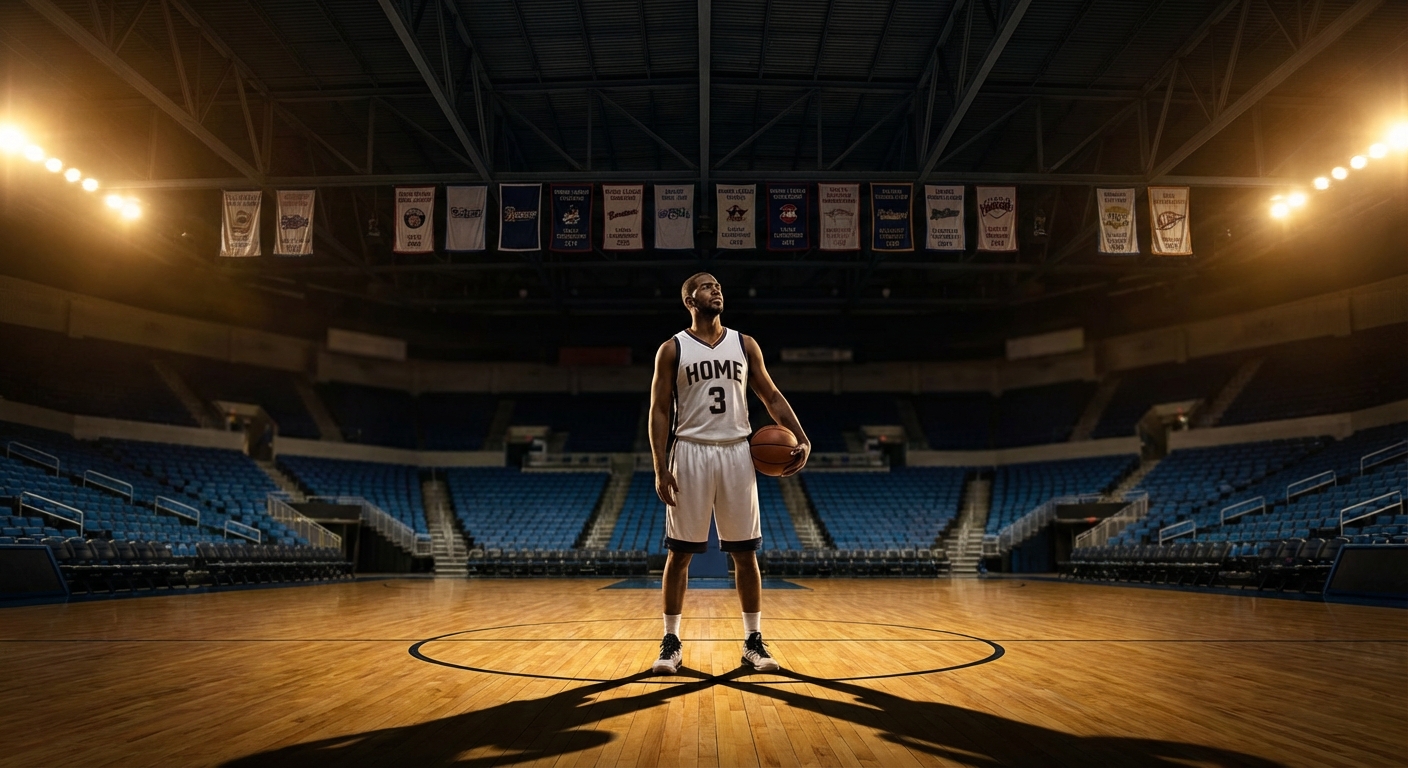
Chris Paul’s Instagram post on February 13 was three sentences long. “This is it! After 21 years I’m stepping away from basketball,” he wrote, the exclamation point carrying a strange mix of finality and relief. “It’s time for me to show up for others and in other ways.” The announcement came hours after the Toronto Raptors waived him, a procedural footnote to a trade from the Clippers that everyone involved understood was really a farewell. No press conference. No farewell tour. No final game at Staples Center with a standing ovation and a highlight reel on the jumbotron. The greatest point guard of his generation, the player they called the Point God, walked away from professional basketball the same way he ran a half-court offense for two decades: efficiently, purposefully, and on his own terms.
The numbers he left behind are staggering. Second all-time in assists with 12,552, trailing only John Stockton. Second all-time in steals with 2,728, again behind only Stockton. He led the NBA in assists per game five times and steals per game six times, per Yahoo Sports. He was a 12-time All-Star, an 11-time All-NBA selection, a nine-time All-Defensive pick, and the 2006 Rookie of the Year. He scored 23,058 career points, ranking fourth all-time among point guards behind only Russell Westbrook, Oscar Robertson, and Stephen Curry. He became the first player in NBA history to reach 20,000 points and 10,000 assists. And in 21 seasons across seven franchises, Chris Paul won exactly zero championships. That last number is the one that will follow him forever, fairly or not, and it is the one that makes his career the most fascinating case study in what basketball greatness actually means.
The Kid From Winston-Salem Who Reinvented the Position
Paul arrived in the NBA in 2005 as the fourth overall pick to the New Orleans Hornets, a 6-foot guard from Wake Forest who came one vote shy of unanimous Rookie of the Year. The league he entered was still in the grip of the big man era, where championships were built around dominant centers and power forwards. Point guards were expected to distribute, defend, and stay out of the way. Paul did something different. He controlled games the way a chess grandmaster controls a board, seeing three moves ahead of everyone else on the floor, manipulating defenses with his eyes and his hesitation dribble before delivering passes that arrived in teammates’ hands at the exact moment they became open.
By his second season in New Orleans, he was averaging 17.3 points and a league-leading 11.6 assists, per Basketball Reference. By his third, he finished second in MVP voting behind Kobe Bryant despite playing for a franchise still recovering from Hurricane Katrina. The Hornets relocated to Oklahoma City for a season, and Paul carried a displaced franchise on his back with a performance level that announced him as the best point guard in basketball. He was 22 years old. He was already the best passer in the league. And the combination of his vision, his competitiveness, and his physical toughness despite his size created a template that would define how the position was played for the next 15 years.
Lob City, Heartbreak City
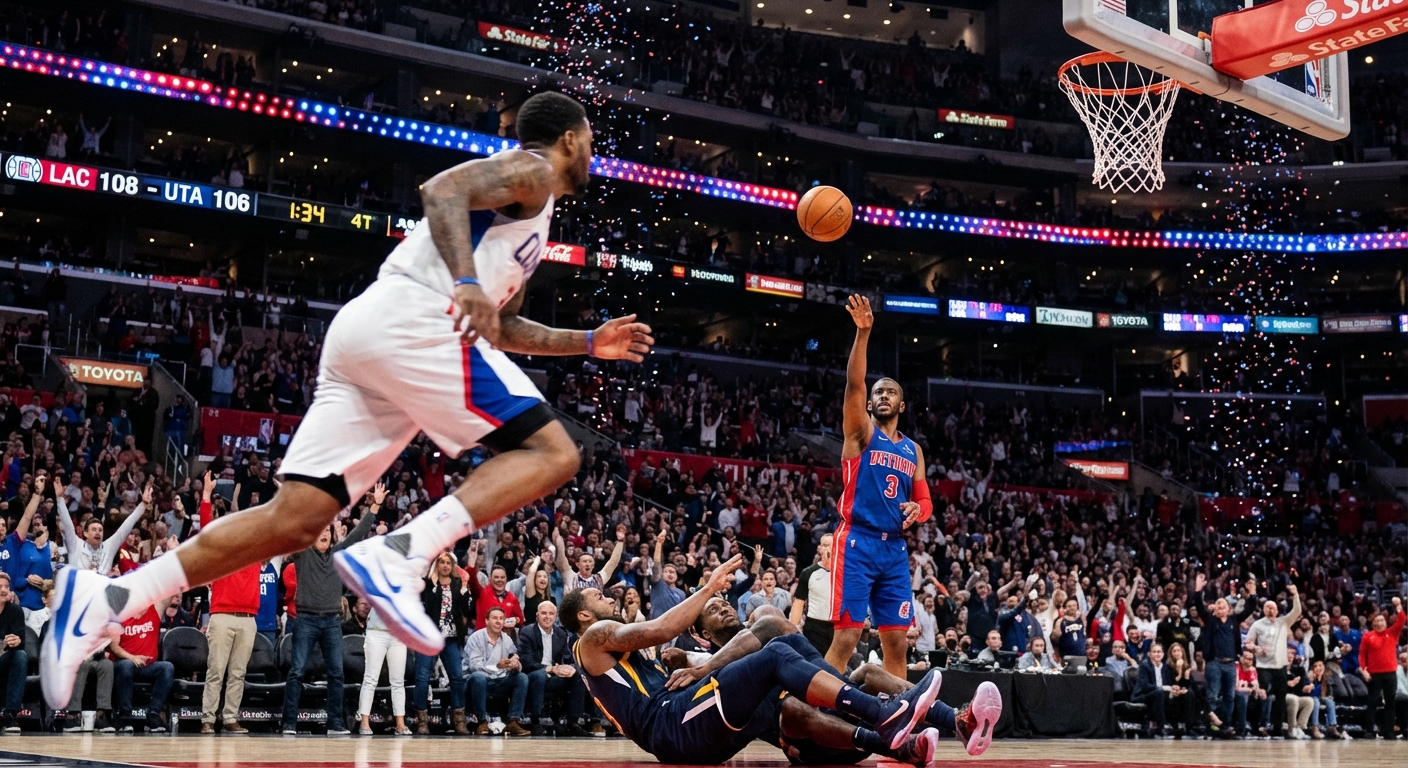
The trade to the Los Angeles Clippers in 2011 was supposed to change everything. Paired with Blake Griffin and DeAndre Jordan, Paul became the engine of “Lob City,” a franchise that went from irrelevant to appointment television overnight. The alley-oops were spectacular. The regular season wins piled up. Paul was named to All-NBA First Team in back-to-back seasons, and the Clippers became a legitimate Western Conference contender for the first time in franchise history. But every spring, something broke. In 2014, the Clippers blew a 3-1 series lead to the Rockets in the second round. In 2015, they blew another 3-1 lead, this time to the Rockets in the conference semifinals, collapsing in historic fashion. Paul hit one of the greatest shots in playoff history during the 2015 first round, a one-legged buzzer-beater over the Spurs’ Tim Duncan in Game 7 despite a torn hamstring. That shot, desperate and brilliant and ultimately futile given what followed, became a metaphor for his entire career: individually transcendent, collectively incomplete.
The Clippers era produced zero conference finals appearances. Zero Finals appearances. Paul’s body started breaking down in the postseason with alarming regularity, hamstring injuries that sidelined him at the worst possible moments. The narrative crystallized: he was too small, too injury-prone, too controlling as a leader, too something to win when it mattered most. Whether the narrative was fair didn’t matter. It existed, and it grew louder with every spring exit.
Houston and the 27 Missed Threes
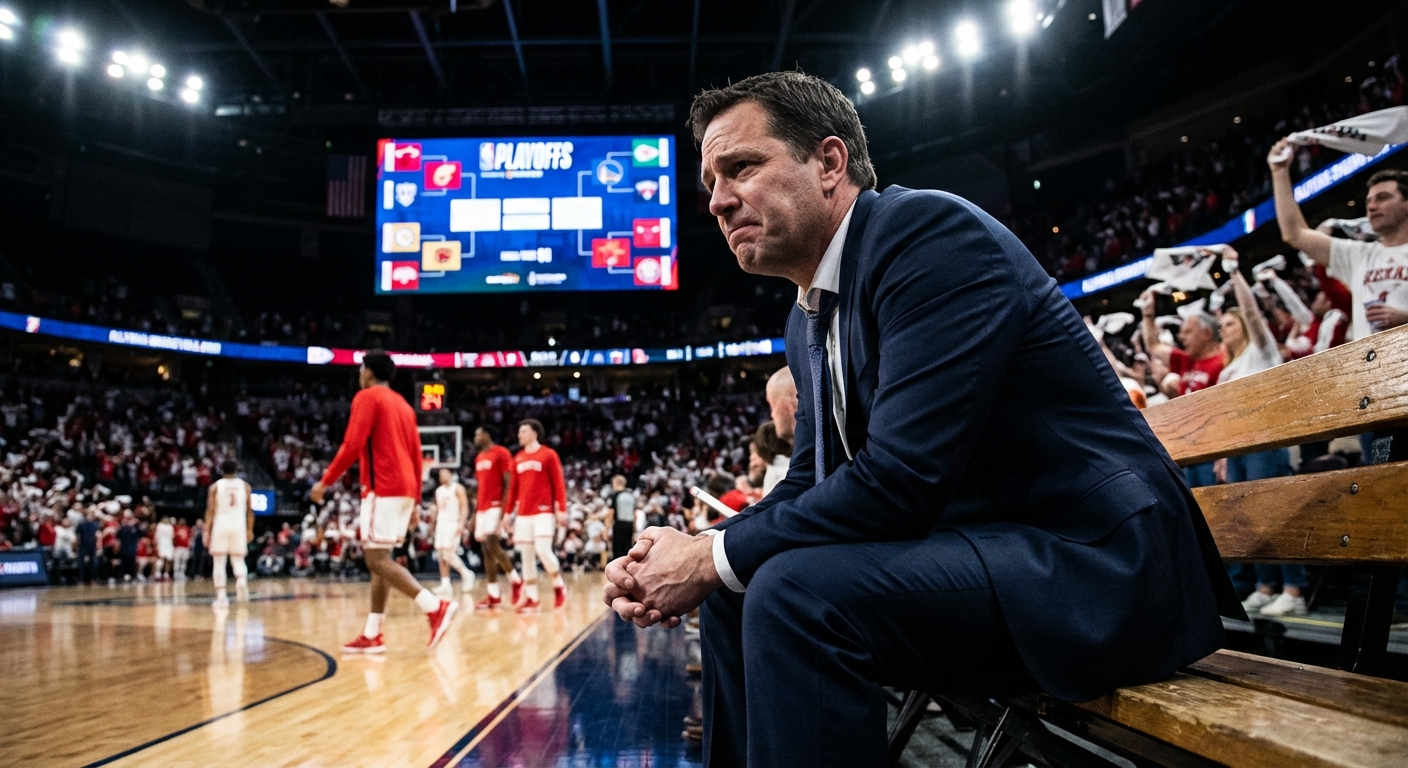
The 2017 trade to the Houston Rockets felt like Paul’s last, best chance. Paired with James Harden in Mike D’Antoni’s system, the Rockets won a franchise-record 65 games in 2017-18 and took a 3-2 lead over the Golden State Warriors in the Western Conference Finals. They were one win from the NBA Finals. Then Paul’s hamstring tore again in Game 5, and the Rockets had to play Games 6 and 7 without him. Game 7 in Houston produced one of the most agonizing sequences in NBA playoff history: the Rockets missed 27 consecutive three-point attempts, going 0-for-27 from beyond the arc in a stretch that obliterated a 15-point lead and ended their season. Paul watched from the bench in a suit, unable to do anything but absorb the math. Twenty-seven misses. One torn hamstring. Zero championships.
That Game 7 haunts Paul’s legacy more than any other single event before the Finals. Not because he played poorly, since he didn’t play at all, but because it crystallized the cruelest aspect of his career: the championships he lost weren’t always about his failures. They were about circumstance, timing, and the thin margins that separate greatness from glory. The Warriors needed every one of those 27 misses to survive. Paul needed one healthy hamstring to potentially change everything. He didn’t have it.
Phoenix, 2-0, and the Collapse That Defined a Career
The 2021 NBA Finals should have been the redemption story. Paul, traded to the Phoenix Suns and playing alongside Devin Booker, orchestrated a masterful run through the Western Conference at age 36. He averaged 25.5 points per game in the conference semifinals against Denver and then dismantled the Clippers, his former team, in the conference finals. In Game 1 of the Finals against Milwaukee, Paul scored 32 points with 9 assists. The Suns won the first two games at home, and Paul looked like a man who had finally outrun 16 years of playoff heartbreak.
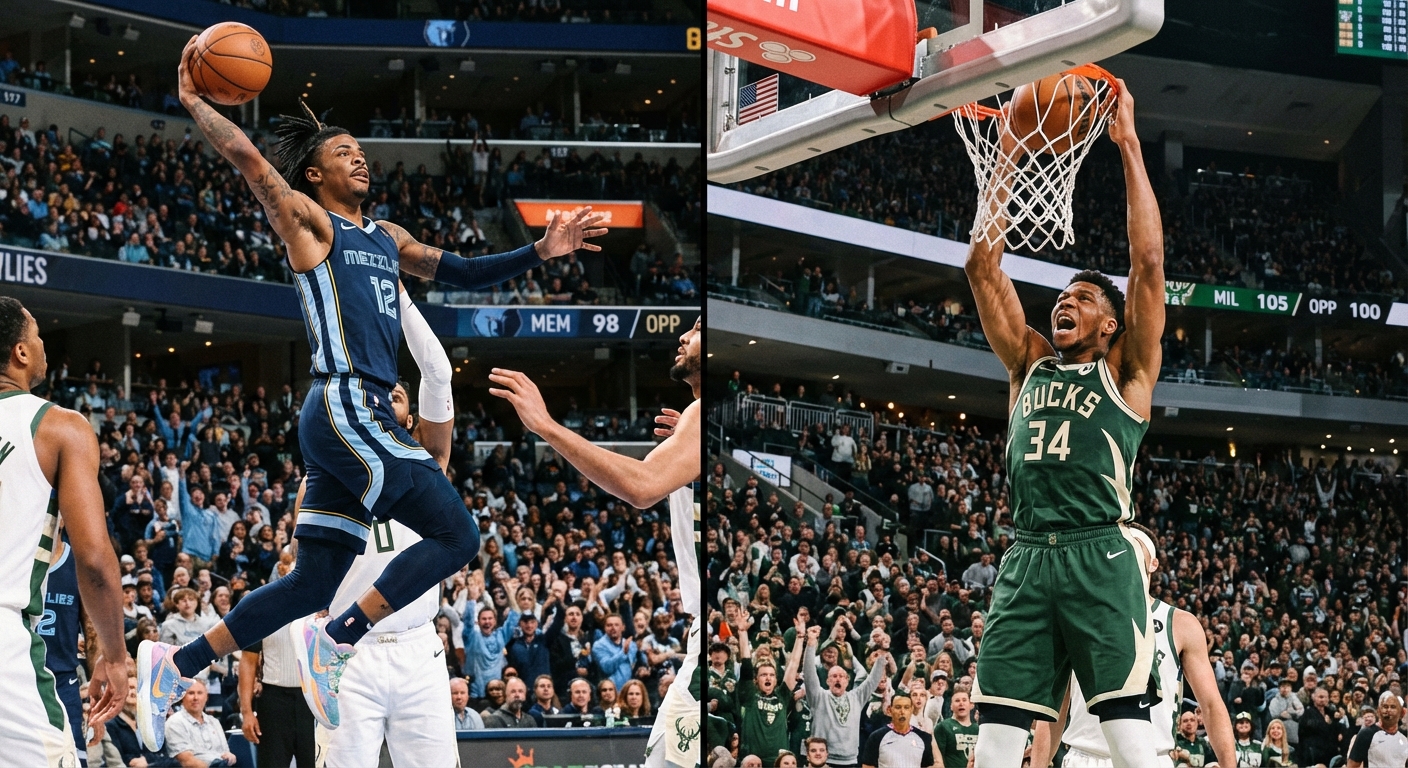
Then the Bucks won four straight. Giannis Antetokounmpo produced one of the greatest Finals performances in modern history, and the Suns unraveled in ways that felt sickeningly familiar. Paul became the first player in NBA playoff history to lose four separate series after leading 2-0. That statistic is almost impossibly cruel. Four times, he held a commanding lead. Four times, it evaporated. The 2021 Finals didn’t just deny Paul a championship. They established him as the defining example of a player for whom the ring was always one game, one quarter, one healthy hamstring away and never quite close enough.
“Mostly I’m filled with so much joy and gratitude,” Paul wrote in his retirement post, and it would be easy to read that as deflection. But the full arc of his career suggests something more honest. Paul never stopped competing, never stopped preparing, never stopped believing the next team, the next system, the next postseason would be different. He spent a season with the Thunder in 2019-20, turning a projected lottery team into a playoff contender. He resurrected the Suns from a decade of irrelevance. He mentored Shai Gilgeous-Alexander, Devin Booker, and the next generation of stars who are now defining the league. Every team he joined got better. Every locker room he entered got more professional. The ringless résumé doesn’t capture what he actually did, which was raise the floor everywhere he went.
The Stockton Parallel and the Ringless Mount Rushmore
Paul’s place in history invites an obvious comparison: John Stockton, the only player ahead of him in both assists and steals, also retired without a championship. Stockton played 19 seasons entirely in Utah, reached the Finals twice, and lost both times to Michael Jordan’s Bulls. The parallel is instructive but incomplete. Stockton had Karl Malone, a top-15 player in NBA history, for his entire career. Paul bounced between seven franchises over 21 years, rebuilt rosters on the fly, and adapted his game from Lob City spectacle to Houston’s analytics-driven system to Phoenix’s mid-range renaissance. Where Stockton’s ringless legacy is accepted as a product of running into Jordan, Paul’s is scrutinized as a product of his own limitations. The double standard says more about how we evaluate greatness than it says about either player.
NBA Commissioner Adam Silver framed Paul’s impact in broader terms. “Chris distinguished himself with his savvy playmaking skills, elite competitiveness, and intense work ethic,” Silver said in a statement following the retirement announcement. “After 21 remarkable seasons, Chris Paul retires as one of the greatest point guards in NBA history and a true steward of our sport.” That word, “steward,” carries weight. Paul served as president of the National Basketball Players Association from 2013 to 2021, negotiating the landmark 2017 collective bargaining agreement that secured significant salary increases and expanded benefits for active and retired players. He led the union through the COVID-19 pandemic and the NBA’s bubble restart, navigating labor disputes with the same precision he brought to running a pick-and-roll. His retirement arrived during All-Star Weekend, a backdrop that underscored both what the league gained from his presence and what it loses now.

The Legacy Without a Ring
The debate over where Chris Paul ranks among the greatest point guards in NBA history will continue for decades, and the championship column will always be part of that conversation. Magic Johnson has five rings. Steph Curry has four. Isiah Thomas has two. Oscar Robertson has one. Paul has zero. But the debate itself, the fact that a player without a championship is even mentioned alongside those names, tells you everything about how good he was. You don’t accumulate 12,552 assists by accident. You don’t lead the league in steals six times without being one of the most relentless defenders the position has ever seen. You don’t get traded to seven franchises and make every single one of them better without possessing something that transcends individual statistics.
Paul’s career is a reminder that basketball, more than any other major American sport, is a team game decided by circumstance as much as talent. A healthy hamstring in Houston. A different Giannis performance in Phoenix. A different trade deadline decision at any point in his final years. Any one of these variables breaks differently, and we’re writing a very different story today. The Point God didn’t get his ring. He got something rarer: a career so complete in every other dimension that the missing piece makes you question whether the piece itself is as important as we’ve always assumed. He changed how the position is played. He changed how the union is run. He changed every franchise he touched. And he walked away at 40 with three sentences on Instagram, the same economy of motion he brought to everything else. No ring. No regrets. Just 21 years of basketball played exactly the way it’s supposed to be played.
Sources
- Chris Paul Career Stats: Legendary PG Retires as 4th All-Time Leading Scorer at His Position - Yahoo Sports
- Chris Paul Announces Retirement from NBA After 21 Seasons - ESPN
- Chris Paul Retires Without a Ring, But His Career Proves He Was One of NBA’s Greatest Winners - CBS Sports
- Chris Paul Announces NBA Retirement After 21 Seasons - NBA.com
- Does Chris Paul Retire as a Top-5 Point Guard in NBA History? - Yahoo Sports