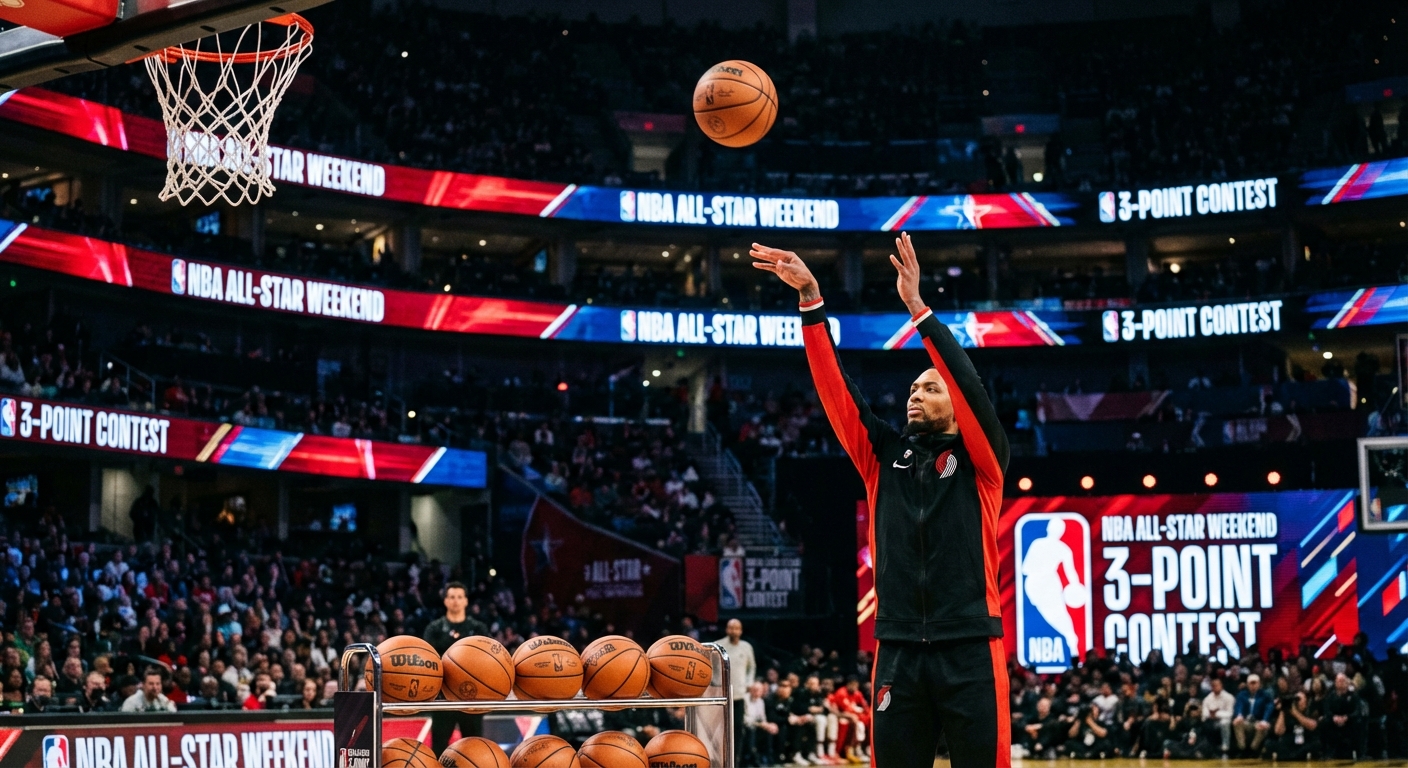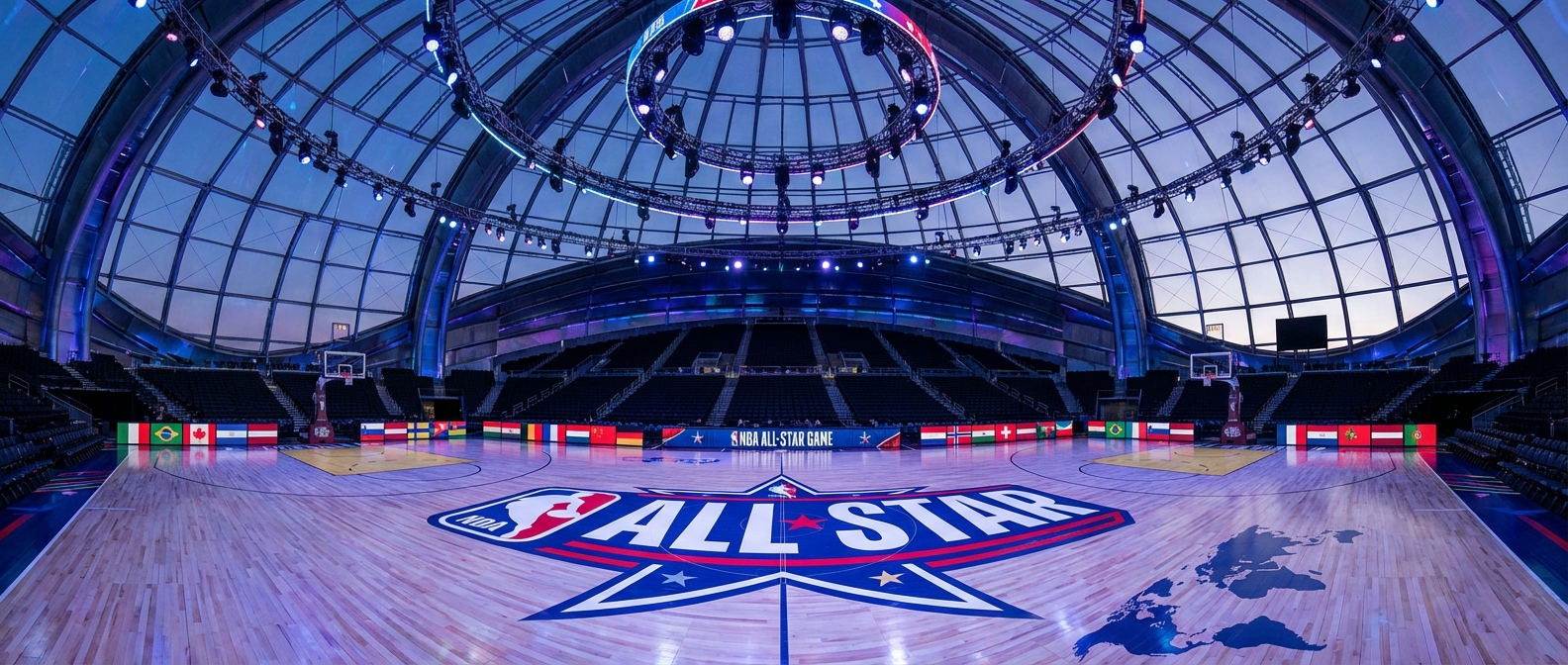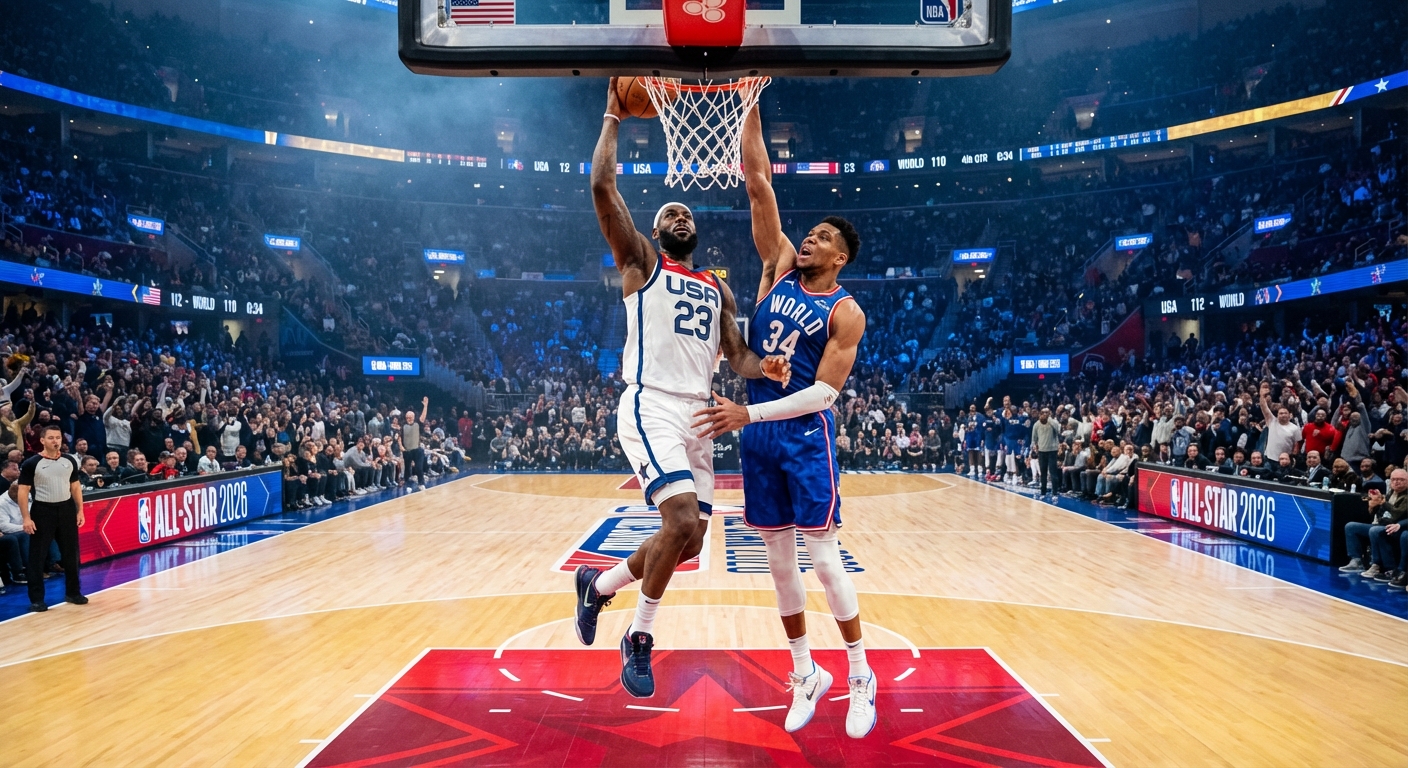
Victor Wembanyama blocked De’Aaron Fox’s layup attempt so emphatically in the opening minutes of Sunday’s All-Star Game that Fox turned to the referee with both hands raised, certain it must have been goaltending. It wasn’t. The ball was still on its way up. Wembanyama had timed the leap perfectly, swatting it into the third row of Intuit Dome as if this were a playoff elimination game rather than a mid-February exhibition. The crowd erupted. Fox looked genuinely stunned. And just like that, the NBA’s All-Star Game, an event that had become the league’s annual embarrassment, had something it hadn’t felt in years: actual competitive tension.
By the end of the night, Anthony Edwards held the Kobe Bryant MVP Trophy after scoring 32 points on 13-of-22 shooting with 9 rebounds and 3 assists, per Yahoo Sports. His young Team Stars squad had dismantled the veteran Team Stripes 47-21 in a championship game that felt more like a generational coronation than an exhibition. But the numbers that matter most from Sunday night don’t belong to Edwards. They belong to the format itself: four games, three close finishes, and a tournament that gave the NBA’s best players something they hadn’t had in an All-Star setting in over a decade. A reason to care. Everything that we hoped this format might produce, from real defensive effort to clutch moments under pressure, showed up at Intuit Dome on Sunday. And it all traced back to one player’s refusal to treat the opening tip as a formality.
How Bad the All-Star Game Had Become
The context for what happened Sunday requires understanding just how broken the thing it replaced was. The 2023 All-Star Game in Salt Lake City finished 211-186, a combined 397 points that represented the logical endpoint of a decade-long decline in competitive effort. Nobody played defense. Nobody contested shots. Nobody dove for loose balls or set real screens or did any of the things that make basketball, when played at its highest level, the most watchable sport on earth. The players jogged through 48 minutes of layup lines in front of a crowd that grew quieter as the game dragged on, and the broadcast ratings reflected the apathy.
The league had tried fixes. The captain draft in 2018 generated selection-night drama but changed nothing about the actual basketball. The Elam Ending, which replaced the fourth-quarter clock with a target score, produced one memorable game in 2020, the emotional tribute to Kobe Bryant, and then quietly became another gimmick that players ignored. Target scores don’t work when neither side is trying to stop the other from scoring. The fundamental problem was never the format or the rules. It was motivation. All-Star selections are individual honors, and once a player earned his spot, there was nothing at stake in the game itself. No playoff implications. No financial incentive. Not even bragging rights, because East vs. West meant nothing to players who change conferences through trades and free agency.
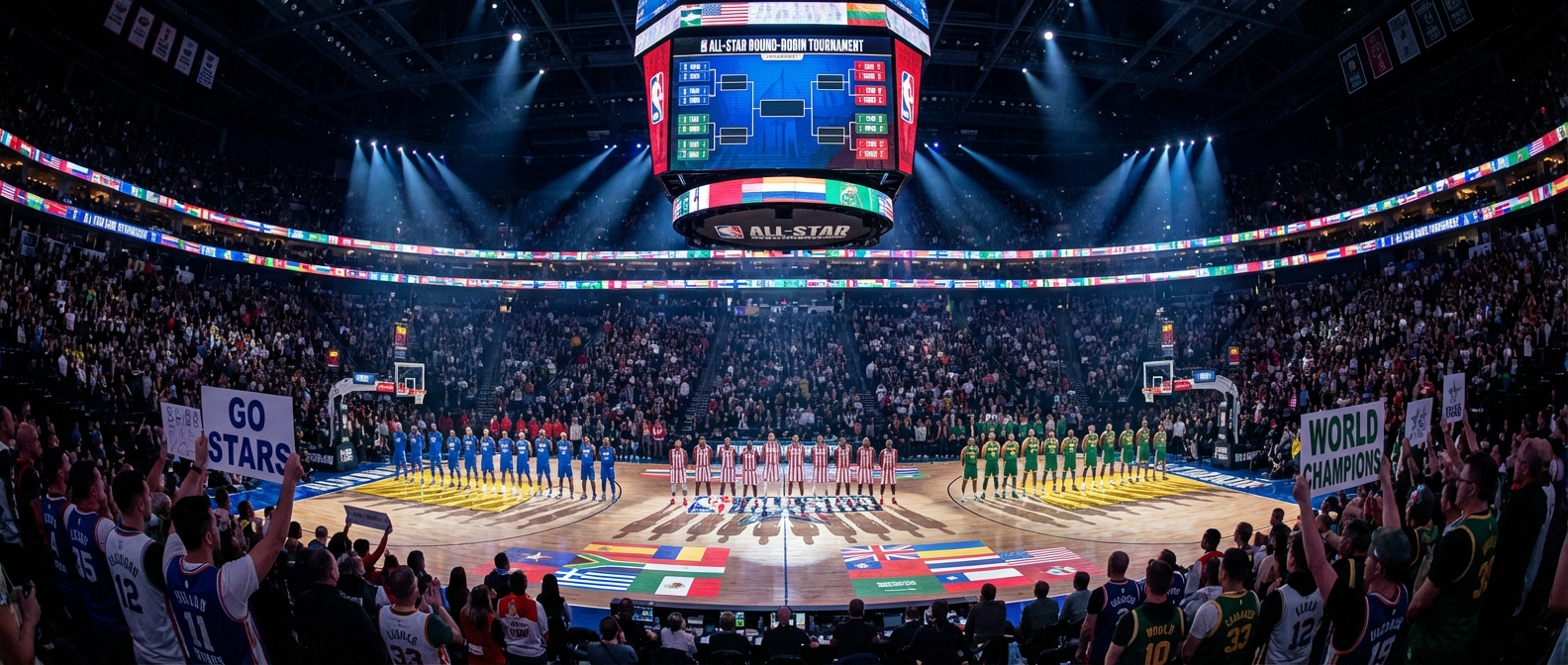
The NBA’s decision to scrap conferences entirely for a three-team USA vs. World round-robin tournament was born from desperation as much as innovation. The league borrowed from international competition, betting that the tribalism of national identity, the same force that makes Olympic basketball and World Cup soccer compelling, could manufacture effort where gimmicks had failed. It was a gamble. And on Sunday night at Intuit Dome, it paid off in a way that even the league’s most optimistic executives probably didn’t expect.
Wembanyama’s Defense Changed the Temperature
The first game of the round-robin, Team Stars versus Team World, established the competitive baseline for the entire night. Wembanyama, the 7-foot-4 San Antonio center competing in his first All-Star Game, treated the opening minutes like a defensive showcase. His block on Fox was the most dramatic, but it wasn’t an isolated moment. He registered 3 blocks in just 20 minutes of total playing time on the night, per CBS Sports, and each one sent the same unmistakable message to every player on the floor: this isn’t a layup line tonight.
“We chose to compete, and Wemby set the tone,” Edwards told reporters after accepting the MVP trophy, per ESPN. That wasn’t locker room cliché. It was an accurate description of the chain reaction that Wembanyama’s intensity triggered. When the best shot-blocker in the world is actually trying to block your shot, you start pump-faking. When you start pump-faking, the offense slows down, possessions extend, and the game begins to resemble actual basketball rather than a glorified open run. The Stars-World opener went to overtime, with Scottie Barnes hitting the game-winning basket to give the Stars a 37-35 victory. That two-point margin in a game that went to extra time? That simply doesn’t happen when players are coasting.
Wembanyama finished the night with 33 points, 8 rebounds, and 3 blocks in just 20 minutes of action, shooting an absurd 10-of-13 from the field, per Yahoo Sports. Those numbers would have been impressive in a regular season game against real defensive schemes. In an All-Star setting where defensive effort had been treated as optional for the better part of a decade, they were extraordinary. The 76.9 percent shooting wasn’t a product of uncontested dunks and open threes. It was efficient offense generated against players who were, for the first time in anyone’s recent All-Star memory, actually contesting shots.
Fox’s Buzzer-Beater and Kawhi’s Quiet Masterclass
Game 2 answered whatever skepticism remained about the format’s ability to produce real basketball. The veteran Team Stripes, featuring LeBron James in his record 22nd All-Star appearance alongside Kevin Durant and Kawhi Leonard, faced Team Stars in a game that came down to the final possession. De’Aaron Fox, who had been on the receiving end of Wembanyama’s block in Game 1, responded the way elite competitors respond to being embarrassed on national television. He drained a buzzer-beating three-pointer to give the Stripes a 42-40 win, a shot that would have been the night’s signature moment in most years. Fox’s celebration, sprinting the length of the court with arms spread, wasn’t the choreographed showmanship of a typical All-Star highlight. It was genuine, reactive, the kind of emotion that only emerges when a shot actually matters. “I got chills on that one,” Fox told CBS Sports afterward. “I’ve played in real games that didn’t feel like that.”
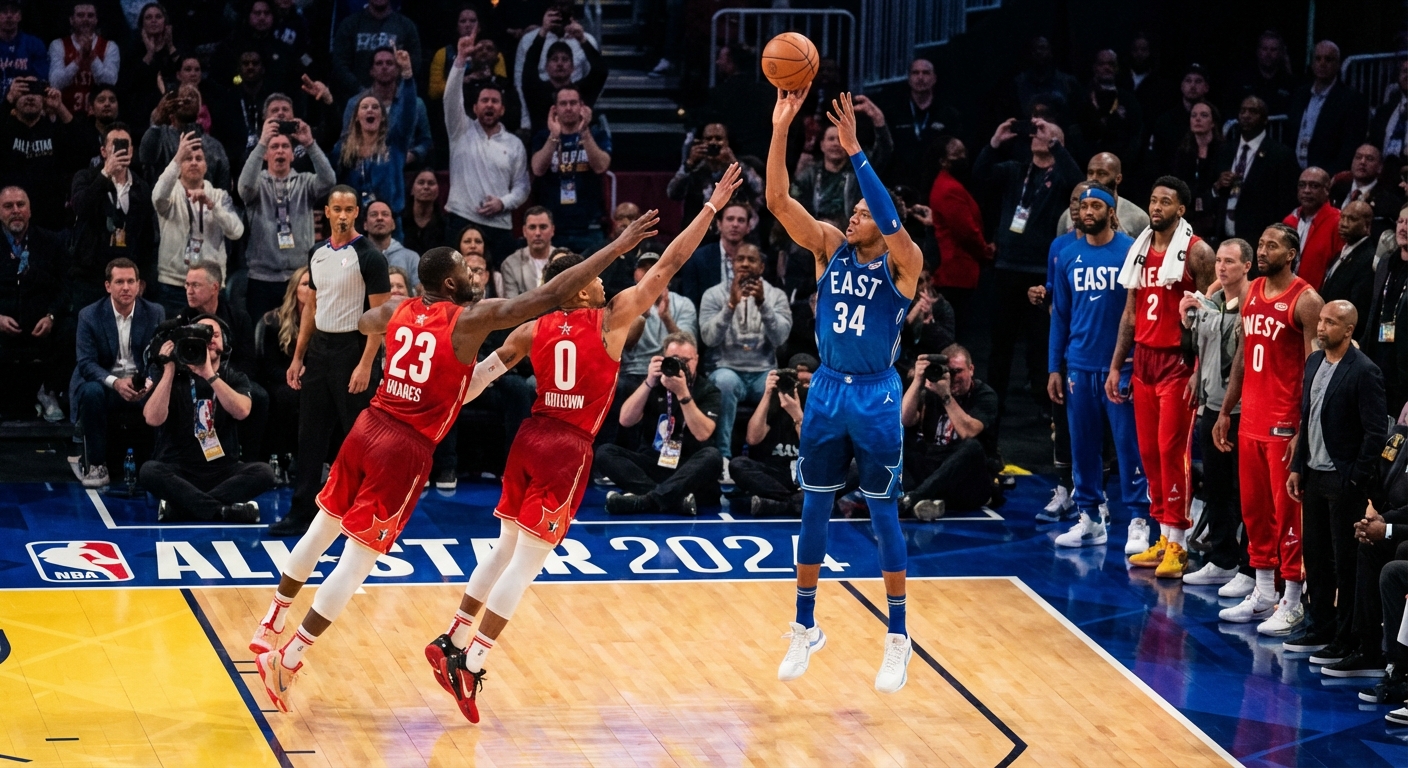
But Game 3 stole it. Kawhi Leonard, who has spent the past two years proving that his body can still produce elite basketball when healthy, turned the Stripes-World matchup into a personal exhibition. Leonard scored 31 points on 11-of-13 shooting, including 6-of-7 from three-point range, per Yahoo Sports. That is an 85 percent clip from the field in a game where both teams were genuinely competing. The Stripes won 48-45 in another close finish, and Leonard’s performance was so absurdly efficient that he briefly appeared to be the MVP frontrunner, per Sports Illustrated. For a player whose narrative in recent years has been dominated by load management and availability concerns, the 31-point eruption was a reminder that when Kawhi decides to go full speed, there may not be a more skilled scorer in basketball.
Three games. Three results decided by a combined 7 points in regulation or overtime. The format hadn’t just produced competitive basketball. It had produced stakes, drama, and clutch performances that rivaled the intensity of regular season play.
The 47-21 Blowout That Told a Generational Story
Then came the championship. Team Stars 47, Team Stripes 21. A 26-point demolition in a 12-minute title game. On the surface, a lopsided result seems like an anticlimactic ending to a night that had delivered close game after close game. But the blowout itself was the story, because of who delivered it and who absorbed it.
Edwards was devastating in the final. His tournament total of 32 points included a championship performance where he attacked the rim with the kind of force that overwhelmed veteran defenders who had been competing hard all night. Cade Cunningham orchestrated the offense with the poise of a floor general who has transformed Detroit into a playoff contender this season. Barnes added his overtime heroics from Game 1 to the resume. Chet Holmgren provided rim protection. This wasn’t simply a team of young players outrunning a team of older players in a meaningless sprint. It was a generation announcing its arrival by dominating the generation that came before it, in a competitive setting, when both sides were trying.
The Stripes, the team that LeBron James captained in his 22nd All-Star appearance, the team with Kevin Durant and Kawhi Leonard and Jaylen Brown, couldn’t generate anything resembling competitive offense against the Stars’ youth and energy in the championship. They scored 21 points in 12 minutes. That is a pace of 84 points per 48 minutes, a number that would be historically bad in a regular season game. In a championship setting where effort was genuine, it was a thorough dismantling that carried implications beyond one night in Inglewood.
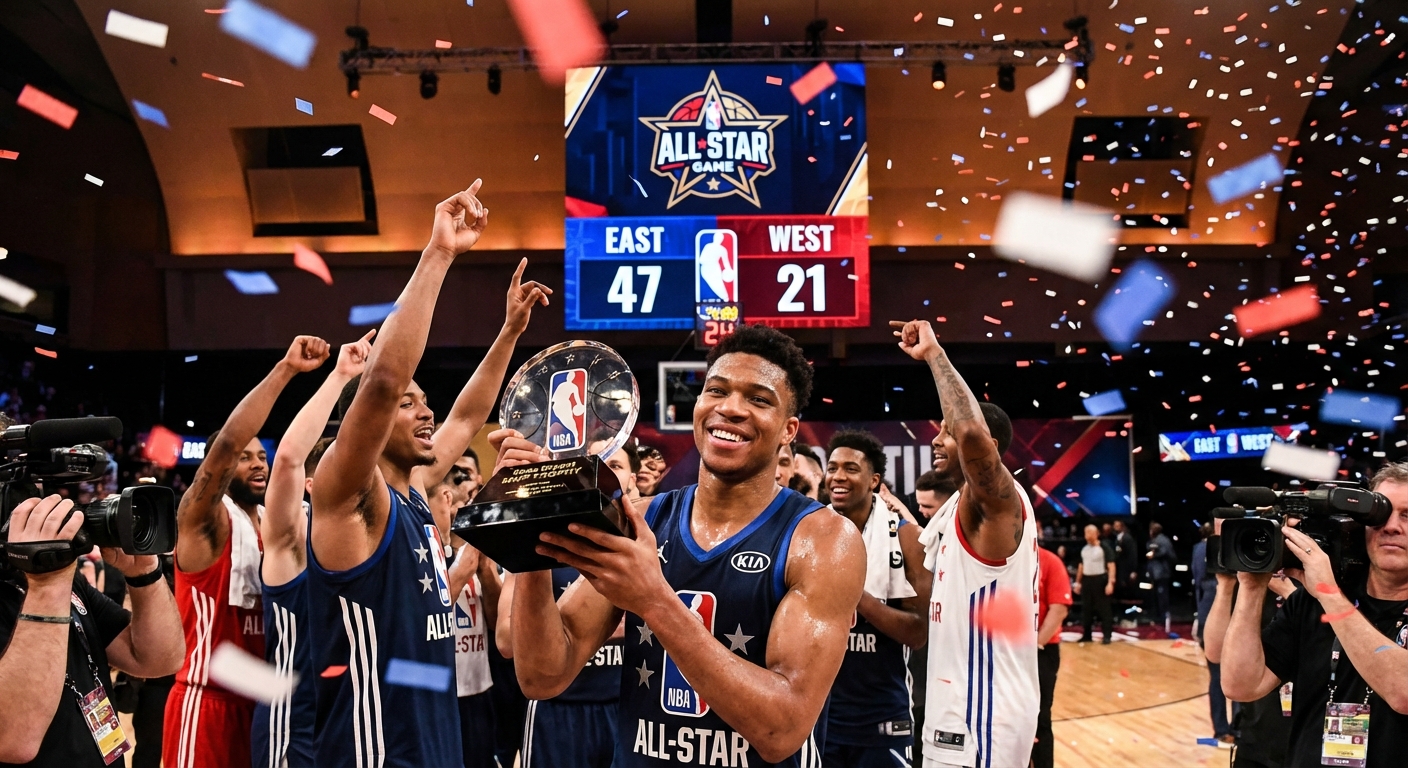
The generational implications are difficult to overstate. Edwards, at 24, took the MVP from a field that included three former MVPs and multiple future Hall of Famers. His Stars teammates, most of them under 25, didn’t just win the tournament. They made the veterans look their age, which in an All-Star Game that was actually competitive for the first time in years, carried a weight that previous exhibitions never could. The 47-21 margin wasn’t about one team caring more than the other. Both teams played hard on Sunday. The Stars were simply better, faster, and more explosive. That is the kind of truth that only emerges when the games are real.
Why This Fix Worked When Others Failed
The obvious explanation for Sunday’s success is mechanical. The games were shorter: 12 minutes instead of 48, eliminating the dead time where effort evaporated in old All-Star formats. The round-robin created real elimination pressure, where losing both preliminary games meant watching the championship from the bench. These structural changes mattered, and the NBA deserves credit for designing a format where every possession counted from the opening tip.
But the deeper reason this format succeeded where the Elam Ending and captain draft failed is that it tapped into identity rather than competition alone. The USA vs. World framing gave international players a genuine cause. Wembanyama wasn’t just playing an exhibition game with randomly assigned teammates. He was representing the global basketball community against the country that invented the sport, on American soil, on national television. That asymmetry of meaning produced effort that no amount of rule tinkering could manufacture. The comparison to hockey’s 4 Nations Face-Off is instructive: when the NHL put its best players in national team jerseys earlier this year, the result was some of the most intense hockey the sport had seen in years, the same players producing dramatically different effort simply because of what was on the front of the jersey.
The format also benefited from what economists call a demonstration effect. Wembanyama’s opening defense established a competitive norm that every subsequent player felt pressure to match. Once one All-Star was swatting shots and diving for loose balls, the social cost of coasting became higher than the physical cost of competing. By Game 2, the standard had been set, and Fox’s buzzer-beater cemented it. By Game 3, Kawhi Leonard was shooting 85 percent because the defense he was facing was genuine, which meant his makes actually proved something about his ability rather than his willingness to participate. The NBA had spent years trying to force competition through rules. On Sunday, it created the conditions for competition to emerge organically, and the players did the rest.
The Verdict on the Format
The NBA’s USA vs. World experiment produced the most compelling All-Star event in at least a decade. Four competitive games, legitimate MVP contention between Edwards and Leonard, a generational blowout that told a meaningful story about the state of the league, and the first All-Star night in years where the basketball itself was worth watching from start to finish. NBC, broadcasting the game for the first time since 2002, got the product the league promised them.
The question now is whether Sunday was the beginning of something sustainable or a one-time novelty. The Elam Ending had a strong debut too, in 2020, before the energy dissipated. The answer depends on whether the identity-driven motivation that powered this edition can survive repetition. If future All-Star weekends continue to frame the event as a genuine competition between American and international basketball, with elimination stakes and 12-minute intensity, the format has staying power. If the novelty fades and players revert to exhibition mode, this edition will join the captain draft as a promising experiment that couldn’t outlast its own introduction.
The evidence from Sunday suggests durability. The effort was real because the motivation was real, and the motivation was real because national identity runs deeper than one-night team assignments. Edwards is the face of the NBA’s next generation. Wembanyama is the most disruptive defensive presence in any setting, All-Star or otherwise. Leonard can still produce masterpieces when the stage demands them. And the young Stars’ 47-21 championship demolition of the veteran Stripes told a story about where the league is heading that no amount of highlight-reel dunks in a traditional All-Star Game could have communicated. The showcase was broken for years. On Sunday in Inglewood, it wasn’t just repaired. For the first time since anyone can remember, the best game of All-Star weekend was the All-Star Game itself.
Sources
- Yahoo Sports: NBA All-Star Game 2026 results, Team Stars wins in USA vs. World format
- ESPN: NBA All-Star 2026 live updates, results, and highlights
- CBS Sports: 2026 NBA All-Star Game results, scores, and highlights
- NBC Sports: 2026 NBA All-Star Game updates, Anthony Edwards MVP
- Sports Illustrated: Anthony Edwards wins 2026 All-Star Game MVP