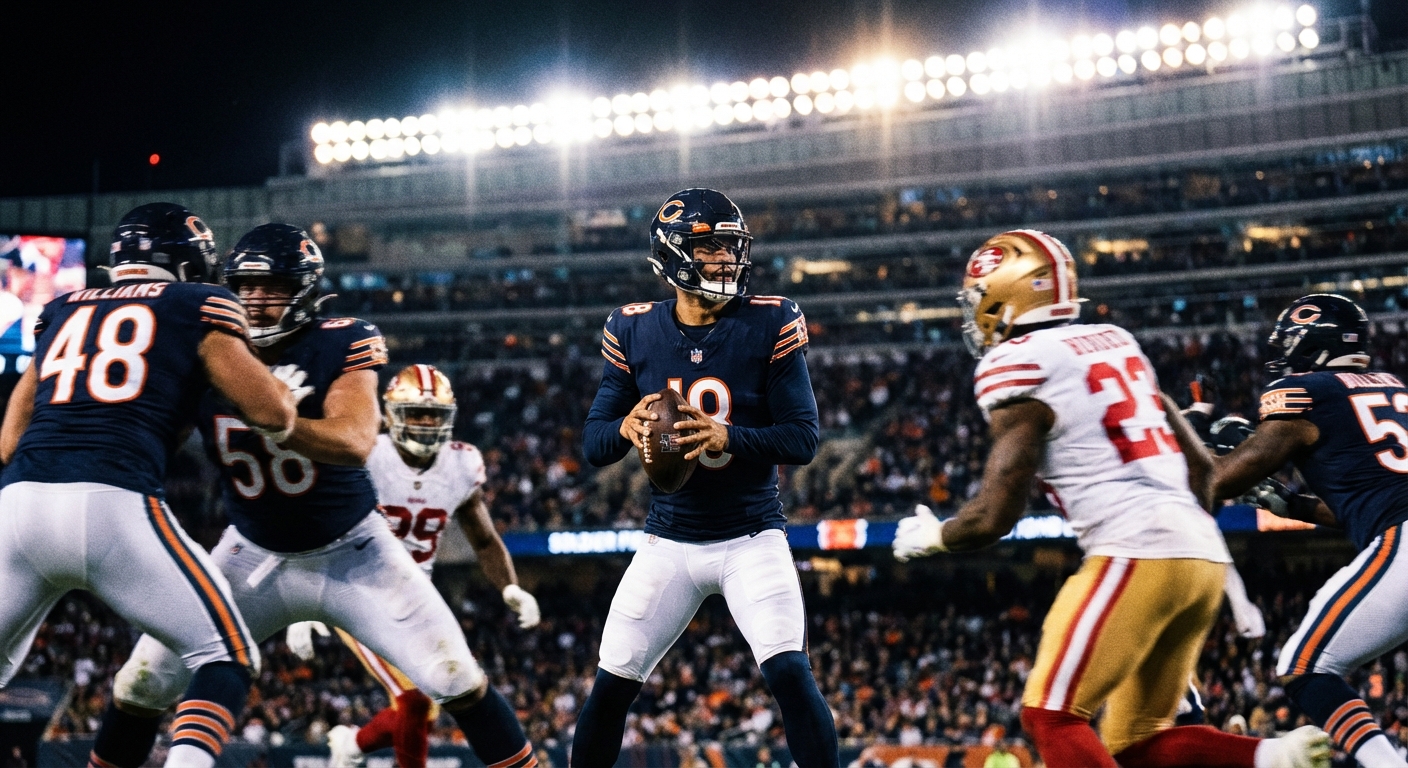
Caleb Williams has been telling anyone who will listen that he’s “built for these moments.” Heading into his first NFL postseason game against the Green Bay Packers, the Chicago Bears quarterback sounds like a player who has waited his entire life for exactly this kind of stage. The confidence is backed by numbers: Williams posted a 104.7 passer rating in the fourth quarter this season, per PFF, the third-best mark in the NFC, and his completion percentage actually rises by 3.2 points in one-score games compared to blowouts.
The game against Green Bay represents more than just a playoff matchup. It’s the continuation of the NFL’s oldest rivalry, a Bears-Packers collision that carries weight beyond the current season. Chicago hasn’t won a playoff game since the 2010 season. Green Bay has owned this rivalry for most of the past two decades, winning consistently while the Bears cycled through quarterbacks searching for an answer. Williams is Chicago’s best candidate in a generation. Williams faces a Packers defense that allowed a league-low 38.2 percent conversion rate on third-and-long this season, per ESPN Stats & Info, meaning Chicago’s offense must stay ahead of the chains rather than relying on Williams to bail them out in obvious passing situations.
Williams doesn’t seem fazed by the stakes. He’s spoken publicly about treating playoff games like any other game, about trusting his preparation and his teammates, about playing his style regardless of the opponent. What separates his press-conference composure from standard quarterback boilerplate is the on-field evidence. Film from Chicago’s final five regular season games shows Williams checking out of called plays at the line 14 times, per The Athletic’s Kevin Fishbain, with those audibles producing a 71 percent success rate measured by expected points added. That command of the pre-snap phase is rare for a second-year quarterback and suggests a player who has internalized the offense deeply enough to trust his own reads over the play call.
The Heisman Moment That Defined Him
Understanding why Williams handles pressure so well requires going back to his college career at USC. He won the Heisman Trophy in 2022, but the award itself mattered less than how he won it. Williams didn’t just compile impressive statistics. He delivered signature performances in the biggest games on the biggest stages, the kind of performances that separate good players from special ones.
The most revealing game came against UCLA that season. The Trojans trailed by 14 in the fourth quarter of a rivalry game with playoff implications. Williams threw three touchdown passes in the final 12 minutes to lead the comeback victory, per ESPN Stats & Info. Two of those touchdowns came on fourth down plays where lesser quarterbacks might have checked down to safer options. Williams attacked instead, trusting his arm and his receivers to make plays that seemed impossible. USC won, Williams cemented his Heisman campaign, and observers noted a young quarterback who got better as games got bigger.

That UCLA game revealed something essential about Williams’s makeup. He doesn’t tighten up when trailing. He doesn’t abandon his process when circumstances demand immediate results. The pressure that causes other quarterbacks to force throws or make poor decisions sharpens Williams’s focus. He becomes more precise, not less. He takes calculated risks that work because he’s processing the game correctly even when his team is desperate.
The trait showed up again throughout his rookie NFL season and has continued into year two. Fourth quarter drives that required conversion after conversion. Two-minute drills that ended with touchdowns instead of field goals. His red zone touchdown rate ranked in the top five among qualifying quarterbacks this season, per Pro Football Reference, exceeding his already-strong overall numbers. Williams plays his best football when the game hangs in the balance, which is exactly what you want from a quarterback entering playoff competition.
How Williams Rewired His Pressure Response
Williams has spoken openly about his mental approach to football, crediting sports psychology work and mindfulness practices with helping him stay centered during chaotic moments. This isn’t unusual for elite athletes in 2026, but Williams has integrated these practices more completely than most. He’s not just going through the motions of mental training. He’s actually using the tools to manage his nervous system and maintain clarity under stress.
The results show up in his play sequencing. After turnovers this season, Williams posted a 92.3 passer rating on the immediately following drive, per PFF, which ranks fifth among qualifying quarterbacks. By contrast, the league average passer rating on post-turnover drives is 78.1. The gap matters because playoff games hinge on how teams respond to mistakes, and the data indicates Williams recovers faster than most. He engages with coaches about adjustments without the emotional residue of the previous play clouding the conversation, and the next drive begins with a clean slate because Williams has trained himself to compartmentalize errors in real time.
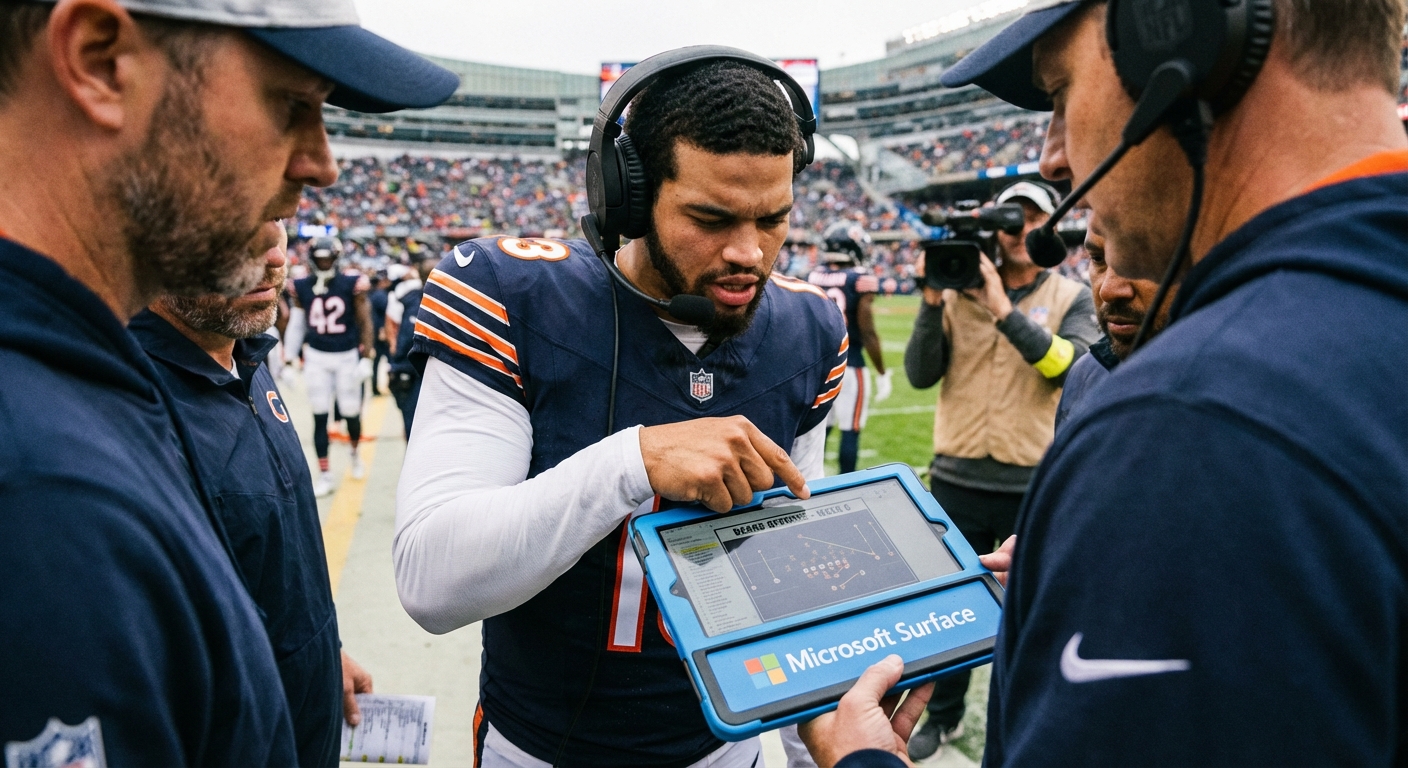
This mental discipline extends to how Williams prepares during the week. Teammates have noted his film study habits, the hours he spends watching not just upcoming opponents but also his own performances from previous games. He’s looking for patterns, tendencies, and opportunities that might not be obvious from casual viewing. The preparation creates confidence because Williams enters games knowing he’s done the work. He’s not hoping things go well. He’s trusting a process that has consistently produced results.
The Packers will test this mental fortitude in ways the regular season hasn’t. Playoff games have a different feel, a different intensity, a different level of scrutiny. The crowd noise is louder. The hits are harder. The stakes are higher. Williams has never experienced a playoff environment, but his second-half splits this season suggest a quarterback who has already adapted to increasing pressure. From Weeks 10 through 18, as the playoff race intensified, Williams averaged 8.3 yards per attempt with a 68.4 percent completion rate, both improvements over his first-half numbers, per Pro Football Reference. He also cut his interception rate nearly in half during that stretch, suggesting that his decision-making sharpened as the stakes grew rather than deteriorating.
How the Packers Defense Tests Williams’s Strengths
The Packers defense has improved significantly this season, presenting a challenge different from what Williams faced in the regular season meetings between these teams. Green Bay’s secondary has developed better communication, reducing the coverage busts that allowed explosive plays earlier in the year. Their pass rush has found a rhythm, generating pressure on 38% of dropbacks in the second half of the season according to PFF, without relying solely on blitzes that can leave defenders exposed. This is a more complete defensive unit than Williams saw in November.
The key matchup will be Williams’s ability to operate in the intermediate zones where Green Bay’s linebackers patrol. The Packers want to force quarterbacks into quick decisions underneath rather than allowing deep shots over the top. Williams thrives at reading coverage shells and attacking the soft spots in zone schemes, but the Packers’ zone has grown tighter. He’ll need to be more precise with his ball placement than usual, fitting throws into windows that might be smaller than he prefers.
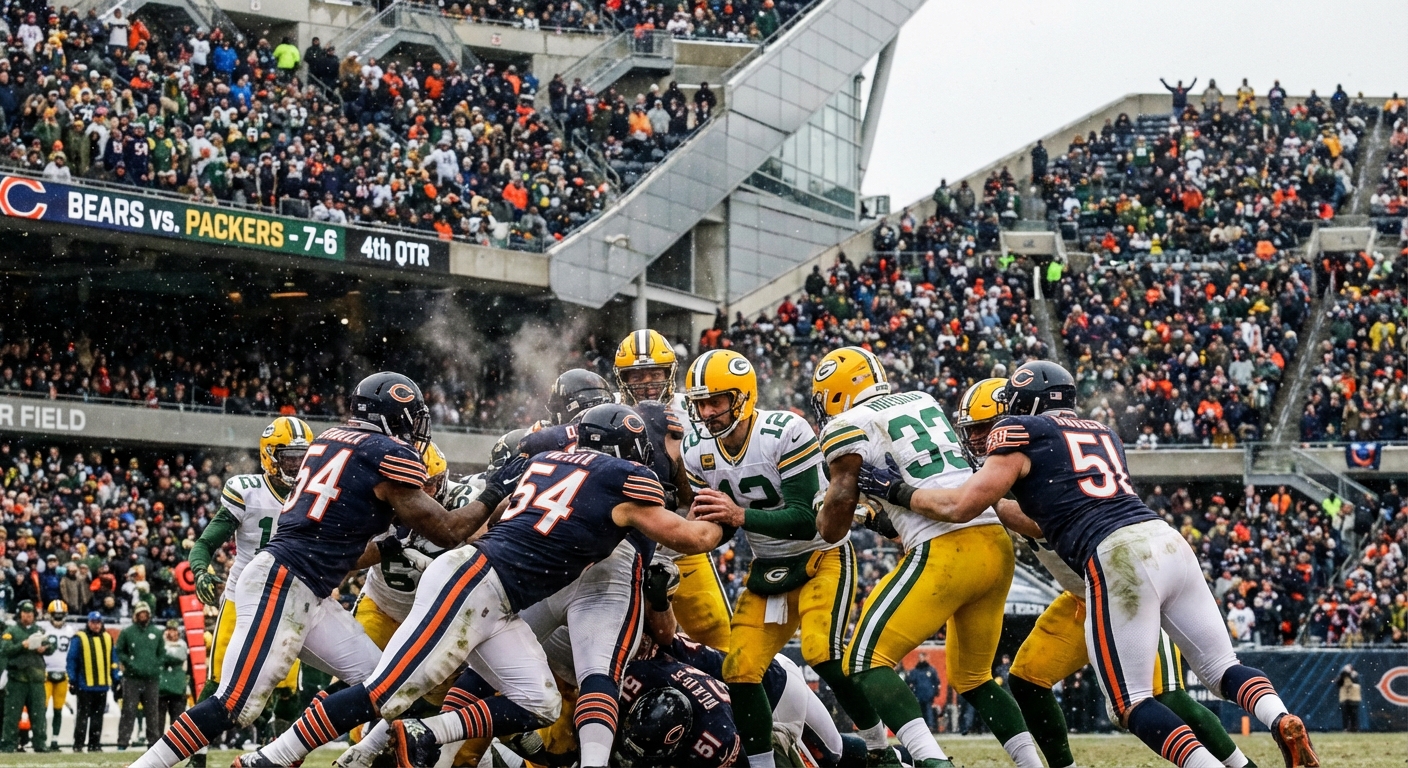
Williams’s mobility will matter more in this game than in most. The Packers have struggled to contain running quarterbacks, allowing the second-most scramble yards to quarterbacks in the NFC per Next Gen Stats, and Williams has the ability to extend plays with his legs when the pocket collapses. He’s not a designed runner like some mobile quarterbacks, but his scramble ability creates second chances on broken plays. The Bears will likely incorporate more designed rollouts to take advantage of this skill while keeping Williams away from Green Bay’s interior rushers.
The historical parallel worth examining is Joe Burrow’s first playoff game in January 2022, when the second-year Bengals quarterback faced a Raiders defense that pressured him on 34 percent of dropbacks. Burrow responded by shortening his release and targeting the middle of the field on quick-game concepts, completing 78 percent of his passes under 10 air yards to neutralize the pass rush. Williams’s skill set mirrors Burrow’s in key ways: both are pocket passers with above-average mobility who process coverages quickly and rarely panic under pressure. If Williams adopts a similar approach against Green Bay, attacking the intermediate zones with high-percentage throws rather than trying to win with deep shots, he can control the game’s tempo and limit the Packers’ ability to generate negative plays. The Bears’ coaching staff would be wise to study that Burrow blueprint closely.
The Bears’ Postseason Drought
Chicago’s playoff drought hangs over this game like a shadow. The franchise hasn’t won a postseason contest since January 2011, per Pro Football Reference, when they beat Seattle in the divisional round before losing to Green Bay in the NFC Championship. That’s 15 years of January disappointments, of promising seasons that ended with defeats, of quarterbacks who couldn’t get it done when it mattered most.
Williams knows this history. He’s spoken about wanting to bring championship-caliber quarterback play back to Chicago, about understanding what the position means to a franchise that has rarely had stability there. The burden of those expectations would crush some young players. Williams treats it as motivation rather than pressure. He wanted to be drafted by the Bears specifically because of the challenge, because he believed he could be the quarterback who changed the franchise’s trajectory.
The confidence isn’t arrogance. Williams has earned respect from teammates and coaches through his work ethic and his willingness to learn. He doesn’t act like someone entitled to success. He acts like someone who expects success because he’s prepared for it. The distinction matters because teammates follow leaders who have earned their confidence rather than assumed it. The Bears locker room believes in Williams because he’s shown them reasons to believe.
What It Means
This playoff debut matters for Williams’s career trajectory beyond the final score. The NFL’s recent history shows that quarterbacks who win a playoff game in their first two seasons — Patrick Mahomes, Joe Burrow, Lamar Jackson — accelerate into a different tier of league-wide perception. Free agents prioritize their rosters. Coaching staffs build around them with more ambition. The franchise unlocks a level of organizational momentum that compounds over multiple seasons. A Williams win on Saturday would place Chicago on that same accelerating track for the first time since the Lovie Smith era.
The inverse is also true, which is what makes this game a genuine inflection point. A loss won’t erase Williams’s talent, but it would extend the narrative that Chicago’s quarterback situation remains unresolved, feeding another offseason of doubt that the Bears can’t afford. Williams doesn’t just need to play well. He needs to demonstrate the kind of fourth-quarter command that shifts the conversation from “promising young quarterback” to “franchise cornerstone entering his prime.”
The game against Green Bay will not define Williams permanently. But it will set the trajectory for how the league treats him heading into 2026 and beyond. Since 2015, every quarterback who won a playoff game in his first two seasons has received a contract extension averaging at least $35 million annually, per Over The Cap, and three of the five went on to reach a Super Bowl within the following three seasons. The organizational investment that follows a postseason win is not just financial; it reshapes how front offices build around a quarterback. Williams has earned the opportunity to unlock that level of commitment from Chicago. Saturday night determines whether the Bears begin building a championship roster or spend another offseason debating whether they have the right quarterback to build around.
Sources
- Caleb Williams 2025 Game Log - Pro Football Reference, season statistics and red zone performance
- Packers vs. Bears Wild Card Pregame Preview - ESPN, matchup analysis and Williams’s pressure metrics
- Caleb Williams Passing Data - PFF, advanced passing grades and pressure rate data
- Next Gen Stats: QB Scramble Metrics - NFL Next Gen Stats, scramble yards allowed by defense
- Chicago Bears Playoff History - Pro Football Reference, franchise postseason record and historical context