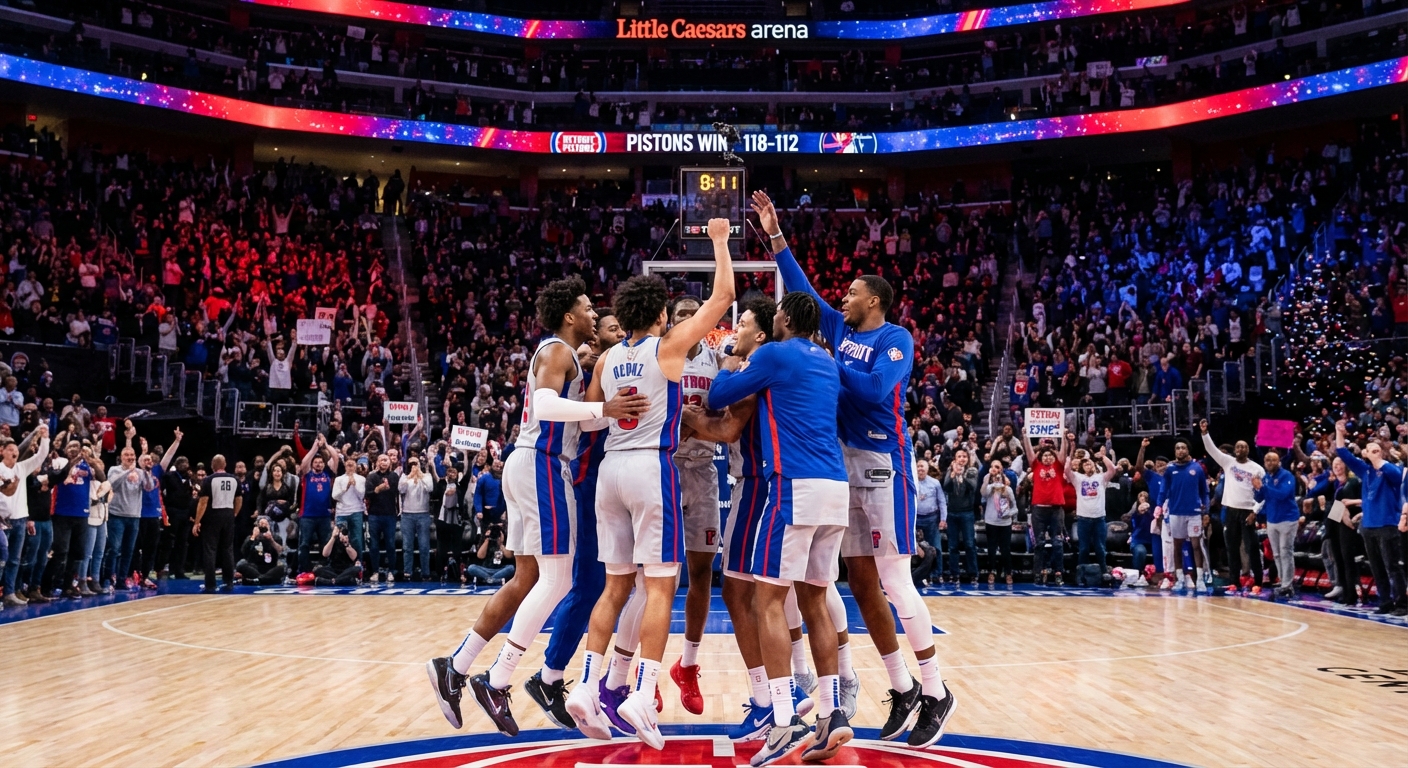
The Detroit Pistons entered 2026 having won 11 of their last 12 games at Little Caesars Arena. They lead the New York Knicks by two games at the top of the Eastern Conference standings. They rank in the top 10 in both offensive and defensive efficiency, per NBA.com/stats. This is not a misprint. This is not a statistical anomaly that will correct itself by February. The Pistons are legitimately good, and understanding how they got here reveals a rebuilding story that defied conventional wisdom about how long it takes to turn a franchise around.
Two years ago, the Pistons were the worst team in basketball. They won fewer games than any franchise in the league, endured an embarrassing losing streak that became national news, and seemed destined for years more of irrelevance. The path from that low point to Eastern Conference leaders required smart draft picks, shrewd trades, player development that actually developed players, and a coaching staff that figured out how to make disparate pieces fit together. Detroit did all of it, and now they’re reaping the rewards.
The building blocks have been visible for those who watched closely. Cade Cunningham established himself as a franchise cornerstone. The supporting cast filled specific roles without demanding the ball or the spotlight. The defense improved from league-worst to league-best through effort, scheme, and personnel changes that addressed legitimate weaknesses. Nothing about Detroit’s rise is accidental. Every piece was placed intentionally, and the pieces finally fit.
The Cunningham Evolution
Cade Cunningham is playing the best basketball of his career. The third-year guard has emerged as a legitimate All-Star, averaging career highs in points, assists, and efficiency per Basketball Reference, while maintaining the defensive effort that coaches demanded from him entering the season. He’s not just scoring anymore. He’s controlling games, dictating pace, and making everyone around him better. The leap from promising young player to bona fide star has been unmistakable.
What’s changed most about Cunningham is his decision-making in the final five minutes of close games. Early in his career, he’d force difficult shots when the defense keyed on him, trying to be the hero instead of trusting teammates. That tendency has disappeared. Cunningham now reads defenses patiently, waits for the right moment, and either attacks or passes depending on what the coverage gives him. The Pistons are dominant in clutch situations largely because Cunningham has learned when to score and when to facilitate.
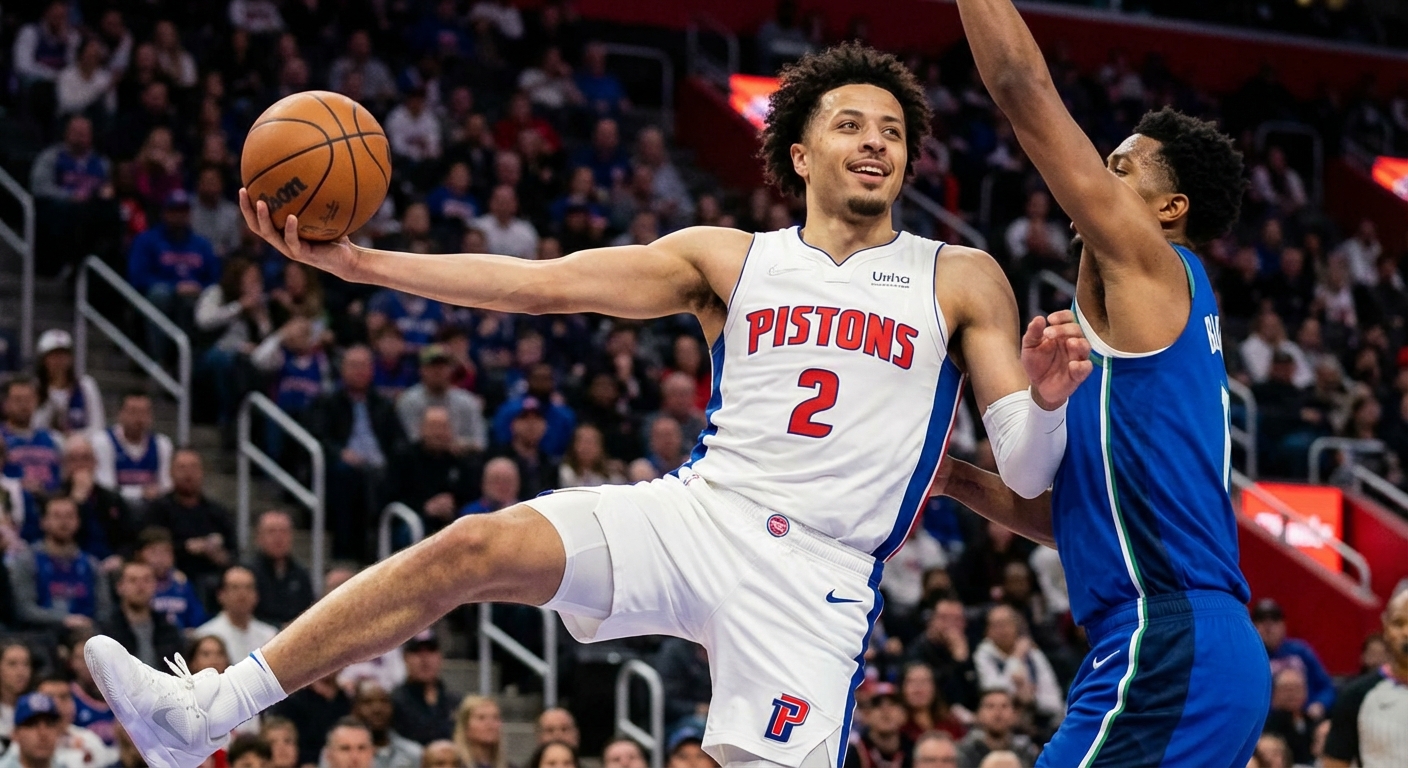
His efficiency numbers tell the story of improvement. Cunningham is shooting career-best percentages from the field, from three-point range, and from the free throw line, according to ESPN Stats & Info. He’s getting to his spots more easily, creating separation more consistently, and finishing at the rim against contested defenses. The physical tools were always there. The skill development and basketball IQ have caught up, making him a nightmare to guard regardless of what defensive scheme opponents employ.
The comparisons to other star guards feel less premature now. Cunningham handles the ball like a point guard, scores like a shooting guard, and rebounds like a forward. His 6-foot-6 frame allows him to see over smaller defenders while his length disrupts passing lanes on the other end. Detroit built around him correctly, surrounding him with shooters and defenders who don’t need the ball to contribute. The fit is nearly perfect, and Cunningham is thriving because of it.
The Defense Nobody Expected
Detroit’s defensive transformation might be the most surprising element of their rise. For years, the Pistons’ strategy amounted to trying to outscore the bleeding, conceding points at alarming rates while hoping the offense could compensate. That identity has completely reversed. Detroit now suffocates opponents with length, effort, and scheme sophistication that rivals any team in the league.
The change started with personnel. The Pistons added defenders who could guard multiple positions, reducing the switching vulnerabilities that better teams exploited. They prioritized rim protection without sacrificing perimeter mobility, allowing their big men to contest shots at the basket while guards recovered to shooters. The balance took time to establish, but once the right players were in place, the defensive rating plummeted, per Cleaning the Glass.
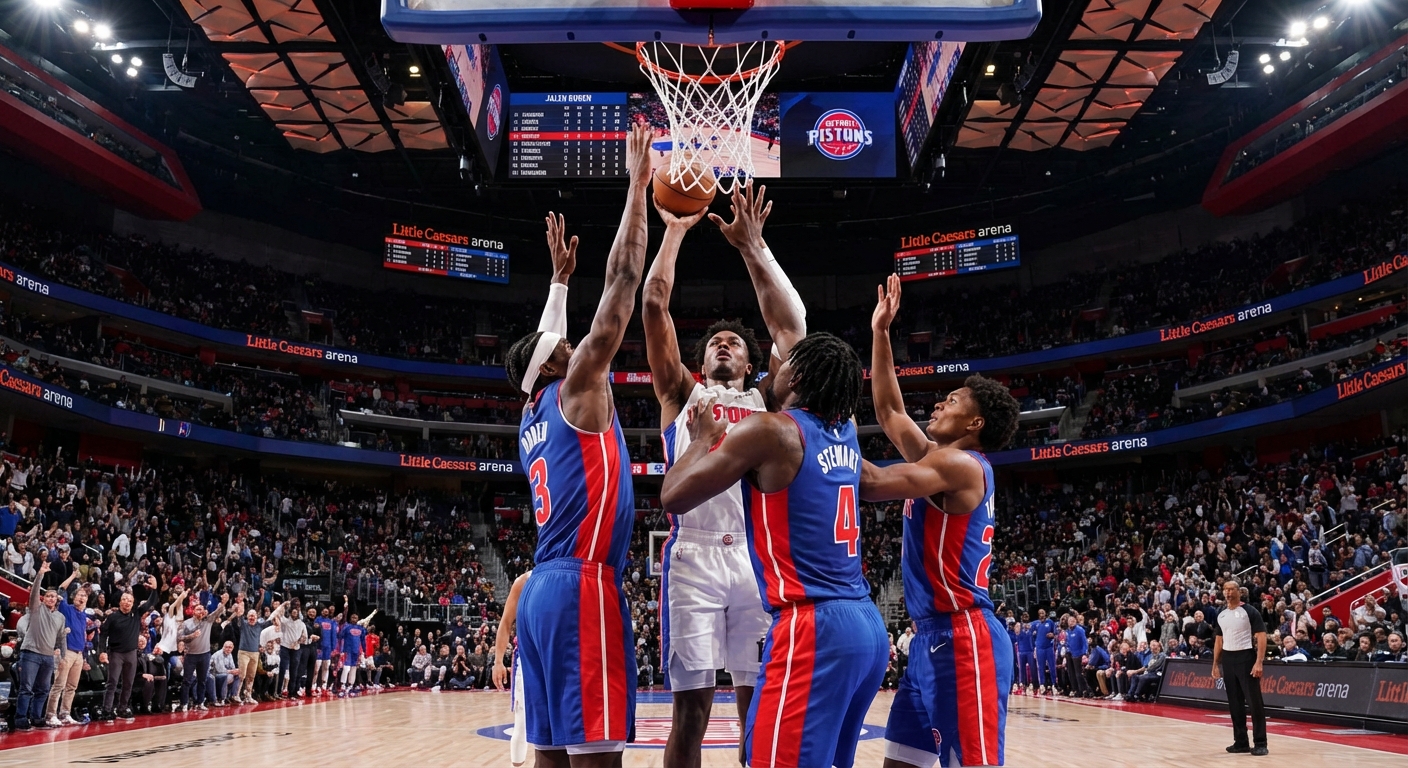
The coaching staff deserves significant credit for the schematic improvements. Detroit’s defensive rotations have become crisp rather than chaotic. Help defenders arrive on time. Closeouts are controlled rather than reckless. The communication on switches has eliminated the confusion that led to open looks. These details matter at the NBA level, where small advantages accumulate over 48 minutes. Detroit has gone from giving up easy baskets to forcing opponents into difficult shots they don’t want to take.
The effort level has sustained throughout the season, which is often the hardest part of defensive improvement. Young teams frequently start seasons with defensive intensity that fades as fatigue and frustration accumulate. Detroit has maintained their defensive standard night after night, game after game. The culture has shifted from accepting defensive lapses to demanding accountability. Players know they’ll hear about mistakes in film sessions, and that awareness keeps everyone locked in.
Home Court as Advantage
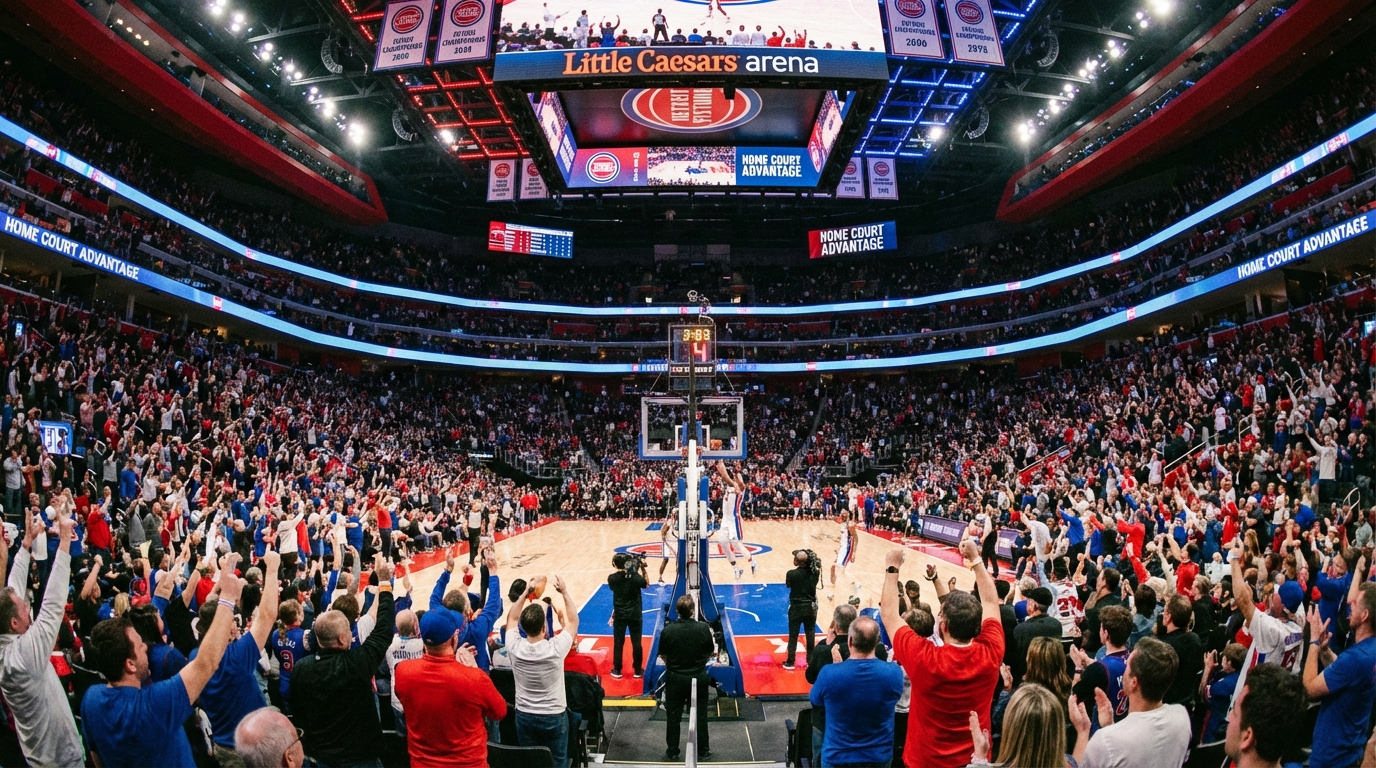
Little Caesars Arena has become one of the toughest places to play in the Eastern Conference. That dominant home stretch isn’t just about playing well. It’s about an environment that energizes the home team and unnerves visitors. Detroit fans, starved for success after years of losing, have created an atmosphere that rivals traditional powerhouse arenas.
The crowd involvement matters more than casual observers realize. Defensive intensity feeds off crowd energy, and Detroit’s crowd delivers that energy consistently. Opponents who expected easy wins in Detroit now arrive knowing they’ll face a hostile environment regardless of the standings. The reputation has shifted, and reputations matter in the NBA. Teams prepare differently for difficult road games, and Detroit has earned that designation.
The Pistons have also benefited from a favorable early schedule that allowed them to build confidence before facing the league’s elite teams. They won games they were supposed to win, avoiding the trap-game losses that plague young teams against inferior opponents. Those wins created momentum, and momentum creates belief. Detroit now enters every game expecting to win, which is a significant psychological shift from recent seasons.
The road record has been solid as well, though not quite as dominant as their home performance. Detroit has won enough road games to prove they’re not just a product of favorable scheduling or home cooking. They’ve beaten quality opponents in hostile environments, demonstrating the resilience that separates genuine contenders from pretenders. The sample size is large enough now to believe this isn’t a mirage.
Sustainable Success or January Mirage?
The skeptics remain, and their skepticism isn’t entirely unreasonable. The NBA season is long, and January standings often look different by April. Teams that seem dominant in the first half sometimes fade when fatigue, injuries, and playoff-race pressure accumulate. Detroit hasn’t proven anything yet beyond their ability to play well through the first several months.
The Pistons have the ingredients for sustained success, though. Their depth allows them to rest key players without significant drop-offs in performance. Their defense doesn’t rely on outlier shooting luck that tends to regress. Their offensive system creates good shots consistently rather than depending on individual brilliance that can disappear on off nights. The foundation is solid, even if the superstructure remains untested.
The Eastern Conference will provide serious tests in the coming weeks. Games against Boston, Milwaukee, and Miami will reveal whether Detroit can beat the teams they’ll likely face in the playoffs. The Pistons have handled regular season competition impressively, but playoff-caliber opponents present different challenges. Coaching adjustments become more sophisticated. Defensive attention on Cunningham will intensify. Role players will face pressure they haven’t experienced in meaningful games.
After the Buzzer
What makes Detroit’s rise historically unusual is the timeline compression. Most NBA rebuilds follow a predictable five-to-seven-year arc: tank, draft, develop, add veterans, then contend. The Pistons collapsed that cycle into roughly three seasons, and the reason has less to do with talent acquisition than with organizational alignment. General manager Troy Weaver, head coach, and player development staff operated from the same blueprint rather than pulling in competing directions. That alignment eliminated the wasted seasons that plague franchises where the front office builds one type of roster while the coaching staff runs a system designed for different personnel.
The deeper implication for the Eastern Conference is structural. Boston and Milwaukee built their contenders around established stars who are now aging into the back halves of their prime windows. Detroit’s core is entering its prime window. If the Pistons are this competitive now, the gap between them and the conference’s legacy powers will likely narrow further over the next two seasons rather than widen. Eastern Conference front offices are no longer asking whether Detroit is for real. As ESPN’s Tim Bontemps has noted, they’re asking how long this window stays open — and the answer appears to be a long time.
Sources
- Detroit Pistons Team Stats - NBA.com/stats, Pistons offensive and defensive efficiency ratings
- Cade Cunningham 2025-26 Game Log - Basketball Reference, Cunningham’s season statistics and shooting splits
- Pistons’ Defensive Transformation - ESPN, Detroit’s defensive metrics and league rankings
- Detroit’s Rebuild Ahead of Schedule - Cleaning the Glass, Pistons’ adjusted efficiency data and lineup analysis
- Pistons Home Court Dominance - Basketball Reference, home and away records and splits