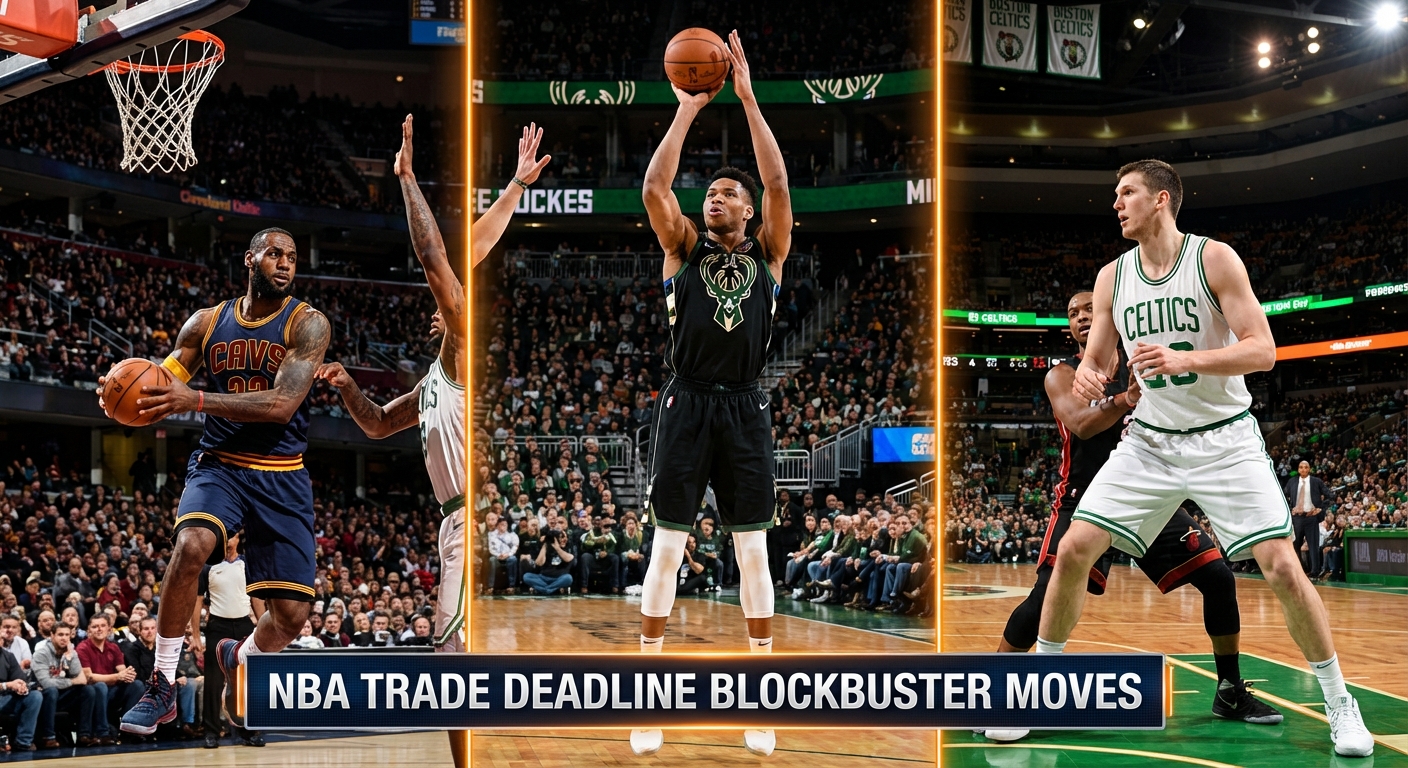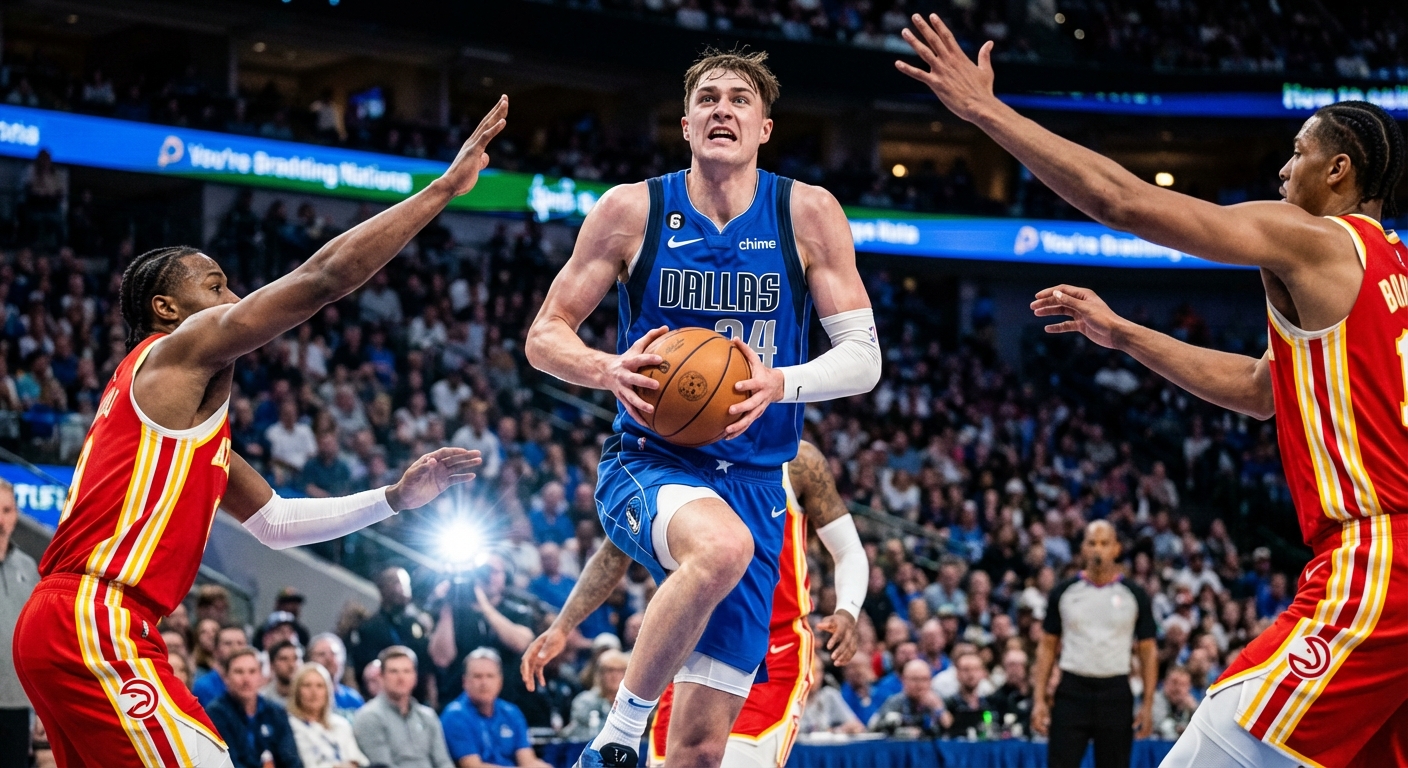
Cooper Flagg took the inbound pass with 4.7 seconds remaining and the Mavericks down two against the defending champion Thunder. What happened next has already been replayed millions of times: a crossover that sent his defender stumbling, two dribbles toward the three-point line, and a step-back jumper that swished through as the buzzer sounded. The 19-year-old rookie had just beaten the best team in basketball with a shot that would have made Michael Jordan nod in approval.
“I’ve been making that shot since I was eight years old,” Flagg said after the game, displaying the preternatural confidence that has defined his first NBA season. “When the ball’s in my hands at the end of games, I expect to make plays. That’s what I was drafted to do.”
What Flagg has done in his first three months as a professional has only one historical comparison: LeBron James’s rookie season in 2003-04. The statistical parallels are almost eerie. Both players averaged over 20 points, 5 rebounds, and 5 assists before the All-Star break, per Basketball Reference. Both demonstrated a basketball IQ that seemed impossible for someone their age. And both made their teammates measurably better simply by being on the floor.
But Flagg’s emergence is just one thread in what has become the most chaotic NBA season in recent memory. Federal indictments have rocked the league, a former MVP is watching his team crumble, and the defending champions are navigating their own target-on-the-back struggles. We’ve reached the midseason point, and nothing about this year has gone according to anyone’s preseason predictions.
The Betting Scandal That Shook the League

The news broke three weeks ago like a thunderclap: federal prosecutors had indicted Portland Trail Blazers head coach Chauncey Billups, Miami Heat guard Terry Rozier, and former player Damon Jones on charges related to illegal sports betting and participation in rigged poker games. The NBA immediately placed Billups and Rozier on indefinite leave, and the reverberations continue to shake the foundation of the league.
According to court documents, the scheme involved betting on NBA games through illegal offshore accounts, with amounts totaling several million dollars over a two-year period. While none of the charges allege that any of the defendants bet against their own teams or attempted to influence game outcomes, the mere proximity of active NBA personnel to illegal gambling has created a crisis of credibility for a league that had proudly positioned itself as a leader in sports betting partnerships.
ESPN’s Brian Windhorst described the situation as “the worst-case scenario the league always feared,” adding: “They spent years building relationships with sportsbooks, selling the integrity of the product, and now they have a head coach and an active player facing federal charges. The optics are devastating.”
The Trail Blazers have turned to assistant coach Tiago Splitter on an interim basis, while the Heat are navigating the season without one of their key rotation players. Both organizations have issued carefully worded statements expressing shock and promising full cooperation with authorities, but the damage extends far beyond those two franchises. League-wide, teams are reportedly conducting internal reviews of their personnel’s gambling activities, and the players’ union has retained outside counsel to advise members on compliance issues.
For Commissioner Adam Silver, who has been perhaps the most progressive major sports commissioner when it comes to gambling legalization, this scandal represents an existential test of his signature policy initiative. The NBA was the first major American sports league to embrace legal sports betting partnerships, and Silver personally lobbied for legalization. Now critics are questioning whether the league moved too fast in normalizing gambling culture around the sport.
Cooper Flagg: The Real Deal
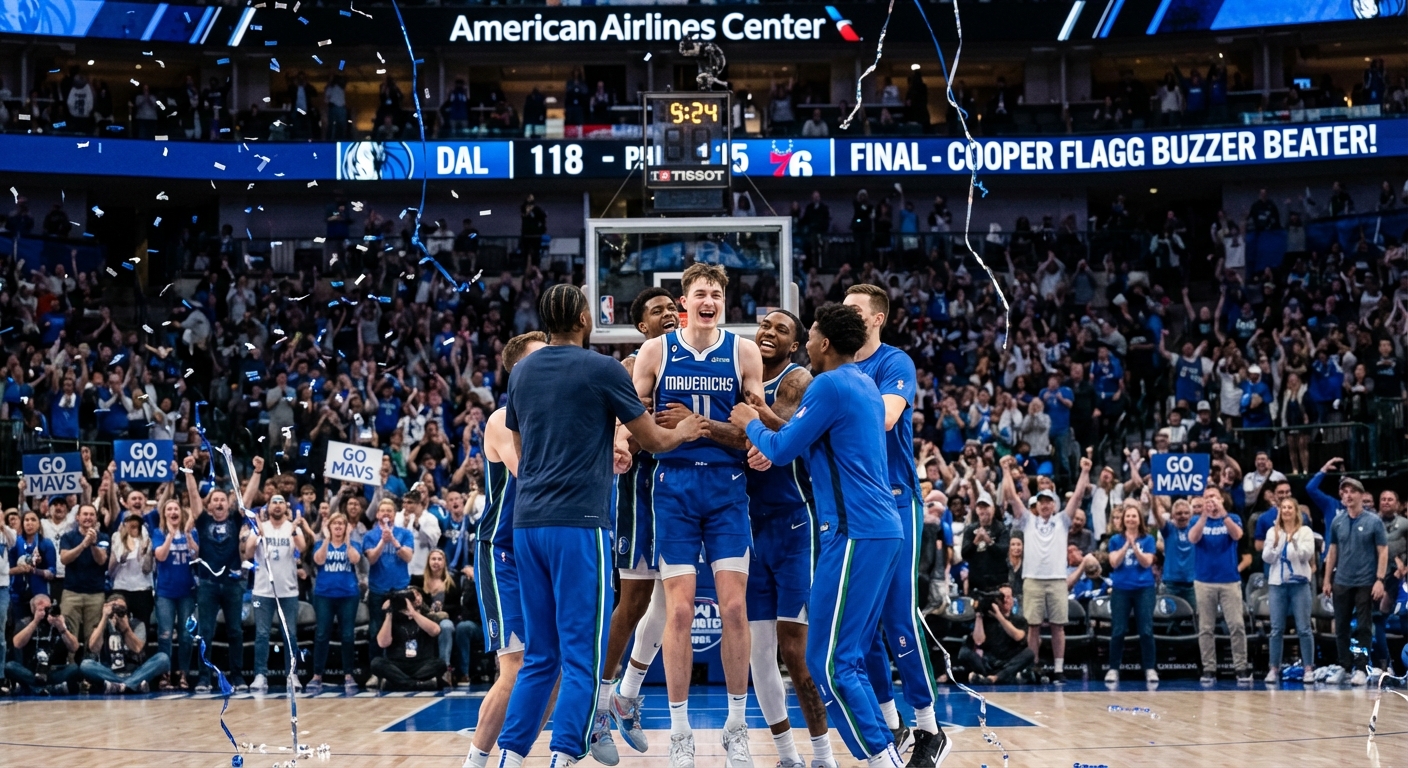
Amid the scandal’s darkness, Cooper Flagg has provided the NBA with its brightest light. The 6-foot-9 forward out of Duke was the consensus No. 1 pick after a college season that saw him win every major award, and the Mavericks made the controversial decision to trade Luka Doncic to acquire the assets necessary to draft him. At the time, many questioned whether any rookie could possibly justify giving up a generational talent like Doncic. Flagg has spent the first half of the season answering that question with an emphatic yes.
His numbers are staggering, according to NBA.com/stats: 22.4 points, 6.8 rebounds, 5.2 assists, and 1.9 steals per game, all while shooting 48% from the field and 38% from three. Among rookies, he leads in virtually every major statistical category. But the numbers don’t capture what makes Flagg special. It’s the way he commands the floor, directing traffic on offense like a 10-year veteran. It’s the defensive instincts that allow him to anticipate passes before they happen. It’s the clutch gene that has already produced four game-winning plays this season.
“He’s the most NBA-ready prospect I’ve ever evaluated,” ESPN draft analyst Jonathan Givony said. “Usually with young guys, you’re projecting what they might become. With Flagg, you’re just watching what he already is. The ceiling is terrifying.”
The LeBron comparisons that seemed hyperbolic before the draft now feel increasingly appropriate. Both players entered the league with impossible expectations and somehow exceeded them. Both demonstrated leadership qualities that typically take years to develop. And both showed an ability to elevate their teammates that goes beyond individual statistics. The Mavericks, who many predicted would struggle in their first season post-Doncic, are currently sixth in the Western Conference and firmly in the playoff hunt.
Giannis and Milwaukee’s Collapse
The contrast between Flagg’s ascent and Giannis Antetokounmpo’s struggles couldn’t be more stark. The Milwaukee Bucks entered the season hoping to reclaim their status as Eastern Conference contenders after a disappointing first-round exit last spring. Instead, they’ve cratered to 11th place in the East, and the franchise’s stunning decision to waive and stretch Damian Lillard’s contract has produced more questions than answers.
Giannis is still putting up monster numbers individually, per Basketball Reference: 28.9 points, 11.2 rebounds, and 6.1 assists per game. But his efficiency has dropped noticeably, and his frustration has become increasingly visible on the court. The team’s defensive rating, which was elite during their championship run, has fallen to the bottom third of the league according to NBA.com/stats. And the chemistry that defined Milwaukee’s best seasons has evaporated completely.
“Something is broken there, and I’m not sure it can be fixed,” Jeff Van Gundy said on ESPN’s broadcast. “Giannis is doing everything he can, but he’s surrounded by guys who don’t fit together. The Lillard stretch was supposed to give them cap flexibility, but all it really did was remove their second-best player. Now they’re stuck in purgatory.”
The Bucks’ Christmas Day loss to the Washington Wizards, one of the league’s worst teams, encapsulated their season. Milwaukee blew a 17-point fourth-quarter lead and lost on a buzzer-beater, dropping to .500 on a day when they should have been showcasing their star. Trade rumors have swirled around Giannis for weeks now, though team sources insist he remains committed to the franchise. But with each loss, those assurances ring more hollow.
The Defending Champs Navigate Their Target

The Oklahoma City Thunder entered the season as prohibitive favorites to repeat, and despite every team’s best effort to dethrone them, Shai Gilgeous-Alexander and company have largely maintained their elite status. At 28-12, they hold the Western Conference’s second-best record behind only the Denver Nuggets, and their point differential suggests they might be even better than that mark indicates.
What’s remarkable about the Thunder’s championship defense is how they’ve managed the target on their backs. Every opponent circles games against OKC on their calendar. Every arena brings its loudest crowd. Yet SGA has somehow raised his game even further, averaging 31.4 points while leading the league in fourth-quarter scoring, per ESPN Stats & Info. His MVP candidacy, which he won last season, remains viable heading into the second half.
“Teams are giving us their absolute best every single night,” Gilgeous-Alexander said after a recent victory. “We expected that. Championships aren’t given; they’re earned. And we’re going to have to earn this one every game, just like we did last year.”
The Thunder’s depth has been their secret weapon. While other contenders have struggled with injuries and rotation management, OKC has gotten consistent contributions from players seven and eight deep on their bench. Their system, built on interchangeable wings and relentless defense, has proven remarkably durable even when individual stars have off nights.
The Road to the Playoffs
As the league approaches the All-Star break, several storylines will dominate the second half of the season. The betting scandal investigation remains ongoing, with the possibility of additional charges or revelations that could further rock the league. Cooper Flagg’s Rookie of the Year candidacy appears locked up barring injury, but his ability to lead the Mavericks to a playoff spot will be the true test of his readiness. And the Thunder’s repeat bid will face its sternest challenges in February and March as playoff positioning becomes paramount.
The trade deadline looms on February 6th, and several teams appear poised to make significant moves. Milwaukee must decide whether to double down on the Giannis era or begin a painful rebuilding process. Contenders seeking the final piece will target veterans on expiring contracts. And teams out of playoff contention will look to accumulate draft capital for future seasons.
The Takeaway
What makes this midseason inflection point so significant is not any single storyline in isolation — it is how these crises and breakthroughs are reshaping the NBA’s power structure in real time. The betting scandal has quietly accelerated a philosophical reckoning across front offices: teams are now re-evaluating not just their gambling compliance protocols, but the very culture of risk that permeates modern roster construction. The league’s willingness to push boundaries — whether through gambling partnerships or blockbuster trades — is being stress-tested all at once.
Dallas’s gamble on Flagg may prove to be the most consequential franchise decision since Golden State drafted Stephen Curry, precisely because it signals a new calculus in the NBA. Teams are no longer content to build gradually around proven stars; they are willing to bet their entire identity on a 19-year-old’s ceiling. If Flagg leads the Mavericks to a playoff series win, that model will be replicated league-wide, fundamentally changing how franchises value proven production versus projected upside.
Meanwhile, Milwaukee’s collapse exposes a harder truth the league has been reluctant to confront: the window for superstar-driven teams is narrower than ever. The Bucks’ failure is not just about roster construction — it is about a league moving so fast that even a two-time MVP cannot hold his franchise together without the right systemic support around him. The second half of this season will reveal whether the NBA’s future belongs to the system-builders like Oklahoma City or the star-chasers still betting on individual brilliance.
Sources
- ESPN NBA Intel - ESPN, League-wide insider reporting and front office analysis
- ESPN Season Preview - ESPN, Second-half storylines and midseason review
- Basketball-Reference 2025-26 Season - Basketball Reference, Player and team statistics
- NBA Official Statistics - NBA.com, Advanced stats and league-wide data