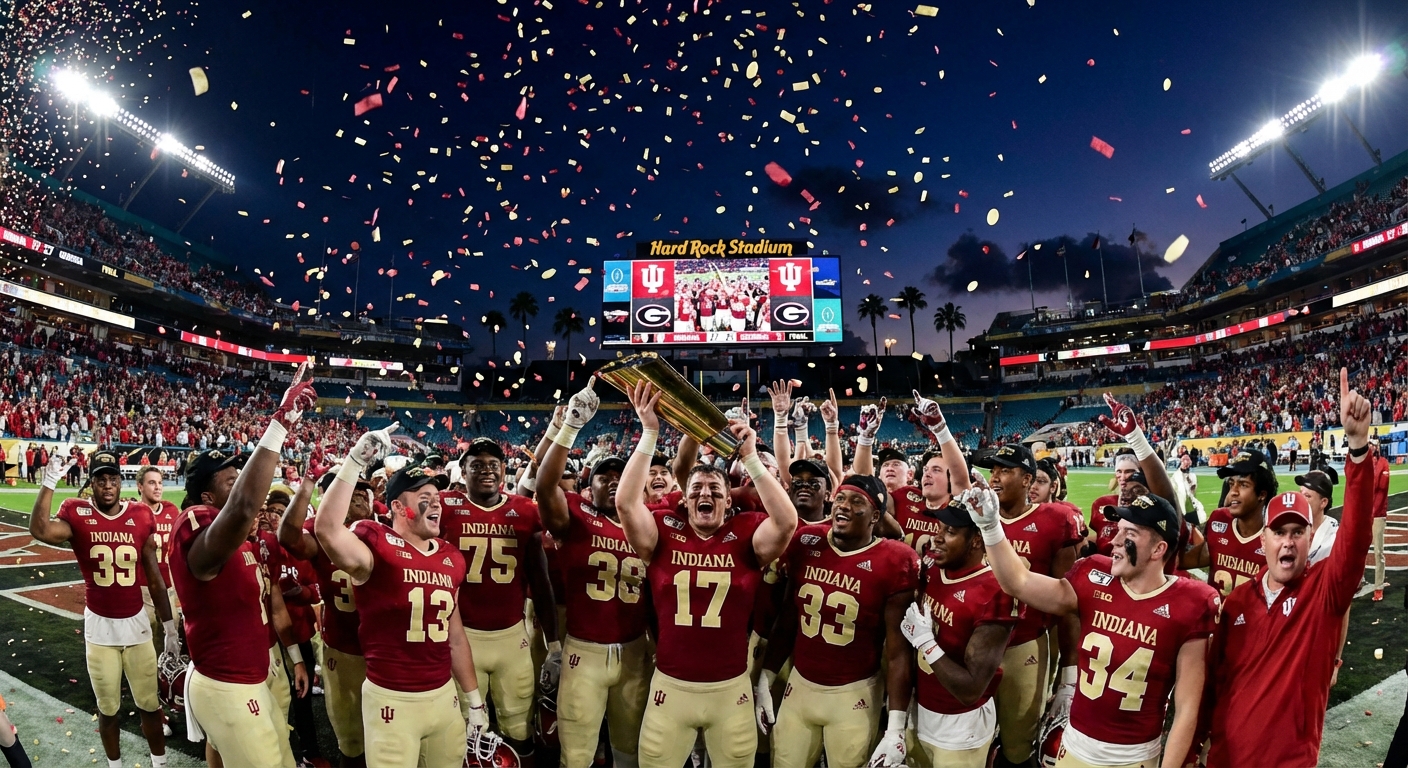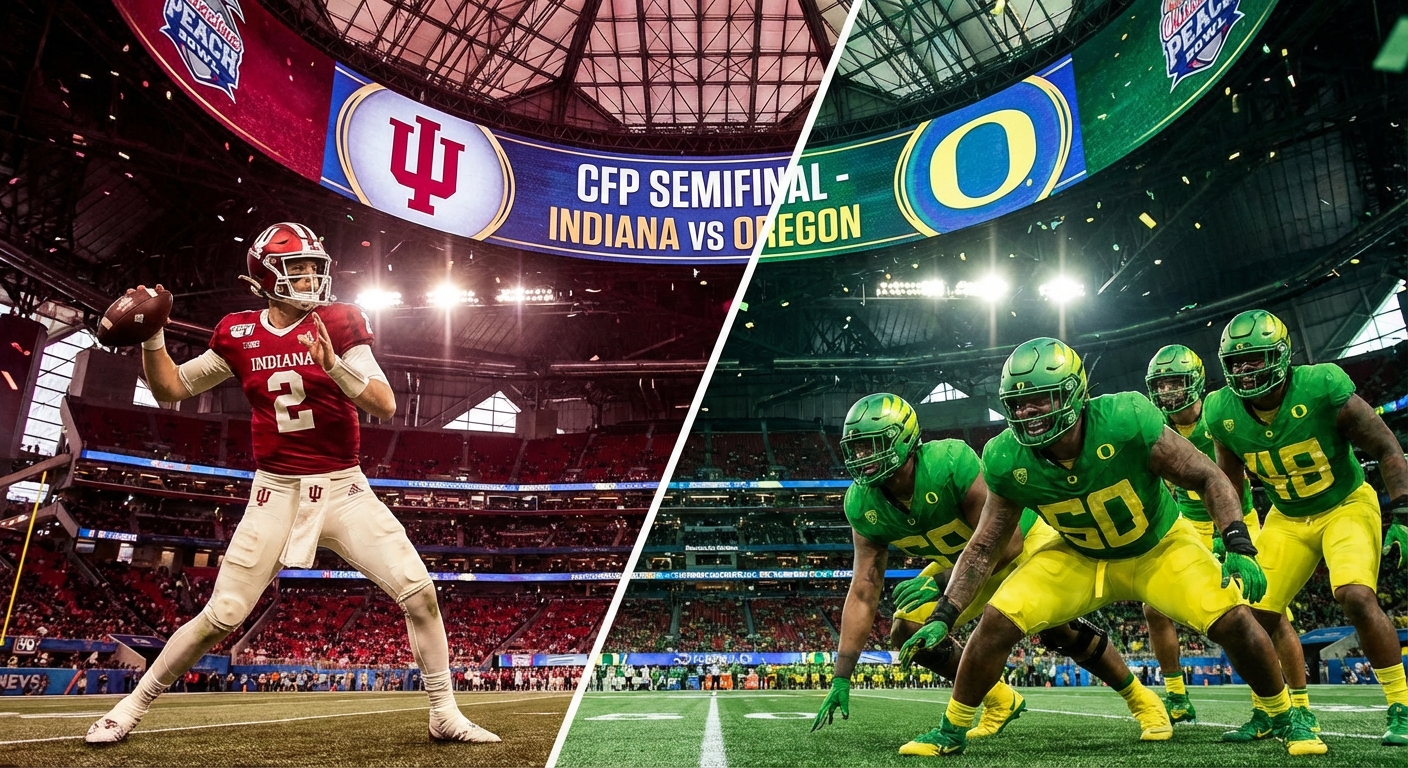
When Indiana defeated Oregon 30-20 in Eugene on October 11, the college football world treated it as a curiosity rather than a coronation. The Hoosiers were building something interesting, sure, but they couldn’t possibly sustain it. Oregon would regroup. The natural order would reassert itself. Three months later, Indiana enters tonight’s Peach Bowl CFP semifinal as the nation’s top-ranked team, undefeated at 14-0, with their first Heisman Trophy winner and a chance to play for their first national championship. The program that went 3-9 just two years ago is now 60 minutes away from the biggest game in its history.
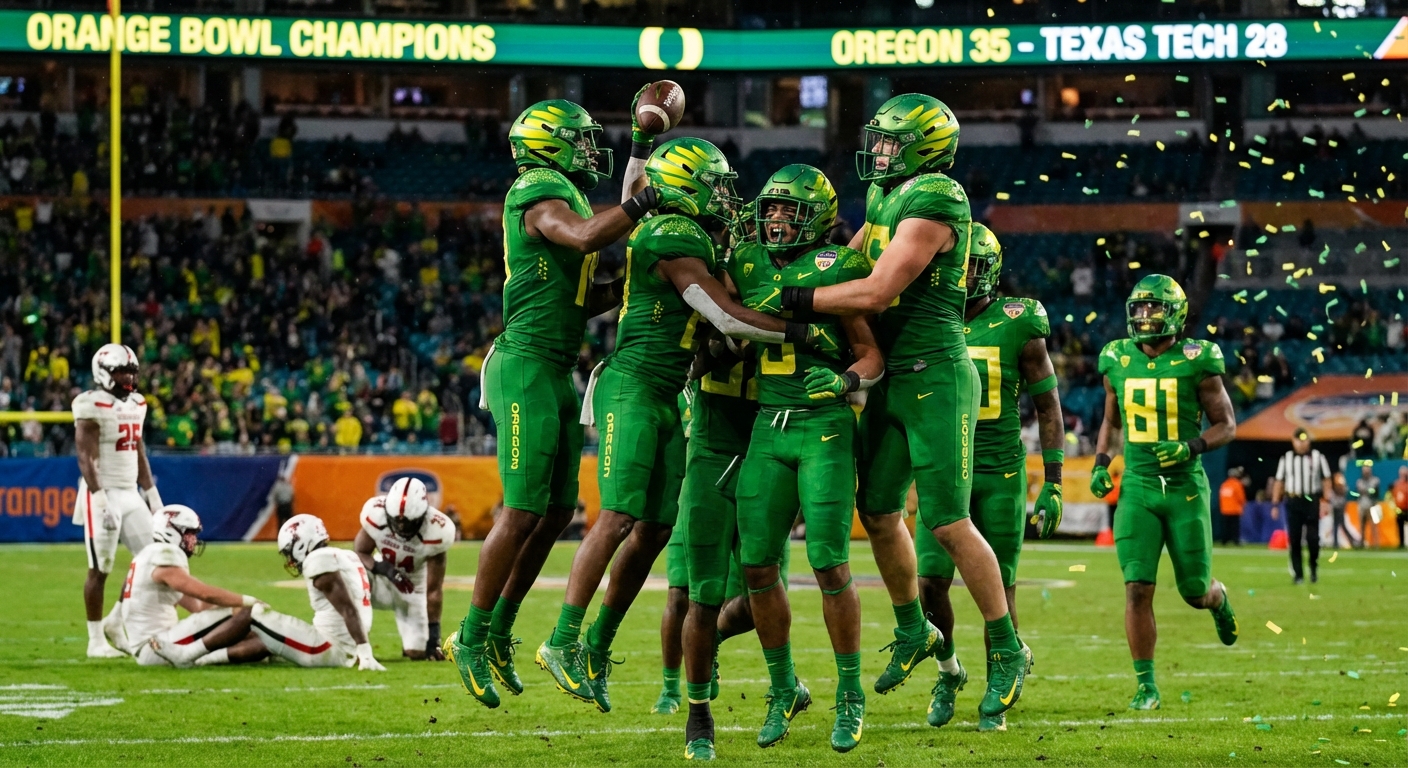
Oregon arrives in Atlanta seeking revenge but also validation. The Ducks have won eight consecutive games since that stunning home loss, including a dominant 23-0 shutout of Texas Tech in the Orange Bowl that demonstrated just how formidable their defense has become. At 13-1, Oregon possesses the experience of playing in high-stakes January games that Indiana simply lacks. The Ducks reached the CFP semifinal in 2014 and returned to the tournament last season. They’ve been here before. They understand what tonight requires.
The stakes could hardly be higher for either program. The winner advances to face Miami in the national championship game on January 19 at Hard Rock Stadium, where the Hurricanes will have the remarkable advantage of playing for the title in their home venue. For Indiana, it’s a chance to complete a transformation that defies every historical precedent in major college football. For Oregon, it’s the opportunity to prove that one October afternoon was an anomaly rather than a preview of tonight’s outcome.
This isn’t just a football game. It’s a referendum on whether the sport’s traditional hierarchy still holds meaning, or whether we’ve entered an era where programs can accelerate from irrelevance to championship contention in the span of a single offseason.
The Indiana Phenomenon: Building a Champion in Real Time
Indiana’s rise from Big Ten afterthought to national title contender represents one of the most dramatic turnarounds in college football history. The Hoosiers finished 3-9 in 2023, their twelfth losing season in fourteen years. They hadn’t won a conference championship since 1967. They hadn’t won a bowl game since 1991. The idea that Indiana would be playing for a spot in the national championship felt like satire as recently as last spring.
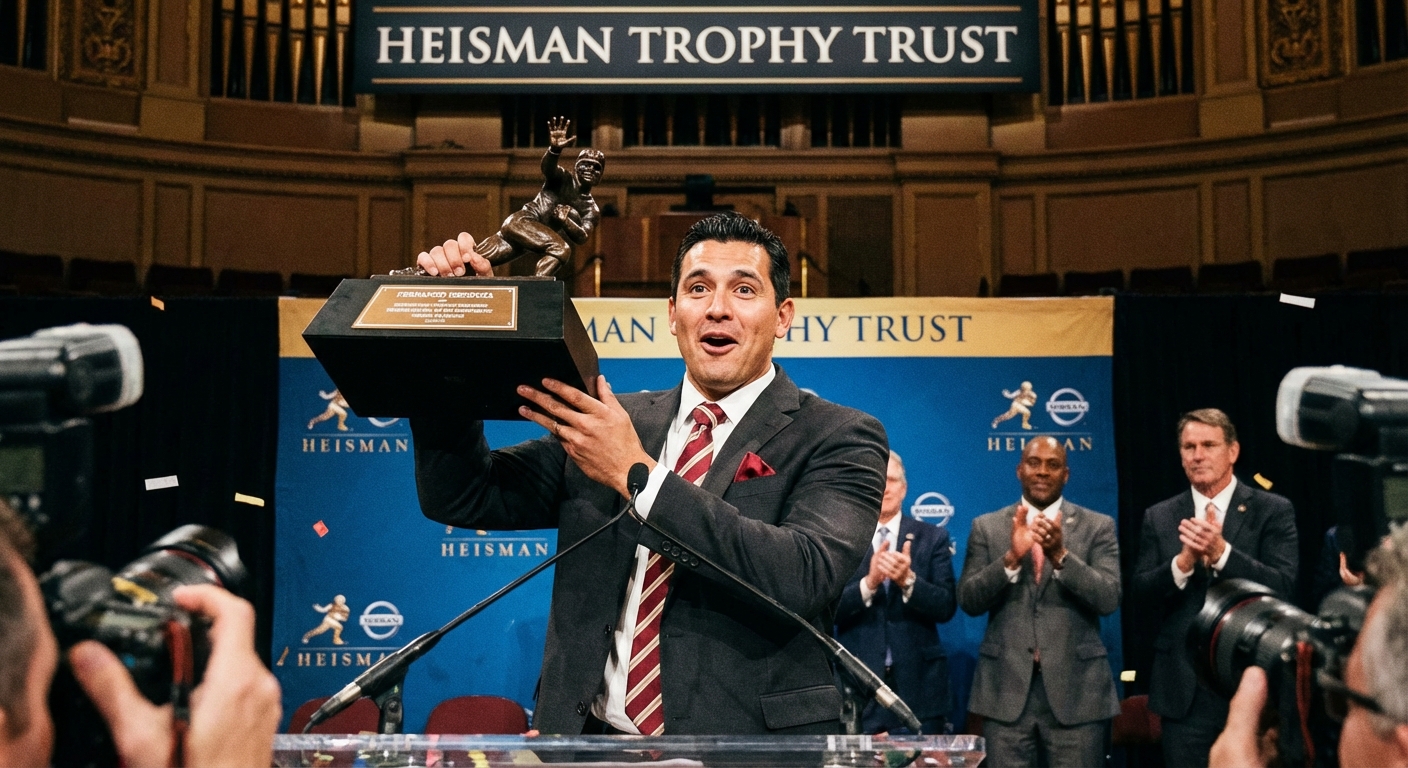
What changed was everything. Head coach Curt Cignetti arrived from James Madison with a system and a swagger that transformed expectations immediately. His quarterback, Fernando Mendoza, emerged as the Heisman Trophy winner after throwing for over 4,200 yards with a 38-to-5 touchdown-to-interception ratio that speaks to both his individual brilliance and the offensive system’s efficiency. The Hoosiers lead the nation in turnover margin at plus-18, per ESPN Stats & Info, forcing 26 turnovers while giving the ball away just eight times. They’re third nationally in scoring offense at 41.6 points per game and second in scoring defense at 10.3 points allowed, according to Sports Reference.
The Rose Bowl victory over Alabama announced that Indiana’s regular season success would translate to the postseason. The 38-3 demolition of a program that has defined championship-level football for the past fifteen years wasn’t merely a statement win. It was a declaration of permanent arrival. The Hoosiers controlled every phase of that game, holding Alabama to just 217 total yards while Mendoza threw for three touchdowns without a turnover. If anyone doubted whether Indiana belonged among the sport’s elite, that performance ended the conversation.
What makes Indiana particularly dangerous tonight is their combination of offensive firepower and defensive discipline. The Hoosiers don’t beat themselves. That nation-leading turnover margin reflects a rate of ball security that separates championship-caliber teams from pretenders. Their defense has allowed more than 17 points just twice all season, creating a margin for error that lets Mendoza and the offense operate without desperation. They can play with a lead, protect a lead, and impose their identity on games against any opponent.
Oregon’s Redemption Arc: The Road Back to Atlanta
The October loss to Indiana could have derailed Oregon’s season. Home defeats to unranked opponents have destroyed campaigns before, sending programs spiraling into self-doubt and underperformance. Instead, the Ducks treated it as a wake-up call. They haven’t lost since, reeling off eight consecutive victories including dominant playoff performances against James Madison (51-34) and Texas Tech (23-0) that suggest Oregon found something in the aftermath of that afternoon in Eugene. Per CFP selection committee data, Oregon’s strength of schedule ranks fourth nationally, lending credibility to the quality of that winning streak.
The defensive transformation has been particularly striking. Oregon allowed 30 points to Indiana in their first meeting. In the Orange Bowl against Texas Tech, they allowed none. That shutout was Oregon’s first in a bowl game since 1917, a span of 108 years that underscores just how complete the Ducks’ defensive performance was against the Red Raiders. Defensive coordinator Tosh Lupoi has crafted a unit that can win games independently of what the offense produces, a luxury that playoff-caliber teams require when facing elite competition in January.
Quarterback Dante Moore has matured throughout the season into a legitimate first-round NFL prospect who, according to Pro Football Focus, grades out as the second-highest passer in the FBS behind Mendoza. Moore threw for 287 yards and two touchdowns in the Orange Bowl shutout, but his growth extends beyond statistics. He’s making better decisions under pressure, protecting the football in critical moments, and demonstrating the leadership qualities that pro scouts prioritize. Tonight’s game features two quarterbacks who could hear their names called in the first two picks of the 2026 NFL Draft. The winner will likely cement his status as the top signal-caller in his class.
Oregon’s challenge tonight centers on personnel attrition that could significantly impact their ground game. Running back Jordan Davison, who led the team with 15 rushing touchdowns this season, was officially ruled out with a broken clavicle suffered against Texas Tech. The Ducks are now operating with just three healthy running backs after Jayden Limar and Makhi Hughes entered the transfer portal. That depth concern forces Oregon to lean more heavily on Moore’s arm and limits the offensive versatility that head coach Dan Lanning prefers to deploy in big games.
The revenge narrative provides Oregon with obvious motivation, but championship teams channel emotion into execution rather than letting it become a distraction. The Ducks know they’re capable of beating Indiana because they’ve done it before in regular season matchups. They also know that the Hoosiers who arrive in Atlanta tonight are playing with a confidence and cohesion that exceeds what Oregon faced three months ago. This won’t be the same game. It can’t be.
The Rematch Dynamic: What Changed Since October
Understanding what happened on October 11 in Eugene provides essential context for evaluating tonight’s game. Indiana won 30-20, but the margin undersells the Hoosiers’ dominance. They outgained Oregon 453 to 379, controlled time of possession, and forced three turnovers while committing none themselves. Mendoza threw for 284 yards and two touchdowns, looking comfortable throughout against a defense that had been expected to overwhelm Indiana’s offensive line.
The most significant factor in that game was Indiana’s ability to neutralize Oregon’s pass rush, giving Mendoza clean pockets and time to find receivers working against coverage. Oregon generated just two sacks in that contest, well below their season average, and Mendoza’s decision-making in the pocket was exceptional. He didn’t force throws into dangerous windows or try to manufacture plays that weren’t there. The patience and precision that would eventually earn him the Heisman was already evident against the Ducks.
Oregon’s defensive adjustments since that game have addressed some of the vulnerabilities Indiana exploited. Lupoi has implemented more varied coverage looks and created additional pressure packages that don’t require overwhelming the offensive line with pure pass-rush ability. The shutout against Texas Tech wasn’t merely about facing a lesser opponent. It reflected genuine schematic evolution and improved execution from a defensive unit that learned from its October failures.
Both teams enter tonight with extensive film on each other, which cuts both ways strategically. Indiana knows what worked in Eugene and will attempt to recreate those conditions. Oregon knows what failed and has spent three months devising alternatives. The coaching chess match between Cignetti and Lanning should produce adjustments and counter-adjustments that differ substantially from their first meeting. Whoever adapts more effectively as the game unfolds will likely emerge victorious.
Key Matchups That Will Decide the Game
The battle in the trenches will determine whether Oregon can generate the defensive pressure they lacked in October or whether Indiana’s offensive line can again provide Mendoza with the protection he needs to dissect the Ducks’ secondary. Indiana’s front five has been remarkably consistent all season, allowing sacks on just 3.2% of pass attempts per Pro Football Focus, a rate that ranks among the nation’s best. If Oregon cannot improve their pressure rate substantially, Mendoza will pick them apart again.
Conversely, Indiana’s defensive line faces a challenge against an Oregon ground game that may look different than expected given the injury situation. The Ducks will need to establish some running threat to keep the Hoosiers honest, but with limited depth at running back, Moore may be asked to carry more of the rushing burden himself. His scrambling ability has improved throughout the season, and designed quarterback runs could become a more prominent feature of Oregon’s game plan than we’ve seen previously.

The secondary battle could prove decisive. Indiana has exceptional pass catchers who stress defenses at every level, while Oregon’s cornerbacks have played at a high level since October. Whoever wins the one-on-one matchups between Indiana’s receivers and Oregon’s corners will tilt the game significantly. Moore also has weapons capable of winning contested catches, and Indiana’s secondary will need to play mistake-free football against a quarterback who makes defenders pay for any lapse in coverage.
Special teams represents an underrated area where both programs have excelled this season. Field position battles in games between evenly matched teams often come down to punting and return coverage. Oregon’s punt unit has been exceptional, pinning opponents inside their own 20-yard line regularly throughout the season. Indiana’s return game has provided hidden yards that don’t show up in traditional statistics but contribute to the field position advantages that matter in close games.
Historical Stakes: What Victory Would Mean
For Indiana, winning tonight would represent the most significant achievement in program history, and it wouldn’t be particularly close. The Hoosiers have never played for a national championship. They’ve won exactly one conference title since 1967. Their football tradition consists primarily of futility punctuated by occasional mediocrity. A victory over Oregon doesn’t just send them to Miami. It completes a transformation from laughingstock to legitimate championship contender in less than two years.
The implications extend beyond Indiana’s program. A Hoosier victory validates the idea that college football’s hierarchy can be disrupted more rapidly than conventional wisdom suggests. Transfer portal dynamics, the right coaching hire, and a favorable schedule can combine to produce results that would have seemed impossible under the sport’s previous structure. Indiana winning would encourage every struggling program to believe that similar turnarounds are achievable with the right combination of circumstances.
Oregon enters tonight seeking their first national championship as well, despite their status as a perennial power. The Ducks have reached championship games before, losing to Auburn in the 2011 BCS title game and to Ohio State in the first CFP championship following the 2014 season. They’ve been close enough to touch the trophy without ever grasping it. Defeating Indiana tonight would set up a championship opportunity against Miami that Oregon’s experience and talent should make them favorites to win.
The program legacies of both head coaches are also at stake. Cignetti has orchestrated one of the most remarkable coaching performances in college football history, but winning a national championship would place him among the sport’s legendary coaches. Lanning has built Oregon into a consistent contender, but his tenure will ultimately be judged by championships won. For both coaches, tonight represents the opportunity to define their legacies with a victory that leads to the ultimate prize.
The Pick
Indiana 27, Oregon 21. The Hoosiers advance to Miami for the national championship.
Oregon’s depleted backfield forces the decisive schematic concession of the night: without Davison and with their running back room thinned by the portal, the Ducks abandon their heavy personnel packages that set up play-action. That strips Lupoi’s defense of the complementary run threat it needs to keep Indiana’s linebackers honest, and it hands Cignetti exactly the light-box looks his quick-passing game feasts on. Mendoza will see single-high coverage on early downs more than any quarterback should against a defense this talented, and he won’t waste the opportunity.
The turning point comes on turnovers in the fourth quarter. Indiana’s dominance in the takeaway battle all season isn’t a fluke; it’s a reflection of a defense that generates pressure without blitzing, which baits opposing quarterbacks into throwing into tight windows. Moore has been brilliant this season, but under late-game duress against a secondary that has seen his tendencies on film, he’ll force one throw too many. The Hoosiers convert the short field into the game-sealing score and punch their ticket to Hard Rock Stadium, where the most improbable season in modern college football history gets one final chapter.
Sources
- Indiana Hoosiers 2025 Season Stats - Sports Reference, Full season statistical profile
- Oregon vs. Indiana Pregame Preview - ESPN, Game preview and matchup analysis
- Playoff Semifinal at the Peach Bowl: Oregon vs. Indiana - College Football Playoff, Official semifinal information
- Oregon running back Jordon Davison out for CFP semifinal - ESPN, Oregon injury and roster analysis
- How Curt Cignetti’s eye for talent has fueled Indiana’s CFP rise - ESPN, Indiana program transformation feature