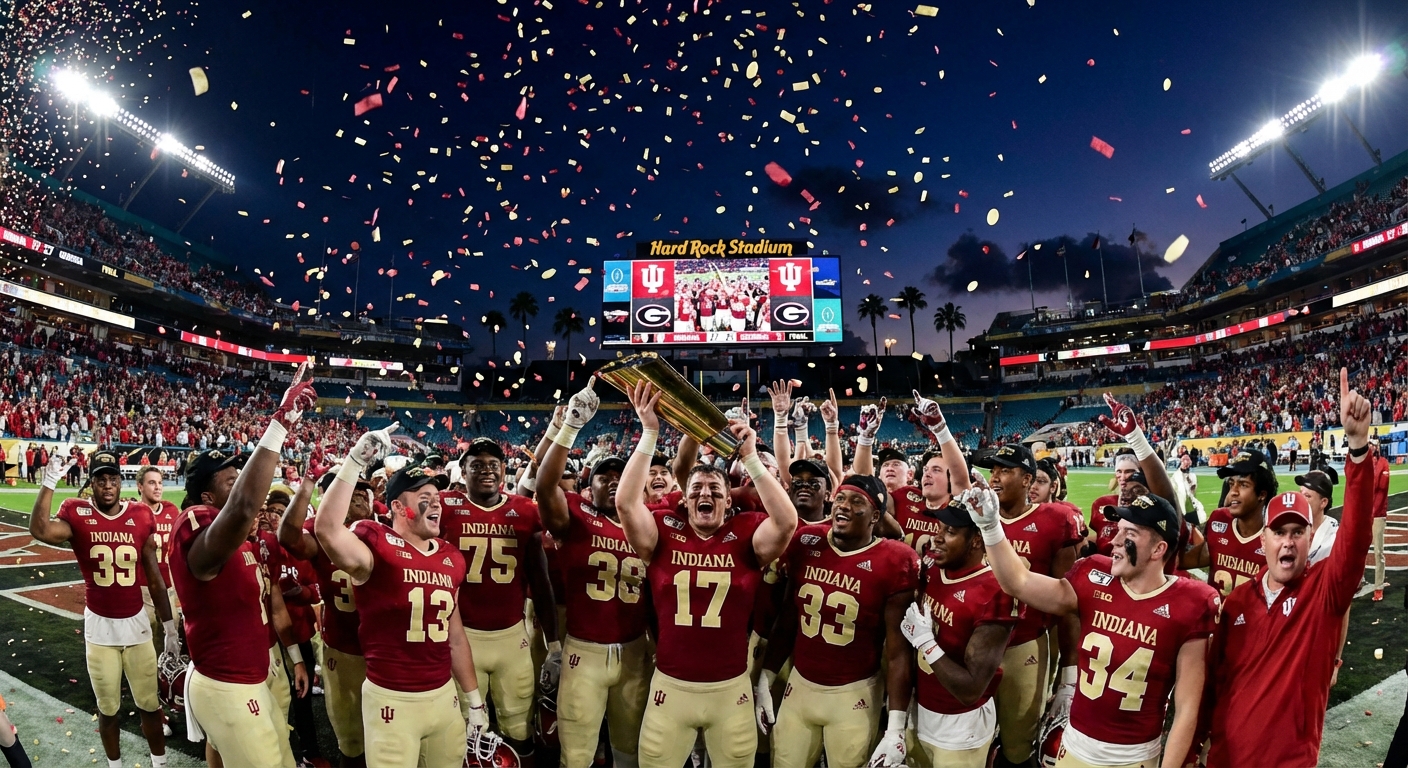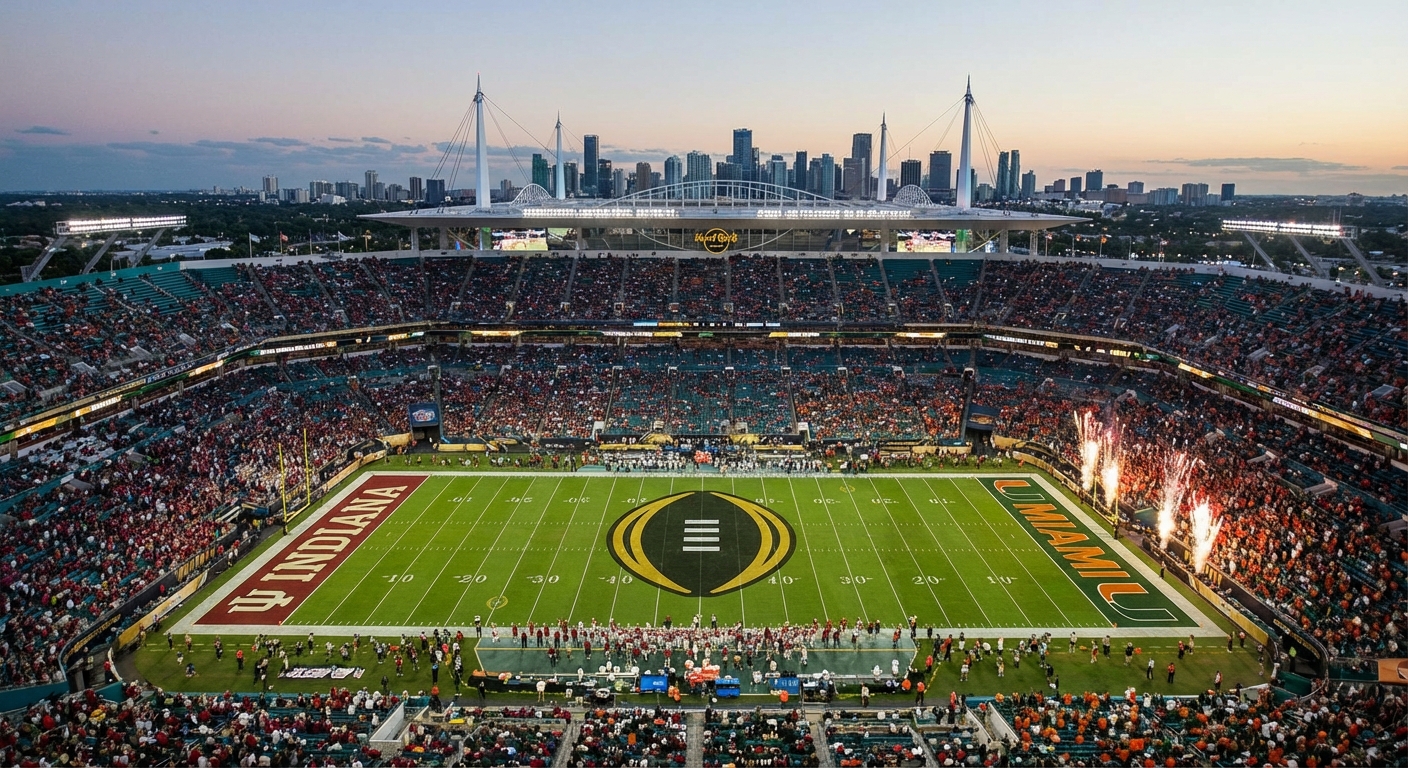
Fernando Mendoza threw his fifth touchdown pass of the game with 4:37 remaining in the Peach Bowl, and the Oregon sideline had already emptied. The Ducks’ players stood in stunned silence, watching Indiana celebrate a 56-22 demolition that erased any remaining doubt about whether the Hoosiers belonged among college football’s elite. Indiana had entered the College Football Playoff as doubters’ favorite target, the 15-0 team that supposedly hadn’t beaten anyone impressive. They responded by embarrassing a top-five opponent in the most dominant semifinal performance in CFP history. Now they will play Miami for the national championship on January 19, seeking to bring Bloomington its first football title in 126 years of competition.
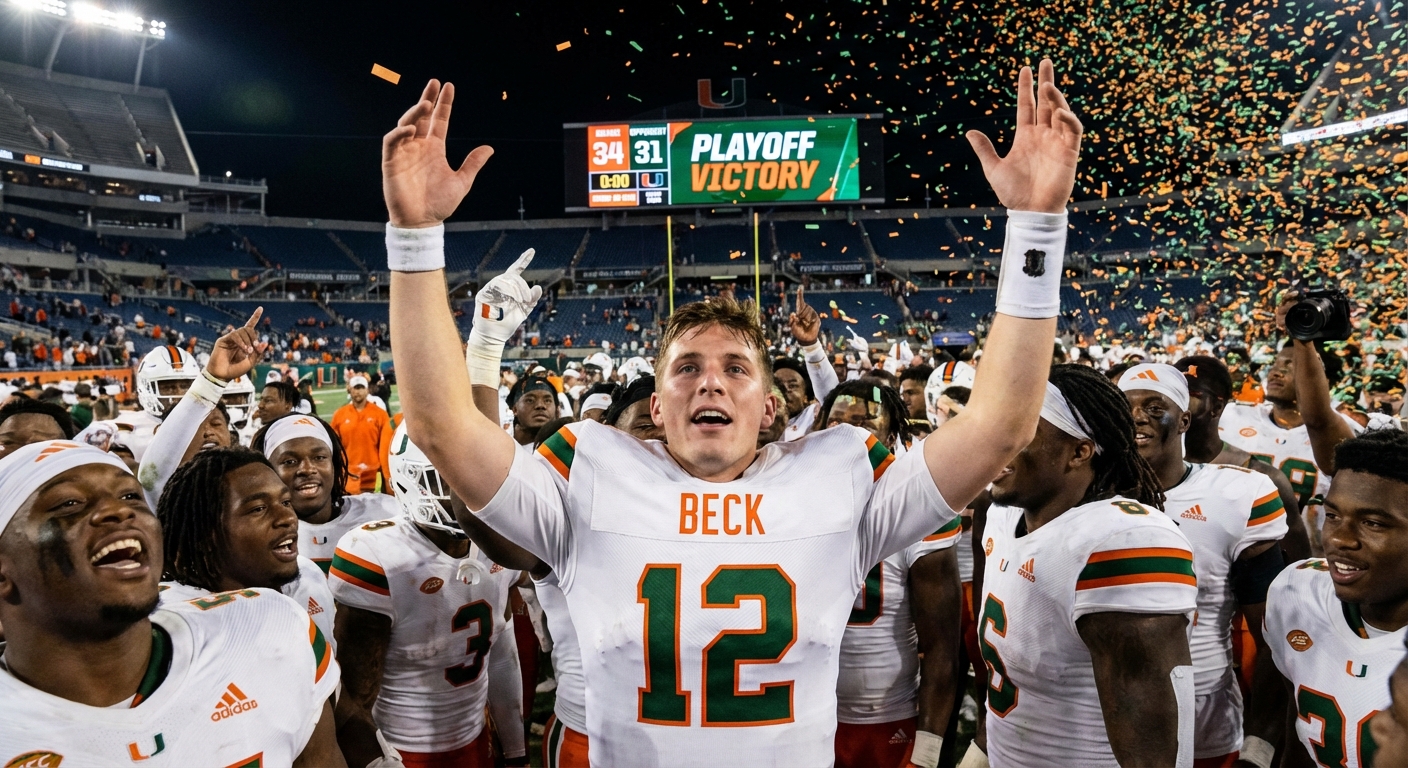
The Hurricanes’ path to Hard Rock Stadium has been equally remarkable, though for entirely different reasons. Miami entered the playoff as a 10-seed after a regular season that included two losses and a near-collapse against Georgia Tech in November. They were supposed to be eliminated in the first round. Instead, Mario Cristobal’s team shocked Texas A&M on the road, stunned defending champion Ohio State in the Cotton Bowl, and then outlasted Ole Miss in a Fiesta Bowl thriller that saw Carson Beck scramble for a game-winning touchdown with 19 seconds remaining. Miami will now play for the national championship in their home stadium, a circumstance that has never occurred in the BCS or CFP era and may never happen again.
The matchup presents a collision of styles, philosophies, and narratives that college football rarely produces. Indiana is methodical, dominant, and statistically perfect. They have outscored opponents 567-189 this season, per CFP data, an average margin of victory exceeding 25 points. Miami is chaotic, resilient, and impossible to predict. They have won their last four games by a combined 20 points, surviving situations that should have ended their season multiple times. One team has looked unstoppable. The other team refuses to stop.
Curt Cignetti has orchestrated one of the most improbable turnarounds in college football history. He arrived at Indiana from James Madison in December 2023, inheriting a program that had won four games total over the previous two seasons. The Hoosiers went 7-5 in his first year, a respectable improvement that nobody outside Bloomington noticed. This season, they have become the sport’s most fascinating story, running through the Big Ten schedule without a loss. ESPN’s David Pollack, who questioned Indiana’s strength of schedule throughout November, conceded after the Peach Bowl that the Hoosiers had proven they belonged with the sport’s best.
Indiana’s Dominant Defense
The Hoosiers’ defense has allowed just 12.6 points per game this season, per Sports Reference, the lowest mark in college football and the best defensive performance by any team since Alabama’s 2011 national championship squad. Defensive coordinator Bryant Haines has built a unit that suffocates opposing offenses with relentless pressure and disciplined coverage. Indiana blitzed Oregon’s quarterbacks 23 times in the Peach Bowl and got pressure on 18 of those plays, turning what was supposed to be a competitive semifinal into a clinic on defensive dominance.
The defensive line is anchored by Mikail Kamara, whose 14 sacks lead the nation according to ESPN Stats & Info, and whose motor never stops running. Kamara’s ability to collapse the pocket has disrupted every quarterback Indiana has faced this season, and his performance against Oregon’s Bo Nix was particularly devastating. Nix, who had thrown just seven interceptions during the regular season, threw three against Indiana and was sacked five times. The Hoosiers’ pressure packages gave him no time to find his receivers, and Oregon’s offensive line, which had allowed just 19 sacks all year, looked overwhelmed by the speed and technique of Indiana’s front.
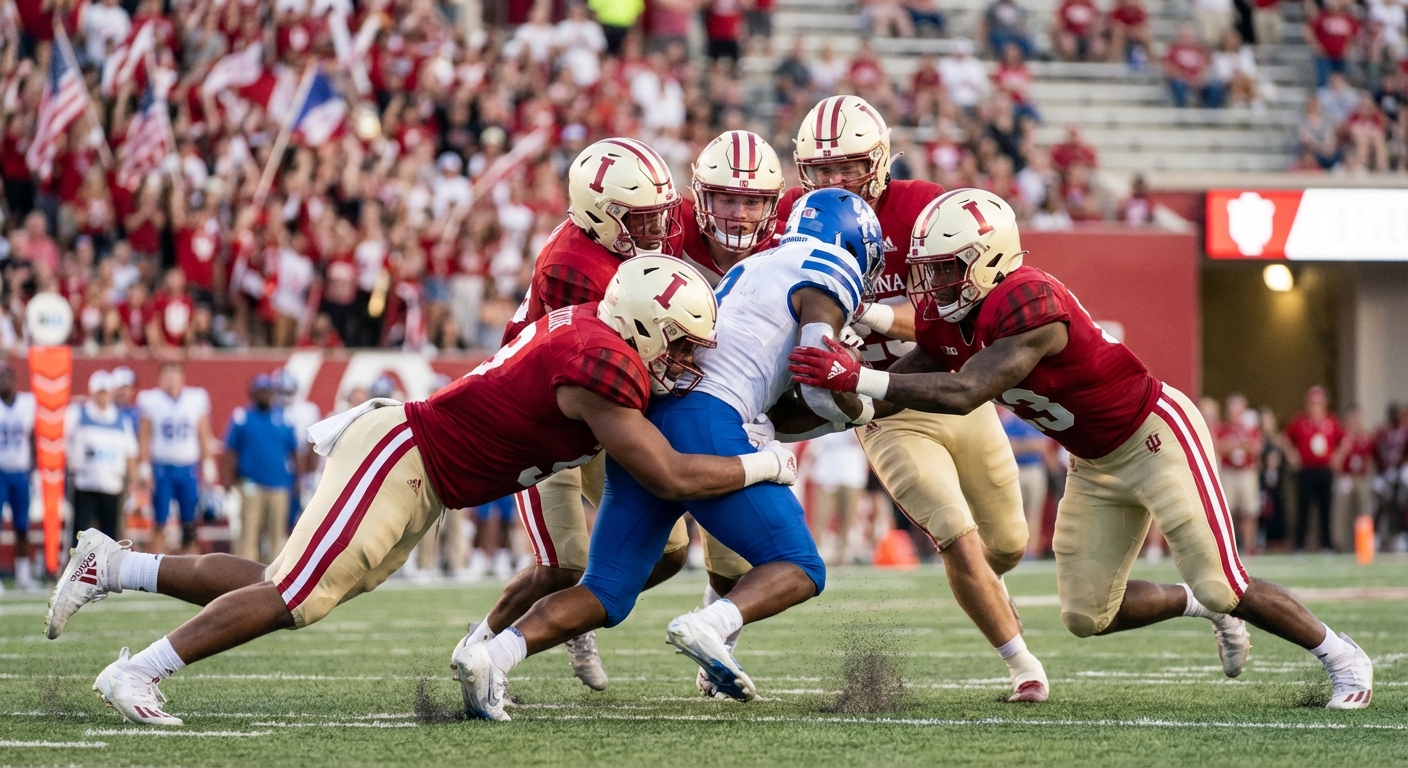
The secondary has been equally impressive, led by cornerback D’Angelo Ponds, who has six interceptions and 14 pass breakups this season. Ponds has shadow-covered opponents’ best receivers throughout the playoff and has yet to be beaten for a touchdown in man coverage. His ability to take away one side of the field has allowed Indiana’s defensive coordinators to disguise their coverages and create confusion for opposing quarterbacks. Oregon’s receivers, who averaged over 250 yards per game during the regular season, managed just 167 against the Hoosiers’ suffocating secondary.
The linebackers provide the physicality that ties Indiana’s defense together. Aaron Casey leads the team with 98 tackles and has been particularly effective against the run, filling gaps and taking on blockers with the kind of violence that wears down opposing offensive lines. The Hoosiers have allowed just 102 rushing yards per game, third-best in the nation, and their ability to stop the run has forced opponents into obvious passing situations that Indiana’s pass rushers exploit ruthlessly.
Miami’s Resilient Offense
The Hurricanes’ offensive identity could not be more different from Indiana’s defensive philosophy. Miami’s offense operates on the edge of chaos, relying on Carson Beck’s improvisational ability and a receiving corps that makes difficult catches look routine. Beck transferred from Georgia after last season, and his arrival has transformed Miami’s offensive potential. He has thrown for 3,847 yards and 29 touchdowns per Sports Reference, but the numbers don’t capture his most valuable trait: the ability to make something happen when everything else fails.
Beck’s scrambling touchdown against Ole Miss in the Fiesta Bowl will be replayed for decades. Facing third-and-seven from the Ole Miss 23-yard line with 24 seconds remaining and Miami trailing by three, Beck took the snap, saw pressure coming from both edges, and decided to run. He broke a tackle at the 15-yard line, cut back against the grain at the 10, and dove into the end zone with three Rebels defenders draped over him. The play shouldn’t have worked. Beck isn’t particularly fast, and running into a stacked defense with the game on the line violates every principle of quarterback decision-making. He did it anyway, and now Miami is playing for a national championship.
Xavier Restrepo leads Miami’s receiving corps with 1,247 yards and 11 touchdowns, providing the consistent production that Beck needs to keep drives alive. Restrepo runs routes with precision that creates separation against any coverage, and his hands have been reliable in contested situations throughout the playoff. Isaiah Horton complements Restrepo with speed that stretches defenses vertically, and his 22.4 yards per reception leads all playoff qualifiers. The combination of Restrepo’s reliability and Horton’s explosiveness gives Beck options that most quarterbacks would envy.
The running game has been Miami’s weakness this season, with Damien Martinez averaging just 4.1 yards per carry behind an offensive line that has struggled with consistency. The Hurricanes rank 67th nationally in rushing yards per game according to ESPN Stats & Info, a liability that Indiana’s dominant front seven will certainly target. If Miami can’t establish any semblance of a ground game, Beck will face obvious passing situations that allow Indiana’s pass rushers to pin their ears back and attack. The Hurricanes have survived without a running game throughout the playoff, but surviving Indiana’s defense may require a different approach.
The Home Field Advantage Question
Miami will become the first team in the BCS or CFP era to play for the national championship in their home stadium. Hard Rock Stadium has hosted Super Bowls, World Cups, and countless Miami Hurricanes victories, but it has never hosted a college football game with this much at stake for the home team. The advantage this provides is unprecedented and unpredictable.
The Hurricanes have gone 6-1 at Hard Rock Stadium this season, their only home loss coming against Georgia Tech in a game that nearly derailed their season before it truly began. Miami’s home crowds have been raucous this year, energized by a team that has given them reasons to believe after years of disappointing seasons under Cristobal’s leadership. As ESPN’s Kirk Herbstreit noted, the title game crowd will skew heavily toward Miami, creating a de facto home atmosphere for the Hurricanes in a game where neutral-site pressure is supposed to equalize both rosters.
The travel and logistics favor Miami as well. While Indiana will fly across the country and stay in hotels, the Hurricanes can maintain the routines and preparation schedules that have carried them through the playoff. CBS Sports’ Gary Danielson pointed out that Miami’s familiarity with Hard Rock Stadium’s turf, sight lines, and locker room setup gives the Hurricanes a tangible comfort advantage that is difficult to quantify but impossible to ignore.
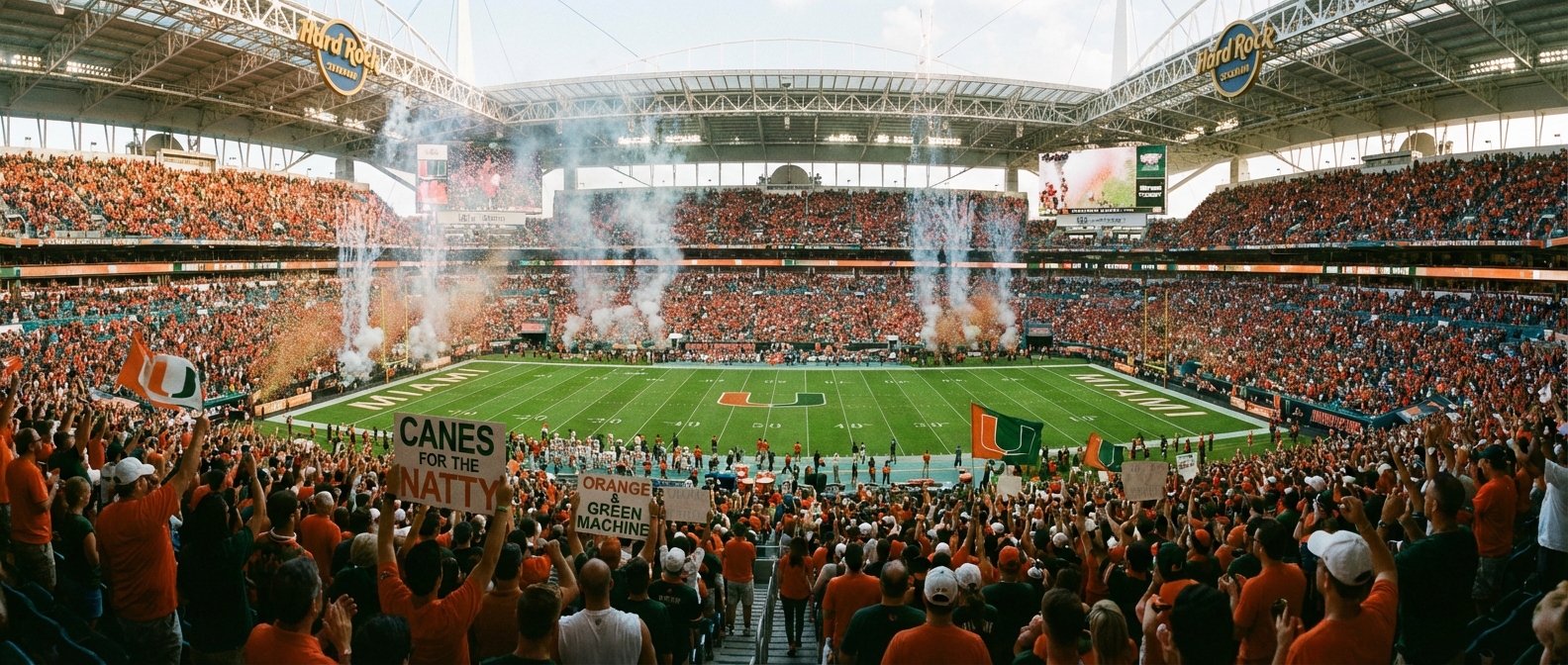
Indiana’s coaching staff has downplayed the significance of Miami’s home field advantage, noting that their team has won road games at Oregon, Penn State, and Michigan this season without appearing intimidated by hostile environments. The Hoosiers’ discipline and preparation have allowed them to execute regardless of crowd noise, and Cignetti has built a culture that thrives under pressure rather than wilting from it. Whether that culture can withstand the unique circumstances of playing for a national championship in the opponent’s stadium remains the most interesting question heading into January 19.
Historical Stakes
Indiana has never won a football national championship. The program’s greatest moments include a 1967 Rose Bowl victory over USC and a handful of Big Ten titles from an era when the conference was less competitive. The Hoosiers have been historically terrible at football, the kind of program that other Big Ten schools scheduled for homecoming because wins were guaranteed. Curt Cignetti has changed that perception in two short years, but winning a national championship would transform Indiana’s place in college football history entirely.
A victory for Indiana would rank among the most improbable championship runs in any sport. The Hoosiers were picked to finish 14th in the 18-team Big Ten in preseason media polls, and The Athletic’s Stewart Mandel had them unranked in his preseason top 25. Every step of their journey has exceeded expectations, and the final step would cement Cignetti’s transformation as one of the greatest coaching achievements the sport has ever witnessed.
Miami, by contrast, claims five national championships, most recently in 2001 when Ken Dorsey and the Hurricanes demolished Nebraska 37-14 in the Rose Bowl. That title capped a dynasty that produced NFL Hall of Famers at nearly every position, a team so talented that losing felt like an impossibility. The current Hurricanes bear no resemblance to those championship teams in talent or dominance, but they share something perhaps more important: the belief that they cannot be eliminated. Miami has been counted out repeatedly during this playoff run, and they have responded by finding ways to win that defy logical explanation.
Mario Cristobal came to Miami to restore the program to championship contention, and his tenure has been defined by inconsistency and near-misses until now. A national championship would validate his decision to leave Oregon, justify Miami’s massive investment in his program, and announce the Hurricanes’ return to the sport’s elite. It would also provide the signature victory that Cristobal’s career has lacked, the proof that his recruiting and development can produce results that matter in January.
The Prediction
Indiana 27, Miami 20. The Hoosiers win the national championship behind a defensive performance that holds Miami to its lowest point total of the playoff. Carson Beck throws for over 300 yards but commits three turnovers, two interceptions and a fumble on a strip sack by Kamara, as Indiana’s relentless pressure forces him into the kind of mistakes he avoided against Ohio State and Ole Miss. Mendoza manages the game efficiently, and Indiana’s rushing attack controls possession with over 35 minutes of time of possession, a strategy that neutralizes Miami’s home crowd by keeping the Hurricanes’ offense on the sideline during the decisive third quarter.
The key matchup that decides this game is one that has received little attention: Miami’s interior offensive line against Indiana’s defensive tackles. The Hoosiers have generated a pressure rate above 40 percent on interior rushes this season, per ESPN Stats & Info, and Miami’s center and guards have allowed the second-most interior pressures among playoff teams. If Indiana collapses the pocket from the inside, Beck loses the clean throwing lanes he needs to find Restrepo on intermediate routes, and the scrambling ability that saved Miami against Ole Miss becomes a liability against a disciplined defense that maintains gap integrity. Indiana’s interior dominance, not Kamara’s edge rush, will be the factor that separates the Hoosiers from every other team Miami has faced this postseason.
The game kicks off at 7:30 PM ET on ESPN from Hard Rock Stadium.
Sources
- ESPN College Football Playoff Coverage - Semifinal recaps, player statistics, and analyst commentary from Herbstreit and Pollack.
- CBS Sports CFP National Championship Preview - Gary Danielson’s analysis of the home field advantage dynamic.
- Sports Reference College Football Statistics - Season-long defensive and offensive statistical rankings cited throughout.
- College Football Playoff Official Site - Official bracket, scoring data, and championship game details.
- The Athletic College Football - Stewart Mandel’s preseason projections and postseason analysis of Indiana’s historic run.