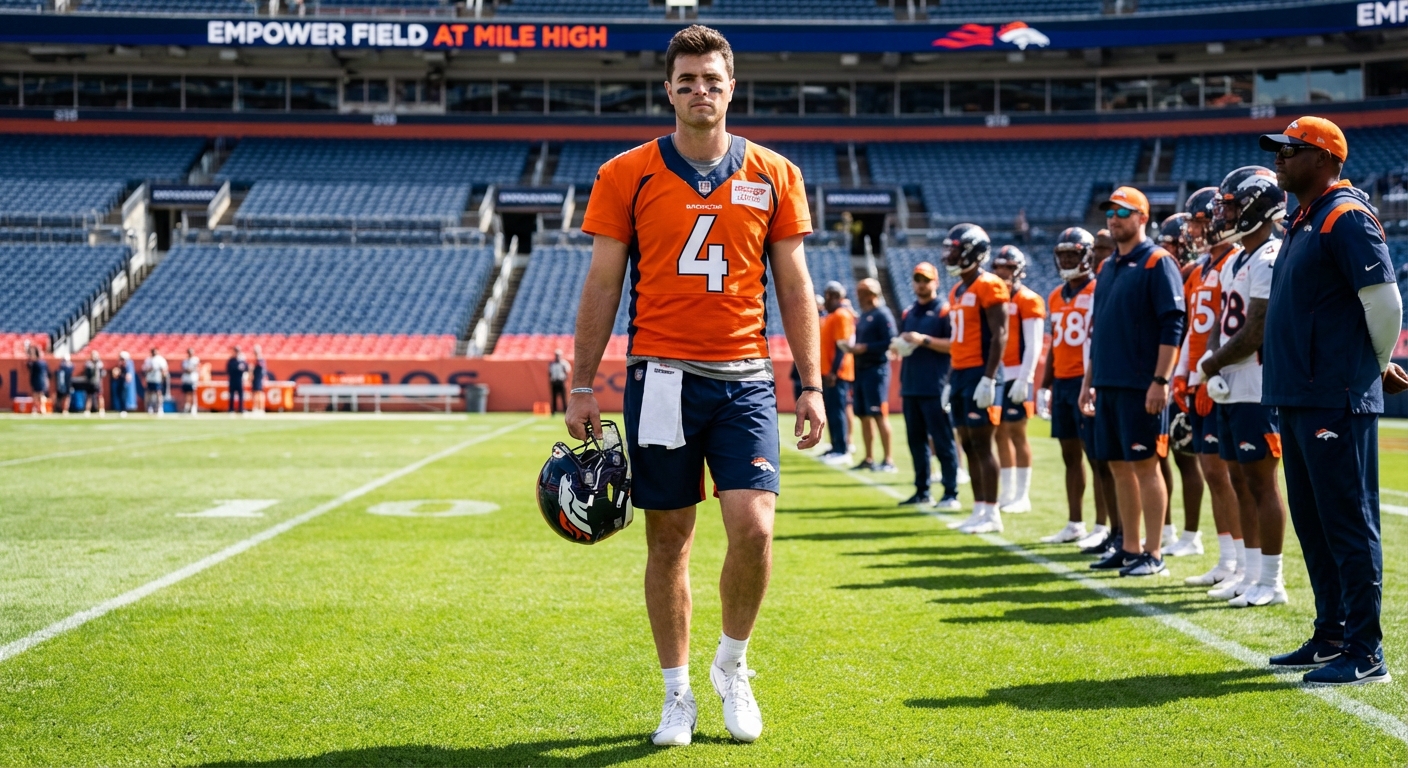
Bo Nix has started 17 NFL games. Josh Allen has started 119, including 13 in the playoffs. The statistical gulf between these two quarterbacks heading into Saturday’s Divisional Round matchup spans more than just career totals; it encompasses the accumulated wisdom of close losses, fourth-quarter pressure, and the specific education that only postseason football provides. Nix has never experienced any of it. Allen has experienced all of it and, as of last Sunday against Jacksonville, finally figured out how to emerge victorious when the game hangs in the balance. The Broncos’ remarkable rookie season, which has restored Denver to playoff relevance for the first time in a decade, now faces its ultimate examination against a Buffalo team playing with renewed confidence and a quarterback who has exorcised his postseason demons.
The setup feels almost scripted for maximum drama. Denver earned the first-round bye by winning the AFC West, giving Nix two weeks to prepare for a playoff debut that the entire football world will be watching. The Broncos haven’t won a playoff game since Super Bowl 50, when Von Miller terrorized Carolina’s offense and Peyton Manning secured the final victory of his legendary career. Miller now plays for Buffalo, a storyline that adds another layer of intrigue to a matchup already overflowing with compelling narratives. Everything Nix has accomplished this season, the wins, the stats, the franchise revival, gets tested against the kind of opponent that separates good quarterbacks from great ones.
The Making of Bo Nix
Nix’s path to this moment followed the longest route imaginable. He played five years of college football, splitting time between Auburn and Oregon, accumulating more starts than any quarterback in Division I history. The extended college career raised questions about his NFL ceiling, with some scouts viewing his extensive experience as evidence of development and others seeing it as a sign that he needed extra time to reach competence. The Broncos selected him in the first round despite these concerns, betting that his polish would translate more quickly than the raw potential of less experienced prospects.
That bet has paid off beyond reasonable expectations. Nix threw for 3,775 yards and 29 touchdowns during the regular season while completing 66.3% of his passes, per Pro Football Reference. His 8.7 interceptions ranked among the lowest for any starting quarterback, per ESPN Stats & Info, reflecting the decision-making that scouts praised but also questioned as too conservative. He managed games rather than dominated them, fitting perfectly into Sean Payton’s system but leaving observers wondering whether he could elevate his play when circumstances demanded more than efficiency. Saturday’s game will answer that question definitively.
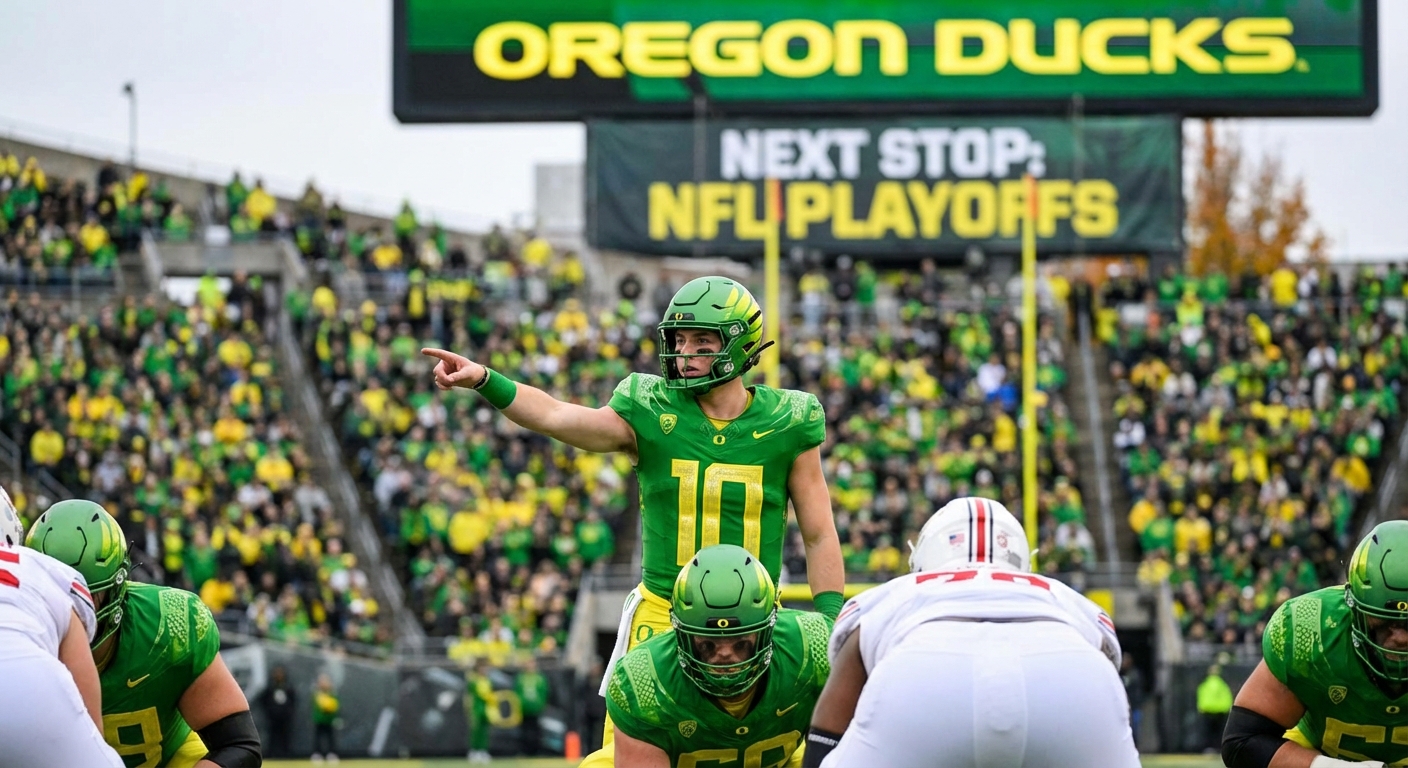
Payton’s coaching deserves significant credit for Nix’s success. The veteran head coach designed an offense that maximizes Nix’s strengths while minimizing exposure to his limitations. Quick passes, play-action concepts, and creative screen designs have allowed Denver’s receivers to gain yards after the catch rather than requiring Nix to fit throws into tight windows. The approach resembles what Payton did with Drew Brees during their Saints years, though Nix obviously lacks Brees’ precision and timing. The system works because it asks Nix to do only what he does well, and Payton has shown no interest in expanding the playbook simply to prove his quarterback can handle more complexity.
The two-week break has given Nix time to study Buffalo’s defense with unusual thoroughness. The Bills allowed the third-fewest points in the AFC this season, combining a ferocious pass rush with disciplined secondary play that limits explosive opportunities. Their scheme adjusts based on down, distance, and game situation in ways that can confuse young quarterbacks who haven’t seen similar looks before. Nix will need to process information quickly and make decisions without the luxury of second-guessing, exactly the kind of challenge that has torpedoed other rookies in their first playoff games.
Josh Allen’s Evolution
The narrative arc of Josh Allen’s career has been defined by postseason disappointment. The 13-seconds loss to Kansas City in the 2021 playoffs became shorthand for everything that seemed wrong with the Bills, a team talented enough to compete with anyone but somehow unable to finish when it mattered most. Allen shouldered blame that rightfully belonged to coaching decisions and defensive breakdowns, accepting the label of a quarterback who couldn’t close even as his regular-season performances reached MVP levels. Last Sunday’s comeback victory against Jacksonville finally provided the counter-evidence that Allen supporters had been waiting for.
The game-winning drive showcased everything Allen does well. He completed five consecutive passes under pressure, scrambled for first-down yardage when the pocket collapsed, and converted a fourth-and-two with a dart over the middle that showed no fear of the consequences. The 1-yard touchdown sneak that followed required Allen to lower his shoulder and push through bodies, the kind of physical play that defined his early career but that many assumed he had abandoned in favor of safer approaches. The expression on his face when he emerged from the pile suggested years of frustration finally releasing.
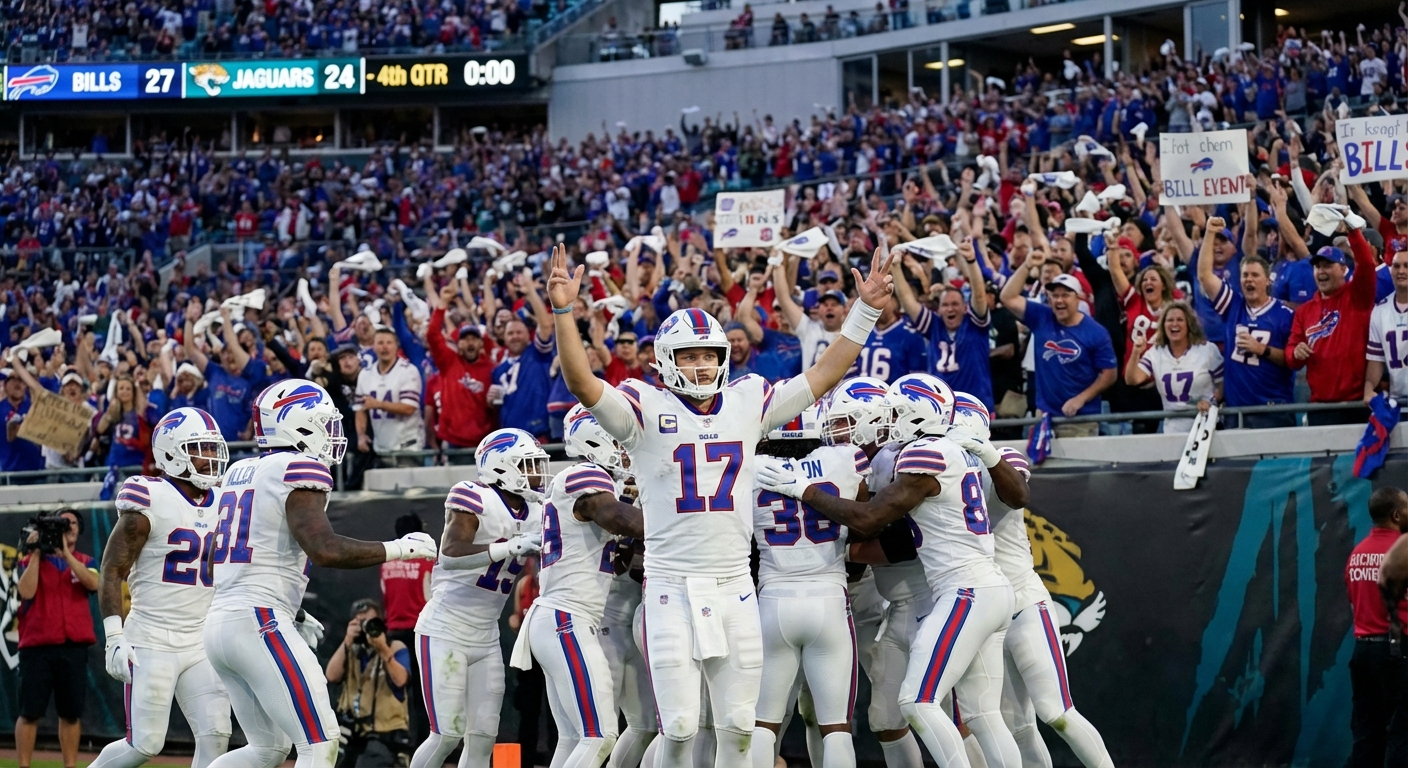
Allen enters Saturday’s game with momentum that previous playoff appearances lacked. The Bills have won seven consecutive games, their longest streak of the season, and the offense has averaged 31.4 points per game during that stretch. Stefon Diggs’ departure via trade created questions about Buffalo’s receiving options, but the emergence of Keon Coleman and the continued excellence of Dalton Kincaid have provided adequate replacements. Allen has thrown for 300 or more yards in four of his last six games, according to PFF, suggesting that his arm talent remains elite and that his decision-making has matured alongside his physical gifts.
The experience gap is quantifiable. Allen has played 13 playoff games, completing 62.4% of his postseason passes per Pro Football Reference, and has experienced both dominant performances and devastating losses. He understands how playoff football differs from regular-season football, the increased physicality, the elevated attention to detail, and the way small mistakes get magnified by national audiences. Nix possesses none of this knowledge. His first playoff snap will be exactly that, a first, with all the uncertainty and potential for error that accompanies novelty.
The Key Matchup: Buffalo’s Pass Rush vs. Denver’s Protection
The Bills recorded 51 sacks during the regular season, per Pro Football Reference, tied for fourth in the NFL and representing the most dangerous element of their defense. Von Miller has been rejuvenated in his contract year, producing 8 sacks after questions about whether his best football was behind him. A.J. Epenesa has emerged as a legitimate force rushing from the other side, giving Buffalo a two-headed pass-rushing monster that coordinators struggle to account for without compromising coverage elsewhere. When the Bills can generate pressure with four rushers, their defense becomes nearly impossible to move against.
Denver’s offensive line has protected Nix adequately but not exceptionally. The Broncos allowed 39 sacks during the regular season, per Next Gen Stats, a number that ranked in the middle of the league and suggested competence without dominance. The extended layoff should have allowed any injured linemen to heal, but rust could be a factor for a unit that derives cohesion from repetition. The Bills’ defensive front will attack with a variety of stunts and games designed to create confusion, hoping to force Nix into the kind of panicked decisions that young quarterbacks make when pressure arrives faster than expected.
The chess match between Payton and Buffalo defensive coordinator Leslie Frazier will determine which philosophy prevails. Payton wants to get the ball out of Nix’s hands quickly, using screens, quick slants, and play-action to neutralize the pass rush. Frazier wants to disguise coverages and rush patterns, showing one look pre-snap and executing another at the snap. Both coaches have been in the league long enough to know each other’s tendencies, but Payton has the additional constraint of working with a quarterback who hasn’t seen playoff-caliber disguise before. The first few series will reveal whether Denver’s preparation has adequately prepared Nix for what he’s about to face.
Denver’s Path to Victory
The Broncos can win this game, but the path to victory requires near-perfect execution in several areas. First, Nix must avoid turnovers. Buffalo’s defense thrives on creating short fields for their offense, and any giveaway inside Denver territory could prove fatal. Second, the running game must control pace. Javonte Williams needs to average at least 4.5 yards per carry to keep Buffalo’s defense honest and prevent them from teeing off on Nix every snap. Third, the home crowd at Empower Field must create communication problems for Allen and the Bills’ offense.

The altitude factor deserves consideration. Empower Field at Mile High sits over 5,200 feet above sea level, where the thin air affects both players’ endurance and the flight of the football. Visiting teams typically struggle with conditioning in the fourth quarter, when the altitude’s effects become most pronounced. Bills players have spent the week practicing at sea level, which means they’ll experience the elevation change with minimal adaptation time. The Broncos have lived at altitude all season and should maintain their conditioning advantage as the game progresses.
Defensively, Denver must limit explosive plays while accepting that Allen will move the football. The Bills’ offense is too talented to shut down entirely, but the Broncos can win a game where both teams score in the 20s. Patrick Surtain II has been the NFL’s best cornerback this season, and his assignment against whoever emerges as Allen’s top target will be critical. If Surtain can eliminate one weapon from the Bills’ offense, Denver’s other defensive backs can focus their attention on the remaining options without fear of getting beaten deep.
The Prediction
Bills 24, Broncos 17. Buffalo wins this game because of a factor that does not show up on the stat sheet: Allen’s ability to manipulate post-snap coverage rotations, something ESPN’s Dan Orlovsky has called “the single biggest jump in Allen’s game over the past two seasons.” Rookie quarterbacks facing Cover 2 shells that rotate into Cover 6 post-snap have completed just 41% of their passes in the playoffs since 2020, per PFF’s Sam Monson, and Buffalo runs those disguised looks more than any team in the AFC. Nix has not seen that level of post-snap deception at game speed against playoff-caliber personnel.
Denver’s defense keeps this close through three quarters. Patrick Surtain II holds Keon Coleman to under 50 receiving yards, and Javonte Williams grinds out enough yardage to sustain two scoring drives. But Allen exploits a Cover 3 bust late in the third quarter for a 42-yard touchdown to Dalton Kincaid that breaks a 14-14 tie, and the Broncos never recover. Nix finishes with respectable numbers, roughly 220 yards and a touchdown, but also throws a red-zone interception in the fourth quarter that seals the outcome. The altitude advantage Denver holds in the fourth quarter is real, but it cannot overcome the processing-speed gap between a first-time playoff starter and a quarterback making his 14th postseason appearance.
The Athletic’s Nick Kosmider has noted that Payton’s quick-passing scheme can neutralize elite pass rushes, and it will keep Denver competitive. But the Bills’ secondary discipline, not their pass rush, is what ultimately undoes Nix. Buffalo advances to the AFC Championship for the second time under Allen, and Nix returns to Denver with a blueprint for what playoff football demands of him going forward.
Sources
- Bo Nix 2025 Season Stats - Pro Football Reference
- Josh Allen Playoff Career Stats - Pro Football Reference
- Bills Pass Rush and Defensive Rankings - PFF
- Broncos Playoff Preview: Nix’s Postseason Debut - The Athletic
- NFL Playoffs Divisional Round Upset Keys and X Factors - ESPN