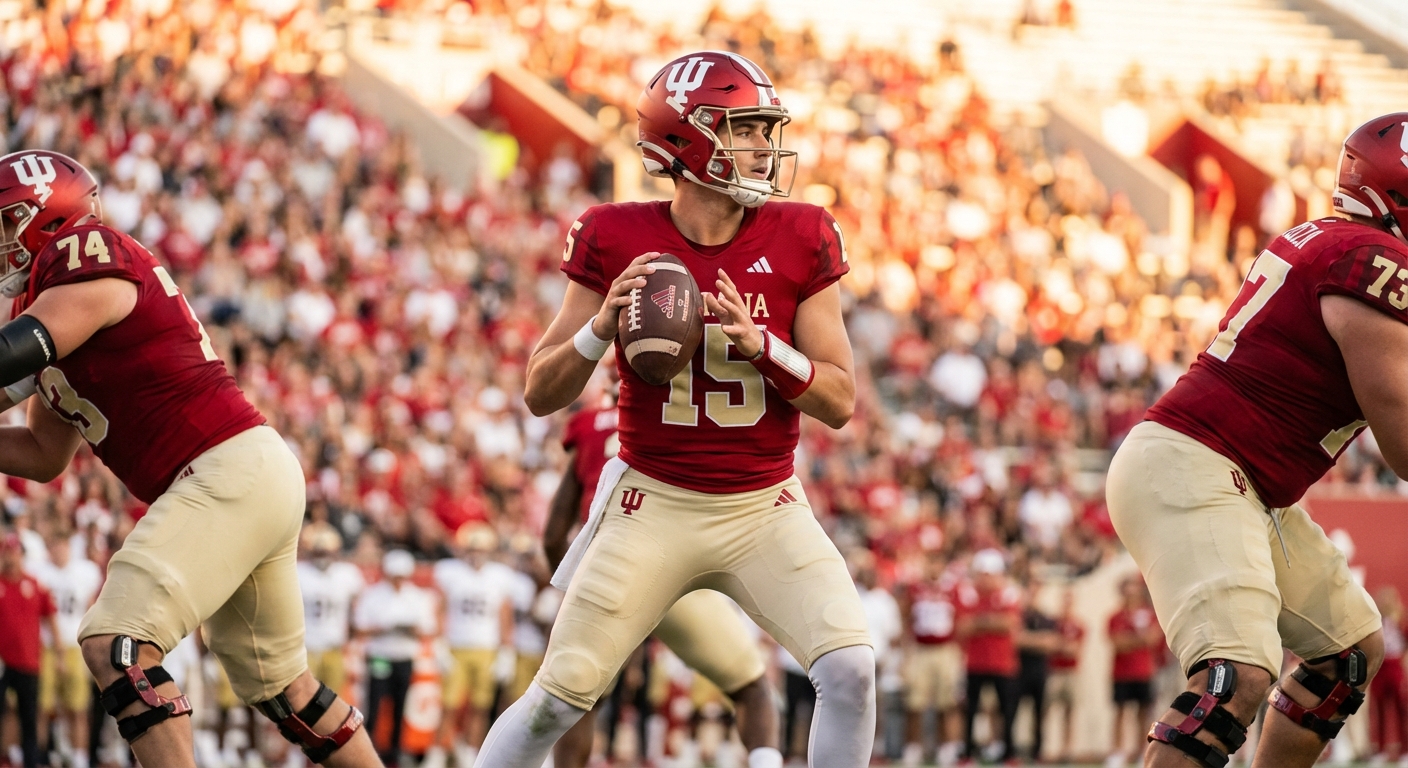
The statistic that best captures Fernando Mendoza’s playoff performance seems almost made up. Through two College Football Playoff games, Indiana’s Heisman Trophy-winning quarterback has thrown eight touchdown passes and only five incompletions. Not five interceptions. Five incompletions total. He has been more likely to throw a scoring pass than to have a throw fall incomplete. It’s the kind of number that belongs in a video game, not in actual competition against Alabama and Oregon, two programs that have defined college football excellence for the past two decades.
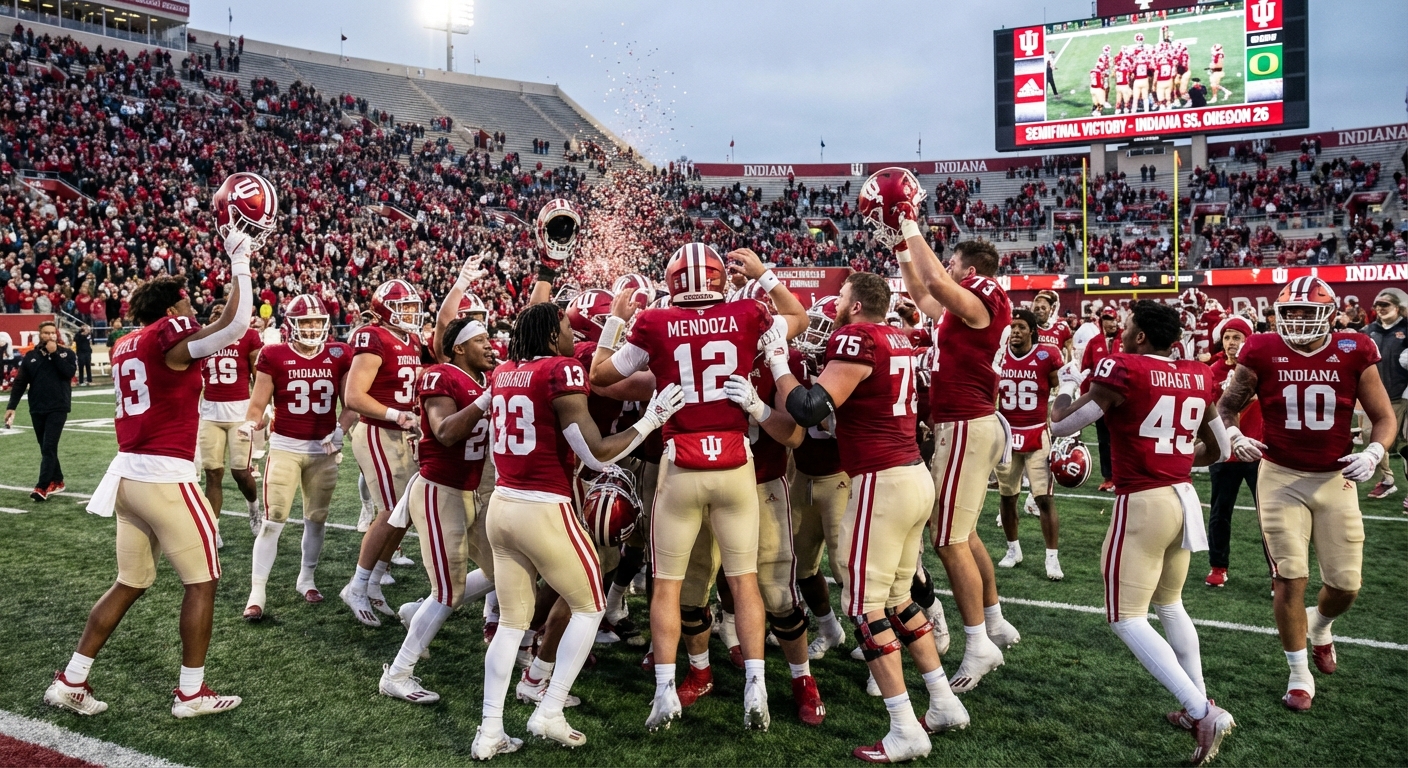
Mendoza goes into Monday’s national championship against Miami having completed 37 of 42 passes in the playoff, a completion percentage of 88.1% that would be remarkable in any context. Against the Crimson Tide in the Rose Bowl quarterfinal, he went 20-for-22 with five touchdowns in a 38-3 demolition. Against Oregon in the Peach Bowl semifinal, he was nearly as efficient, completing 17 of 20 attempts for 177 yards and three scores in a 55-26 victory. Defensive coordinators have spent weeks game-planning against him. None of it has mattered.
The Making of a Perfect Season
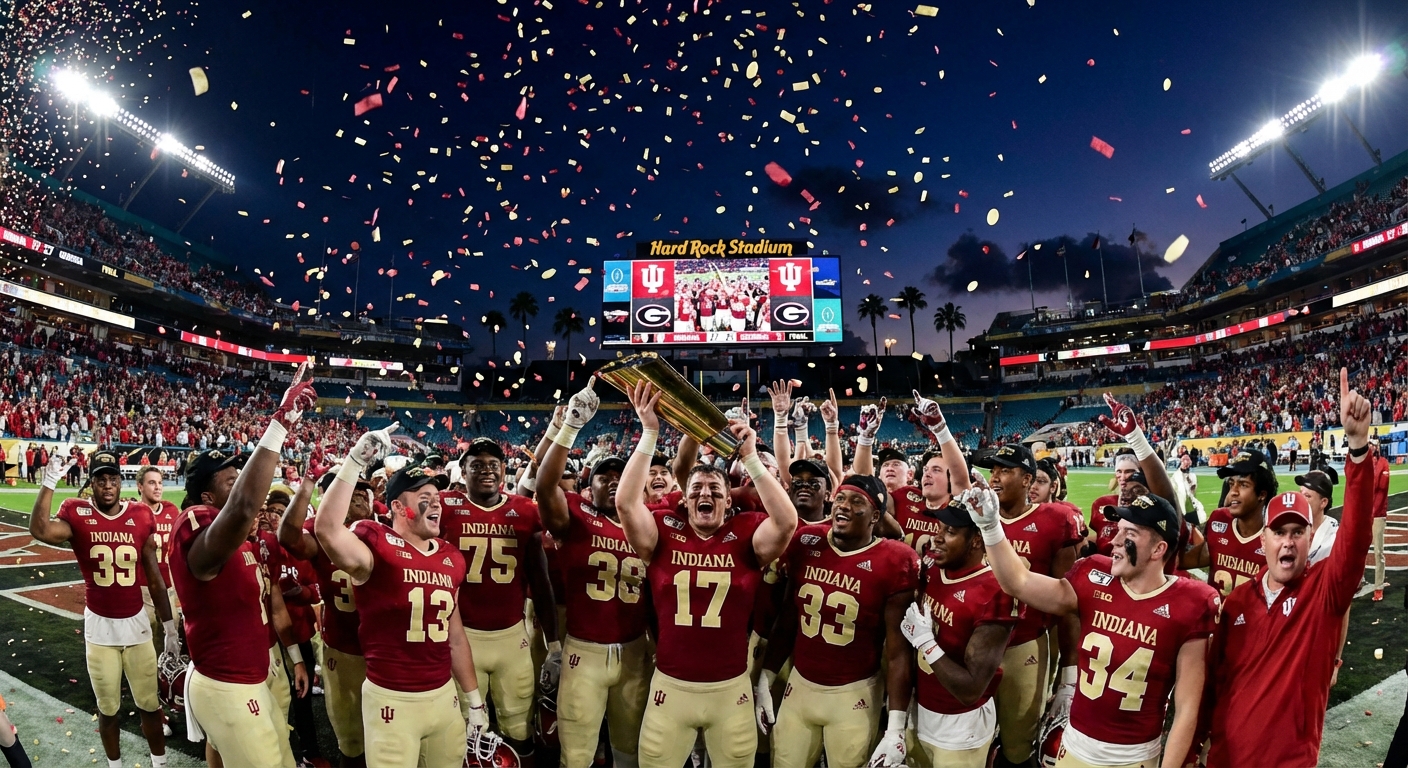
Indiana entered this season as an afterthought in Big Ten title conversations. The Hoosiers hadn’t won a conference championship since 1967. They had appeared in a grand total of zero College Football Playoff games. Their football program was historically defined by futility, a punching bag for Ohio State and Michigan, a team that occasionally produced exciting players but never sustained excellence. Fernando Mendoza changed everything.
The transfer from California arrived in Bloomington with impressive physical tools but questions about his ability to lead a program. Those questions evaporated by September. Mendoza threw for 387 yards and four touchdowns in the season opener against Florida State, announcing immediately that Indiana would be different this year. He followed that with masterful performances against UCLA, Illinois, and Nebraska, building a case for Heisman consideration before October had even begun.
What separates Mendoza from other great college quarterbacks is his decision-making. He has thrown just two interceptions all season, both coming in games Indiana won by multiple scores, giving him a turnover-worthy play rate of just 1.1%, per PFF College. His ability to process defensive coverage, identify the correct throw, and execute with precision has been unmatched. ESPN’s Mel Kiper Jr. has called Mendoza “the most pro-ready quarterback prospect I’ve evaluated since Andrew Luck,” projecting him as the consensus number one overall pick in April’s NFL Draft. His playoff performances have only strengthened that assessment.
Statistical Perfection in Context
The numbers Mendoza has produced demand historical comparison. That playoff completion rate would be the highest in CFP history by a significant margin, according to ESPN Stats & Info. His eight touchdown passes through two games tie him with Joe Burrow’s 2019 playoff performance, per Sports Reference, but Mendoza has done it while attempting 16 fewer passes. His efficiency rating in the playoff is 231.4, a figure that exceeds what most quarterbacks achieve in cupcake non-conference games.
For the full season, Mendoza has thrown for 4,287 yards and 43 touchdowns against just two interceptions, per Sports Reference. His passer rating of 188.7 ranks among the best in college football history. But the raw statistics only tell part of the story. “What makes Mendoza special is the way he transforms the players around him,” The Athletic’s Bruce Feldman wrote. “He doesn’t just make throws. He makes everyone on that offense better.” Indiana’s receiving corps entered the season with minimal national recognition. Tight end Asher Smith was a third-team preseason All-Big Ten selection at best. Running back Damien Jackson had never rushed for more than 800 yards in a season.
All of them have thrived under Mendoza’s leadership. Smith has become one of the nation’s most dangerous receiving tight ends, catching 67 passes for 891 yards and 11 touchdowns. Jackson rushed for over 1,200 yards because defenses have to respect Mendoza’s arm, opening running lanes that didn’t exist in previous seasons. The offensive line has allowed just 14 sacks all year, partly because Mendoza gets the ball out quickly but also because opposing pass rushers must account for his ability to extend plays.
The Championship Stage Awaits
Miami presents a different challenge than anything Mendoza has faced this playoff. The Hurricanes’ defense is built on speed and aggression, with a front seven that has generated 42 sacks this season. Coordinator Lance Guidry has developed schemes that confuse even experienced quarterbacks, mixing coverage looks and bringing pressure from unexpected angles. Miami reached the championship game as a 10-seed by beating Texas A&M, Ohio State, and Ole Miss in consecutive weeks, proving they can compete with anyone when their defense is clicking.
But Mendoza has seen elite defenses before. Oregon brought the Pac-12’s best unit to the Peach Bowl, and Mendoza carved them apart with surgical precision. Alabama’s defense entered the Rose Bowl ranked in the top 15 nationally, according to ESPN Stats & Info, and Mendoza completed his first 12 passes en route to the blowout victory. “I’ve watched every snap of Mendoza’s season, and there isn’t a coverage concept that slows him down,” ESPN’s Kirk Herbstreit said during the semifinal broadcast. “Miami’s defense is talented, but they haven’t seen processing speed like this.”
The historical parallel that keeps coming up is Joe Burrow’s 2019 season at LSU. Burrow went 15-0, won the Heisman, and captured the national championship with performances that seemed to exist in a different category than normal college football. Mendoza’s numbers are comparable, and in some categories superior. Burrow threw 60 touchdowns that season but also had six interceptions. Mendoza has just two. Burrow’s completion percentage was 76.3%. Mendoza sits at 72.8% for the season but has elevated his accuracy dramatically in the playoff, when games matter most.
The Legacy at Stake
A victory over Miami would cement Mendoza’s season as the greatest individual performance in college football history. CBS Sports’ Dennis Dodd has argued that Mendoza’s combination of statistical dominance, minimal turnovers, and championship-stage elevation already puts him in a category beyond the Burrow comparison. “Burrow had the better supporting cast and the benefit of an LSU program built to win titles,” Dodd wrote. “Mendoza built this from nothing at a program that had nothing. That distinction matters.” Every quarterback who follows will be measured against what Mendoza accomplished in 2025.
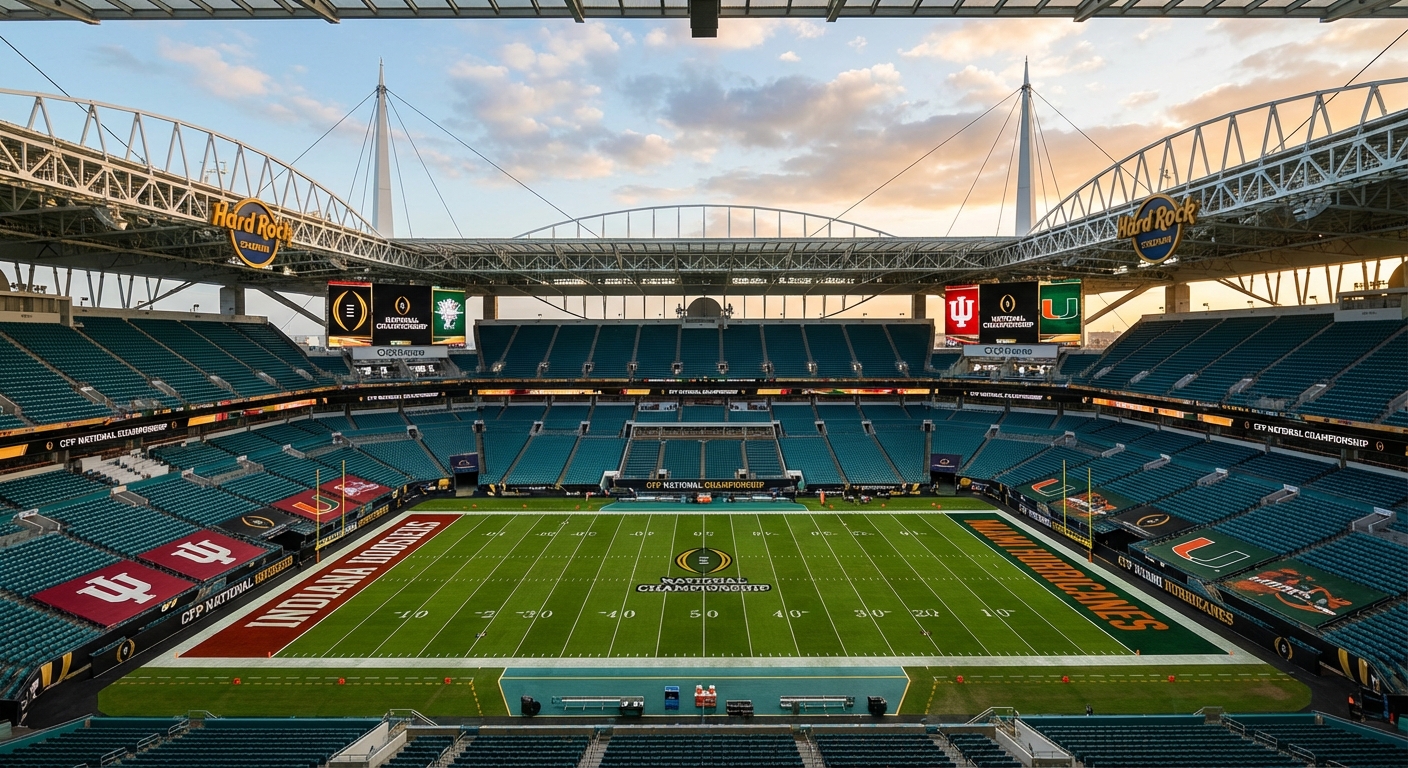
Indiana as a program is also playing for something beyond a single game. A championship would transform how the Hoosiers are perceived nationally. It would validate the rebuild that began years ago, prove that programs outside the traditional powers can compete at the highest level, and create a recruiting advantage that could sustain success for years to come. The Big Ten would have another championship contender beyond Ohio State, Michigan, and Penn State.
The Legacy Question
What Mendoza does Monday night will shape two legacies at once: his own and Indiana’s. A championship would make him the most decorated single-season transfer in college football history and almost certainly lock him in as the first overall pick in April’s NFL Draft. ESPN’s Todd McShay has noted that Mendoza’s playoff tape alone, the quick processing, the accuracy under pressure from elite front sevens, addresses every concern NFL evaluators typically have about college quarterbacks transitioning to the pro game. A title would remove the last remaining question mark: whether he can finish.
But even if Miami’s defense finds something no one else has, Mendoza’s season has already altered Indiana’s trajectory in ways that outlast a single game. The Hoosiers recruited at a top-15 level this cycle for the first time in program history, per 247Sports, and their next television deal will reflect a program that played for a national championship rather than one fighting for bowl eligibility. Mendoza gave Bloomington proof that it could happen there.
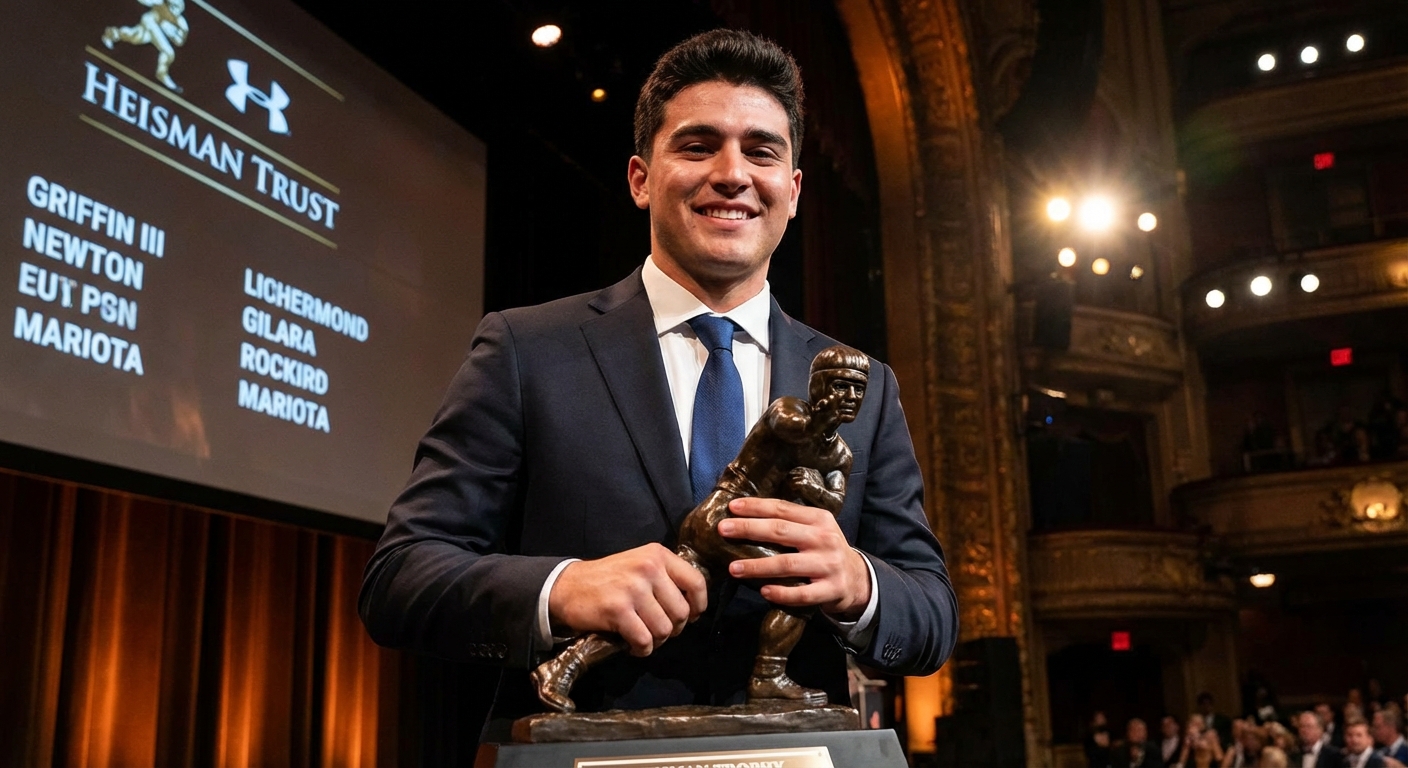
The Heisman is won. The 15-0 regular season and playoff run, with more touchdown passes than incompletions in elimination games, already belongs to history. What remains is the difference between a season that was extraordinary and one that was perfect. For a quarterback who has spent the past four months erasing every limitation anyone tried to place on him, that distinction is the only thing left to claim.
Sources
- Fernando Mendoza 2025 Season Statistics - Sports Reference College Football
- Fernando Mendoza 2025 Stats per Game - ESPN
- 2026 NFL Draft Big Board: Mel Kiper’s Top Prospects - ESPN
- Indiana vs. Miami CFP National Championship Game Preview - CBS Sports