Two All-Stars on the roster. Zero games played between them. And somehow, the Washington Wizards might be pulling off the smartest rebuild in the NBA.
Washington sits at 16-40, firmly planted in the Eastern Conference basement for the third consecutive season. They lost 67 games last year and 64 the year before that. Yet in the span of 30 days, the front office traded for four-time All-Star Trae Young and five-time All-NBA center Anthony Davis, creating one of the most talented rosters on paper in the franchise’s recent history. The catch? Young is nursing an MCL sprain and a thigh bruise. Davis is rehabbing ligament damage in his left hand. Neither has worn a Wizards uniform in an actual game, and Davis is now expected to miss the rest of the season.
On the surface, this looks like organizational chaos. Look closer, and it starts to resemble a plan.
Two All-Stars, Zero Games, One Master Plan
The Wizards acquired Young from the Atlanta Hawks on January 7 and Davis from the Dallas Mavericks on February 6, two moves that collectively stunned a league that had long written off Washington as a rebuilding afterthought. The trade deadline grades reflected the surprise: ClutchPoints gave Washington a B+, noting that the Wizards “added two stars without giving up any foundational players or lottery picks.”
That last part is the key to understanding what’s actually happening here. Washington didn’t mortgage its future. Alex Sarr, the No. 2 overall pick from 2024, is still on the roster. So is standout rookie Tre Johnson. So are Bub Carrington, Bilal Coulibaly, and Kyshawn George, the young players the front office has spent two miserable seasons developing. The outgoing pieces in both trades, CJ McCollum, Corey Kispert, Khris Middleton, Malaki Branham, Marvin Bagley III, were either expiring contracts or replaceable rotation players. Washington essentially swapped depth for star power without touching the foundation.
The reason both trades were available at such a discount comes down to a single factor: salary. Young carries a $49 million player option for 2026-27. Davis is owed $58.4 million this season with a $62.7 million option for the following year. Atlanta and Dallas both needed cap relief, and the Wizards were one of the few teams with the space and the willingness to absorb those contracts. As The Ringer’s analysis noted, Dallas traded Davis “without getting back a single star, blue-chip prospect, or highly coveted draft pick in return,” because shedding his salary was the priority.
Why Phantom Stars Are Better Than Healthy Role Players
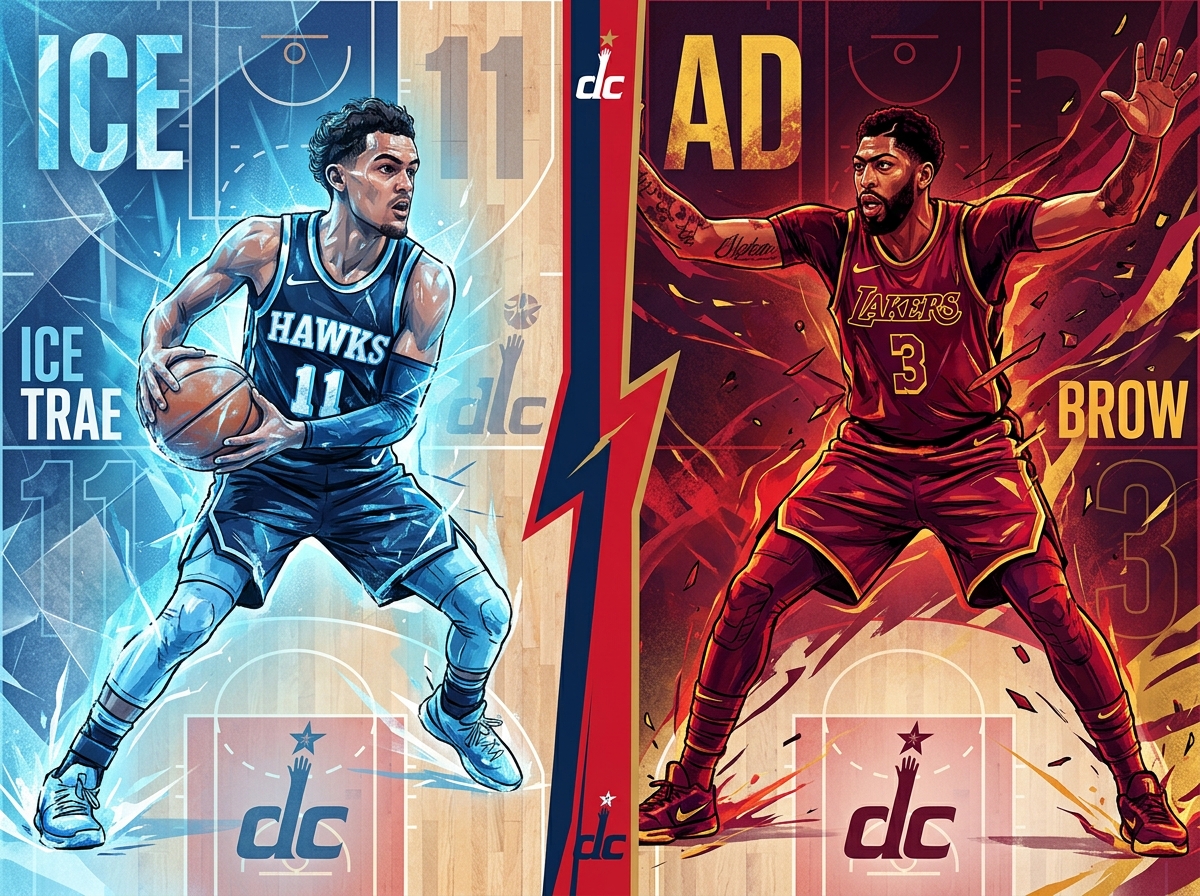
Here is the part that makes Washington’s strategy quietly brilliant: both stars being injured this season is not a bug. It’s a feature.
The Wizards were never competing for anything this year. At 16-40, they’re on pace for approximately 23 wins, which would land them among the three or four worst records in the league. That means a strong lottery position in a 2026 draft class headlined by elite talent. By sitting Young and Davis, Washington accomplishes three things simultaneously: they protect their new acquisitions from wear on a losing team, they preserve their draft positioning, and they give their young players extended minutes to develop. Tre Johnson is averaging over 30 minutes per game since the All-Star break. Sarr is getting full starter’s reps without a veteran eating into his touches. Carrington is running point in high-pressure situations he wouldn’t see on a competitive roster.
Compare this to what the Brooklyn Nets attempted in 2021 when they brought in James Harden to pair with Kevin Durant and Kyrie Irving. Brooklyn went all-in immediately, sacrificed draft capital and young players to do it, and the result was two years of dysfunction followed by a complete teardown. Washington learned from Brooklyn’s mistake. They added the stars without subtracting the future, and by keeping both injured players sidelined through a lost season, they’ve created a pathway that didn’t exist six weeks ago: a young core plus two star veterans plus a lottery pick, all converging in October 2026.
Anthony Davis at $58 Million: The Math Behind Washington’s Biggest Bet
The Davis trade is the one that draws the most skepticism, and fairly so. He turns 33 in March. He has played 65 or more games in a season exactly once since 2019. The ligament damage in his left hand, which occurred during his final stretch in Dallas, required evaluation by Dr. Steven Shin at Cedars-Sinai, and the latest update confirmed he hasn’t been cleared for basketball activity. His next evaluation comes in two weeks, but the expectation is that he’s done for the year.
Washington is paying $58.4 million this season for a player who won’t play a minute in their uniform. Next year, Davis can pick up a $62.7 million option. At 33 going on 34, those numbers look punishing. But the Wizards’ front office appears to have accepted a specific calculation: Davis doesn’t need to be a 75-game-per-season player. He needs to be a 55-game anchor who elevates the team’s defense from bottom-five to top-15. Paired with Sarr’s length and athleticism in the frontcourt, even a version of Davis operating at 80% of his peak could transform Washington’s defensive identity.
The historical parallel worth examining is the Toronto Raptors’ acquisition of Kawhi Leonard in 2018. Leonard came to Toronto with legitimate injury concerns after missing most of the previous season with the Spurs. The Raptors managed his load carefully, sitting him on back-to-backs, limiting his minutes in blowouts, and accepting some regular-season losses in exchange for a healthy Leonard in April. That approach ended with a championship. Washington won’t replicate Toronto’s title run next year, but the load management template is the blueprint they’re working from.
The Trae Young Factor and the Extension That Drives Everything
If Davis is the high-risk acquisition, Young is the high-reward one. At 27, Young is in his statistical prime, a four-time All-Star who averaged 24.3 points and 10.8 assists per game in Atlanta last season. His MCL sprain and thigh bruise are the kind of injuries that heal fully, not the chronic concerns that shadow Davis. The latest update from the Wizards indicated Young is “ramping up on-court activities” and could be re-evaluated within a week. There is a real possibility he plays meaningful minutes before the season ends.
But the games themselves are secondary to the contract conversation happening behind the scenes. According to NBA reporters Marc Stein and Jake Fischer, the primary motivation behind the Davis trade was showing Young that Washington is serious about competing. Young has that $49 million player option for 2026-27, and the Wizards want to negotiate an extension this offseason. Letting him walk after one season would be catastrophic, turning the entire trade sequence into a salary dump that cost the franchise rotation players and draft picks for nothing.
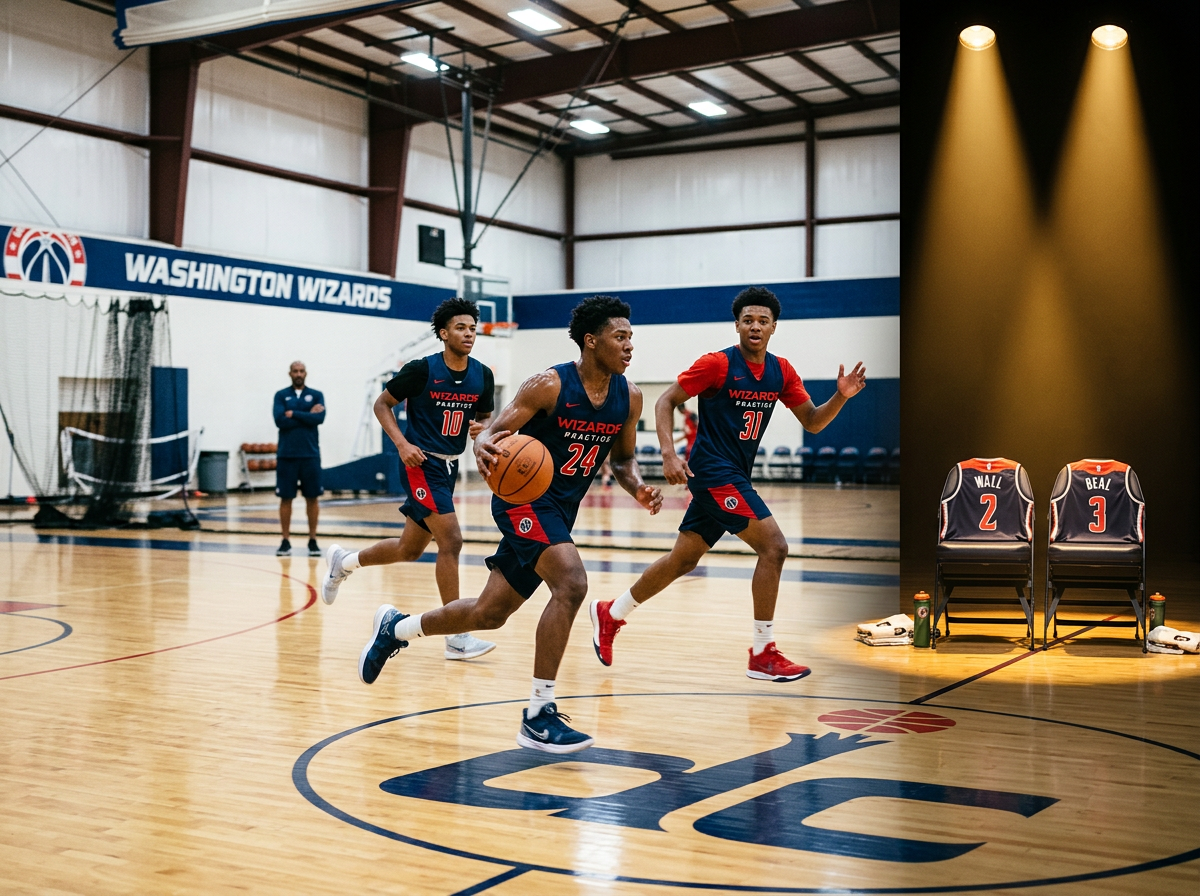
Young’s fit with the existing roster is genuinely promising. He’ll have Tre Johnson, who has shown scoring ability from all three levels, as a backcourt partner. Sarr gives him a lob target and rim protector that Atlanta’s Clint Capela could no longer provide at an elite level. The spacing improves with Coulibaly’s development as a wing shooter. If you squint at the roster construction, there’s a coherent vision: Young orchestrates, Davis anchors, and the young players fill in the margins with energy and athleticism.
The Case Against: Why Recent History Urges Caution
The counterarguments are not trivial. Washington has been the NBA’s worst franchise for three consecutive seasons. Building a winning culture isn’t accomplished by plugging in expensive veterans, as the Sacramento Kings demonstrated for over a decade before finally breaking through. Davis has played 65-plus games just once since 2019, making his long-term availability a legitimate concern at his price point. And absorbing over $107 million in combined salary for two players means the Wizards have almost no financial flexibility to address roster weaknesses through free agency.
There’s also the chemistry question. Young has a well-documented reputation as a ball-dominant guard who can struggle to coexist with other high-usage players. In Atlanta, the Hawks spent years trying to find the right supporting cast around his style, cycling through John Collins, Dejounte Murray, and eventually deciding that a full rebuild was preferable to another season of Young-centric basketball that topped out as a play-in team. Washington is betting that surrounding Young with defenders and athletes, rather than asking him to share creation duties with another ball-handler, will unlock a version of his game that Atlanta never accessed.
And then there’s the macro concern. The Eastern Conference is significantly better than it was during Washington’s last playoff appearance. The Spurs’ emergence as a contender under Wembanyama demonstrates how quickly rebuilds can accelerate, but it also means the Wizards will be competing against young, ascending teams with their own star power and superior continuity.

The Verdict
Washington’s dual-star acquisition is the most fascinating strategic play of this NBA season, and it’s being made by a team most fans stopped paying attention to two years ago. The Wizards didn’t just add talent. They added talent at a discount, preserved their young core, maintained lottery positioning, and created a credible pitch for why Trae Young should sign a long-term extension rather than testing free agency.
The risks are real and significant. Davis’s health history is genuinely alarming at his salary. Young’s willingness to adapt to a supporting cast built around youth rather than established veterans is unproven. The financial commitment is enormous for a franchise that hasn’t generated meaningful playoff revenue since the John Wall era.
But here’s what separates this from the typical “worst team buys stars” cautionary tale: Washington didn’t sacrifice the rebuild to make these trades. They absorbed contracts that other teams were desperate to shed, kept every meaningful young player, and positioned themselves for a lottery pick that could add another piece to a roster that, on paper, now has legitimate two-way talent at every level. They’re not trying to win this year, and that’s exactly why this might work. The true test arrives in October, when Young, Davis, Sarr, Johnson, and a lottery selection share the court for the first time. Until then, the Wizards’ phantom stars are doing exactly what they need to do: nothing at all.
Sources
- Anthony Davis traded to Wizards in 9-player, 3-team deal - NBA.com
- The Anthony Davis Trade Is the Disaster the Dallas Mavericks Needed - The Ringer
- Wizards’ Anthony Davis Expected to Miss Rest of Season - Hoops Rumors
- Trae Young moves closer to Wizards debut; Anthony Davis not yet ready - NBA.com
- Wizards 2026 NBA trade deadline grade after Trae Young, Anthony Davis bombshells - ClutchPoints