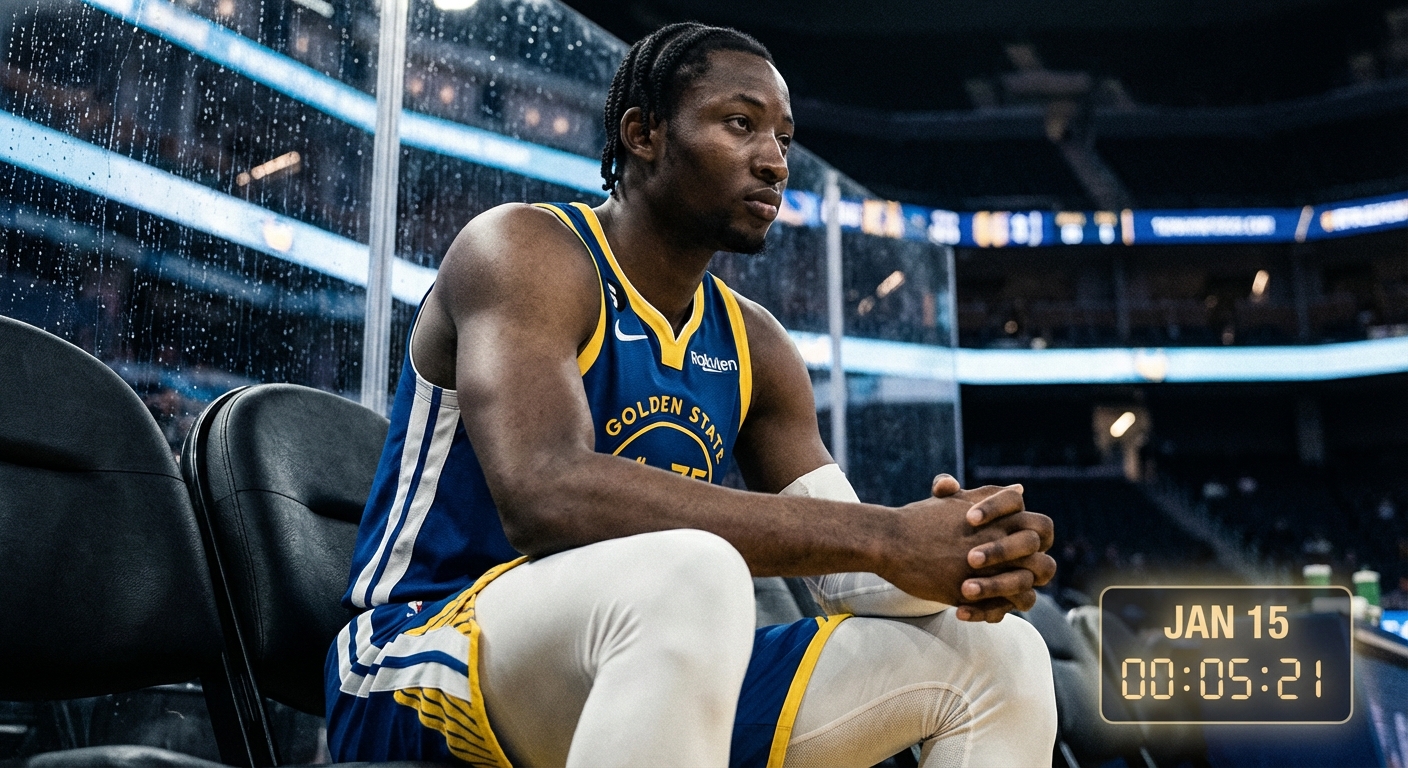
Jonathan Kuminga signed his two-year contract extension with the Golden State Warriors in August knowing exactly what it meant. The team had offered less than what his representatives believed he deserved, he had accepted because restricted free agency offered no better alternatives, and both sides understood the arrangement was temporary. In seven days, on January 15, Kuminga becomes trade-eligible under NBA rules. What happens next could determine whether the Warriors have found Stephen Curry’s successor or simply delayed an inevitable parting of ways.
The timeline creates urgency that neither side can ignore. The February 5 trade deadline looms three weeks after Kuminga’s eligibility date, giving Golden State a narrow window to find a trade partner if the front office decides their young forward doesn’t fit their championship aspirations. ESPN’s Brian Windhorst has reported that the Warriors have engaged in preliminary conversations about Kuminga, though no trade is imminent. The Athletic’s Anthony Slater has described the situation as “fluid,” with both sides waiting for clarity that hasn’t arrived.
Kuminga’s 2025-26 season has been a study in contradictions. His per-game averages represent career highs across multiple categories, and he’s shown flashes of the two-way dominance that made him the seventh overall pick in 2021. But those flashes have been inconsistent, appearing in stretches rather than as the foundation of every performance. At 23 years old, Kuminga remains a bundle of potential that hasn’t fully cohered into the kind of reliable star that championship teams need alongside aging superstars.
The Warriors’ decision isn’t simply about Kuminga’s talent. It’s about whether that talent can develop into championship-level production within a window that closes a little more each season Curry ages.
Kuminga’s Development: Progress and Frustration
The statistical trajectory shows legitimate improvement. Kuminga is averaging 16.2 points, 6.1 rebounds, and 2.8 assists per game, all career bests per Basketball Reference. His three-point shooting has climbed to 34%, up from 28% last season according to NBA.com/stats, addressing the most significant concern about his long-term offensive ceiling. He’s playing 31 minutes per night, more than any previous season, and handling increased responsibility without the catastrophic failures that characterized his early career.
But the eye test reveals inconsistencies the numbers don’t capture. Kuminga’s decision-making in half-court offense remains erratic, with brilliant plays followed by head-scratching choices that disrupt possessions. His defensive focus wanders during extended stretches, though his physical tools allow him to make impact plays even when his attention drifts. The talent has never been in question. The reliability, the game-to-game consistency that separates good players from stars, hasn’t fully materialized.
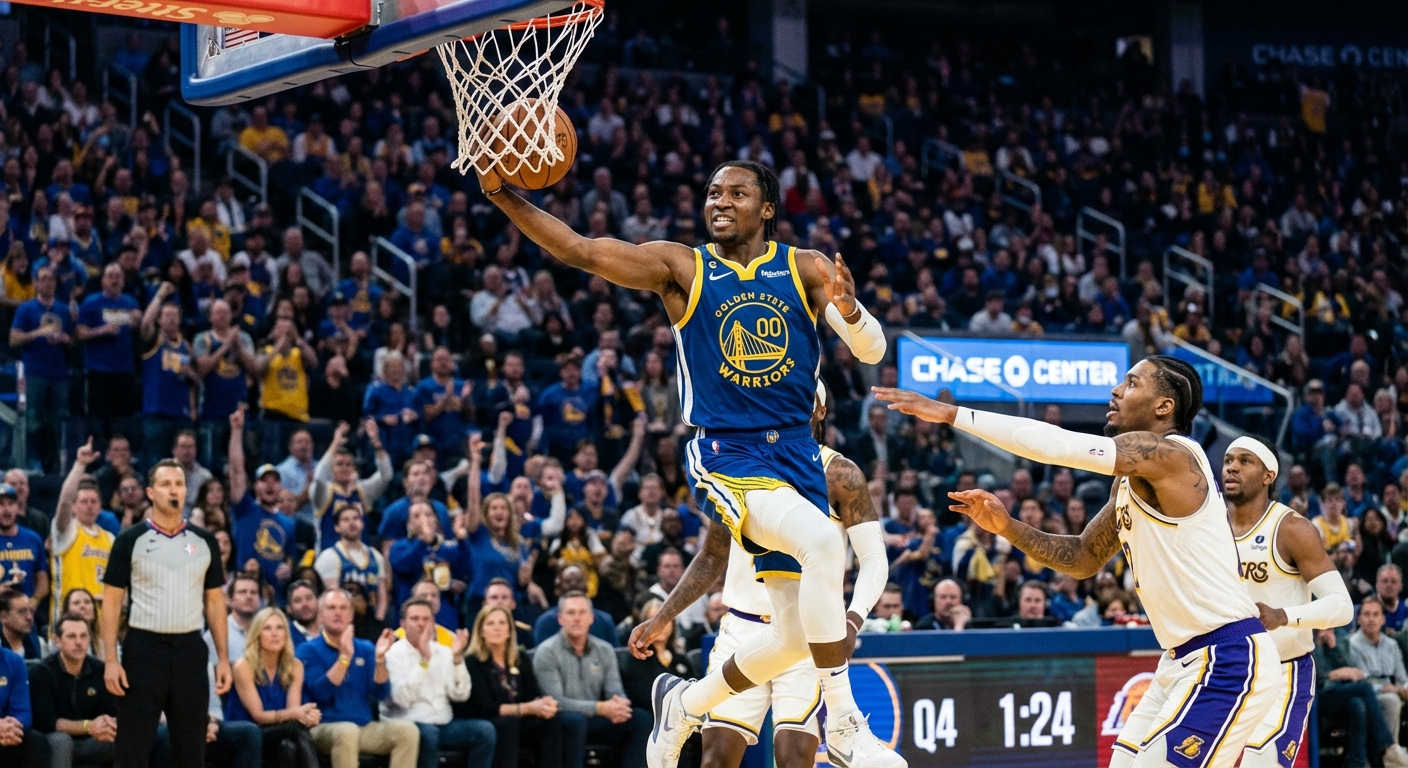
The Warriors have seen this pattern before with young players who needed time to translate physical gifts into winning basketball. Kuminga’s athletic profile compares favorably to established stars at the same age, per Cleaning the Glass, and his year-over-year statistical gains are real. The problem is that steady improvement doesn’t help when Curry is 37 years old and the window for another championship is measured in seasons rather than years.
Head coach Steve Kerr has publicly expressed confidence in Kuminga, though as The Athletic’s Anthony Slater has documented, the coaching staff continues to navigate the challenges of integrating a developing player into a system designed for championship-level execution. The Warriors’ motion offense requires precise decision-making and timing that comes naturally to veterans but must be learned through repetition for younger players. Kuminga understands the concepts but doesn’t always execute them at game speed, creating friction between his individual talents and the team’s collective identity.
Golden State’s Win-Now vs. Build-Forward Dilemma
Golden State’s front office faces a classic contender’s dilemma: trade youth and picks for win-now help, or maintain flexibility for an uncertain future. As ESPN’s Bobby Marks has noted, the NBA’s trade deadline landscape offers few clean solutions for teams straddling competitive windows. Historically, teams that mortgaged futures for championships have hit rates no better than those that prioritized development, making the calculus genuinely difficult rather than obvious.
The Warriors’ recent history complicates any straightforward analysis. They won a championship in 2022 with a veteran-heavy roster, then spent the next two seasons trying to integrate younger players into championship culture with mixed results. Kevin Durant’s departure opened roster spots for Kuminga, James Wiseman, and Moses Moody, but none has yet become the foundational piece the Warriors need to extend their competitive window beyond Curry’s prime.
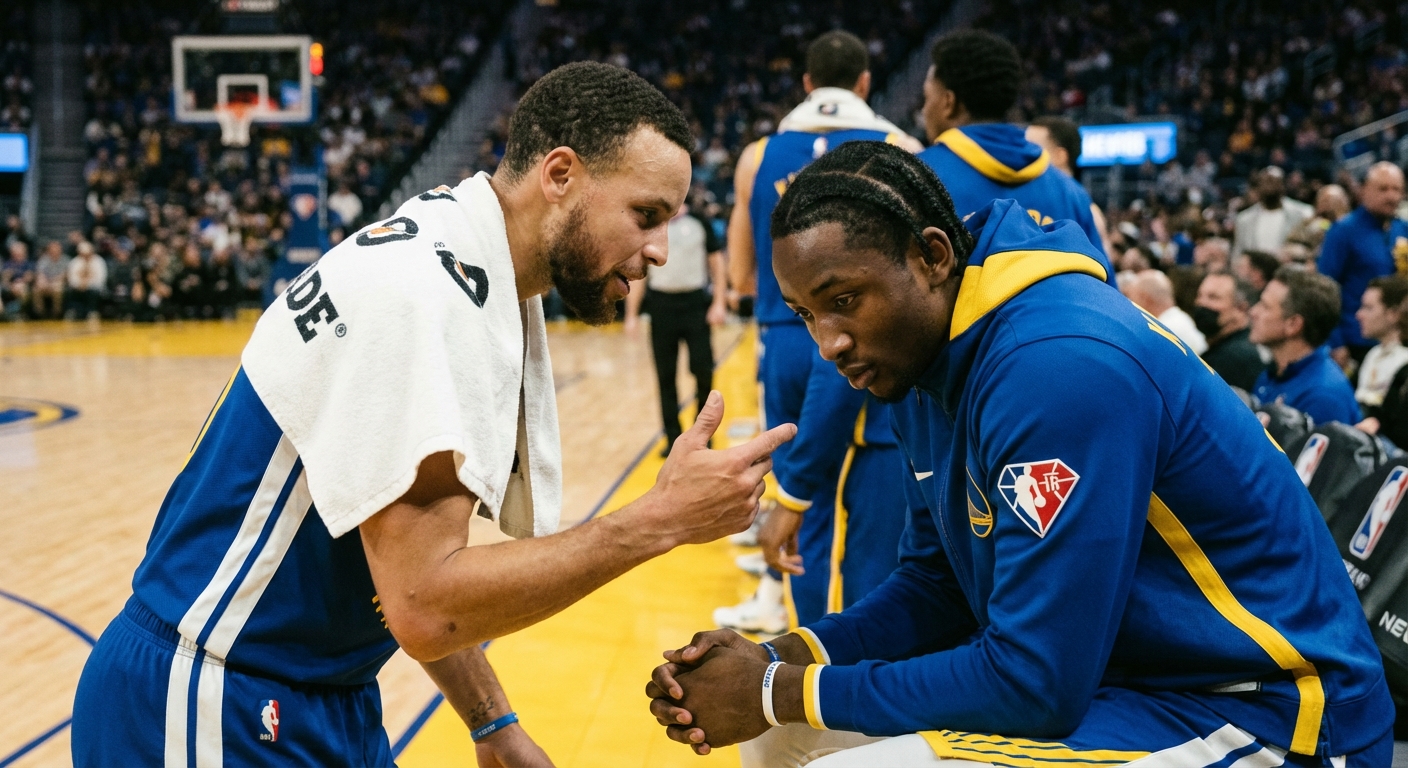
Wiseman was traded. Moody remains but hasn’t developed into a rotation fixture. Kuminga is the last standing member of that youth movement experiment, and his fate will signal whether the Warriors believe in developing homegrown talent or have concluded that buying established players offers better championship odds. The choice they make will shape perceptions of the franchise’s direction for years.
The Curry factor makes everything more urgent. At 37, Curry remains one of the league’s best players, but his shooting efficiency has dipped slightly this season according to ESPN Stats & Info, a subtle reminder that even greatness has an expiration date. If the Warriors believe they can win another title with their current core plus minor additions, keeping Kuminga makes sense. If they believe a significant upgrade is necessary and Kuminga’s value can acquire that upgrade, trading him becomes the logical choice.
Why Kuminga’s Trade Value Doesn’t Match His Talent
The Warriors have discovered what every team with a valuable-but-complicated asset eventually learns: the gap between your valuation and the market’s valuation is often larger than expected. The Ringer’s Kevin O’Connor has reported that Golden State has been disappointed by the offers received for Kuminga, with teams unwilling to pay what the Warriors consider appropriate value for a 23-year-old with his physical tools and upside.
Part of the problem is Kuminga’s contract structure. The two-year deal he signed allows him to become an unrestricted free agent in summer 2027, meaning any team acquiring him faces the risk of losing him after 18 months. That limited control depresses trade value compared to what Kuminga might command with a longer-term deal. Teams are reluctant to send significant assets for a player who might leave in free agency.
According to NBC Sports Bay Area’s Marcus Thompson, the Warriors’ asking price includes young players with upside, draft assets, and salary-matching components that few teams can assemble without gutting their rosters. Golden State isn’t interested in trading Kuminga for role players and distant future picks. They want contributors who can help immediately while maintaining some future flexibility. That combination of demands has proven difficult to satisfy.
Potential destinations have included teams with cap space seeking young talent and contenders looking to add athleticism and defense. ESPN’s Brian Windhorst has named the Orlando Magic, Oklahoma City Thunder, and Miami Heat as potential suitors, though none has reportedly made the kind of offer that would compel Golden State to pull the trigger. The Warriors may ultimately decide that keeping Kuminga and hoping for a developmental breakthrough offers better expected value than the trades currently available.
The January 15 Decision Point
What happens when Kuminga becomes trade-eligible will reveal the Warriors’ true intentions. If significant trade discussions accelerate immediately after the 15th, it suggests Golden State has been waiting for the earliest possible moment to move him. If discussions remain preliminary and exploratory, it indicates the Warriors are content to evaluate the market while maintaining the option to keep their young forward.
The most likely outcome is continued uncertainty through at least the All-Star break. The Warriors have shown patience in trade negotiations historically, preferring to explore all options rather than making decisions under artificial deadline pressure. They may carry Kuminga past the trade deadline, gambling that his development accelerates in the second half and either proves his value to the championship push or increases his trade value for the summer.
That approach carries risks the Warriors are surely calculating. If Kuminga plays well in the second half and the Warriors reach the playoffs, keeping him looks brilliant. If he struggles and the Warriors’ season ends early, questions about why they didn’t pursue available upgrades will dominate the offseason. The Warriors’ own 2022 title run succeeded precisely because the front office avoided half-measures at the deadline, a precedent that cuts both ways in the current debate.
The NBA’s Shifting Valuation of Upside vs. Certainty
Beyond the Warriors’ specific situation, the Kuminga saga reflects broader questions about how NBA teams value young players with uncertain ceilings. The league has shifted toward certainty in recent years, with established stars commanding premium prices while unproven talent gets traded for pennies on the dollar of expected value. Teams would rather overpay for known quantities than gamble on potential that might never materialize.
Kuminga represents the kind of risk that lottery picks always carry: extraordinary physical tools, clear improvement trajectory, but no guarantee that all the pieces will come together into a star-level player. Some top-ten picks become All-Stars. Some become solid starters. Some wash out of the league entirely. Kuminga appears to be somewhere between the first two outcomes, which is both encouraging and frustrating depending on your perspective.
The Warriors’ decision will signal how they weigh certainty against potential during a championship window. If they keep Kuminga, they’re betting his development justifies patience even as Curry ages. If they trade him, they’re acknowledging that championship windows don’t wait for young players to figure things out. The answer depends less on Kuminga’s talent and more on whether Golden State’s front office believes their current roster is one piece away or several.
The Verdict
The Warriors should keep Jonathan Kuminga through the February 5 deadline, but not because of the optimistic “development bet” framing the organization prefers. They should keep him because the trade market has already answered the question for them: Kuminga’s value to Golden State exceeds his value on the open market, and it isn’t close.
Here’s the overlooked dynamic in this entire discussion. Kuminga’s two-year deal with a 2027 UFA exit means acquiring teams are pricing in rental risk, which compresses his trade return well below his on-court production. The Warriors would be selling low on a player who, even at his inconsistent worst, is producing career-best numbers that most trade packages cannot replicate. His production profile, a wing averaging career highs across the board with a three-point shot that has finally become credible, is exactly what teams spend lottery picks hoping to develop. Trading him for anything less than a proven starter and a pick concedes value Golden State cannot afford to lose.
The smarter play is to use the January 15 to February 5 window not as a decision deadline but as leverage. Kuminga’s trade eligibility changes his status from untouchable to available, which opens conversations that were previously impossible. The Warriors can use him as a matching-salary centerpiece in larger deals if a genuine upgrade becomes available, while keeping him as the default if the market doesn’t deliver. That optionality is worth more than any deal currently on the table.
The real question isn’t whether Kuminga fits the Warriors’ championship timeline. It’s whether the Warriors have a realistic championship timeline at all. If they do, Kuminga’s upside at 23 gives them a better shot at a deep playoff run than the role players and mid-first-round picks they’d receive in return. If they don’t, then the trade deadline isn’t the right moment to sell anyway. The summer, when acquiring teams face less rental risk, would yield a better return.
January 15 starts Kuminga’s trade clock. The Warriors’ best move is to let it run.
Sources
- Sources: Jonathan Kuminga Demanding Trade Away from Warriors - ESPN
- Jonathan Kuminga Career Statistics - Basketball Reference
- Will the Warriors Keep Jonathan Kuminga? - Kevin O’Connor, Yahoo Sports
- What’s Next for Warriors After Jonathan Kuminga Trade Demand? - NBC Sports Bay Area
- Warriors’ Jonathan Kuminga Situation Draws Exasperated Reaction from Brian Windhorst - NBC Sports Bay Area