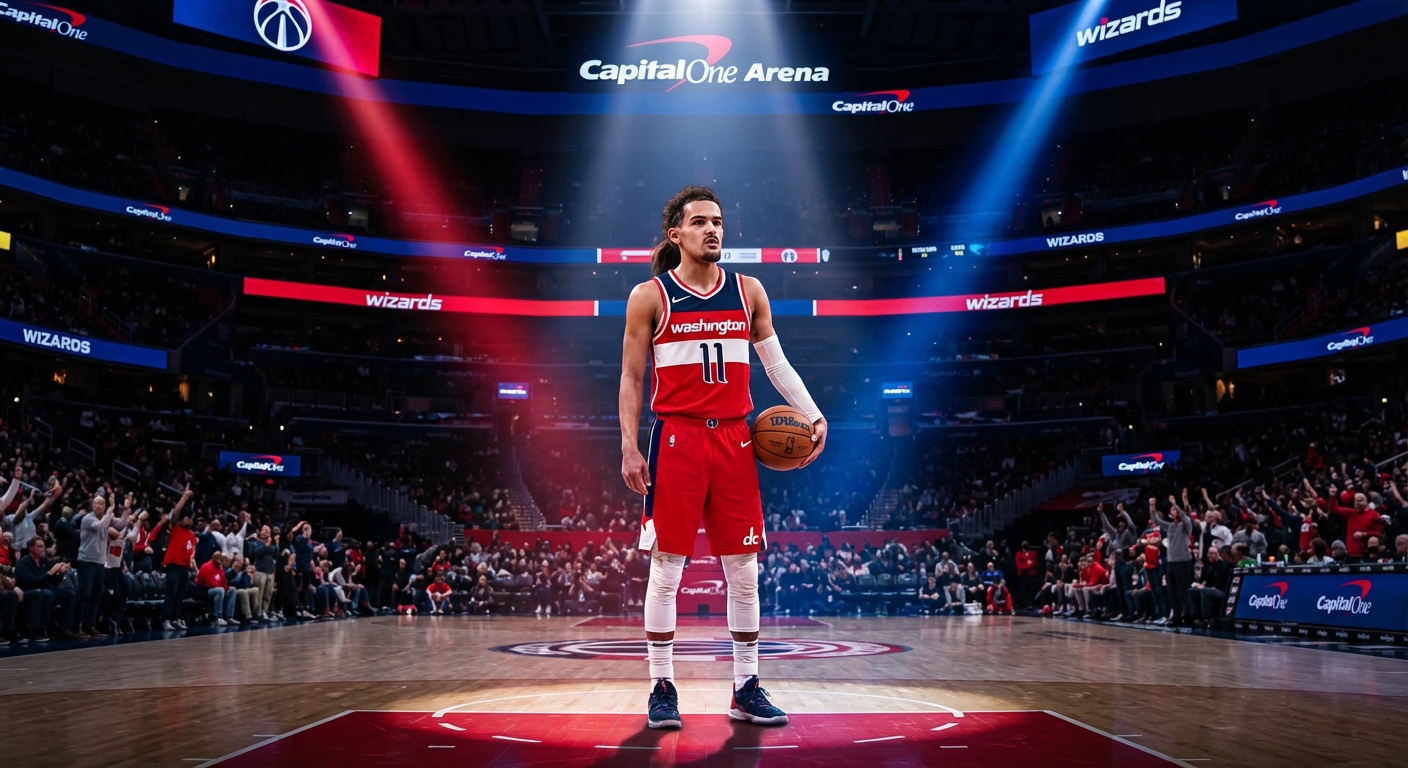
Trae Young was sitting on the Atlanta Hawks bench in street clothes on January 7 when the news broke that his seven-year tenure with the franchise had ended. He’d missed six consecutive games with a bruised right quad, watching from the sideline as his former team played at State Farm Arena without their once-unquestioned franchise cornerstone. Within minutes of the trade announcement, Young had gathered his belongings and walked off the court, receiving brief farewells from teammates who seemed as surprised as anyone that the moment had finally arrived. The face of Hawks basketball since draft night 2018 was now a Washington Wizard, acquired in exchange for CJ McCollum and Corey Kispert in a deal that contained no draft picks in either direction.
The trade represents a philosophical pivot for both franchises. Atlanta has spent years trying and failing to build a championship contender around Young’s playmaking and scoring. They reached the Eastern Conference Finals in 2021 behind his brilliance, then watched the supporting cast deteriorate and the team’s chemistry fracture in subsequent seasons. The Hawks were 2-8 in games Young played this season and 15-13 without him, per NBA.com/stats, a striking disparity that suggested the organization had moved on mentally before the trade made it official. Washington, meanwhile, has been searching for a star to anchor their rebuilding project, someone capable of maximizing the development of their young talent while providing immediate competitive relevance.
Young arrives in Washington at 27 years old with $95 million remaining on his contract through 2026-27, per Basketball Reference, plus a player option in the final year. The Wizards cleared $46 million in cap room for the summer while adding a four-time All-Star who can collapse defenses and create scoring opportunities for teammates. For a franchise that has lacked a point guard of Young’s caliber since John Wall’s prime years, this trade represents a calculated gamble that youth and scoring can coexist, that Young can be the mentor and facilitator their young players need while still pursuing his own championship aspirations.
Atlanta’s Pivot: Life After Trae
The Hawks’ decision to trade Young reflects a cold assessment of what they’d built around him versus what they could build without him. Since the 2021 conference finals run, Atlanta has struggled to construct a roster capable of competing for championships in an Eastern Conference dominated by Boston, Milwaukee, and more recently Detroit. The supporting cast around Young never quite fit together, and the organization’s attempts to upgrade through trades and free agency consistently fell short of expectations.
The emergence of Jalen Johnson has been particularly significant. The fourth-year forward has developed into a legitimate two-way threat who anchors Atlanta’s defensive identity in ways Young never could. Dyson Daniels has become one of the league’s best perimeter defenders. Onyeka Okongwu provides interior presence. Zaccharie Risacher, their top draft pick, brings additional upside. This young core plays an athletic, defensively oriented style that contradicts everything about Young’s game, which demands the ball in his hands and spacing for him to operate.
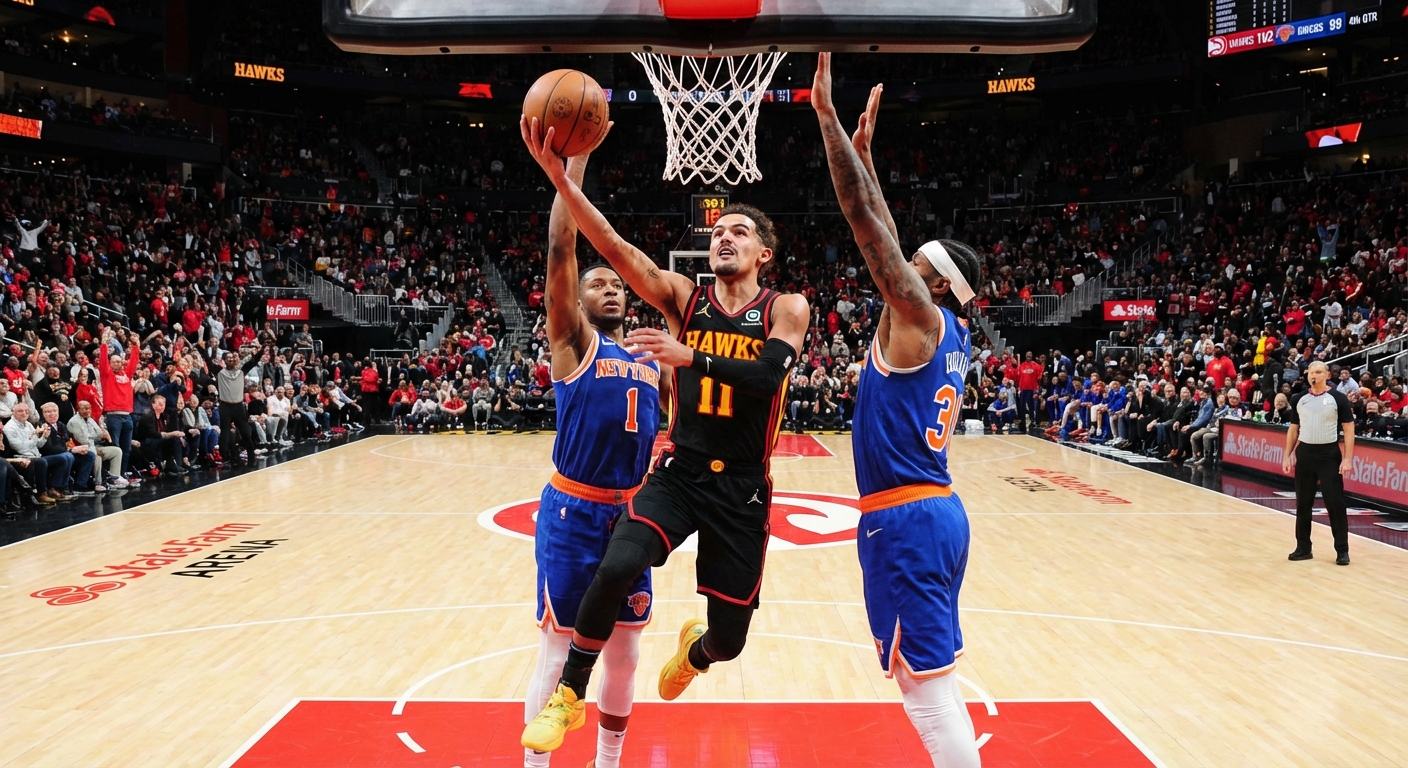
The return of McCollum and Kispert gives Atlanta precisely what they needed: expiring contracts and roster flexibility. McCollum carries a substantial salary that will come off the books, freeing Atlanta to pursue free agents who fit their defensive identity. Kispert provides immediate three-point shooting that spaces the floor for Johnson and the Hawks’ attacking wings. Neither player represents the long-term future, but both serve the short-term purpose of bridging Atlanta from the Young era to whatever comes next.
Hawks general manager Landry Fields has spoken about building sustainably through the draft and developing talent internally. Young’s presence complicated that vision. His salary consumed cap space that could be used on role players. His style of play demanded that the team operate through him even when the young players were more effective operating independently. As The Athletic’s Chris Kirschner reported, that stark win-loss split told a story the organization could no longer ignore: the Hawks were better positioned to succeed without their highest-paid player on the court.
Washington’s Gamble: Reuniting with Familiar Faces
The Wizards’ acquisition of Young reunites him with Travis Schlenk, the executive who brought him to Atlanta on draft night 2018. Schlenk, now with Washington’s front office, understands Young’s strengths and limitations better than perhaps anyone in basketball. He knows that Young needs specific roster construction to maximize his abilities. He also knows that Young’s court vision and passing creativity can accelerate the development of young players in ways that conventional point guards cannot provide.
Washington’s rebuild has accumulated promising young talent without a clear path to competitive relevance. They’ve drafted well and found value in overlooked prospects, but they’ve lacked a star capable of drawing defensive attention and creating advantages for teammates. Young provides exactly that. His ability to collapse defenses opens driving lanes for wings, creates corner three-point opportunities, and forces opponents to make difficult decisions about how to allocate their defensive resources.
The Wizards’ young players will benefit from playing alongside a point guard who sees passing angles they haven’t learned to anticipate yet. Young’s 8.9 assists per game this season, per Basketball Reference, despite limited appearances due to injury, demonstrates his continued excellence as a distributor. He’ll make developing players look better than they are, which builds confidence and accelerates growth. The shots that young Wizards currently have to create for themselves will appear more naturally with Young orchestrating the offense.
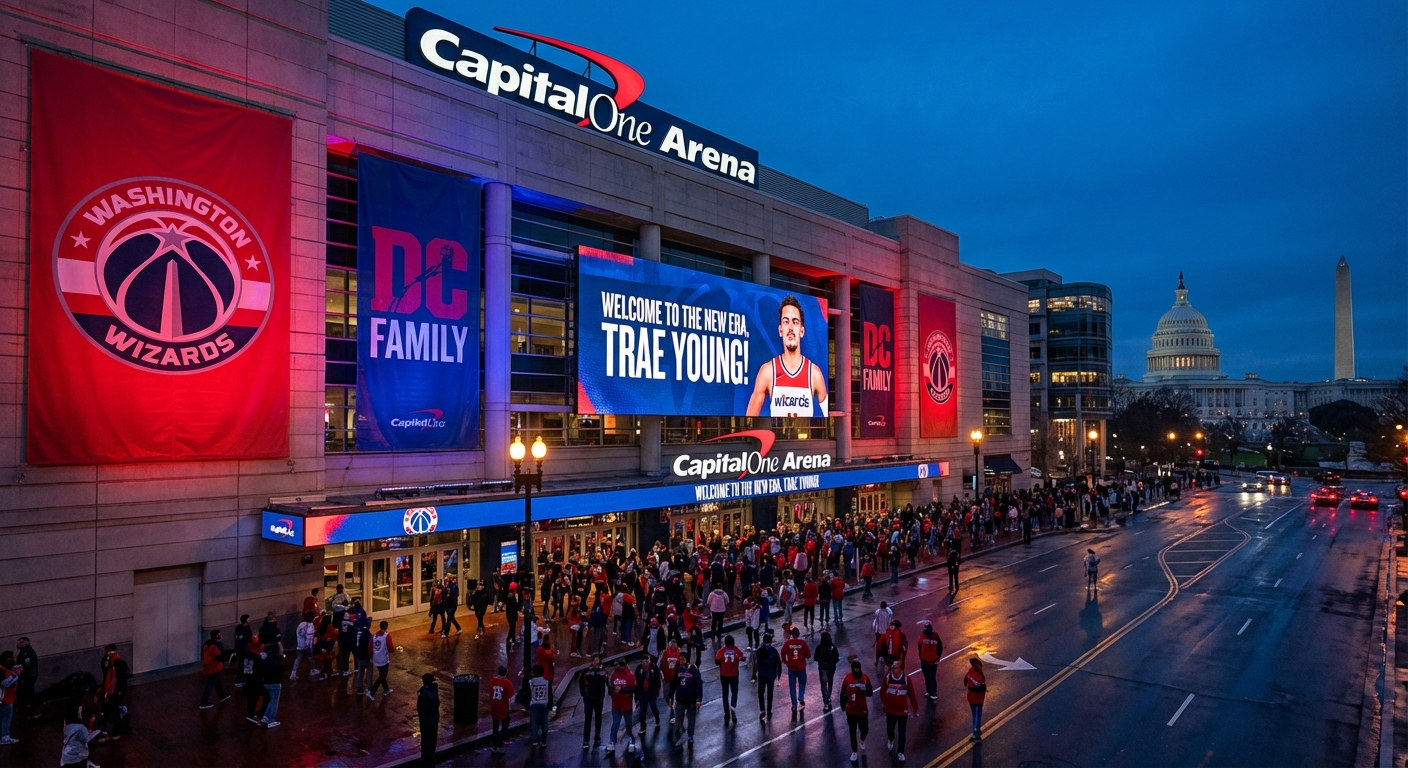
The financial implications work favorably for Washington as well. After completing the trade, the Wizards moved $30 million below the luxury tax while clearing significant cap room for the summer. They can pursue additional pieces around Young and their young core, building a roster specifically designed to complement their new point guard’s strengths. The team’s timeline accelerates from speculative rebuilding project to potential playoff contender within the next two seasons if the integration succeeds.
Young’s injury history does present some concern. He’s missed six consecutive games with a bruised quad, and the Wizards plan to take a cautious approach with his health rather than rushing him onto the court. The organization understands that Young’s long-term value exceeds whatever impact he might provide in the remaining months of this season. Getting him healthy and integrated properly matters more than winning games in January.
Young’s Legacy in Atlanta
Trae Young leaves Atlanta as the most statistically accomplished point guard in franchise history. He’s the Hawks’ all-time leader in three-pointers made with 1,295 and assists with 4,837, according to NBA.com/stats. He led the team to three playoff appearances and that remarkable 2021 conference finals run when he outdueled Knicks fans in Madison Square Garden and established himself as one of the league’s most entertaining stars. His floater became iconic. His deep three-pointers launched from the logo became signature moments. For a franchise that has struggled to attract and retain star talent, Young’s seven seasons represent a significant chapter in Hawks history.
The relationship deteriorated gradually rather than catastrophically. Young never demanded a trade publicly, but the disconnect between his style and the team’s emerging identity became impossible to ignore. He wanted the ball in his hands. The young Hawks played better with ball movement. He needed spacing to operate. The Hawks’ best players were attacking wings who thrived in transition and semi-transition rather than half-court sets. The fit had become problematic even before injuries limited his availability this season.
Young’s career trajectory in Washington will shape how this trade is ultimately evaluated. Atlanta traded a four-time All-Star still in his prime at 27, a move that carries real risk if Young thrives in a new environment. But the Hawks’ improved record in his absence provided the clearest possible signal that the partnership had run its course.
The Fit Question: Can Young Adapt?
The central question surrounding Young’s time in Washington involves whether he can adapt his style to complement rather than dominate younger teammates. Throughout his career, Young has been most effective with the ball constantly in his hands, making decisions, controlling pace, and creating advantages through his individual brilliance. The Wizards’ young players need opportunities to develop their own decision-making, which could conflict with Young’s preferred mode of operation.
ESPN’s Brian Windhorst has pointed to Young’s willingness to facilitate as the key factor in Washington’s decision. He’s averaged over 9 assists per game throughout his career, per Cleaning the Glass, and has demonstrated genuine joy in creating scoring opportunities for teammates. His court vision exceeds what most young point guards can offer, and his gravity alone creates space for others even when he doesn’t have the ball. As ESPN’s Bobby Marks noted, the argument for Young in Washington centers on his playmaking intellect rather than his scoring, positioning him as an offensive coordinator who happens to also be a 25-point-per-game scorer.
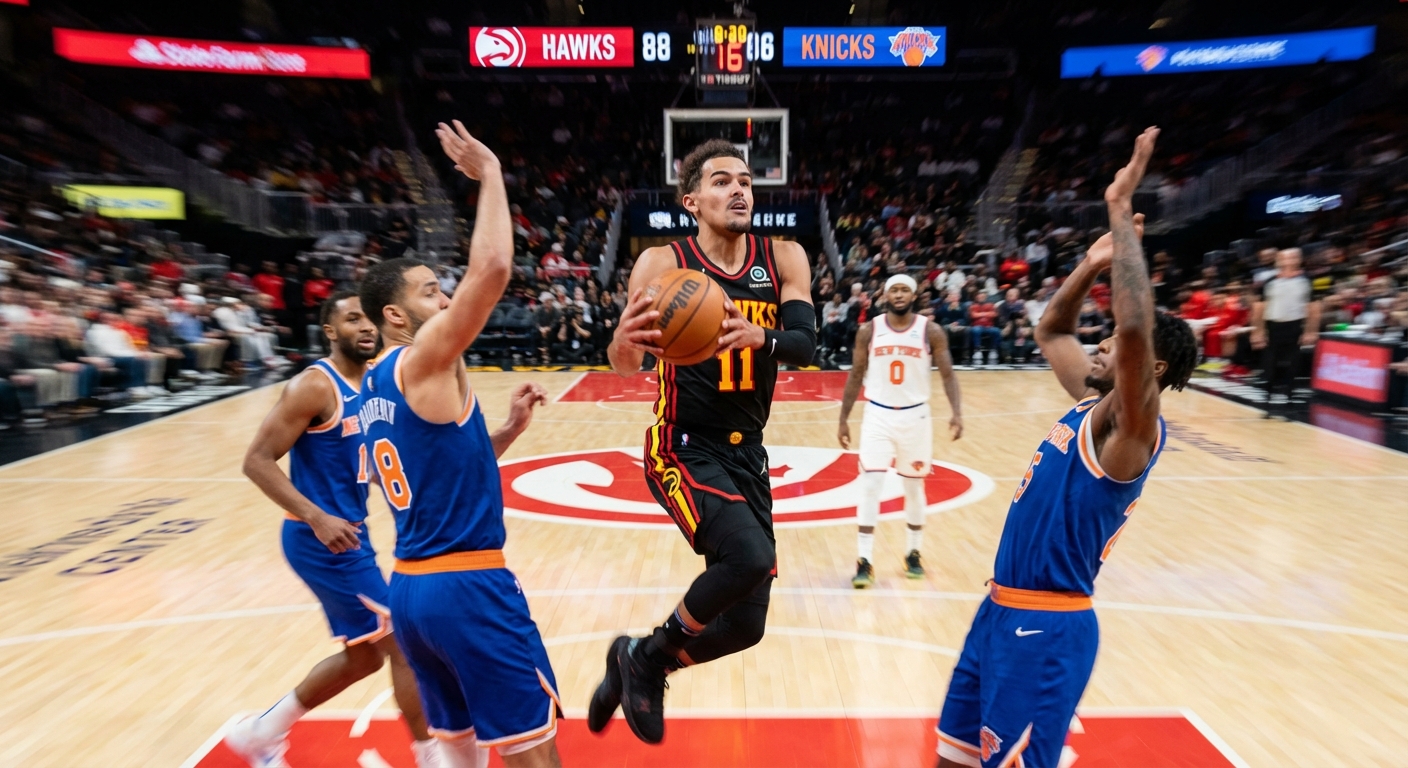
The Athletic’s Sam Amick has cautioned that Young’s defensive limitations could undermine whatever offensive value he provides. He’s been a below-average defender throughout his career, and Washington’s young players cannot yet compensate for a liability at the point of attack. The Eastern Conference playoffs require capable perimeter defense against guards like Jalen Brunson, Tyrese Haliburton, and Cade Cunningham. If Young cannot improve defensively, the Wizards’ ceiling in the postseason remains constrained regardless of how much he contributes offensively.
The comparison to other point guards navigating similar team-building situations provides context for what Washington hopes to accomplish. Teams have successfully integrated ball-dominant guards into developmental rosters before, using their star’s gravity to create easier paths for young players while gradually shifting responsibility as those players mature. The Wizards are betting that Young can accept a transitional role that prioritizes team development over individual statistics, at least until the supporting cast reaches a level where championship contention becomes realistic.
Winners and Losers
Winner: Washington’s young core. The Wizards’ developing players gain a playmaker who generated 8.9 assists per game this season and has consistently ranked among the NBA’s top five in potential assists throughout his career. Young’s ability to read defenses and deliver passes into scoring windows will give Washington’s wings easier baskets than they’ve ever experienced. For a franchise that ranked 28th in assist rate before the trade, per Cleaning the Glass, the upgrade in offensive creation is transformational.
Winner: Atlanta’s cap sheet. The Hawks shed Young’s long-term salary commitment and replaced it with expiring deals. By summer, they will have the flexibility to build around Jalen Johnson’s timeline rather than Young’s, pursuing free agents who complement their defensive identity. McCollum’s contract comes off the books after this season, giving Atlanta one of the league’s cleanest cap situations heading into a deep free agent class.
Loser: Trae Young’s prime runway. Young is 27 with two guaranteed seasons remaining in Washington. The Wizards are not a playoff team today, and even optimistic projections place competitive relevance at 2027-28. Young’s peak years will be spent developing someone else’s roster rather than contending, a steep price for a player who led a conference finals run just four years ago. The trade structurally asks him to sacrifice wins now for the promise of wins later, a bet that rarely favors the veteran star.
Loser: Washington’s defense. Adding Young to a roster that already ranked in the bottom ten defensively compounds the Wizards’ most persistent weakness. The Eastern Conference’s best teams attack through their guards, and Young’s career defensive metrics remain well below average at the point of attack. Until Washington acquires a rim protector capable of erasing Young’s mistakes, the ceiling on this team stays capped at the play-in round regardless of how many points the offense produces.
The overlooked element in this trade is the absence of draft picks in either direction. That signals both front offices view this as a fair swap of current assets rather than a franchise-altering heist. History shows that star-for-role-player trades without pick compensation tend to favor the team that receives the star, but only when that star’s timeline aligns with the roster around him. Washington is betting that Young’s prime and their rebuild converge at exactly the right moment. The February 5 trade deadline will reveal whether either franchise considers this deal complete or merely the first move in a larger reshaping.
Sources
- Sources: Hawks trading Trae Young to Wizards for McCollum, Kispert - ESPN
- Trae Young career stats and player profile - Basketball Reference
- NBA trade deadline: Reactions and grades for every transaction - ESPN
- Hawks and Wizards team statistics and efficiency ratings - Cleaning the Glass